
Safety
General information, not medical advice
Your prescriber and the leaflet in your pack know your situation. This page does not.
- Follow your prescriber and the leaflet
- Don't start, stop, or change a dose on your own
- Doses and warnings differ by country and product
Klaricid Tablet: Uses, Dosage, Side Effects, Precautions and Alternates
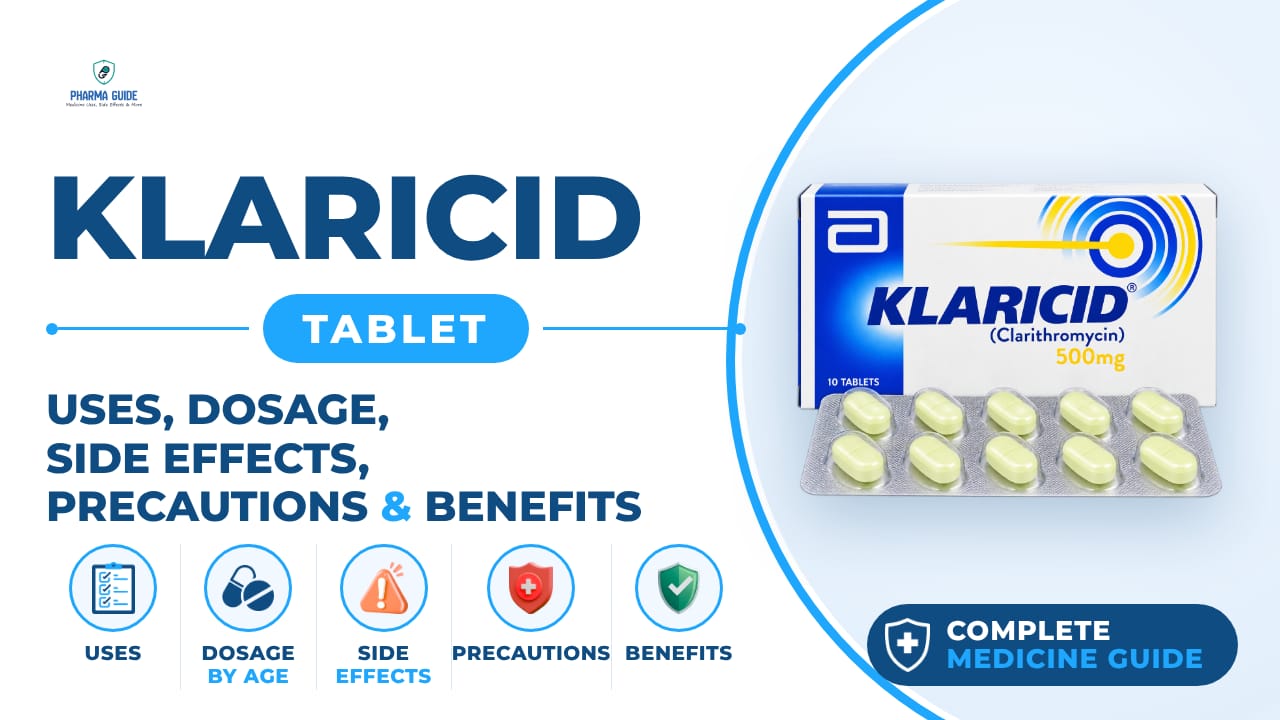
| Generic name | Clarithromycin |
|---|---|
| Drug class | Macrolide antibiotic |
| Forms | Tablets, Injection, Suspension, Extended-release tablets |
Quick overview
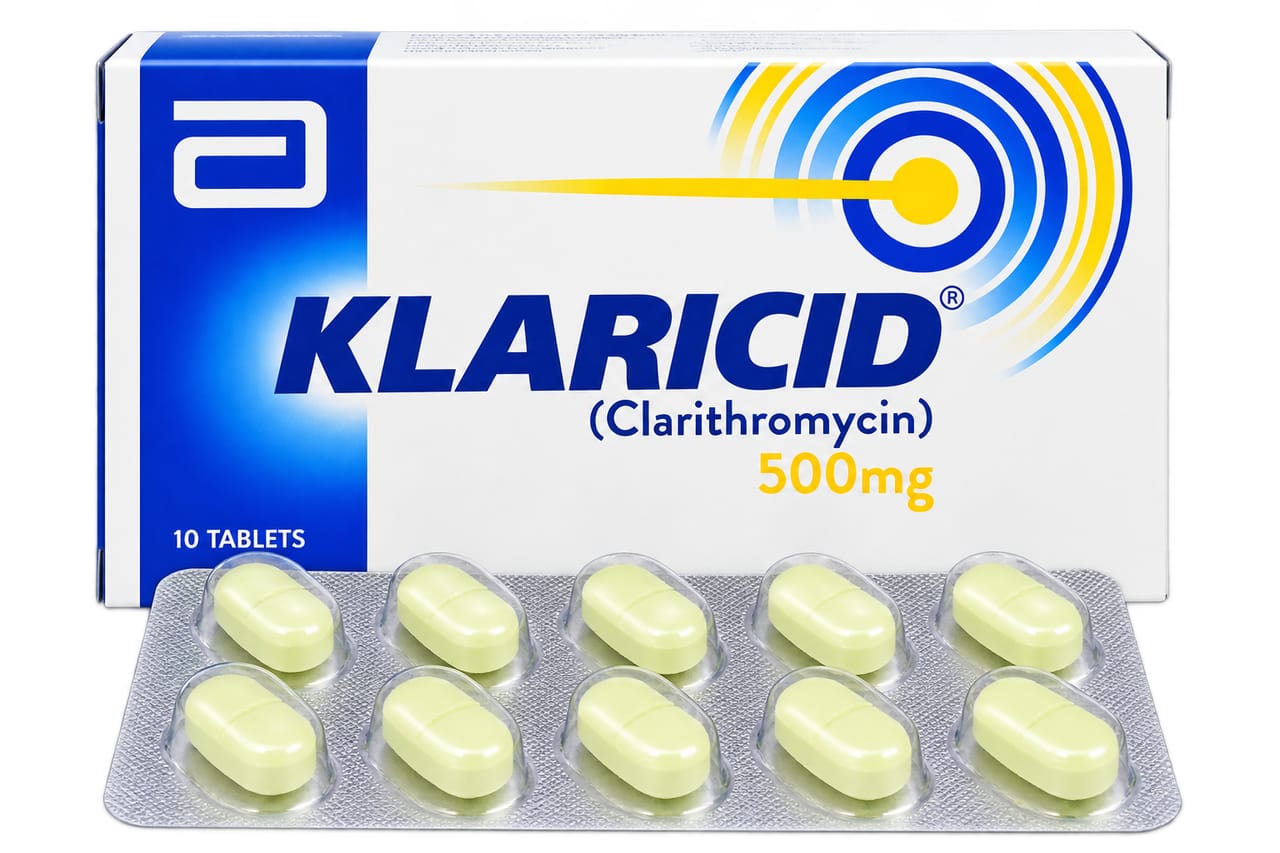
Klaricid Tablet contains clarithromycin, a macrolide antibiotic that stops the growth of bacteria causing infection. It is used for chest, throat, sinus, skin, and ear infections, as well as for Helicobacter pylori infection associated with duodenal ulcer. It works by inhibiting bacterial growth and is taken as directed by a doctor, with attention to certain warnings and precautions.
What is Klaricid Tablet
Klaricid is an antibiotic that contains clarithromycin. It belongs to a group of medicines called macrolide antibiotics, which stop the growth of bacteria that cause infections.
Klaricid Tablet uses
- Chest infections such as bronchitis and pneumonia
- Throat and sinus infections
- Skin and tissue infections
- Helicobacter pylori infection associated with duodenal ulcer
- Pneumonia
- Ear infections like otitis media
- Streptococcal pharyngitis
- Lyme disease
Benefits of Klaricid Tablet
- Bacterial Infection Treatment: Helps treat susceptible bacterial infections.
- Respiratory Support: Used for certain bacterial throat, sinus, and respiratory infections.
- Skin Infection Treatment: May treat selected bacterial skin infections.
- Ear Infection Support: Can be prescribed for certain bacterial ear infections.
- H. pylori Treatment: Used with other medicines in some H. pylori eradication regimens.
- Antibacterial Action: Inhibits bacterial protein production, helping stop bacterial growth.
How Klaricid Tablet works
Klaricid contains clarithromycin, an antibiotic that stops bacteria from growing and spreading, which helps clear the infection.
Klaricid Tablet dosage
Swallow the tablets with at least half a glass of water. They can be taken with or without food. Do not give these tablets to children under 12 years; your doctor will prescribe another suitable medicine for your child. Take the tablets for as long as your doctor has told you, even if you feel better, otherwise the problem might come back. If you forget a dose, take it as soon as you remember, but do not take extra tablets to make up for a missed dose. Finish the full course of treatment to make sure the infection is completely treated.
| Age group | Dose |
|---|---|
| Under 12 Years | Tablets generally not used; pediatric formulation is dosed by body weight |
| 12 Years and Above | 250 mg twice daily; may be increased to 500 mg twice daily for severe infections |
| Adults | 250–500 mg twice daily, depending on the infection |
| Older Adults (65+ years) | Adult dose; adjustment may be required with reduced kidney function |
Available forms and strengths
- Tablets
- Injection
- Suspension
- Extended-release tablets
Side effects of Klaricid Tablet
Common
- Stomach upset
- Headache
- Paraesthesia (pins and needles)
- Nausea and vomiting
- Stomatitis
- Glossitis
- Diarrhea
- Difficulty sleeping
- Changes in sense of taste
- Widening of blood vessels
- Increased sweating
- Indigestion
- Stomach pain
Serious
- Severe or prolonged diarrhoea, which may have blood or mucus in it
- A rash, difficulty breathing, fainting or swelling of the face, tongue, lips, eyes and throat (allergic reaction)
- Yellowing of the skin (jaundice), skin irritation, pale stools, dark urine, tender abdomen or loss of appetite (liver problems)
- Severe skin reactions such as painful blistering of the skin, mouth, lips, eyes and genitals (Stevens-Johnson syndrome/toxic epidermal necrolysis)
- A red, scaly rash with bumps under the skin and blisters (exanthematous pustulosis)
- Rare allergic skin reactions with ulceration of the mouth, lips and skin, rash, fever and inflammation of internal organs (DRESS)
- Muscle pain or weakness known as rhabdomyolysis
- Changes in heart rhythm such as palpitations or an irregular heartbeat
- Liver problems
Warnings and precautions
- If you are pregnant, think you may be pregnant, or are planning to have a baby, ask your doctor or pharmacist before taking this medicine, as its safety in pregnancy is not known.
- If you are breastfeeding, ask your doctor or pharmacist before taking this medicine, as its safety while breastfeeding is not known.
- Talk to your doctor or pharmacist before taking Klaricid if you have any kidney problems.
- Talk to your doctor or pharmacist before taking Klaricid if you have any liver problems. Do not take it if you have severe liver disease together with kidney disease.
- Drinking alcohol while taking Klaricid can lead to unwanted side effects.
- Klaricid tablets may make you feel dizzy or drowsy. If they affect you this way, do not drive, operate machinery, or do anything that requires you to be alert.
- Do not take Klaricid if you are allergic to clarithromycin, other macrolide antibiotics such as erythromycin or azithromycin, or any of the other ingredients.
- Do not take Klaricid with ergot alkaloid medicines (like ergotamine or dihydroergotamine) or ergotamine inhalers for migraine.
- Do not take Klaricid with terfenadine, astemizole, cisapride, or pimozide, as combining these drugs can cause serious heart rhythm disturbances.
- Do not take Klaricid if you are taking lovastatin or simvastatin (statins for cholesterol).
- Do not take Klaricid if you have abnormally low potassium levels in your blood.
- Do not take Klaricid if you or a family member has a history of certain heart rhythm disorders or long QT syndrome.
- Do not take Klaricid if you are taking ticagrelor, ranolazine, or colchicine.
- An overdose of Klaricid is likely to cause vomiting and stomach pains; seek medical help immediately if too much is taken.
Storage
- Keep this medicine out of the sight and reach of children
- Do not use these tablets after their use-by (exp) date that is printed on the box and indented on the blister strip
- Keep these tablets in a dry, safe place, protected from light
- Do not throw away any medicines via wastewater or household waste; ask your pharmacist how to throw away medicines you no longer use
- Store at room temperature between 20-25°C (68-77°F)
- Avoid storing in the fridge unless specifically advised by your healthcare provider
When to see a doctor
- Stop taking the tablets and contact your doctor immediately if you get severe or prolonged diarrhoea, which may contain blood or mucus, even if it starts up to two months after treatment.
- Get medical help right away if you notice a rash, difficulty breathing, fainting, or swelling of the face, tongue, lips, eyes and throat, as this may be an allergic reaction.
- Contact your doctor if you notice yellowing of the skin, skin irritation, pale stools, dark urine, tender abdomen, or loss of appetite, as these may be signs of liver problems.
- Seek medical help for severe skin reactions such as painful blistering of the skin, mouth, lips, eyes and genitals.
- Seek medical help if you develop muscle pain or weakness, which could be a sign of a rare condition called rhabdomyolysis.
- If you accidentally take more tablets than prescribed, or a child swallows some, contact your doctor or nearest hospital emergency department immediately.
Alternatives
- Azithromycin
- Clindamycin
- Cefuroxime
Watch the video
FAQs
What is Klaricid Tablet used for?
Klaricid Tablet is used to treat chest infections like bronchitis and pneumonia, throat and sinus infections, skin and tissue infections, ear infections like otitis media, streptococcal pharyngitis, Lyme disease, and Helicobacter pylori infection associated with duodenal ulcer.
How does Klaricid Tablet work?
Klaricid contains clarithromycin, a macrolide antibiotic that stops bacteria from growing and spreading, which helps clear the infection by inhibiting bacterial protein production.
What is the dosage of Klaricid Tablet?
Tablets should be swallowed with at least half a glass of water, with or without food. For those 12 years and above, the dose is generally 250 mg twice daily, which may be increased to 500 mg twice daily for severe infections. Adults typically take 250–500 mg twice daily depending on the infection. Klaricid tablets are not given to children under 12 years, who require a pediatric formulation dosed by body weight.
What are the common side effects of Klaricid Tablet?
Common side effects include stomach upset, headache, pins and needles sensations, nausea and vomiting, stomatitis, glossitis, diarrhea, difficulty sleeping, changes in sense of taste, widening of blood vessels, increased sweating, indigestion, and stomach pain.
Can Klaricid Tablet be taken with alcohol?
Drinking alcohol while taking Klaricid can lead to unwanted side effects, so it should be avoided unless advised otherwise by your doctor.
General information, not medical advice
Your prescriber and the leaflet in your pack know your situation. This page does not.
- Follow your prescriber and the leaflet
- Don't start, stop, or change a dose on your own
- Doses and warnings differ by country and product
Sources
- https://instacare.pk/blog/klaricid-tablet-uses-side-effects-price-in-pakistan
- Patient Information Leaflet, Klaricid Tablets (Clarithromycin), Mylan Products Ltd./AbbVie S.r.l., revised February 2018
- https://www.shijiebiaopin.net/upload/product/20125719122530.PDF
Video
Related medicines

AzaSite Eye Drops: Uses, Dosage, Side Effects, Precautions and Alternates
macrolide antibiotic
AzaSite Eye Drops treat bacterial conjunctivitis with a 7-day course of azithromycin, requiring only once-daily dosing after the first 2 days.
Dificid Tablet: Uses, Dosage, Side Effects, Precautions and Alternates
macrolide antibiotic
Dificid Tablet (fidaxomicin) treats C. difficile diarrhea in adults and children. Learn about dosage, side effects, warnings, and storage tips.