
Safety
General information, not medical advice
Your prescriber and the leaflet in your pack know your situation. This page does not.
- Follow your prescriber and the leaflet
- Don't start, stop, or change a dose on your own
- Doses and warnings differ by country and product
Klor-Con Tablet: Uses, Dosage, Side Effects, Precautions and Alternates
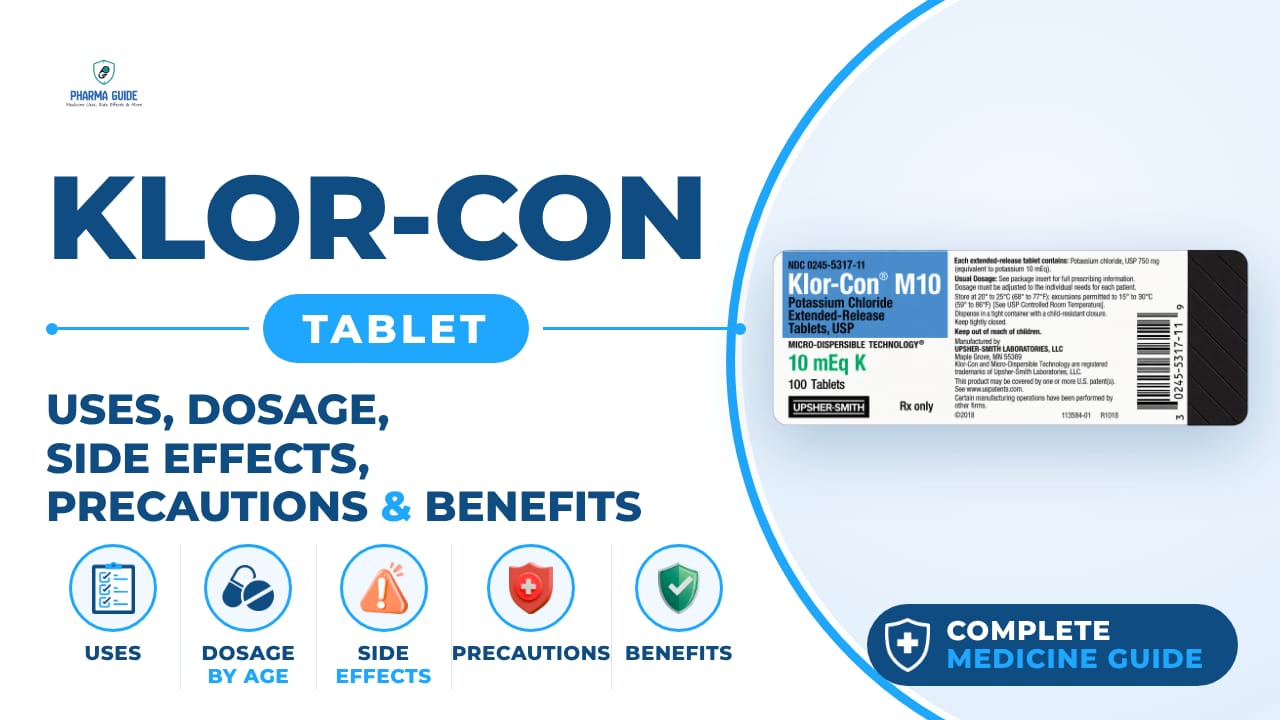
| Generic name | potassium chloride |
|---|---|
| Drug class | Minerals and electrolytes |
| Forms | effervescent tablets, extended release tablets, extended release capsules (sprinkle), powder for oral solution |
Quick overview
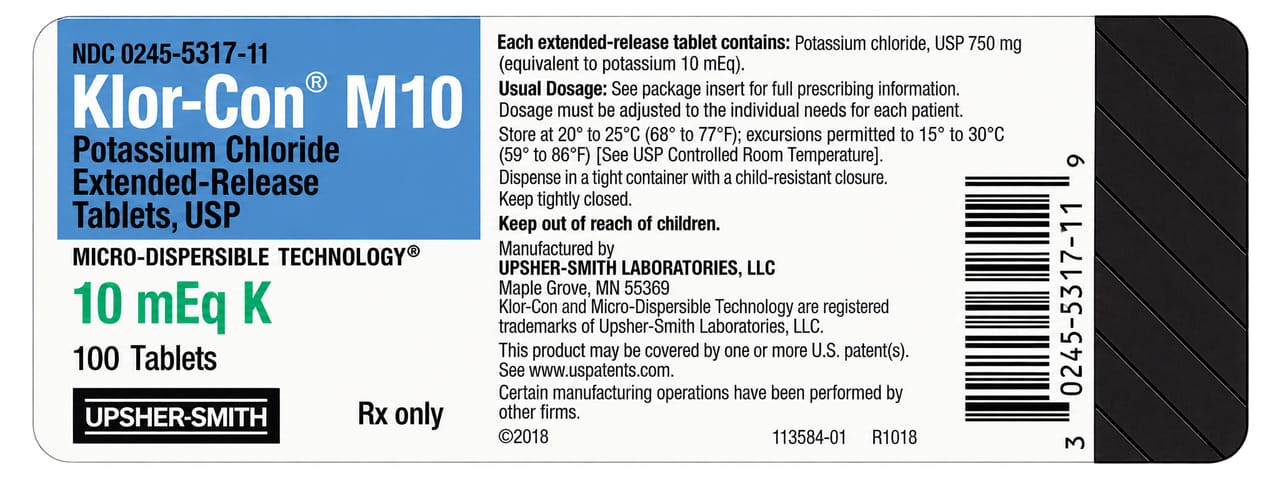
Klor-Con Tablet contains potassium chloride, a mineral found in many foods that is needed for several functions of the body, especially the beating of the heart. It belongs to the minerals and electrolytes drug class and is used to prevent or treat low blood potassium levels (hypokalemia). It is available in several forms, including effervescent tablets, extended-release tablets, extended-release sprinkle capsules, and powder for oral solution.
What is Klor-Con Tablet
Klor-Con contains potassium chloride, a mineral that is found in many foods and is needed for several functions of your body, especially the beating of your heart.
Klor-Con Tablet uses
- Prevent or treat low blood levels of potassium (hypokalemia)
- Treat hypokalemia with or without metabolic alkalosis
- Treat digitalis intoxication
- Treat hypokalemic familial periodic paralysis
- Prevent hypokalemia in patients at particular risk, such as those on digitalis or with significant heart rhythm problems
Benefits of Klor-Con Tablet
- Helps prevent and treat low potassium levels (hypokalemia).
- Replaces potassium lost through diuretics, vomiting, diarrhea, or certain medical conditions.
- Supports normal heart rhythm and cardiac function.
- Helps maintain proper muscle and nerve function.
- Supports healthy fluid and electrolyte balance in the body.
- Extended-release formulations provide potassium gradually over time.
How Klor-Con Tablet works
Potassium is a key mineral inside your cells. It helps send nerve signals, helps your heart, smooth muscles, and skeletal muscles contract, and supports kidney function and other body processes.
Klor-Con Tablet dosage
Take exactly as prescribed by your doctor and follow all directions on your prescription label. Take with food or just after a meal, or if the medicine upsets your stomach, along with a full glass of water. Do not crush, chew, break, or suck on an extended-release tablet or capsule; swallow it whole. Do not lie down for at least 10 minutes after taking this medication.
Some brands may be opened and the contents sprinkled onto a spoonful of cool, soft food such as applesauce or pudding, then swallowed right away without chewing, followed by a glass of cool water. Do not prepare a sprinkle mixture ahead of time. If using a liquid or powder form, measure it carefully with a dosing syringe or medicine dose-measuring device, not a kitchen spoon, and mix the oral solution with water before taking it.
Take this medication regularly and at the same time each day to get the most benefit. Follow directions on the medicine label when giving this medicine to a child. Tell your doctor if you have trouble swallowing the tablet or capsule, or if it feels stuck in your throat. You may need to follow a special diet while using this medicine; follow your doctor's or dietitian's instructions about foods to eat or avoid. Part of the tablet's outer shell may appear in your stool; this is normal and does not mean the medicine is less effective.
If you miss a dose, take it as soon as you remember, but skip it if it is almost time for your next dose; do not take two doses at once.
| Age group | Dose |
|---|---|
| Under 18 years | Dose is individualized by body weight and serum potassium; medical supervision required |
| 18–64 years – Prevention | Typically 20 mEq once daily |
| 18–64 years – Treatment | Typically 40–100 mEq/day, given in divided doses |
| 65+ years | Start cautiously and individualize according to kidney function and serum potassium |
Available forms and strengths
- Effervescent tablets
- Extended release tablets
- Extended release capsules (sprinkle)
- Powder for oral solution
Side effects of Klor-Con Tablet
Common
- Nausea
- Vomiting
- Diarrhea
- Gas
- Stomach pain/upset
- Acute abdominal pain
- Flatulence
- Tingling in the hands or feet
- Appearance of a potassium chloride tablet in your stool
Serious
- Uneven heartbeat
- Muscle weakness or limp feeling
- Severe stomach pain
- Numbness or tingling in your hands, feet, or mouth
- Severe throat irritation
- Chest pain, trouble breathing
- Stomach bloating, severe vomiting
- High potassium level symptoms - nausea, weakness, tingly feeling, chest pain, irregular heartbeats, loss of movement
- Signs of stomach bleeding - bloody or tarry stools, coughing up blood or vomit that looks like coffee grounds
- Difficult or painful swallowing, or feeling as if the capsule/tablet is stuck in your throat
- Skin rash
- Sore throat
- Gastrointestinal ulcer, obstruction, or perforation
- Signs of an allergic reaction - hives, difficult breathing, swelling of your face, lips, tongue, or throat
Warnings and precautions
- Do not use this medicine if you have high potassium levels in your blood (hyperkalemia), or if you also take a potassium-sparing diuretic.
- Your blood may need to be tested often, and your heart rhythm may be checked with an ECG, to make sure this medicine is working safely. Do not miss scheduled appointments.
- Do not stop taking this medicine suddenly without talking to your doctor, as your condition could get worse.
- Never crush, chew, break, or suck on an extended-release tablet or capsule. Swallow it whole, since breaking it can release too much drug at once, and sucking on it can irritate your mouth or throat.
- Avoid using other potassium supplements or products containing potassium, including salt substitutes or low-salt foods, unless your doctor tells you to.
- This medicine can cause ulcers, bleeding, blockage, or a hole in the gastrointestinal tract, especially in solid oral forms.
- Do not use potassium supplements together with a potassium-sparing diuretic, as this combination can cause severe high potassium levels.
- People with kidney disease or other conditions that reduce the body's ability to remove potassium need careful monitoring, since this medicine can cause dangerously high potassium levels and even cardiac arrest.
- Klor-Con should be used only when prescribed during pregnancy. Tell your doctor if you are pregnant.
- Potassium passes into breast milk. Talk with your doctor before breastfeeding while taking this medicine.
- This drug is removed from the body mainly by the kidneys, so people with kidney problems may be at greater risk of side effects. Careful monitoring and dose adjustment may be needed.
- Tell your doctor if you have liver disease before taking this medicine.
- No specific direct interaction with alcohol is listed.
- Klor-Con is not generally expected to impair driving or operating machinery.
Storage
- Store at 20–25°C (68–77°F) at controlled room temperature.
- Keep in a cool, dry place away from excessive heat.
- Protect tablets from moisture and direct sunlight.
- Keep in the original, tightly closed container until use.
- Avoid storing in bathrooms or other hot and humid areas.
- Keep out of reach and sight of children.
When to see a doctor
- Get emergency help right away if you have signs of an allergic reaction such as hives, difficulty breathing, or swelling of your face, lips, tongue, or throat.
- Stop taking this medicine and call your doctor right away if you have severe throat irritation, chest pain, trouble breathing, stomach bloating, severe vomiting, severe stomach pain, signs of high potassium (nausea, weakness, tingling, chest pain, irregular heartbeat, loss of movement), or signs of stomach bleeding such as bloody or tarry stools or vomit that looks like coffee grounds.
- Seek emergency medical attention if you think you have taken too much of this medicine.
- Check with your doctor right away if you notice tarry stools or other signs of gastrointestinal bleeding.
- Stop this medicine right away and contact your doctor if you have severe vomiting, stomach pain, bloating, or gastrointestinal bleeding, since these could mean ulceration, blockage, or a hole in the gut.
Alternatives
- Slow-K
- K-Dur
- Micro-K
- Lyte
- Potassium Chloride Oral Solution
Watch the video
FAQs
What is Klor-Con Tablet used for?
Klor-Con is used to prevent or treat low blood potassium levels (hypokalemia), treat hypokalemia with or without metabolic alkalosis, treat digitalis intoxication, treat hypokalemic familial periodic paralysis, and prevent hypokalemia in patients at particular risk, such as those on digitalis or with significant heart rhythm problems.
How should I take Klor-Con Tablet?
Take exactly as prescribed, with food or just after a meal, along with a full glass of water. Do not crush, chew, break, or suck on an extended-release tablet or capsule; swallow it whole, and do not lie down for at least 10 minutes after taking it.
What should I do if I miss a dose of Klor-Con?
If you miss a dose, take it as soon as you remember, but skip it if it is almost time for your next dose. Do not take two doses at once.
What are the serious side effects of Klor-Con Tablet?
Serious side effects include uneven heartbeat, muscle weakness, severe stomach pain, numbness or tingling in hands, feet, or mouth, severe throat irritation, chest pain, trouble breathing, signs of high potassium levels, signs of stomach bleeding, and signs of an allergic reaction such as hives or swelling of the face, lips, tongue, or throat.
Who should not take Klor-Con Tablet?
You should not use this medicine if you have high potassium levels in your blood (hyperkalemia) or if you also take a potassium-sparing diuretic, as this combination can cause severe high potassium levels.
General information, not medical advice
Your prescriber and the leaflet in your pack know your situation. This page does not.
- Follow your prescriber and the leaflet
- Don't start, stop, or change a dose on your own
- Doses and warnings differ by country and product
Sources
Video
Related medicines
Magnesium Sulfate Injection: Uses, Dosage, Side Effects, Precautions and Alternates
Minerals and electrolytes
Magnesium Sulfate Injection treats low magnesium, prevents eclampsia seizures, and lowers high potassium. Learn uses, dosage, side effects, and precautions.
Pedialyte Liquid: Uses, Dosage, Side Effects, Precautions and Alternates
minerals and electrolytes
Pedialyte Liquid replaces fluids and electrolytes lost from diarrhea, vomiting, or sweating. Learn uses, dosage by age, side effects, and warnings.