
Safety
General information, not medical advice
Your prescriber and the leaflet in your pack know your situation. This page does not.
- Follow your prescriber and the leaflet
- Don't start, stop, or change a dose on your own
- Doses and warnings differ by country and product
Kombiglyze Tablet: Uses, Dosage, Side Effects, Precautions and Alternates
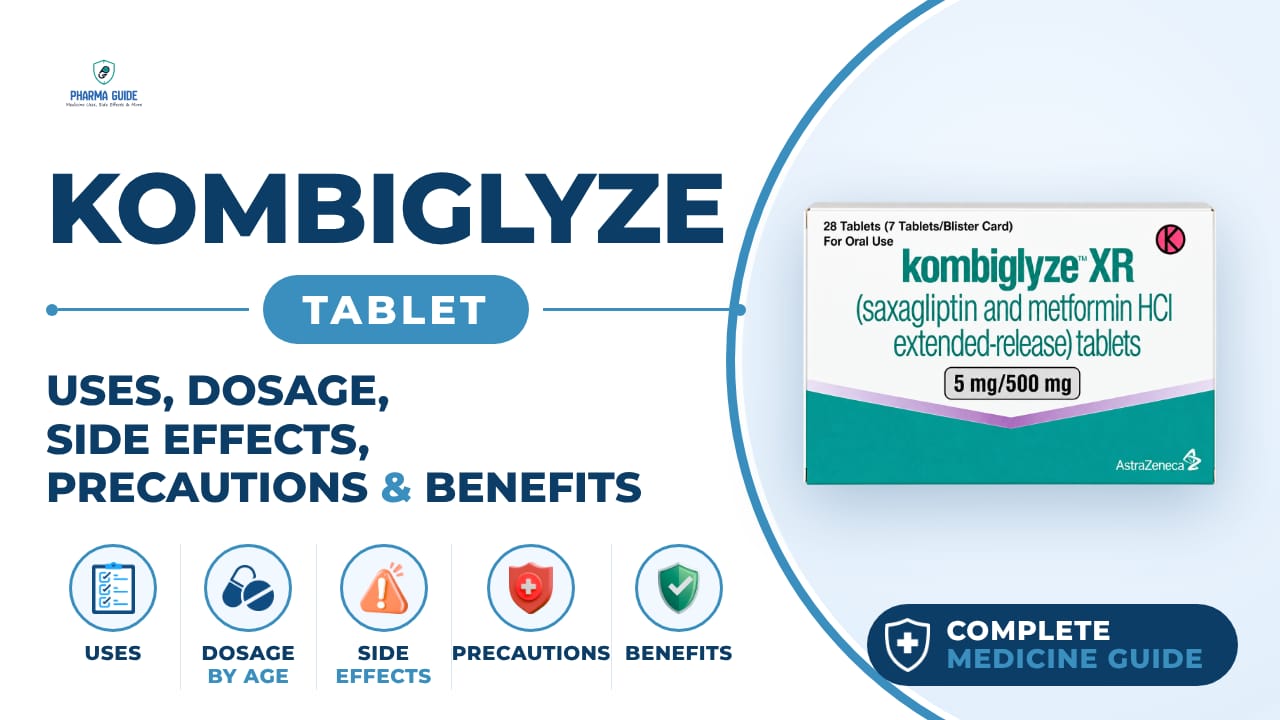
| Generic name | saxagliptin and metformin hydrochloride |
|---|---|
| Drug class | DPP-4 inhibitor and biguanide combination |
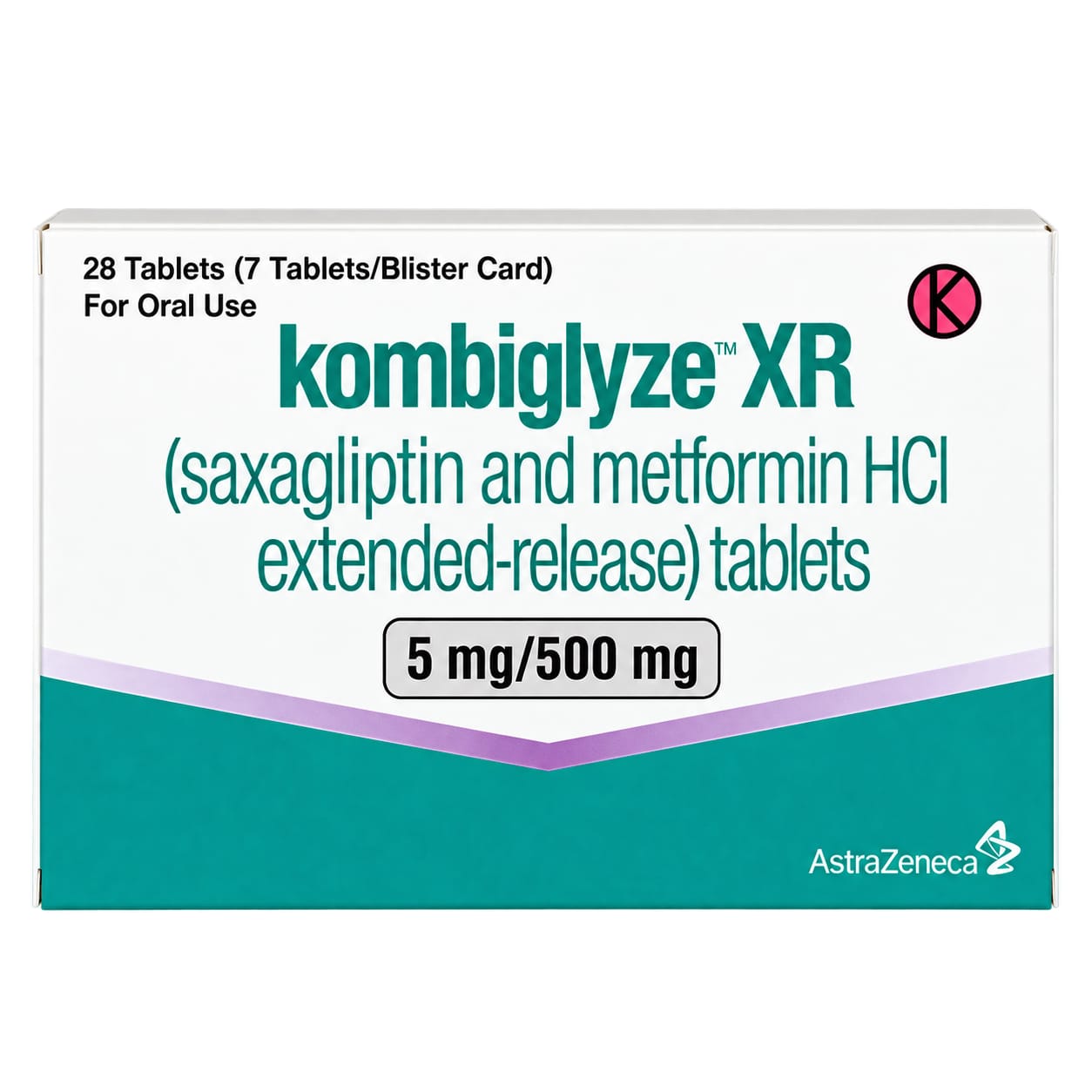
| Forms | Extended-release film-coated tablets: 5 mg saxagliptin/500 mg metformin HCl, 5 mg saxagliptin/1,000 mg metformin HCl, and 2.5 mg saxagliptin/1,000 mg metformin HCl |
Quick overview
Kombiglyze Tablet (saxagliptin and metformin hydrochloride) is a DPP-4 inhibitor and biguanide combination used along with diet and exercise to control blood sugar in adults with type 2 diabetes. It combines two mechanisms of action in one extended-release tablet, usually taken once daily. It is not recommended for type 1 diabetes, diabetic ketoacidosis, pregnancy, or breastfeeding, and carries a risk of a serious condition called lactic acidosis.
What is Kombiglyze Tablet
Kombiglyze XR is a prescription medicine that combines two diabetes medicines, saxagliptin and metformin hydrochloride, in one extended-release tablet. It is used together with diet and exercise to help control blood sugar in adults with type 2 diabetes.
Kombiglyze Tablet uses
- Improves blood sugar control in adults with type 2 diabetes mellitus, used along with diet and exercise
- May be used along with insulin, a sulfonylurea, or an SGLT2 inhibitor to treat type 2 diabetes
- Not recommended for type 1 diabetes or diabetic ketoacidosis
Benefits of Kombiglyze Tablet
- Helps lower blood sugar by combining two different mechanisms of action
- Can be used along with other diabetes medicines such as insulin or sulfonylureas
- Taken once daily, which may be easier to remember than twice-daily dosing
How Kombiglyze Tablet works
One part of this medicine (saxagliptin) helps your body release more insulin after meals by blocking an enzyme that breaks down natural gut hormones. The other part (metformin) lowers the amount of sugar your liver makes and helps your body absorb less sugar from food and use insulin better.
Kombiglyze Tablet dosage
Take exactly as your doctor tells you, usually once daily with the evening meal to help lessen stomach upset. Swallow the tablet whole; never crush, cut, or chew it. You may sometimes see a soft mass in your stool that looks like the tablet — this is just the empty tablet shell and is normal.
If you miss a dose, do not take an extra dose; just resume your next scheduled dose. Do not take two doses at the same time. Keep taking your prescribed diet and exercise plan while using this medicine. Elderly patients may need more frequent kidney function checks while on this medicine.
| Age group | Dose |
|---|---|
| Under 18 years | Safety and effectiveness are not established; no standard pediatric dose |
| 18–64 years | Starting dose depends on previous diabetes treatment. For patients needing saxagliptin who are not taking metformin, a labeled starting dose is 5 mg saxagliptin/500 mg metformin XR once daily |
| 65–74 years | Adult dosing may be used, but treatment should be individualized according to kidney function and glucose control |
| 75 years and older | Individualized cautiously, with close kidney-function monitoring because metformin-associated lactic acidosis risk increases with age |
Available forms and strengths
- Extended-release film-coated tablets: 5 mg saxagliptin/500 mg metformin HCl
- Extended-release film-coated tablets: 5 mg saxagliptin/1,000 mg metformin HCl
- Extended-release film-coated tablets: 2.5 mg saxagliptin/1,000 mg metformin HCl
Side effects of Kombiglyze Tablet
Common
- Diarrhea
- Nausea and vomiting
- Headache
- Upper respiratory tract infection (stuffy or runny nose, sore throat)
- Urinary tract infection
- Nasopharyngitis (cold-like symptoms)
Serious
- Lactic acidosis (build-up of acid in the blood) — can be fatal
- Acute pancreatitis (severe stomach pain, sometimes with nausea and vomiting)
- Heart failure (shortness of breath, rapid weight gain, swelling of feet)
- Low vitamin B12 levels
- Low blood sugar (hypoglycemia), especially when combined with insulin or sulfonylureas
- Serious allergic reactions including anaphylaxis, angioedema, and exfoliative skin conditions
- Severe and disabling joint pain
- Bullous pemphigoid (serious blistering skin condition)
Warnings and precautions
- This medicine can cause a rare but serious and sometimes fatal condition called lactic acidosis, a build-up of acid in the blood. Risk is higher in people with kidney or liver problems, heart failure, heavy alcohol use, older age, or serious infections.
- Do not use this medicine if you have severe kidney disease or diabetic ketoacidosis.
- This medicine may need to be stopped before surgery or before an imaging test that uses injected dye, because of the risk of kidney problems and lactic acidosis.
- Serious allergic reactions, including anaphylaxis, swelling of the face and throat, and severe skin reactions, have been reported.
- Severe and disabling joint pain has been reported with this type of medicine.
- A serious blistering skin condition called bullous pemphigoid has been reported, sometimes requiring hospital treatment.
- This medicine is not recommended during pregnancy. Your doctor will likely switch you to insulin to control blood sugar while you are pregnant.
- This medicine is not recommended while breastfeeding. Talk to your doctor about other options for feeding your baby.
- This medicine is not safe if you have severe kidney problems, and your kidney function should be checked before starting and regularly during treatment, since metformin builds up in the body if kidneys don't work well.
- This medicine is not recommended if you have liver problems, since this can increase the risk of a serious condition called lactic acidosis.
- Avoid drinking excessive alcohol while taking this medicine, as it increases the risk of a serious condition called lactic acidosis.
- Be careful driving or using machinery until you know how this medicine affects you, since it can cause dizziness or low blood sugar that may slow your reactions.
Storage
- Store at 20°C to 25°C (68°F to 77°F); brief exposure to 15°C–30°C (59°F–86°F) is allowed
- Keep tablets in the blister pack until it is time to take them
- Keep in a cool, dry place where the temperature stays below 30°C
- Do not store in the bathroom or near a sink
- Keep out of reach and sight of children, ideally in a locked cupboard
When to see a doctor
- Stop taking this medicine and get emergency help right away if you have symptoms of lactic acidosis, such as feeling very weak or tired, unusual muscle pain, trouble breathing, stomach pain with nausea or vomiting, feeling cold (especially in arms and legs), dizziness, or a slow or irregular heartbeat.
- Stop taking this medicine and contact your doctor right away if you have severe stomach pain that will not go away, which may spread to your back and may occur with or without vomiting — these can be signs of pancreatitis.
- Contact your doctor right away if you have increasing shortness of breath, rapid weight gain, or swelling in your feet, ankles, or legs — these can be signs of heart failure.
- Stop taking this medicine and get medical help right away if you notice swelling of your face, lips, tongue, or throat, difficulty breathing or swallowing, or hives — these can be signs of a serious allergic reaction.
- Tell your doctor right away if you develop blisters or skin breakdown, which could be a sign of a serious skin condition.
- Call your doctor if you have severe joint pain, which could be related to this medicine.
Alternatives
- Janumet XR
- Jentadueto XR
- Kazano
Watch the video
FAQs
What is Kombiglyze Tablet used for?
Kombiglyze Tablet is used along with diet and exercise to improve blood sugar control in adults with type 2 diabetes. It may also be combined with insulin, a sulfonylurea, or an SGLT2 inhibitor. It is not recommended for type 1 diabetes or diabetic ketoacidosis.
How does Kombiglyze Tablet work?
It combines two mechanisms: saxagliptin helps the body release more insulin after meals by blocking an enzyme that breaks down gut hormones, while metformin lowers the amount of sugar the liver makes, reduces sugar absorption from food, and helps the body use insulin better.
How should I take Kombiglyze Tablet?
Take it exactly as prescribed, usually once daily with the evening meal to lessen stomach upset. Swallow the tablet whole without crushing, cutting, or chewing it. If you miss a dose, skip it and resume your next scheduled dose rather than doubling up.
What are the serious side effects of Kombiglyze Tablet?
Serious side effects include lactic acidosis, acute pancreatitis, heart failure, low vitamin B12 levels, low blood sugar, serious allergic reactions, severe joint pain, and bullous pemphigoid (a blistering skin condition).
Is Kombiglyze Tablet safe during pregnancy?
Kombiglyze Tablet is not recommended during pregnancy, and doctors will likely switch patients to insulin to control blood sugar while pregnant. It is also not recommended while breastfeeding.
General information, not medical advice
Your prescriber and the leaflet in your pack know your situation. This page does not.
- Follow your prescriber and the leaflet
- Don't start, stop, or change a dose on your own
- Doses and warnings differ by country and product
Sources
Video
Related medicines

Injectafer Injection: Uses, Dosage, Side Effects, Precautions and Alternates
Iron products
Injectafer (ferric carboxymaltose) treats iron deficiency anemia and heart failure-related iron deficiency via IV. Learn uses, dosage, side effects, and

Gliclazide Tablet: Uses, Dosage, Side Effects, Precautions and Alternates
Sulfonylurea (hypoglycemic/antidiabetic agent)
Gliclazide Tablet is a sulfonylurea for type 2 diabetes that boosts insulin release. Learn about dosage, side effects, warnings, and precautions.