
Safety
General information, not medical advice
Your prescriber and the leaflet in your pack know your situation. This page does not.
- Follow your prescriber and the leaflet
- Don't start, stop, or change a dose on your own
- Doses and warnings differ by country and product
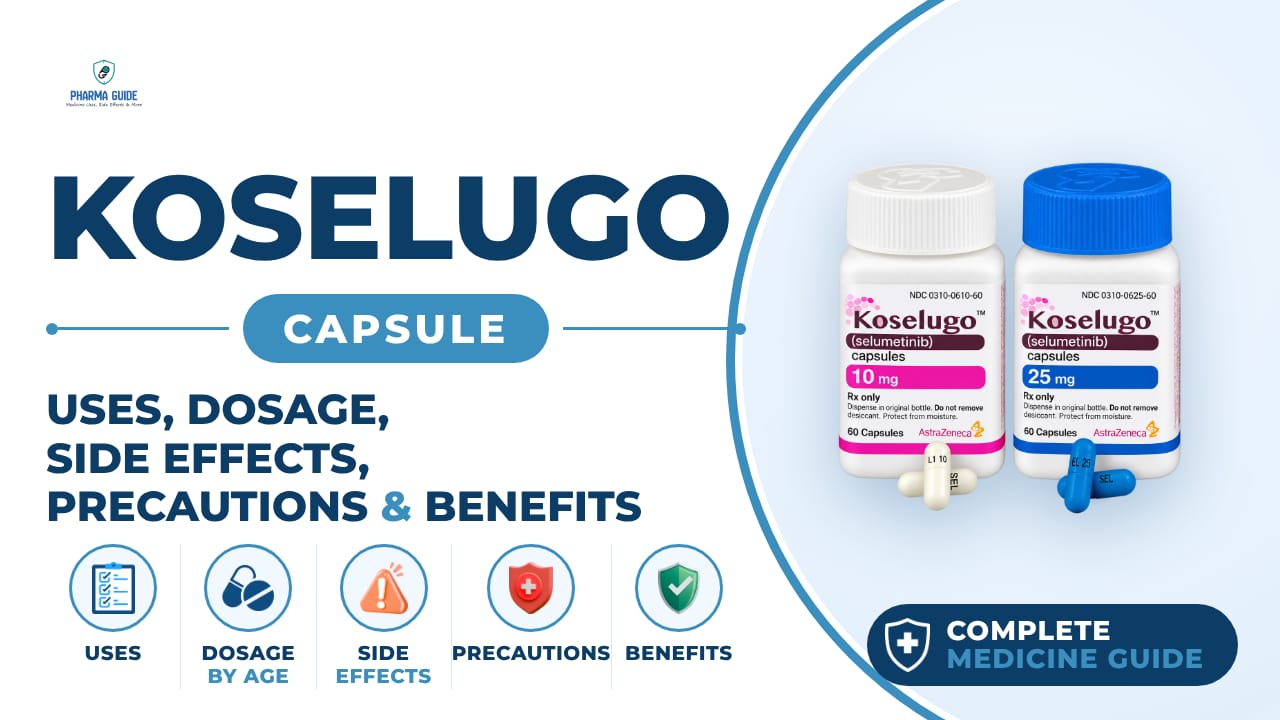
Koselugo Capsule: Uses, Dosage, Side Effects, Precautions and Alternates
| Generic name | selumetinib |
|---|---|
| Drug class | Multikinase inhibitor (MEK inhibitor) |
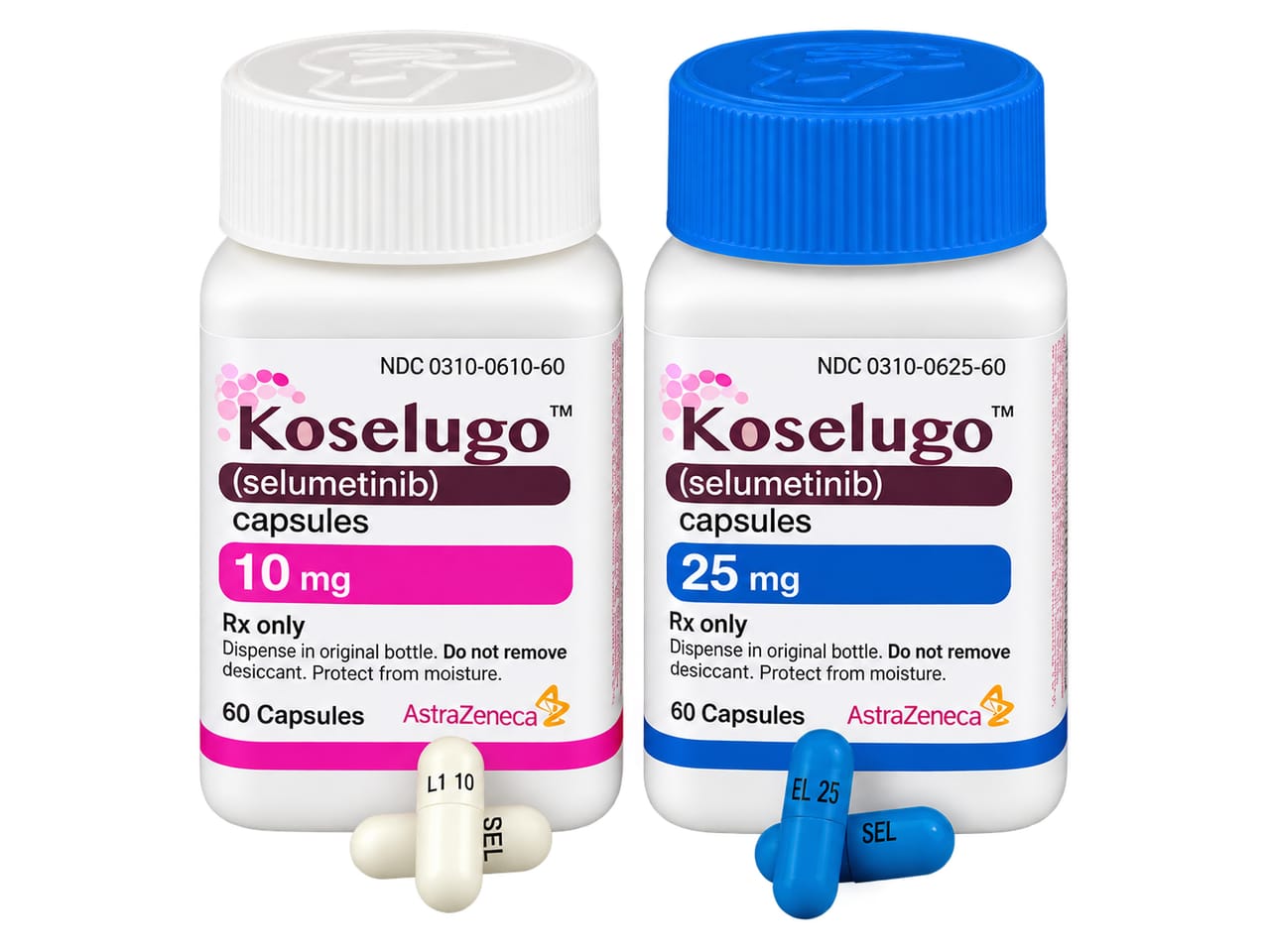
| Forms | Capsules (10 mg, 25 mg), Oral granules (5 mg, 7.5 mg) |
Quick overview
Koselugo Capsule contains the active ingredient selumetinib and belongs to a class of medicines called multikinase inhibitors, specifically MEK inhibitors. It is a prescription targeted therapy, different from standard chemotherapy, used to treat certain nerve tumors. It is taken twice daily as capsules swallowed whole, with dosing based on body surface area.
What is Koselugo Capsule
Koselugo is a prescription medicine that contains the active ingredient selumetinib. It is a targeted therapy, not standard chemotherapy, used to treat certain nerve tumors. It belongs to the drug class known as multikinase inhibitors, specifically MEK inhibitors.
Koselugo Capsule uses
Koselugo treats adult and paediatric patients (2 years and older, per the CMI; other sources state 1 year and older) who have neurofibromatosis type 1 (NF1) and symptomatic plexiform neurofibromas that cannot be completely removed by surgery.
Benefits of Koselugo Capsule
- Treats certain B-cell blood cancers
- Used for chronic lymphocytic leukemia (CLL)
- Used for small lymphocytic lymphoma (SLL)
- Helps block BTK signaling involved in cancer-cell survival
- Can help slow disease progression
How Koselugo Capsule works
Koselugo is a MEK inhibitor. It blocks two proteins (MEK1 and MEK2) that are part of a chain reaction in cells that often becomes overactive in cancer. By blocking these proteins, it reduces the activity of another protein called ERK, which slows tumor growth and can shrink tumors.
Koselugo Capsule dosage
Take Koselugo twice a day, about 12 hours apart, with or without food. Swallow the capsules whole with water. Do not chew, dissolve, or open the capsules. Talk to your doctor before starting treatment if you have, or think you might have, difficulty swallowing capsules whole. Do not give to children younger than 2 years of age.
If you vomit after taking a dose, do not take an additional dose; take the next dose as scheduled. If you miss a dose and it is more than 6 hours until your next dose, take the missed dose as soon as you remember, then continue as normal. If you miss a dose and it is less than 6 hours until your next dose, skip the missed dose and take the next dose at the normal time. Do not take a double dose to make up for a missed dose.
Do not stop taking this medicine or change the dose unless your doctor tells you to. Avoid drinking grapefruit juice while taking this medicine.
| Age group | Dose |
|---|---|
| 1–17 years | 25 mg/m² twice daily, with the actual capsule dose based on body surface area |
| 18–64 years | 25 mg/m² twice daily, with capsule strength determined by body surface area |
Available forms and strengths
- Capsules (10 mg, 25 mg)
- Oral granules (5 mg, 7.5 mg)
Side effects of Koselugo Capsule
Common
- Vomiting
- Stomach pain
- Nausea
- Inflammation of the mouth (stomatitis)
- Headache
- Redness around the fingernails
- Dry skin
- Rash
- Tiredness, weakness, or lacking energy
- Muscle and bone pain
- Fever
- Itching
- Constipation
- Diarrhoea
- Hair thinning (alopecia)
- Hair colour change
- Nosebleeds
- Swelling of the face, hands or feet
- Decreased appetite
- Skin bumps that look like acne
- Nail infection (paronychia)
- Increased creatine phosphokinase (CPK) in blood
Serious
- Blurred vision, loss of vision, dark spots in vision (floaters), or other changes to vision
- Persistent coughing and wheezing
- Shortness of breath
- Swelling of ankles/feet
- Tiredness with increased heart rate
- Diarrhoea (especially the first time it occurs)
- Muscle aches or pains, muscle spasms and weakness
- Dark or reddish urine
- Rash that covers a large area of the body, blisters, or peeling skin
- Heart problems (reduced ability of heart to pump blood, cardiomyopathy)
- Severe allergic reaction (facial swelling, trouble breathing)
- Blood in the urine
Warnings and precautions
- This medicine can cause eye problems. Tell your doctor right away if you get blurred vision or any other changes to your sight during treatment.
- This medicine can lower the amount of blood your heart pumps. Your doctor should test your heart function before and during treatment.
- The capsules contain vitamin E, which may increase your risk of bleeding, especially if you take aspirin, blood thinners, or other vitamin E supplements.
- This medicine may raise a blood enzyme called CPK, which can be a sign of muscle damage. Your doctor should check this with blood tests before and during treatment.
- Avoid grapefruit juice, Seville oranges, and St. John's wort while taking this medicine, as they can affect how it works.
- Do not take this medicine if you are pregnant or plan to become pregnant, as it may harm an unborn baby. Your doctor may test for pregnancy before starting treatment. Women who can become pregnant should use effective birth control during treatment and for at least 1 week after the last dose. Tell your doctor right away if you become pregnant.
- Do not breastfeed while taking this medicine, for the safety of your baby.
- Kidney function and overall clinical condition should be monitored as appropriate.
- Do not take this medicine if you have severe liver disease. Your doctor may prescribe a lower dose if you have liver problems.
- Discuss alcohol use with the treating specialist, particularly if liver abnormalities are present.
- Avoid driving or using machines if you feel tired or have problems with your vision, such as blurred vision, since this medicine can cause side effects that affect these abilities.
Storage
- Keep KOSELUGO in a cool dry place where the temperature stays below 30°C.
- Store in the original bottle to protect from moisture.
- Do not remove the desiccant pack.
- Do not use KOSELUGO after the expiry date, which is stated on the bottle after EXP.
- Keep it where young children cannot reach it.
- If you no longer need to use this medicine or it is out of date, take it to any pharmacy for safe disposal.
- Do not throw away any medicines via wastewater.
When to see a doctor
- Call your doctor straight away if you notice blurred vision, loss of vision, dark spots in your vision, or other vision changes.
- Call your doctor straight away if you get persistent coughing or wheezing, shortness of breath, swelling of the ankles and feet, tiredness, and increased heart rate.
- Call your doctor straight away if you get diarrhoea for the first time during treatment.
- Call your doctor straight away if you get a rash covering a large area of your body, blisters, or peeling skin.
- Call your doctor straight away if you get muscle aches or pain, muscle spasms and weakness, or dark, reddish urine.
- Call your doctor straight away if you become pregnant while taking this medicine.
- If you think you have taken too much of this medicine, seek urgent medical attention right away, even if you feel fine.
Alternatives
- Trametinib
- Mirdametinib
- Cobimetinib
Watch the video
FAQs
What is Koselugo Capsule used for?
Koselugo treats adult and paediatric patients (2 years and older, per the CMI; other sources state 1 year and older) who have neurofibromatosis type 1 (NF1) and symptomatic plexiform neurofibromas that cannot be completely removed by surgery.
How should I take Koselugo Capsule?
Take it twice a day, about 12 hours apart, with or without food. Swallow the capsules whole with water and do not chew, dissolve, or open them. Dosing is based on body surface area, and children younger than 2 years should not be given this medicine.
What should I do if I miss a dose of Koselugo?
If it is more than 6 hours until your next dose, take the missed dose as soon as you remember and then continue as normal. If it is less than 6 hours until your next dose, skip the missed dose and take the next one at the usual time. Do not take a double dose.
What foods or substances should I avoid while taking Koselugo?
Avoid grapefruit juice, Seville oranges, and St. John's wort while taking this medicine, as they can affect how it works.
What serious side effects should prompt me to see a doctor?
Call your doctor straight away if you notice blurred vision, loss of vision, or dark spots in vision; persistent coughing or wheezing; shortness of breath; swelling of the ankles and feet with tiredness and increased heart rate; diarrhoea for the first time during treatment; a rash covering a large area of the body, blisters, or peeling skin; or muscle aches, spasms, weakness, or dark reddish urine.
General information, not medical advice
Your prescriber and the leaflet in your pack know your situation. This page does not.
- Follow your prescriber and the leaflet
- Don't start, stop, or change a dose on your own
- Doses and warnings differ by country and product
Sources
Video
Related medicines

Injectafer Injection: Uses, Dosage, Side Effects, Precautions and Alternates
Iron products
Injectafer (ferric carboxymaltose) treats iron deficiency anemia and heart failure-related iron deficiency via IV. Learn uses, dosage, side effects, and

Gliclazide Tablet: Uses, Dosage, Side Effects, Precautions and Alternates
Sulfonylurea (hypoglycemic/antidiabetic agent)
Gliclazide Tablet is a sulfonylurea for type 2 diabetes that boosts insulin release. Learn about dosage, side effects, warnings, and precautions.