
Safety
General information, not medical advice
Your prescriber and the leaflet in your pack know your situation. This page does not.
- Follow your prescriber and the leaflet
- Don't start, stop, or change a dose on your own
- Doses and warnings differ by country and product
Krystexxa Injection: Uses, Dosage, Side Effects, Precautions and Alternates
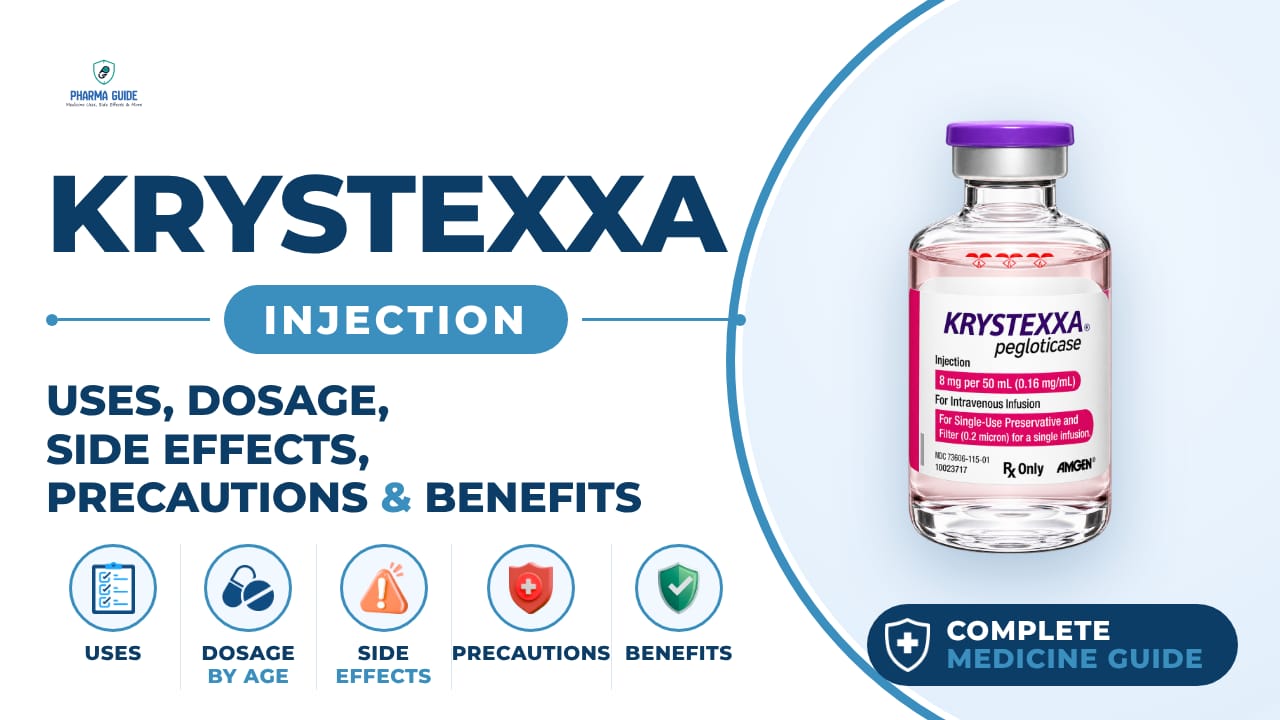
| Generic name | pegloticase |
|---|---|
| Drug class | uric acid specific enzyme |
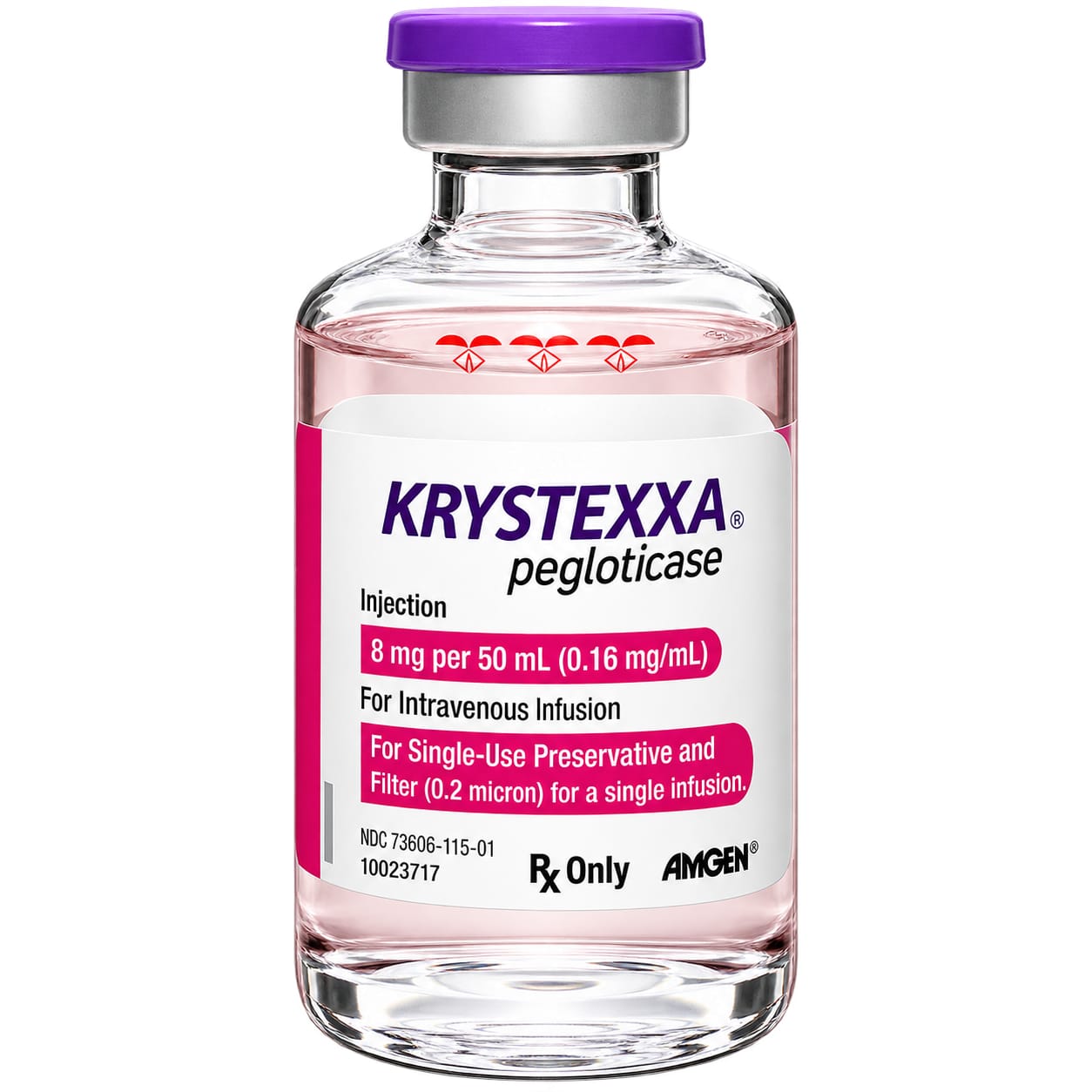
| Forms | Injection (solution in a single-dose vial for intravenous infusion after dilution) |
Quick overview
Krystexxa Injection (pegloticase) is a uric acid specific enzyme medicine given by infusion into a vein. It is used for adults with chronic gout that has not been controlled with standard gout medicines. Krystexxa works by breaking down uric acid so the body can remove it through urine, helping to lower blood uric acid levels and reduce gout tophi over time.
What is Krystexxa Injection
Krystexxa is an injectable medicine that lowers high uric acid levels in the blood. It is used for adults with chronic gout that has not been controlled with other treatments.
Krystexxa Injection uses
- Treatment of chronic gout in adults whose disease has not been controlled with standard gout medicines (refractory gout)
Benefits of Krystexxa Injection
- Lowers blood uric acid levels
- Can help reduce gout tophi (uric acid deposits) over time
- May reduce the frequency of gout flares after the first few months of treatment
- Treats chronic gout that has not responded adequately to conventional treatment
- Significantly lowers serum uric acid
How Krystexxa Injection works
Krystexxa contains an enzyme that breaks down uric acid into a substance called allantoin, which the body can remove easily through urine. This lowers the amount of uric acid in the blood.
Krystexxa Injection dosage
Krystexxa is given by a doctor or nurse as an infusion into a vein, usually taking about 2 hours or longer, and is given every two weeks. It is often given together with weekly methotrexate tablets, started at least 4 weeks before the first Krystexxa infusion, along with folic acid or folinic acid supplements. It can be used alone if methotrexate is not suitable.
You will be given other medicines, such as antihistamines and corticosteroids, before each infusion to help lower the chance of allergic or infusion reactions — take these as directed. Stop taking any oral uric-acid-lowering medicines before starting Krystexxa and do not take them while on treatment. Your doctor will check your blood uric acid level before each infusion, and you will be watched by a healthcare provider during the infusion and for some time afterward for signs of a reaction.
Do not stop treatment just because you have a gout flare — tell your doctor, who may treat the flare separately. If you miss an appointment for your dose, schedule another one as soon as possible.
| Age group | Dose |
|---|---|
| Under 18 years | Safety and effectiveness have not been established |
| 18–64 years | 8 mg IV once every 2 weeks |
Available forms and strengths
- Injection (solution in a single-dose vial for intravenous infusion after dilution)
Side effects of Krystexxa Injection
Common
- Gout flares
- Joint pain (arthralgia)
- Nausea and vomiting
- Tiredness (fatigue)
- Bruising
- Sore throat (nasopharyngitis)
- Constipation
- Chest pain
- Infusion reactions
- COVID-19 (reported in clinical trials)
Serious
- Severe allergic reaction (anaphylaxis), including breathing problems, wheezing, swelling of face/lips/tongue/throat, throat tightness, trouble swallowing, hives, rash, dizziness, fainting, racing heart
- Infusion reactions during or after the infusion, including rash, skin redness, trouble breathing, flushing, itching, chest pain or discomfort
- Hemolysis (breakdown of red blood cells) and methemoglobinemia in people with G6PD deficiency
- Worsening of congestive heart failure
- Increase in gout flares, especially in the first few months of treatment
Warnings and precautions
- Krystexxa can cause severe allergic reactions (anaphylaxis) during or after any infusion, including the very first one. This usually happens within 2 hours of treatment, but delayed reactions can also occur. It must be given in a healthcare setting that is prepared to treat these reactions, and you will be given antihistamines and corticosteroids beforehand and monitored afterward.
- Your blood uric acid level will be checked before every infusion. If it rises above a certain level on two checks in a row, your doctor will likely stop treatment because this increases the risk of allergic and infusion reactions.
- People with a blood condition called G6PD deficiency must not receive Krystexxa, because it can cause life-threatening breakdown of red blood cells and a condition called methemoglobinemia. Your doctor may test for this condition before starting treatment, especially if you are of African, Mediterranean, or Southern Asian background.
- Gout flares can become more frequent when you first start Krystexxa. Your doctor will likely prescribe medicine to help prevent flares for at least the first 6 months of treatment. Do not stop Krystexxa just because you have a flare.
- If you have congestive heart failure, Krystexxa should be used with caution, as it may worsen this condition. Your healthcare provider will monitor you closely after each infusion.
- Do not take other uric-acid-lowering medicines, such as allopurinol, febuxostat, or probenecid, while receiving Krystexxa, as this may hide the rise in uric acid levels that signals an increased risk of reaction.
- It is not known whether Krystexxa is safe during pregnancy or could harm an unborn baby.
- Tell your doctor if you are pregnant or plan to become pregnant. It is also not known if Krystexxa passes into breast milk. You and your doctor should decide together whether you should receive Krystexxa or breastfeed.
- No dose change is needed for people with kidney problems. There are no known interactions between Krystexxa and alcohol, but alcohol may make gout worse, so it is best to limit how much you drink.
- Infusion reactions or dizziness may make driving unsafe after treatment.
Storage
- Before preparation for use, Krystexxa must be stored in its carton and kept under refrigeration between 36°F and 46°F (2°C to 8°C).
- Protect from light.
- Do not shake or freeze.
- Do not use beyond the expiration date stamped on the product.
- This medicine is given to you in a hospital or clinic setting by a healthcare provider — you will not store it at home.
When to see a doctor
- Get medical help right away if you have symptoms of a serious allergic reaction, such as wheezing, shortness of breath, cough, chest tightness or pain, trouble breathing, dizziness, fainting, a fast or weak heartbeat, feeling nervous, facial flushing, itching, hives, a feeling of warmth, swelling of the throat or tongue, throat tightness, a hoarse voice, or trouble swallowing — during or at any time after your infusion.
- Tell your healthcare provider immediately if you notice rash, skin redness, trouble breathing, flushing, itching, or chest pain during or shortly after your infusion — these can be signs of an infusion reaction, and your infusion may need to be slowed or stopped.
- If you think you have used too much Krystexxa or had a reaction after an overdose, get medical help right away.
Alternatives
- Allopurinol
- Febuxostat
- Probenecid
Watch the video
FAQs
What is Krystexxa Injection used for?
Krystexxa is used to treat chronic gout in adults whose disease has not been controlled with standard gout medicines (refractory gout).
How does Krystexxa Injection work?
Krystexxa contains an enzyme that breaks down uric acid into allantoin, which the body can remove easily through urine, lowering blood uric acid levels.
How is Krystexxa Injection given?
Krystexxa is given by a doctor or nurse as an infusion into a vein, usually taking about 2 hours or longer, every two weeks, often with weekly methotrexate and folic acid or folinic acid supplements.
Who should not receive Krystexxa Injection?
People with G6PD deficiency must not receive Krystexxa because it can cause life-threatening breakdown of red blood cells and methemoglobinemia.
What are the serious side effects of Krystexxa Injection?
Serious side effects include severe allergic reactions (anaphylaxis), infusion reactions, hemolysis and methemoglobinemia in people with G6PD deficiency, worsening congestive heart failure, and increased gout flares.
General information, not medical advice
Your prescriber and the leaflet in your pack know your situation. This page does not.
- Follow your prescriber and the leaflet
- Don't start, stop, or change a dose on your own
- Doses and warnings differ by country and product
Sources
Video
Related medicines

Injectafer Injection: Uses, Dosage, Side Effects, Precautions and Alternates
Iron products
Injectafer (ferric carboxymaltose) treats iron deficiency anemia and heart failure-related iron deficiency via IV. Learn uses, dosage, side effects, and

Gliclazide Tablet: Uses, Dosage, Side Effects, Precautions and Alternates
Sulfonylurea (hypoglycemic/antidiabetic agent)
Gliclazide Tablet is a sulfonylurea for type 2 diabetes that boosts insulin release. Learn about dosage, side effects, warnings, and precautions.