
Safety
General information, not medical advice
Your prescriber and the leaflet in your pack know your situation. This page does not.
- Follow your prescriber and the leaflet
- Don't start, stop, or change a dose on your own
- Doses and warnings differ by country and product
Labetalol Tablet: Uses, Dosage, Side Effects, Precautions and Alternates
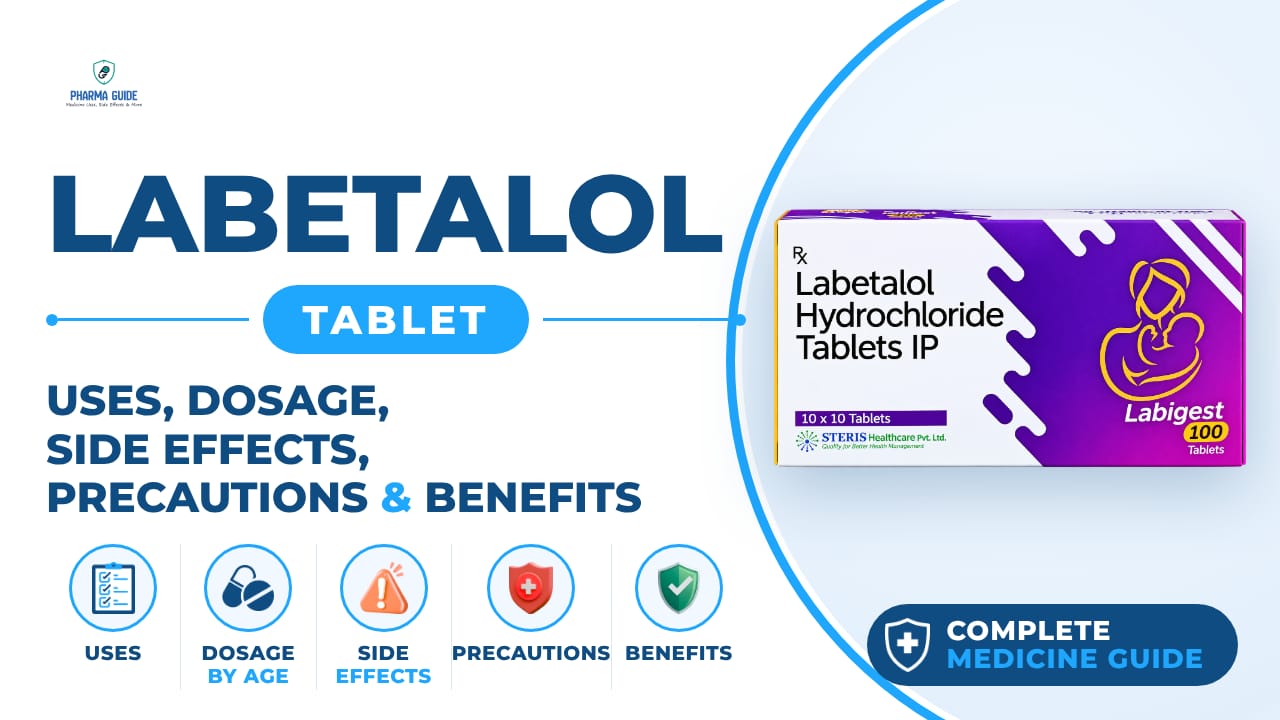
| Generic name | Labetalol hydrochloride |
|---|---|
| Drug class | Beta-blocker (non-cardioselective, with alpha-blocking activity) |
| Forms | Tablet, Injectable solution |
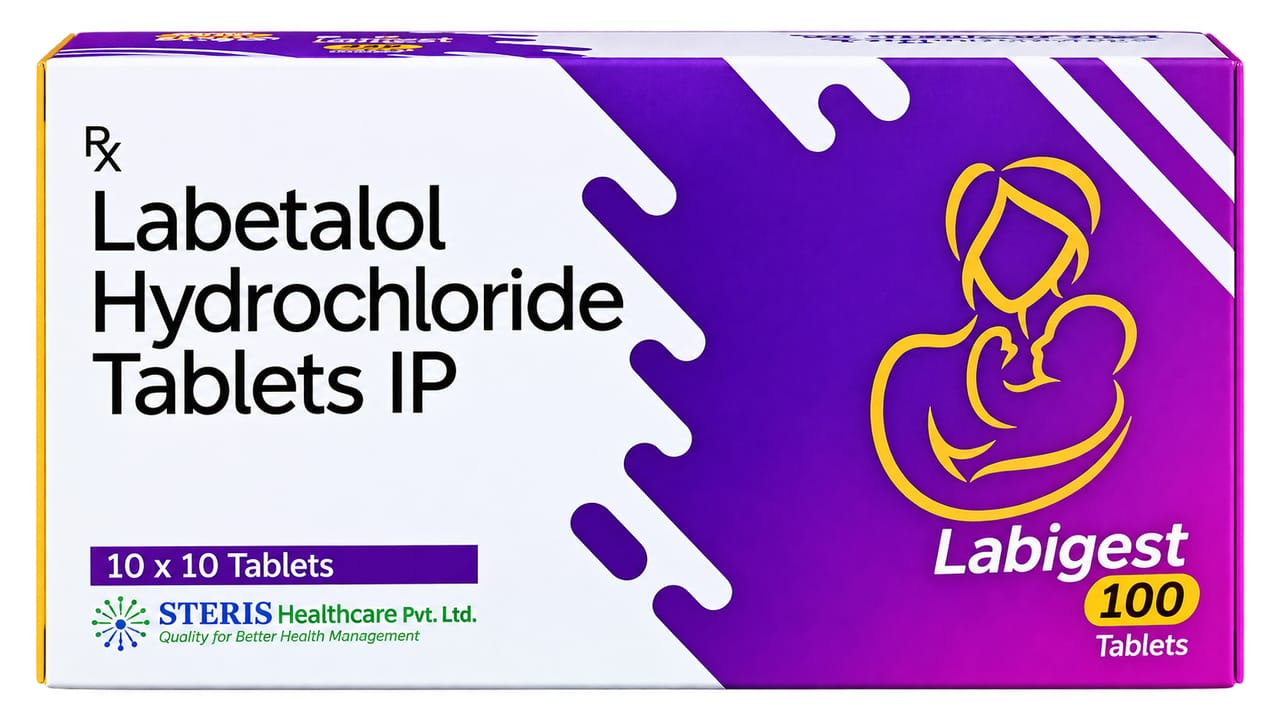
Quick overview
Labetalol Tablet (labetalol hydrochloride) is a non-cardioselective beta-blocker with alpha-blocking activity used to treat high blood pressure (hypertension). It is often the first choice for pregnant women with high blood pressure and can be used alone or with other blood pressure medicines. It works by slowing the heart rate and relaxing blood vessels to lower blood pressure.
What is Labetalol Tablet
Labetalol is a medicine used to treat high blood pressure (hypertension). It is often the first choice for pregnant women with high blood pressure and can be used alone or with other blood pressure medicines.
Labetalol Tablet uses
- High blood pressure (hypertension)
Benefits of Labetalol Tablet
- Helps lower high blood pressure (hypertension).
- Relaxes blood vessels and slows the heart rate, reducing the workload on the heart.
- Helps improve blood flow and lower pressure in the arteries.
- Is commonly used to manage high blood pressure during pregnancy when considered appropriate by a healthcare professional.
- Helps reduce the risk of complications associated with uncontrolled hypertension, such as stroke and heart problems.
- May be used alone or with other blood-pressure medicines when additional control is needed.
How Labetalol Tablet works
Labetalol is a beta-blocker that lowers blood pressure by making the heart beat more slowly and less forcefully, and by relaxing blood vessels so blood flows more easily.
Labetalol Tablet dosage
Take this medicine by mouth with water, at the same time every day, as directed by your care team. Keep taking it even if you feel well, unless your care team tells you to stop. It is best to take this medicine after food. Do not stop taking this medicine suddenly without talking to your care team, since this can be dangerous.
If you miss a dose, take it as soon as you remember, but if it is almost time for your next dose, skip the missed dose and continue your regular schedule. Do not take two doses at once.
Special care may be needed for use in children; talk to your care team. Lower doses are usually needed for elderly patients.
| Age group | Dose |
|---|---|
| Under 18 years | Routine tablet dosing not established; specialist/weight-based dosing |
| 18–64 years | Start 100 mg twice daily |
| 65+ years | Start cautiously; often 100 mg twice daily with slower titration |
Available forms and strengths
- Tablet
- Injectable solution
Side effects of Labetalol Tablet
Common
- Nausea
- Diarrhea
- Dizziness
- Fatigue
- Headache
- Change in sex drive or performance
- Acid or sour stomach
- Belching
- Change in taste
- Indigestion
- Stuffy nose
- Constipation
- Dry mouth
- Sore throat
- Muscle cramps
- Blurred vision
- Nosebleeds
- Itchy skin
- Tingling or 'pins and needles' sensation
Serious
- Allergic reactions—skin rash, itching, hives, swelling of the face, lips, tongue, or throat
- Heart failure—shortness of breath, swelling of the ankles, feet, or hands, sudden weight gain, unusual weakness or fatigue
- Liver injury—right upper belly pain, loss of appetite, nausea, light-colored stool, dark yellow or brown urine, yellowing skin or eyes, unusual weakness or fatigue
- Low blood pressure—dizziness, feeling faint or lightheaded, blurry vision
- Slow heartbeat—dizziness, feeling faint or lightheaded, confusion, trouble breathing, unusual weakness or fatigue
- Worsening mood, feelings of depression
- Chest tightness or chest pain
- Swelling of the face, fingers, feet, or lower legs
- Trouble breathing or wheezing (bronchospasm)
- Signs of overdose—dilated neck veins, extreme fatigue, irregular or noisy breathing, loss of bladder control, muscle spasms or jerking, seizures, sudden loss of consciousness, weight gain
Warnings and precautions
This medicine may rarely cause severe liver problems, which can develop slowly with few symptoms. It is usually reversible but has rarely led to liver failure or death.
Do not stop taking this medicine suddenly, as this can increase the risk of chest pain or heart attack. Your doctor will lower your dose gradually if you need to stop.
This medicine can hide the usual warning signs of low blood sugar, such as a fast heartbeat, which is especially important for people with diabetes.
If you are having surgery, including eye surgery, tell your doctor and surgical team you are taking this medicine, since it can cause a rare eye complication during cataract surgery.
This medicine should not be used by people with asthma or a history of lung problems, certain heart rhythm problems, uncontrolled heart failure, or severe blood flow problems in the legs and feet.
This medicine is not usually recommended during pregnancy, but a healthcare provider may still prescribe it if the benefits outweigh the risks to the baby. It can cross the placenta and may affect the baby's blood pressure, heart rate, blood sugar, or breathing after birth.
This medicine passes into breast milk. You should not breastfeed while taking this medicine, or discuss the risks and benefits with your doctor first.
No specific dose adjustment has been studied for kidney problems, and no extra dose is needed after dialysis.
People with liver problems may need a lower dose because the medicine is removed from the body more slowly. This medicine can also rarely cause serious liver injury.
Drinking alcohol with this medicine can further lower blood pressure and increase the risk of dizziness, headache, or changes in heart rate.
This medicine may affect your coordination, reaction time, or judgment. Do not drive or operate machinery until you know how it affects you.
Storage
- Store at 20–25°C (68–77°F) at room temperature.
- Keep in a cool, dry place away from excessive heat.
- Protect from light and moisture.
- Keep tablets in the original, tightly closed container.
- Avoid storing in bathrooms or humid areas.
- Keep out of reach of children and pets.
When to see a doctor
- Get medical help right away if you have signs of an allergic reaction, such as rash, hives, swelling of the face, lips, tongue, throat, or difficulty breathing.
- Seek help immediately if you have signs of heart failure, such as shortness of breath, swelling in the ankles, feet, or hands, sudden weight gain, or unusual tiredness.
- Get medical help right away if you notice signs of liver problems, such as pain in the upper right belly, loss of appetite, nausea, pale stools, dark urine, or yellowing of the skin or eyes.
- Seek emergency care if you think you have taken too much of this medicine, even if you do not have symptoms yet.
- Get help right away if you have very slow or irregular heartbeat with dizziness, confusion, trouble breathing, or fainting.
Alternatives
- Methyldopa
- Bisoprolol
- Atenolol
- Carvedilol
- Metoprolol
Watch the video
FAQs
What is Labetalol Tablet used for?
Labetalol Tablet is used to treat high blood pressure (hypertension) and is often the first choice for pregnant women with high blood pressure.
How does Labetalol Tablet work?
It is a beta-blocker that lowers blood pressure by making the heart beat more slowly and less forcefully and by relaxing blood vessels so blood flows more easily.
What is the usual dose of Labetalol Tablet for adults?
Adults aged 18-64 years usually start with 100 mg twice daily, taken by mouth with water at the same time every day, preferably after food.
Can Labetalol Tablet be used during pregnancy?
It is not usually recommended during pregnancy, but a healthcare provider may still prescribe it if the benefits outweigh the risks, since it can cross the placenta and affect the baby's blood pressure, heart rate, blood sugar, or breathing after birth.
What are the serious side effects of Labetalol Tablet?
Serious side effects include allergic reactions, heart failure, liver injury, low blood pressure, slow heartbeat, worsening mood or depression, chest pain, swelling, and trouble breathing or wheezing.
General information, not medical advice
Your prescriber and the leaflet in your pack know your situation. This page does not.
- Follow your prescriber and the leaflet
- Don't start, stop, or change a dose on your own
- Doses and warnings differ by country and product
Sources
Video
Related medicines

Injectafer Injection: Uses, Dosage, Side Effects, Precautions and Alternates
Iron products
Injectafer (ferric carboxymaltose) treats iron deficiency anemia and heart failure-related iron deficiency via IV. Learn uses, dosage, side effects, and

Gliclazide Tablet: Uses, Dosage, Side Effects, Precautions and Alternates
Sulfonylurea (hypoglycemic/antidiabetic agent)
Gliclazide Tablet is a sulfonylurea for type 2 diabetes that boosts insulin release. Learn about dosage, side effects, warnings, and precautions.