
Safety
General information, not medical advice
Your prescriber and the leaflet in your pack know your situation. This page does not.
- Follow your prescriber and the leaflet
- Don't start, stop, or change a dose on your own
- Doses and warnings differ by country and product
Lactobacillus Capsule: Uses, Dosage, Side Effects, Precautions and Alternates
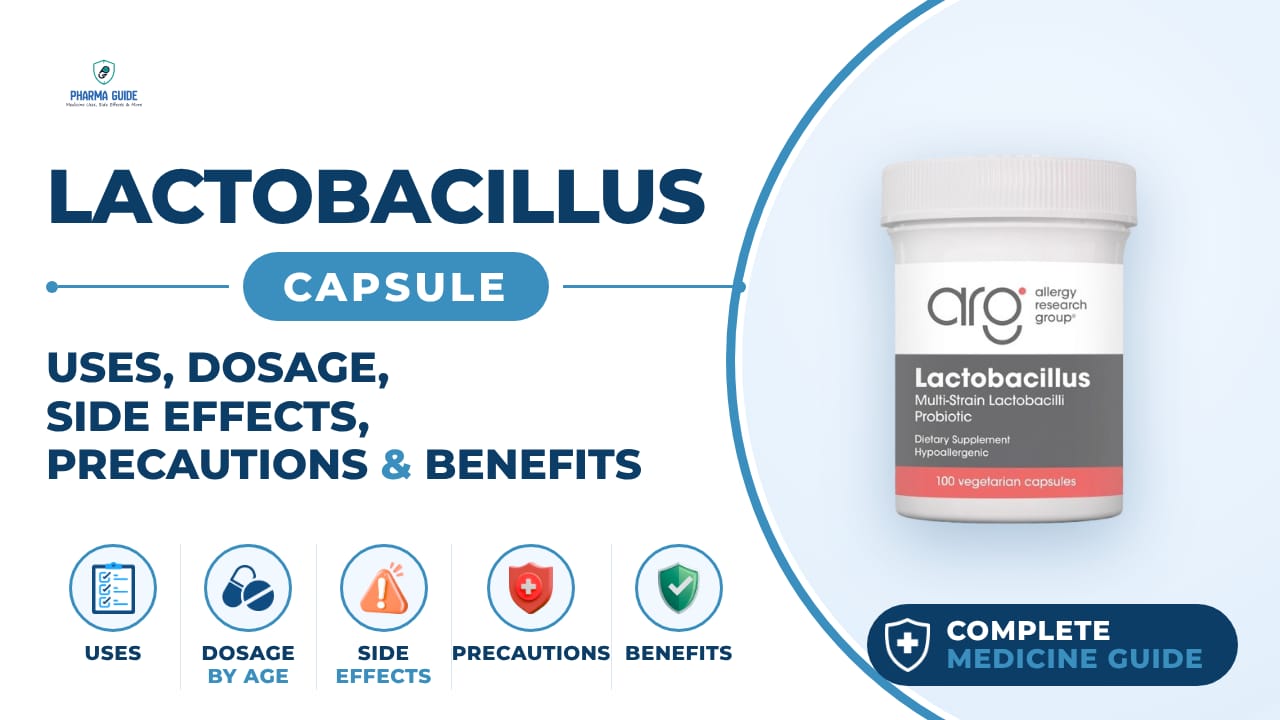
| Generic name | Lactobacillus |
|---|---|
| Drug class | Prebiotic and Probiotic |
| Forms | Tablet, Capsule, Powder, Vaginal tablet, Syrup |

Quick overview
Lactobacillus Capsule contains Lactobacillus, a type of friendly bacteria from the prebiotic and probiotic drug class. It naturally lives in the digestive, urinary, and genital systems without causing disease and is also found in fermented foods like yogurt. It is used to support digestive and vaginal health, including prevention and treatment of certain types of diarrhea. It is available in several forms, including capsules, tablets, powder, and vaginal tablets.
What is Lactobacillus Capsule
Lactobacillus is a type of friendly bacteria that normally lives in our digestive, urinary, and genital systems without causing disease. It is found in fermented foods like yogurt and is also sold as a dietary supplement or capsule.
Lactobacillus Capsule uses
- Preventing and treating diarrhea, including rotaviral diarrhea in children and traveler's diarrhea
- Preventing and treating diarrhea caused by antibiotics
- General digestion problems and irritable bowel syndrome (IBS)
- Helicobacter pylori infection (stomach ulcers), used along with antibiotics
- Vaginal bacterial imbalance and vaginal infections
- General digestive health and gut microbiome support
- Eczema (atopic dermatitis) treatment
- Hayfever symptom relief
Benefits of Lactobacillus Capsule
- Helps break down food, absorb nutrients, and fight off harmful organisms
- May reduce the length of diarrhea caused by rotavirus in children
- May lower the risk of diarrhea linked to antibiotic use
- May improve symptoms of IBS such as bloating and stomach pain
- May help treat bacterial vaginosis when used inside the vagina
- May help the body clear H. pylori infection when combined with standard antibiotic treatment
How Lactobacillus Capsule works
Lactobacillus works by helping restore a healthy balance of bacteria in the gut or vagina. Some strains produce lactic acid and other substances that make it harder for harmful germs to grow, and they compete with other microorganisms to support digestive or vaginal health.
Lactobacillus Capsule dosage
Lactobacillus can be taken by mouth as a capsule, tablet, or powder, or used inside the vagina as a suppository or vaginal tablet, depending on the condition being treated. If you are taking antibiotics, space out your Lactobacillus dose so it is not taken at the same time as the antibiotic, since antibiotics can reduce how well it works. If you miss a dose, take it as soon as you remember, but skip it if your next dose is almost due. It may help to start with a lower amount and gradually increase it to reduce stomach discomfort when first starting.
| Age group | Dose |
|---|---|
| Under 12 years | Not fixed |
| 12–18 years | 1 capsule, once/day |
| 18–60 years | 1 capsule, once/day |
| 60+ years | 1 capsule, once/day |
Available forms and strengths
- Tablet
- Capsule
- Powder
- Vaginal tablet
- Syrup
Side effects of Lactobacillus Capsule
Common
- Intestinal gas
- Bloating
- Mild stomach upset
Serious
- Gas or bloating
- Mild abdominal discomfort
- Constipation or loose stools
- Nausea
- Rarely, allergic reactions
Warnings and precautions
- If your immune system is weakened, such as from HIV/AIDS or medicines taken after an organ transplant, talk to your doctor before taking Lactobacillus, as it has rarely caused infections in such people.
- If you have short bowel syndrome, talk to your doctor before taking Lactobacillus, since you may be more likely to develop an infection from it.
- People with damaged heart valves should be cautious, as there is a theoretical risk that probiotic bacteria could cause a heart valve infection.
- Stop taking probiotics before digestive surgery or a colonoscopy, as there is some concern they could cause infection afterward.
- Do not take Lactobacillus if you have a known allergy to it.
- Lactobacillus is possibly safe to take by mouth during pregnancy, but you should check with your doctor before starting it, since not all strains have been studied for safety in pregnancy.
- There isn't enough reliable information to be sure Lactobacillus is safe while breastfeeding, so talk to your doctor before using it.
- Reducing alcohol intake may help you get the most benefit from probiotics.
- Lactobacillus is unlikely to affect your mental alertness or coordination needed for driving or operating machinery.
Storage
- Store according to the manufacturer's instructions.
- Usually keep at 2–8°C if the product label requires refrigeration.
- Protect from heat, moisture, and direct sunlight.
- Keep the capsule in its original packaging.
- Keep out of reach of children.
When to see a doctor
- If you take too much Lactobacillus by accident, get medical help right away or contact a doctor for guidance.
- If side effects are severe or do not go away, contact your doctor.
Alternatives
- Saccharomyces boulardii
- Bifidobacterium
- Bacillus coagulans
Watch the video
FAQs
What is Lactobacillus Capsule used for?
It is used to prevent and treat diarrhea (including rotaviral and traveler's diarrhea), antibiotic-related diarrhea, IBS symptoms, H. pylori infection alongside antibiotics, vaginal infections, and to support digestive health; it may also help with eczema and hayfever symptoms.
How should I take Lactobacillus Capsule if I'm on antibiotics?
Space out your Lactobacillus dose so it is not taken at the same time as the antibiotic, since antibiotics can reduce how well it works.
What is the usual dosage of Lactobacillus Capsule?
For ages 12 and above, including 12–18, 18–60, and 60+ years, the typical dose is 1 capsule once daily. The dose for children under 12 is not fixed.
What are the common side effects of Lactobacillus Capsule?
Common side effects include intestinal gas, bloating, and mild stomach upset.
Is Lactobacillus Capsule safe during pregnancy?
It is possibly safe to take by mouth during pregnancy, but you should check with your doctor first since not all strains have been studied for safety in pregnancy.
General information, not medical advice
Your prescriber and the leaflet in your pack know your situation. This page does not.
- Follow your prescriber and the leaflet
- Don't start, stop, or change a dose on your own
- Doses and warnings differ by country and product
Sources
Video
Related medicines

Injectafer Injection: Uses, Dosage, Side Effects, Precautions and Alternates
Iron products
Injectafer (ferric carboxymaltose) treats iron deficiency anemia and heart failure-related iron deficiency via IV. Learn uses, dosage, side effects, and

Gliclazide Tablet: Uses, Dosage, Side Effects, Precautions and Alternates
Sulfonylurea (hypoglycemic/antidiabetic agent)
Gliclazide Tablet is a sulfonylurea for type 2 diabetes that boosts insulin release. Learn about dosage, side effects, warnings, and precautions.