
Safety
General information, not medical advice
Your prescriber and the leaflet in your pack know your situation. This page does not.
- Follow your prescriber and the leaflet
- Don't start, stop, or change a dose on your own
- Doses and warnings differ by country and product
Lamisil Cream: Uses, Dosage, Side Effects, Precautions and Alternates

| Generic name | Terbinafine hydrochloride |
|---|---|
| Drug class | Antifungal |
| Forms | Cream |
Quick overview
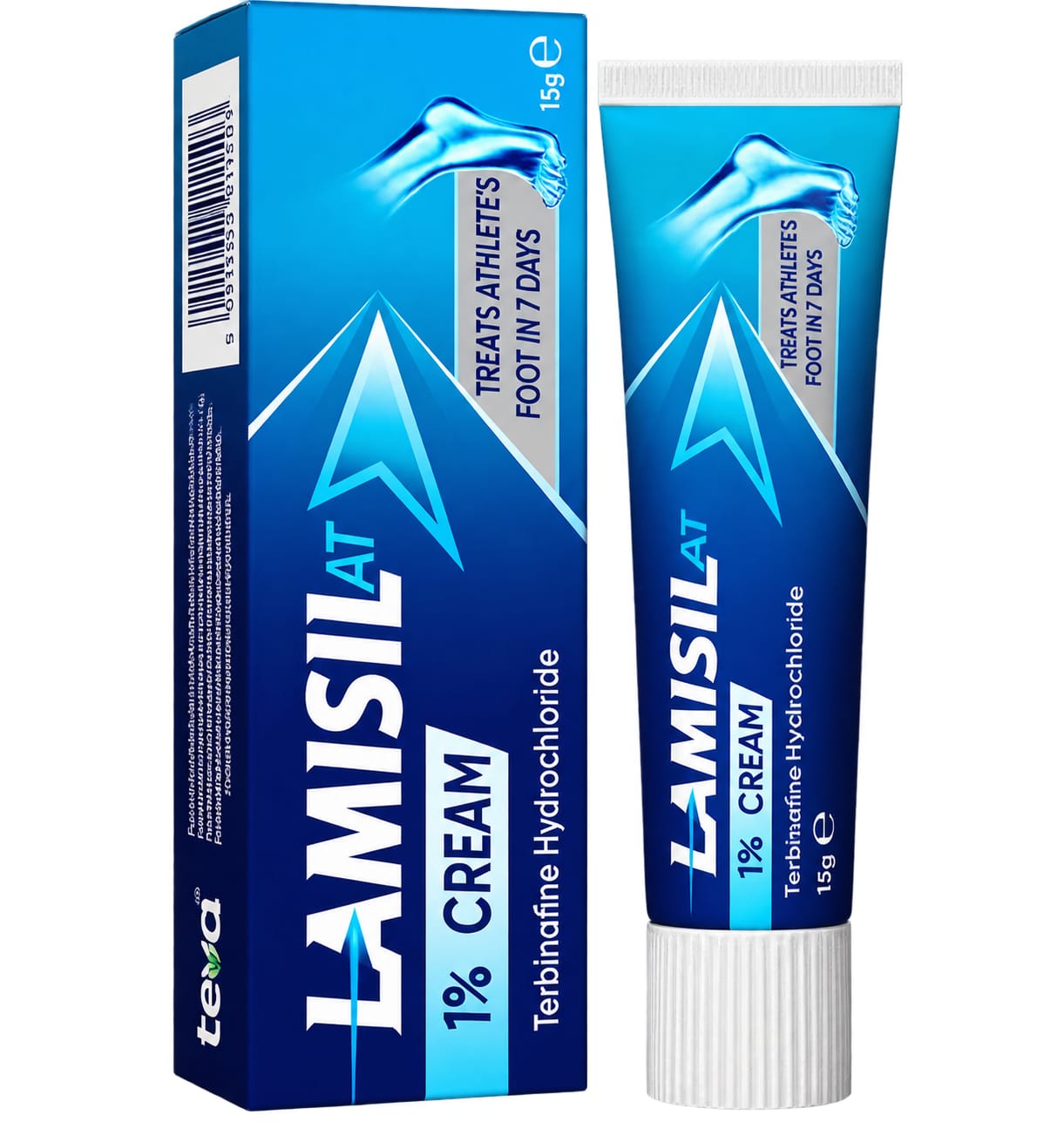
Lamisil Cream is a topical antifungal medicine containing terbinafine hydrochloride 1%. It is used to treat skin infections caused by fungi and yeasts, such as athlete's foot and pityriasis versicolor. The cream works directly on the fungus by interfering with its cell membrane, and it is typically well-tolerated while rapidly reducing symptoms such as itching, scaling, and redness.
What is Lamisil Cream
Lamisil Cream is a topical antifungal medicine that contains terbinafine hydrochloride 1%. It is used to treat skin infections caused by fungi and yeasts, such as athlete's foot and pityriasis versicolor.
Lamisil Cream uses
- Athlete's foot (tinea pedis)
- Jock itch (tinea cruris)
- Preventing the recurrence of fungal infections
- Ringworm (tinea corporis)
- Pityriasis versicolor (fungal pigment disorder)
- Skin yeast infections (candidosis of the skin)
- Relief from itching, burning, and irritation caused by fungal infection
- Inhibiting the growth and spread of fungi on the skin's surface
Benefits of Lamisil Cream
- Rapidly reduces symptoms such as itching, scaling, and red blotches
- Typically well-tolerated and effective for clearing fungal infections
How Lamisil Cream works
Terbinafine works on the fungus itself, rather than just easing symptoms, by interfering with the fungal cell membrane so the fungus cannot survive.
Lamisil Cream dosage
Clean and dry the affected skin and surrounding areas, and wash your hands before applying. Apply a thin layer of cream to the affected area and gently rub it in. Wash hands after application unless the hands are being treated, so you do not spread the infection to yourself or others.
Continue treatment for the full recommended period even if symptoms improve early, since infections may return if treatment is stopped too soon. If treating a fold of skin, you can cover the area with a fresh, clean gauze strip each time you apply the cream, especially at night.
If you forget an application, apply it as soon as you remember and then continue as normal; do not apply extra to make up for a missed one. Only for use on the skin — do not use in the mouth, swallow it, or let it contact the eyes. Not recommended for children under 12 years of age.
If there is no improvement within a couple of weeks of starting treatment, see your doctor or pharmacist.
| Age group | Dose |
|---|---|
| Under 12 years | Generally not recommended without medical advice |
| 12–17 years | Apply a thin layer once or twice daily |
| 18–64 years | Apply a thin layer once or twice daily |
| 65+ years | Usually the same adult application |
Available forms and strengths
- Cream, terbinafine hydrochloride 1%
Side effects of Lamisil Cream
Common
- Burning or stinging sensation at the application site
- Itching
- Redness
- Dryness
- Peeling
- Mild irritation
- Skin lesion, scab, skin color changes, pain
- Dry skin, eczema
- Contact dermatitis
- Skin rash
- Worsening of disease symptoms
- Eye irritation if accidentally applied to the eyes
Serious
- Severe allergic reactions such as difficulty breathing or swallowing
- Swelling of the face, lips, tongue, or throat
- Severe itching of the skin with a red rash or raised bumps
Warnings and precautions
- Do not use this cream if you are allergic to terbinafine hydrochloride or any of its other ingredients.
- The cream is not recommended for children under 12 years old because there is limited experience of use in this age group.
- The cream is only for use on the skin. Do not use it in the mouth or swallow it, and avoid contact with the eyes.
- If the cream accidentally gets into the eyes, rinse them carefully with cold water and see a doctor if discomfort continues.
- See a doctor if the fungal infection is widespread or involves the nails, since the cream is not appropriate for nail fungus and may in rare cases make the underlying infection worse.
- Do not apply other medicines on the areas being treated with this cream.
- This cream contains cetyl alcohol and stearyl alcohol, which may cause local skin reactions such as contact dermatitis.
- Do not use if you have open wounds, burns, or severely broken skin, or apply it to the scalp, eyes, mouth, or vaginal area.
- If you are pregnant, think you might be pregnant, or are planning to have a baby, ask your doctor or pharmacist for advice before using this medicine. It should not be used during pregnancy unless clearly necessary.
- Do not use Lamisil Cream while breastfeeding, as the ingredients can pass into breast milk. Do not let infants come into contact with treated areas, including the breasts.
- Lamisil Cream does not affect your ability to drive or use machines.
Storage
- Do not store above 30°C.
- Protect from direct sunlight.
- Keep the tube closed and in the carton.
- Store in the original package.
- Keep out of the sight and reach of children.
- Do not use beyond the expiry date printed on the package.
- If Lamisil is accidentally swallowed, tell your doctor or pharmacist immediately.
When to see a doctor
- Stop using the cream and get medical help right away if you notice signs of an allergic reaction, such as trouble breathing or swallowing, swelling of the face, lips, tongue, or throat, or severe itching with a red rash or raised bumps.
- See your doctor or pharmacist if you see no improvement within two weeks of starting treatment.
- Tell your doctor or pharmacist immediately if the cream is accidentally swallowed.
Alternatives
- Butenafine Cream
- Econazole Cream
- Ketoconazole Cream
- Miconazole Cream
- Clotrimazole Cream
Watch the video
FAQs
What is Lamisil Cream used for?
Lamisil Cream is used to treat skin infections caused by fungi and yeasts, including athlete's foot, jock itch, ringworm, pityriasis versicolor, and skin yeast infections, and it also helps relieve itching, burning, and irritation from these infections.
How does Lamisil Cream work?
Lamisil Cream contains terbinafine hydrochloride, which works on the fungus itself by interfering with the fungal cell membrane so the fungus cannot survive, rather than just easing symptoms.
How should Lamisil Cream be applied?
Clean and dry the affected area, wash your hands before applying, then apply a thin layer of cream and gently rub it in. Wash hands after application unless treating the hands, and continue treatment for the full recommended period even if symptoms improve early.
Can children use Lamisil Cream?
Lamisil Cream is not recommended for children under 12 years of age due to limited experience of use in this age group.
What are the side effects of Lamisil Cream?
Common side effects include burning or stinging at the application site, itching, redness, dryness, peeling, and mild irritation. Serious but rare effects include severe allergic reactions such as difficulty breathing or swallowing and swelling of the face, lips, tongue, or throat.
General information, not medical advice
Your prescriber and the leaflet in your pack know your situation. This page does not.
- Follow your prescriber and the leaflet
- Don't start, stop, or change a dose on your own
- Doses and warnings differ by country and product
Sources
- U.S. Food and Drug Administration
- American Academy of Dermatology
- National Health Service
- MedlinePlus
- Mayo Clinic
Video
Related medicines

Terbicip Tablet: Uses, Dosage, Side Effects, Precautions and Alternates
Antifungal
Terbicip Tablet contains terbinafine and treats fungal infections like athlete's foot, ringworm, jock itch, and nail infections. Know uses, dosage, and side

Ketoconazole Shampoo: Uses, Dosage, Side Effects, Precautions and Alternates
Antifungal
Ketoconazole Shampoo is an antifungal treatment for dandruff, seborrheic dermatitis, and scalp fungal infections. Learn uses, dosage, and side effects.