
Safety
General information, not medical advice
Your prescriber and the leaflet in your pack know your situation. This page does not.
- Follow your prescriber and the leaflet
- Don't start, stop, or change a dose on your own
- Doses and warnings differ by country and product
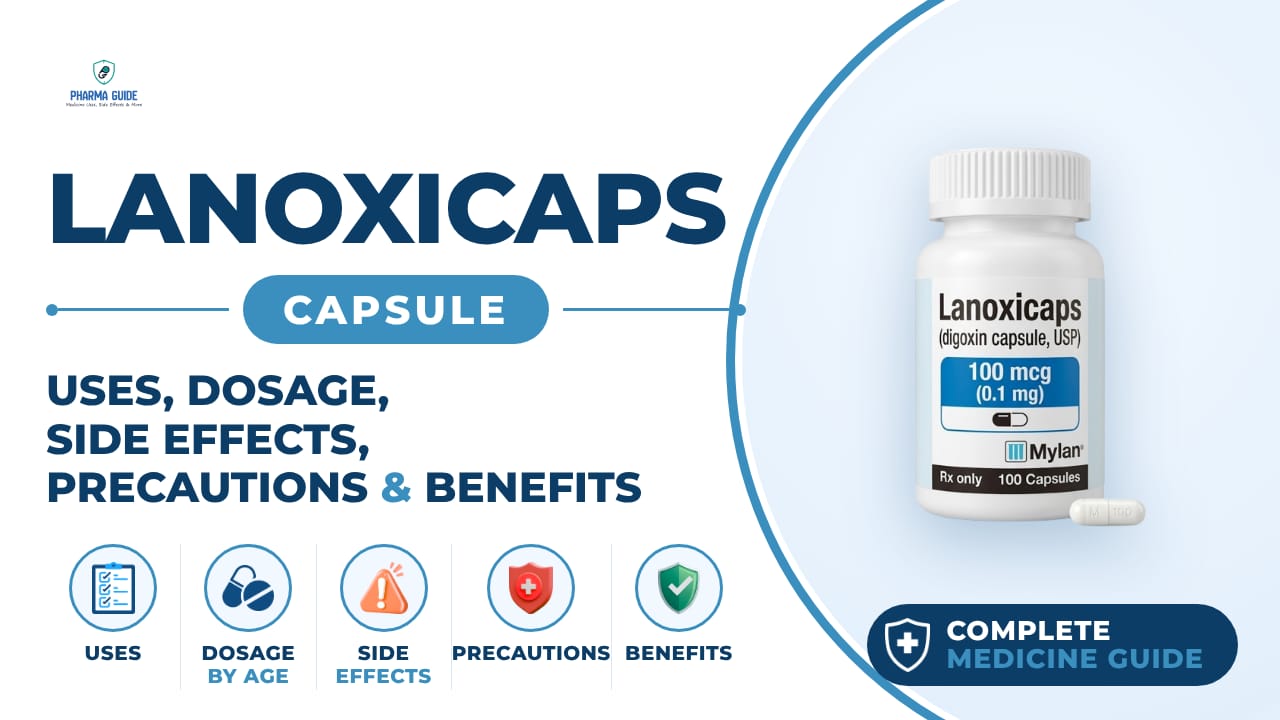
Lanoxicaps Capsule: Uses, Dosage, Side Effects, Precautions and Alternates
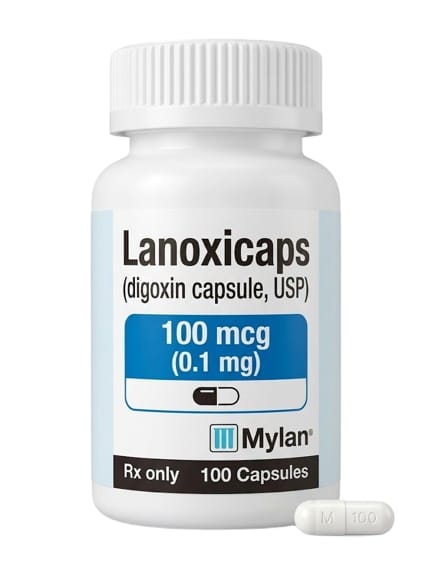
| Generic name | Digoxin |
|---|---|
| Drug class | Group V antiarrhythmics, Inotropic agents (cardiac/digitalis glycoside) |
| Forms | Capsule (liquid-filled, oral), Tablet, Oral solution/elixir |
Quick overview
Lanoxicaps Capsule is a brand of digoxin, a cardiac glycoside medicine that has been discontinued in the U.S. It was made as a soft gelatin capsule containing digoxin dissolved in a liquid solution, used to treat heart failure and certain irregular heartbeats. It works by strengthening heart contractions and slowing the heart rate, and it requires careful dosing because of the risk of toxicity.
What is Lanoxicaps Capsule
Lanoxicaps is a brand of digoxin, a cardiac glycoside medicine that has been discontinued in the U.S. It was made as a soft gelatin capsule containing digoxin dissolved in a liquid solution, used to treat heart failure and certain irregular heartbeats.
Lanoxicaps Capsule uses
- Treating congestive heart failure, usually along with a diuretic (water pill) and an ACE inhibitor
- Treating atrial fibrillation (an irregular heart rhythm)
- Helping control ventricular rate in atrial flutter
- Converting paroxysmal atrial tachycardia (a fast heartbeat) to a normal rhythm
Benefits of Lanoxicaps Capsule
- Improves the strength and efficiency of the heart
- Helps control the rate and rhythm of the heartbeat
- Leads to better blood circulation
- Reduces swelling of the hands and ankles in patients with heart problems
How Lanoxicaps Capsule works
Digoxin makes the heart beat more strongly and slows the heart rate. It affects the movement of sodium, potassium and calcium in and out of heart muscle cells, which strengthens heart contractions, and it also works through the nervous system to slow the heart rate.
Lanoxicaps Capsule dosage
Take this medicine exactly as your doctor directs, even if you feel well, and do not skip doses. Try to take it at the same time each day so the amount in your blood stays steady. Do not take more than your doctor ordered.
If using the oral liquid, measure it with the marked dropper or oral syringe provided, not household teaspoons or tablespoons. It is recommended that doses from the soft capsules be split into divided doses through the day to reduce the chance of side effects.
If you miss a dose, take it as soon as you remember, unless it is almost time for your next dose — in that case skip the missed dose and go back to your normal schedule; do not double up. Do not stop taking this medicine suddenly without checking with your doctor first, since this can cause a serious change in heart function.
Infants may be especially sensitive to this medicine and may need an individually tailored dose. Elderly patients may need dose adjustments because of age-related kidney or heart changes.
| Age group | Dose |
|---|---|
| Under 18 years | Not recommended |
| 18–64 years | 0.125 mg, once/day |
| 65+ years | 0.0625 mg, once/day |
Available forms and strengths
- Capsule (liquid-filled, oral)
- Tablet
- Oral solution/elixir
Side effects of Lanoxicaps Capsule
Common
- Dizziness
- Fainting
- Fast, pounding, or irregular heartbeat or pulse
- Slow heartbeat
- Nausea
- Vomiting
- Diarrhea
- Loss of appetite
- Headache
- Drowsiness
- Blurred vision or visual disturbances
- Skin rash
Serious
- Black, tarry stools
- Bleeding gums
- Blood in the urine or stools
- Bloody vomit
- Pinpoint red spots on the skin
- Rash with flat or small raised skin lesions
- Severe stomach pain
- Unusual bleeding or bruising
- Chest pain or discomfort
- Shortness of breath or troubled breathing
- Swelling of the feet and lower legs
- Confusion, agitation, hallucinations, or expressed fear of impending death
- Changes in color vision, halos around lights, or tunnel vision
- Swelling or soreness of the breasts in males or females
Warnings and precautions
- This medicine should never be used to treat obesity, since it can cause dangerous and potentially fatal heart rhythm problems if used for that purpose.
- This medicine should not be used by people with ventricular fibrillation (a dangerous heart rhythm) or by people who have had a severe allergic reaction to digoxin.
- People with certain heart conditions, such as AV block, inflammation of the heart muscle, or Wolff-Parkinson-White syndrome, may have their condition worsened by this medicine and should use it with caution or avoid it.
- Low potassium, low magnesium, or high calcium levels in the blood can increase the risk of toxicity from this medicine, even if blood levels of the drug look normal.
- The dose needed to help is very close to the dose that can cause serious harm, so overdose is a real risk and must be watched for carefully.
- Never stop this medicine suddenly without talking to your doctor, since doing so can cause a serious change in heart function.
- Newborn and premature infants can react very differently to this medicine and need individualized, carefully adjusted doses.
- It is not known for certain whether digoxin can harm an unborn baby. It should only be used during pregnancy if your doctor decides it's clearly needed.
- Studies suggest this medicine poses minimal risk to a breastfeeding infant, but caution is still advised.
- People with kidney disease should use this medicine with caution, as reduced kidney function can cause the drug to build up in the body and may require a lower dose.
- Liver disease generally has less impact on digoxin dosing than kidney function.
- Alcohol can worsen dizziness and may affect heart rhythm in some people.
- Dizziness, weakness, confusion, or visual disturbances may make driving unsafe.
Storage
- Store the medicine in a closed container at room temperature, away from heat, moisture, and direct light.
- Keep from freezing.
- Keep out of the reach of children.
- Do not keep outdated medicine or medicine no longer needed.
- Ask your healthcare professional how you should dispose of any medicine you do not use.
- Store at 15°-30°C (59°-86°F) in a dry place and protect from light.
When to see a doctor
- Call your doctor right away if you notice confusion, loss of appetite, nausea, vomiting, diarrhea, or vision problems — these can be early signs of overdose.
- Get medical help immediately if you have a change in your heartbeat (too fast, too slow, or irregular), a pounding feeling in your chest, or if you faint.
- Seek medical care if you notice black or tarry stools, bleeding gums, blood in urine or stool, bloody vomit, tiny red spots on the skin, or unusual bleeding or bruising.
- In infants and young children, watch closely for any change in heartbeat rate or rhythm, since this may be the earliest sign of a problem and they might not show other symptoms right away.
Alternatives
- Metoprolol
- Bisoprolol
- Carvedilol
Watch the video
FAQs
What is Lanoxicaps Capsule used for?
It is used to treat congestive heart failure, usually with a diuretic and an ACE inhibitor, as well as atrial fibrillation, controlling ventricular rate in atrial flutter, and converting paroxysmal atrial tachycardia to a normal rhythm.
How does Lanoxicaps Capsule work?
Digoxin affects the movement of sodium, potassium, and calcium in and out of heart muscle cells, which strengthens heart contractions, and it also works through the nervous system to slow the heart rate.
What is the dosage of Lanoxicaps Capsule for adults and elderly patients?
Adults aged 18-64 years typically take 0.125 mg once daily, while those 65 and older typically take 0.0625 mg once daily. It is not recommended for those under 18 years.
What are the serious side effects of Lanoxicaps Capsule?
Serious side effects include black, tarry stools, bleeding gums, blood in urine or stools, chest pain, shortness of breath, confusion or hallucinations, and changes in color vision or halos around lights.
Is Lanoxicaps Capsule safe during pregnancy and breastfeeding?
It is not known for certain whether digoxin can harm an unborn baby, so it should only be used during pregnancy if clearly needed. Studies suggest it poses minimal risk to a breastfeeding infant, but caution is still advised.
General information, not medical advice
Your prescriber and the leaflet in your pack know your situation. This page does not.
- Follow your prescriber and the leaflet
- Don't start, stop, or change a dose on your own
- Doses and warnings differ by country and product
Sources
Video
Related medicines

Injectafer Injection: Uses, Dosage, Side Effects, Precautions and Alternates
Iron products
Injectafer (ferric carboxymaltose) treats iron deficiency anemia and heart failure-related iron deficiency via IV. Learn uses, dosage, side effects, and

Gliclazide Tablet: Uses, Dosage, Side Effects, Precautions and Alternates
Sulfonylurea (hypoglycemic/antidiabetic agent)
Gliclazide Tablet is a sulfonylurea for type 2 diabetes that boosts insulin release. Learn about dosage, side effects, warnings, and precautions.