
Safety
General information, not medical advice
Your prescriber and the leaflet in your pack know your situation. This page does not.
- Follow your prescriber and the leaflet
- Don't start, stop, or change a dose on your own
- Doses and warnings differ by country and product
Lanreotide Injection: Uses, Dosage, Side Effects, Precautions and Alternates
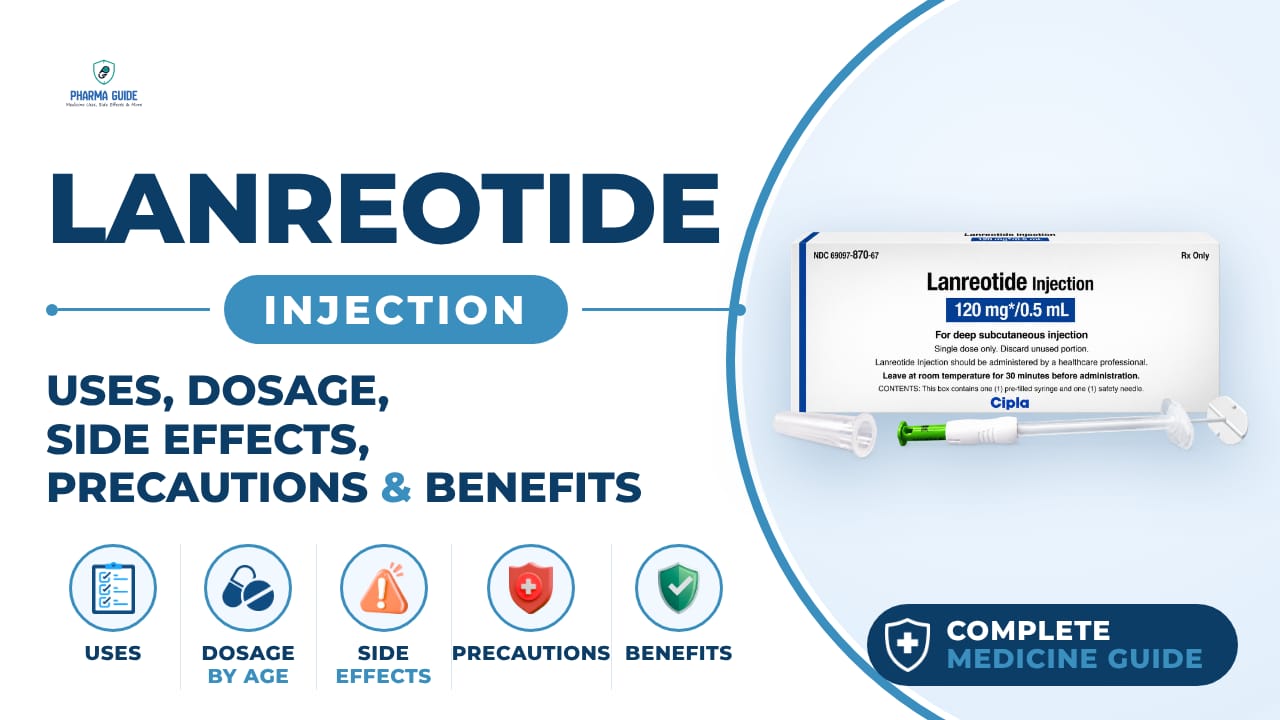
| Generic name | lanreotide acetate |
|---|---|
| Drug class | Somatostatin analog |
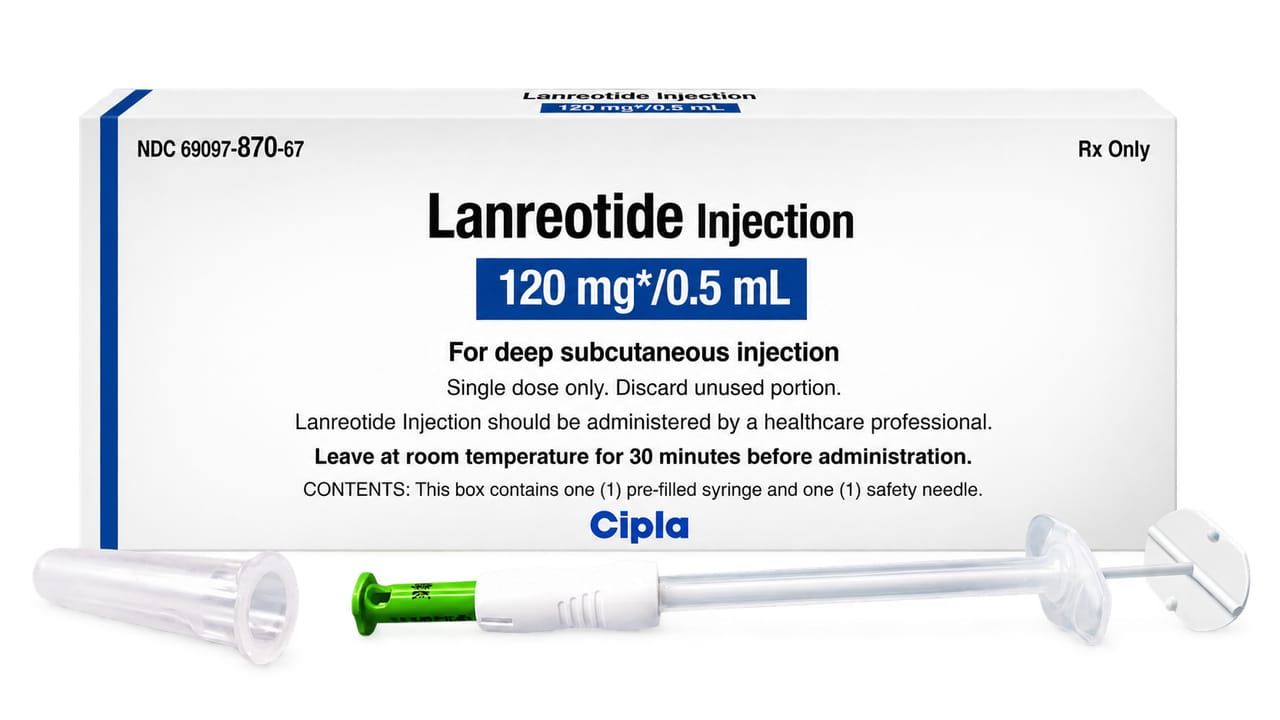
| Forms | Injection in single-dose prefilled syringes: 60 mg/0.2 mL, 90 mg/0.3 mL, and 120 mg/0.5 mL |
Quick overview
Lanreotide Injection is a prescription somatostatin analog given as a slow-release injection under the skin. It is used for long-term treatment of acromegaly in people who have not responded well to, or cannot have, surgery and/or radiotherapy, and for certain gastroenteropancreatic neuroendocrine tumors (GEP-NETs) in adults. It works by mimicking the natural hormone somatostatin to reduce growth hormone release and slow tumor growth. It is administered by a healthcare provider once every 4 weeks.
What is Lanreotide Injection
Lanreotide Injection is a prescription medicine containing a man-made version of a natural body hormone called somatostatin. It is given as a slow-release injection under the skin that releases the drug over several weeks.
Lanreotide Injection uses
- Long-term treatment of acromegaly in people who have not responded well to surgery and/or radiotherapy, or who cannot have those treatments
- Treatment of adults with unresectable, well- or moderately-differentiated, locally advanced or metastatic gastroenteropancreatic neuroendocrine tumors (GEP-NETs) to improve progression-free survival
Benefits of Lanreotide Injection
- Can reduce growth hormone (GH) and IGF-1 levels toward normal in people with acromegaly
- Shown to improve progression-free survival in patients with GEP-NETs compared to placebo
How Lanreotide Injection works
Lanreotide acts like the body's natural hormone somatostatin. It attaches to certain receptors in the body and reduces the release of growth hormone and other hormones, which helps control acromegaly and slow tumor growth in GEP-NETs.
Lanreotide Injection dosage
Lanreotide Injection is given as a deep injection under the skin (subcutaneous), administered by a healthcare provider only — it is not self-administered. It is injected in the upper outer area of the buttock, and the injection site should be alternated between the right and left side with each dose. It is given once every 4 weeks, though your provider may adjust the dosing interval based on how you respond. All the medication must be injected slowly over about 20 seconds. Remove the medicine from the refrigerator about 30 minutes before injecting to let it warm up. Blood tests to check growth hormone and IGF-1 levels may be done periodically to see if the medicine is working, for people being treated for acromegaly.
| Age group | Dose |
|---|---|
| Under 18 years | Safety and effectiveness are not established for the labeled indications; no standard pediatric dose |
| 18–64 years | 90 mg every 4 weeks for 3 months |
Available forms and strengths
- Injection in single-dose prefilled syringes: 60 mg/0.2 mL, 90 mg/0.3 mL, and 120 mg/0.5 mL
Side effects of Lanreotide Injection
Common
- Diarrhea
- Abdominal (stomach area) pain
- Nausea
- Pain, itching, or a lump at the injection site
- Muscle and joint aches
- Vomiting
- Headache
- High blood sugar
- High blood pressure
- Gallstones
Serious
- Gallstones and their complications, such as gallbladder inflammation/infection or pancreatitis
- High or low blood sugar
- Slow heart rate (bradycardia)
- High blood pressure
- Changes in thyroid function (underactive thyroid)
- Allergic reactions, including swelling of face/lips/tongue, trouble breathing, rash, hives, or fainting
Warnings and precautions
- This medicine can increase the risk of gallstones and related complications like gallbladder inflammation, infection, or pancreatitis. Your provider may monitor your gallbladder periodically.
- This medicine can cause high or low blood sugar. Blood sugar should be monitored, especially when starting treatment or changing the dose.
- This medicine can slow the heart rate. It should be used carefully in people at risk for heart problems.
- This medicine can reduce thyroid function. Thyroid tests may be needed if symptoms occur.
- Do not use this medicine if you are allergic to lanreotide; allergic reactions including severe swelling and anaphylaxis have been reported.
- It is not known if this medicine will harm an unborn baby. Tell your doctor if you are pregnant or planning to become pregnant.
- Breastfeeding is not recommended during treatment and for 6 months after the last dose, because of possible harm to a nursing baby.
- People with moderate or severe kidney problems may need a lower starting dose.
- People with moderate or severe liver problems may need a lower starting dose.
- This medicine can cause dizziness. If you feel dizzy, do not drive a car or operate machinery.
Storage
- Store Lanreotide Injection in the refrigerator at 2°C to 8°C (36°F to 46°F).
- Protect from light.
- Store in the original package.
- Product left in its sealed pouch at room temperature (not to exceed 104°F or 40°C) for up to 24 hours may be returned to the refrigerator for continued storage and usage at a later time.
- Dispose of complete product in a sharps disposal container; do not dispose of the syringe or needle in the regular trash. The syringe and needle are not reusable.
When to see a doctor
- Get medical help right away if you have signs of gallstones, such as sudden pain in the upper right stomach area, pain in the right shoulder or between the shoulder blades, yellowing of skin or eyes, fever with chills, or nausea.
- Get medical help right away if you have signs of high or low blood sugar, such as increased thirst, frequent urination, confusion, shakiness, sweating, or fast heartbeat.
- Get medical help right away if you have signs of a slow heart rate, such as dizziness, fainting, chest pain, shortness of breath, or confusion.
- Get medical help right away if you have signs of an allergic reaction, such as swelling of the face, lips, mouth, or tongue, trouble breathing, rash, hives, or fainting.
Alternatives
- Octreotide
- Sandostatin
- Sandostatin LAR
Watch the video
FAQs
What is Lanreotide Injection used for?
It is used for long-term treatment of acromegaly in people who have not responded well to, or cannot have, surgery and/or radiotherapy, and for certain unresectable gastroenteropancreatic neuroendocrine tumors (GEP-NETs) in adults to improve progression-free survival.
How is Lanreotide Injection given?
It is given as a deep subcutaneous injection in the upper outer buttock by a healthcare provider only, alternating sides with each dose, once every 4 weeks, injected slowly over about 20 seconds.
What are the common side effects of Lanreotide Injection?
Common side effects include diarrhea, abdominal pain, nausea, vomiting, headache, muscle and joint aches, high blood sugar, high blood pressure, gallstones, and pain, itching, or a lump at the injection site.
What are the serious risks of Lanreotide Injection?
Serious risks include gallstones and complications like gallbladder inflammation or pancreatitis, high or low blood sugar, slow heart rate, underactive thyroid, and allergic reactions including swelling and trouble breathing.
How should Lanreotide Injection be stored?
Store it in the refrigerator at 2°C to 8°C (36°F to 46°F), protected from light in its original package; it may be left at room temperature up to 24 hours in its sealed pouch and then returned to the refrigerator.
General information, not medical advice
Your prescriber and the leaflet in your pack know your situation. This page does not.
- Follow your prescriber and the leaflet
- Don't start, stop, or change a dose on your own
- Doses and warnings differ by country and product
Sources
Video
Related medicines
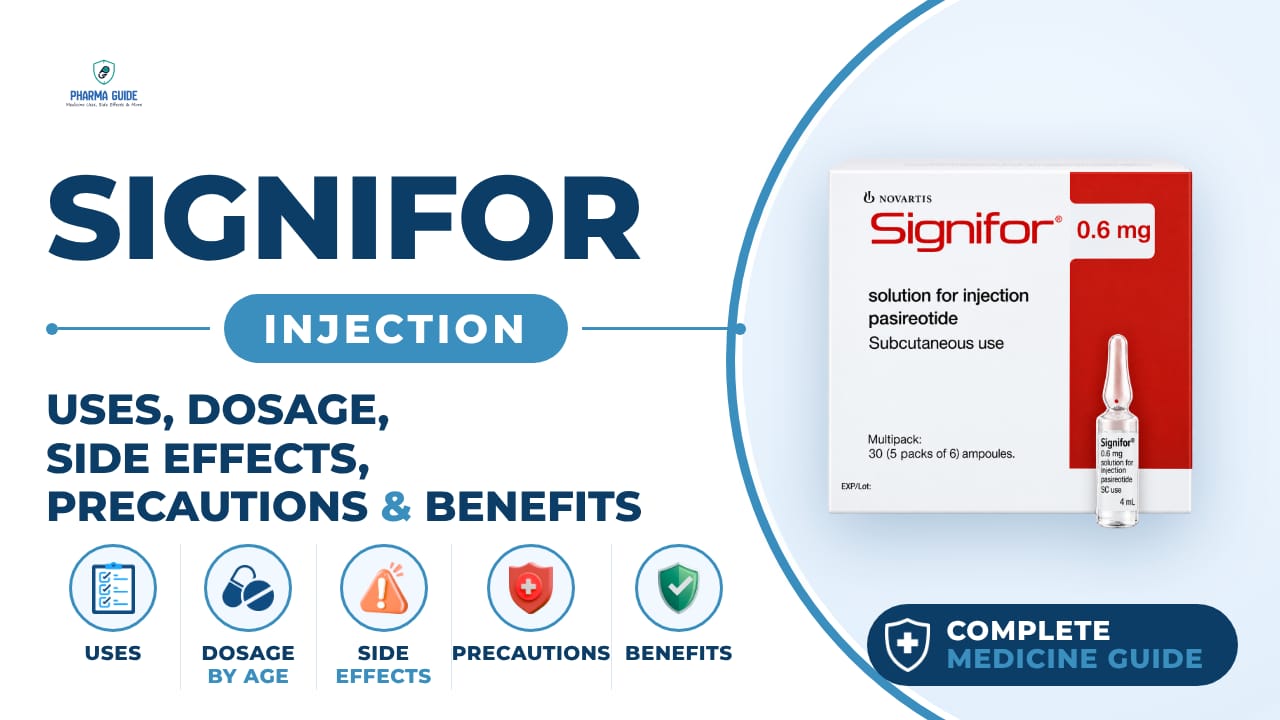
Signifor Injection: Uses, Dosage, Side Effects, Precautions and Alternates
Somatostatin analog
Signifor Injection (pasireotide) treats acromegaly and Cushing's disease by lowering growth hormone, IGF-1, and cortisol. Learn uses, dosage, and side effects.

Injectafer Injection: Uses, Dosage, Side Effects, Precautions and Alternates
Iron products
Injectafer (ferric carboxymaltose) treats iron deficiency anemia and heart failure-related iron deficiency via IV. Learn uses, dosage, side effects, and