
Safety
General information, not medical advice
Your prescriber and the leaflet in your pack know your situation. This page does not.
- Follow your prescriber and the leaflet
- Don't start, stop, or change a dose on your own
- Doses and warnings differ by country and product
Signifor Injection: Uses, Dosage, Side Effects, Precautions and Alternates
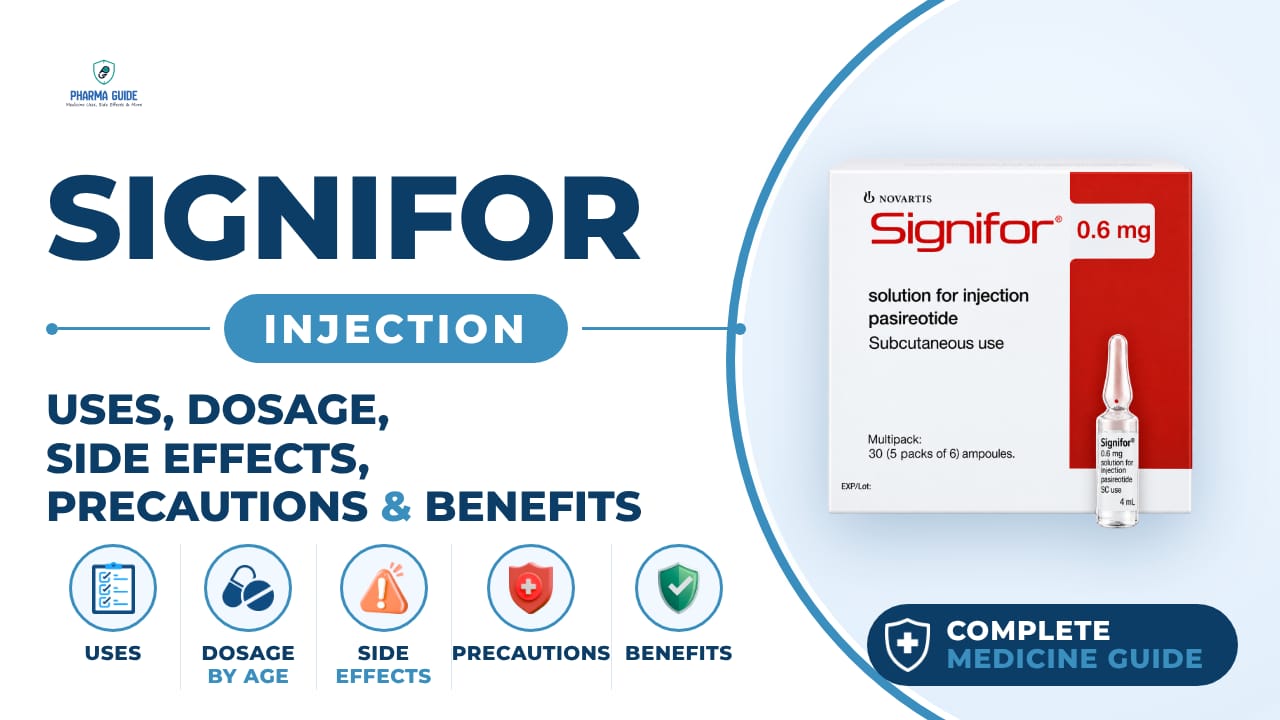
| Generic name | pasireotide |
|---|---|
| Drug class | Somatostatin analog |
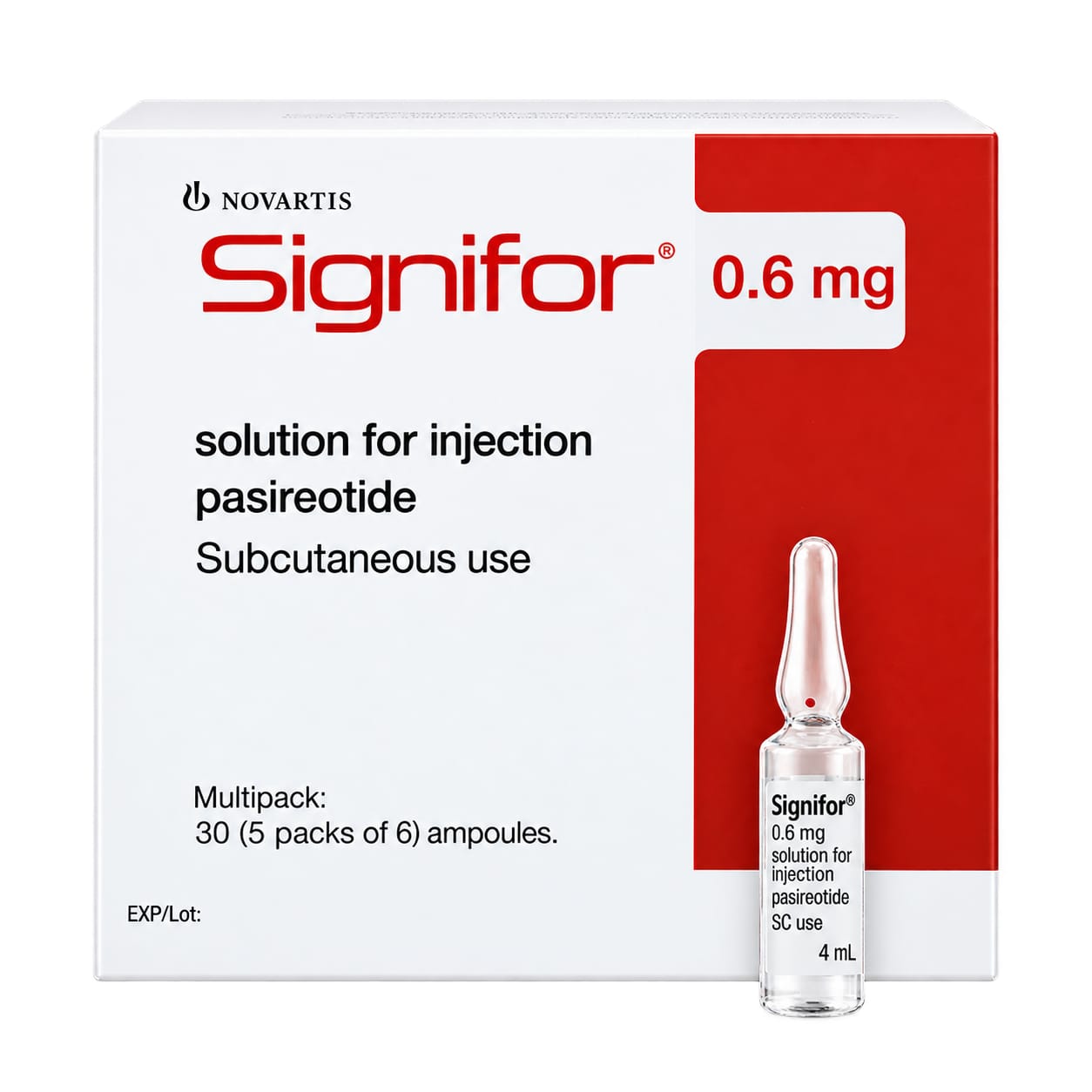
| Forms | Solution for injection (subcutaneous), in strengths of 0.3 mg, 0.6 mg, and 0.9 mg per ampoule, Powder and solvent for suspension for injection (intramuscular), in strengths of 10 mg, 20 mg, 30 mg, 40 mg, and 60 mg per vial |
Quick overview
Signifor Injection (pasireotide) is a somatostatin analog used to treat acromegaly and Cushing's disease in adults. It comes in two forms: a short-acting injection given under the skin twice daily, and Signifor LAR, a longer-acting injection given into a muscle once every 4 weeks by a healthcare professional. It works by acting like a natural body hormone that reduces excess growth hormone, IGF-1, and cortisol levels.
What is Signifor Injection
Signifor is a man-made protein that works like a natural hormone in the body called somatostatin. It comes in two forms: Signifor, a short-acting injection given under the skin twice a day, and Signifor LAR, a longer-acting injection given into a muscle once every 4 weeks by a healthcare professional.
Signifor Injection uses
- Treatment of acromegaly in adults who have had an inadequate response to surgery and/or for whom surgery is not an option
- Treatment of Cushing's disease in adults for whom pituitary surgery is not an option or has not worked
Benefits of Signifor Injection
- Helps lower growth hormone and IGF-1 levels in acromegaly
- Helps reduce excess cortisol levels in Cushing's disease
- May reduce the size of the pituitary tumor
- Can improve symptoms such as headache, sweating, numbness, tiredness, and joint pain
How Signifor Injection works
The medicine acts like a natural body hormone called somatostatin, which blocks the release of certain other hormones. In acromegaly, it reduces growth hormone and IGF-1 levels; in Cushing's disease, it lowers the pituitary hormone ACTH, which in turn reduces cortisol production.
Signifor Injection dosage
The long-acting form (Signifor LAR) must be given by a trained healthcare professional as a deep injection into the muscle of the buttocks, alternating between left and right sides. The short-acting form (Signifor) is injected under the skin, usually twice a day, and can be given by the patient or a caregiver after proper training.
Avoid using the same exact injection site twice in a row; avoid injecting into skin that is red, sore, or irritated. Preferred injection sites for the under-the-skin form are the top of the thighs and the abdomen, avoiding the navel or waistline. Blood sugar should be checked regularly, especially after starting treatment or after a dose change. Keep all scheduled appointments so your doctor can monitor blood tests, heart tracings (ECG), and other checks. If a dose of the long-acting injection is missed, it may be given up to 14 days before the next scheduled dose.
| Age group | Dose |
|---|---|
| Under 12-17 years | Safety and effectiveness are not established; no standard pediatric dose |
| 18–64 years | 0.6 mg or 0.9 mg |
Available forms and strengths
- Solution for injection (subcutaneous), in strengths of 0.3 mg, 0.6 mg, and 0.9 mg per ampoule
- Powder and solvent for suspension for injection (intramuscular), in strengths of 10 mg, 20 mg, 30 mg, 40 mg, and 60 mg per vial
Side effects of Signifor Injection
Common
- Diarrhea
- Nausea
- Stomach pain or bloating
- Headache
- Hair loss
- Tiredness or fatigue
- High blood pressure
- Pain, redness, itching, or swelling at the injection site
- Nasal or throat infection symptoms (stuffy nose, sore throat)
- Back pain
- Fluid retention/swelling in arms or legs
- Loss of appetite
Serious
- High blood sugar, diabetes, or diabetic ketoacidosis
- Slow heart rate (bradycardia)
- Heart rhythm changes (QT prolongation)
- Low cortisol levels (adrenal insufficiency)
- Gallstones and gallbladder complications (such as cholecystitis or cholangitis)
- Liver enzyme elevations or liver problems
- Low levels of pituitary hormones
- Fatty, loose, or discolored stools (steatorrhea) from fat malabsorption
- Pancreatitis (inflammation of the pancreas)
- Severe allergic reaction
Warnings and precautions
- This medicine can raise blood sugar levels and cause or worsen diabetes, sometimes leading to a dangerous condition called ketoacidosis.
- This medicine can slow the heart rate and may affect the heart's electrical rhythm (QT prolongation), which can be serious in people with certain heart conditions.
- Liver enzyme levels can rise during treatment, and in rare cases serious liver problems can occur.
- Gallstones are common with this medicine and can sometimes lead to complications requiring gallbladder removal.
- This medicine can lower other pituitary hormones in the body, which may need to be monitored and treated.
- New or worsening fatty, loose, or discolored stools, bloating, or weight loss could be a sign the body is having trouble absorbing fat and should be evaluated.
- This medicine is not recommended during pregnancy unless clearly needed, as its effects on an unborn baby are not well known. Breastfeeding should be stopped during treatment with this medicine because it is not known if it passes into breast milk.
- No dose change is generally needed for kidney problems, based on limited data. Patients with moderate liver impairment need a lower starting dose, and this medicine should not be used in people with severe liver impairment.
- It is not clearly known how alcohol affects this medicine, but drinking alcohol might make tiredness worse.
- This medicine is not expected to affect the ability to drive or use machines, but tiredness, dizziness, or headache from treatment could make driving less safe.
Storage
- Store Signifor LAR in the refrigerator between 36°F to 46°F (2°C to 8°C)
- Do not freeze Signifor LAR
- Take Signifor LAR out of the refrigerator at least 30 minutes before use to let it reach room temperature, but do not leave it out for more than 24 hours
- The mixed suspension must be given right away after preparation
- Store Signifor (subcutaneous) ampoules in the original package to protect from light
- Keep all medicines out of the sight and reach of children
- Dispose of used needles and syringes right away in a sharps container or other rigid closed container according to local requirements
When to see a doctor
- Get medical help right away for signs of a serious allergic reaction, such as swelling of the face, lips, tongue, or throat, trouble breathing, or hives.
- Contact your doctor right away if you have signs of low cortisol, such as extreme weakness, tiredness, weight loss, nausea, vomiting, or low blood pressure.
- Seek care if you notice symptoms of high blood sugar or ketoacidosis, such as being very thirsty, urinating often, nausea, vomiting, stomach pain, confusion, unusual drowsiness, fruity-smelling breath, or trouble breathing.
- Tell your healthcare provider if you feel your heart beating unusually slow or fast, or if you feel dizzy or faint, as this could signal a heart rhythm problem.
- Contact your doctor if you notice signs of gallbladder problems, such as sudden pain in the upper right stomach area, pain spreading to the shoulder or between the shoulder blades, yellowing of the skin or eyes, fever with chills, or nausea.
Alternatives
- Signifor LAR
- Osilodrostat
- Metyrapone
Watch the video
FAQs
What is Signifor Injection used for?
Signifor Injection is used to treat acromegaly in adults who have had an inadequate response to surgery or for whom surgery is not an option, and to treat Cushing's disease in adults for whom pituitary surgery is not an option or has not worked.
How is Signifor Injection given?
Signifor comes in two forms: a short-acting injection given under the skin twice daily (which can be self-administered after training), and Signifor LAR, a longer-acting injection given into the buttock muscle once every 4 weeks by a healthcare professional.
How does Signifor Injection work?
Signifor acts like the natural hormone somatostatin, blocking the release of other hormones. In acromegaly, it reduces growth hormone and IGF-1 levels; in Cushing's disease, it lowers ACTH, which reduces cortisol production.
What are the serious side effects of Signifor Injection?
Serious side effects include high blood sugar or diabetic ketoacidosis, slow heart rate, QT prolongation, low cortisol levels, gallstones and gallbladder complications, liver problems, low pituitary hormones, fat malabsorption, pancreatitis, and severe allergic reactions.
What happens if a dose of Signifor LAR is missed?
If a dose of the long-acting injection is missed, it may be given up to 14 days before the next scheduled dose.
General information, not medical advice
Your prescriber and the leaflet in your pack know your situation. This page does not.
- Follow your prescriber and the leaflet
- Don't start, stop, or change a dose on your own
- Doses and warnings differ by country and product
Sources
Video
Related medicines
Lanreotide Injection: Uses, Dosage, Side Effects, Precautions and Alternates
Somatostatin analog
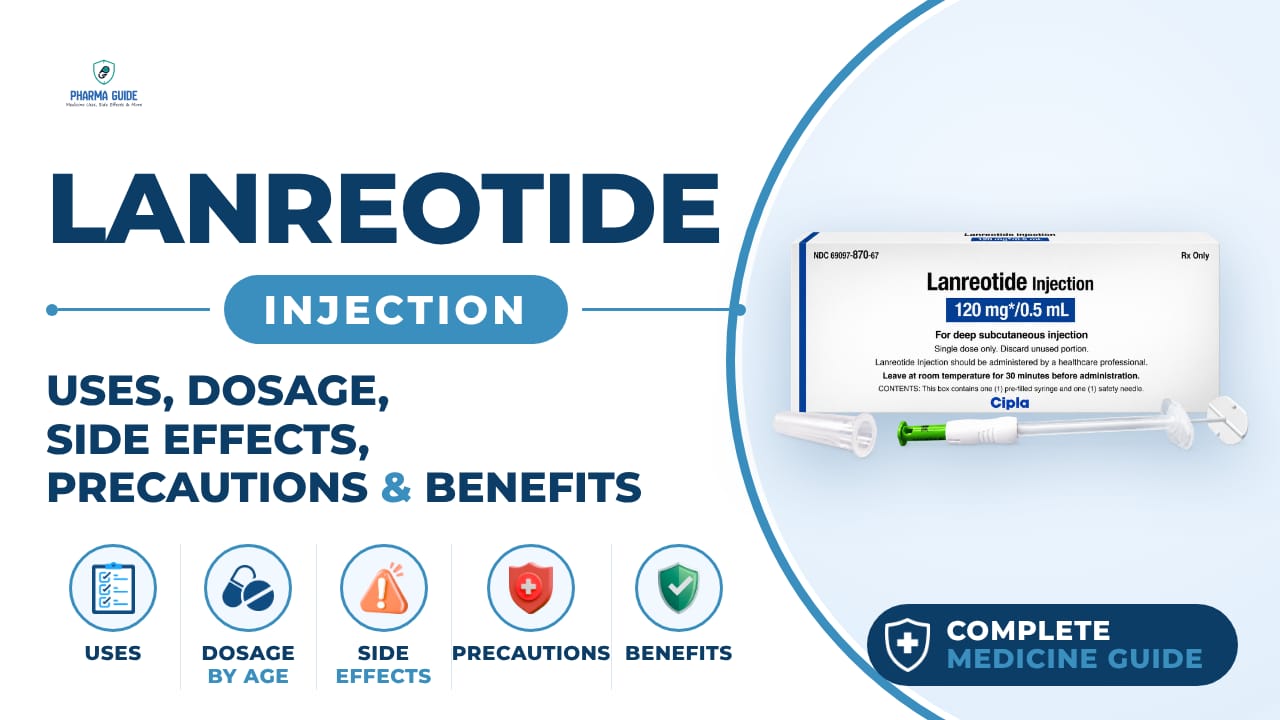
Lanreotide Injection treats acromegaly and GEP-NETs by mimicking somatostatin. Learn how it works, dosage, side effects, warnings, and storage tips.

Injectafer Injection: Uses, Dosage, Side Effects, Precautions and Alternates
Iron products
Injectafer (ferric carboxymaltose) treats iron deficiency anemia and heart failure-related iron deficiency via IV. Learn uses, dosage, side effects, and