
Safety
General information, not medical advice
Your prescriber and the leaflet in your pack know your situation. This page does not.
- Follow your prescriber and the leaflet
- Don't start, stop, or change a dose on your own
- Doses and warnings differ by country and product
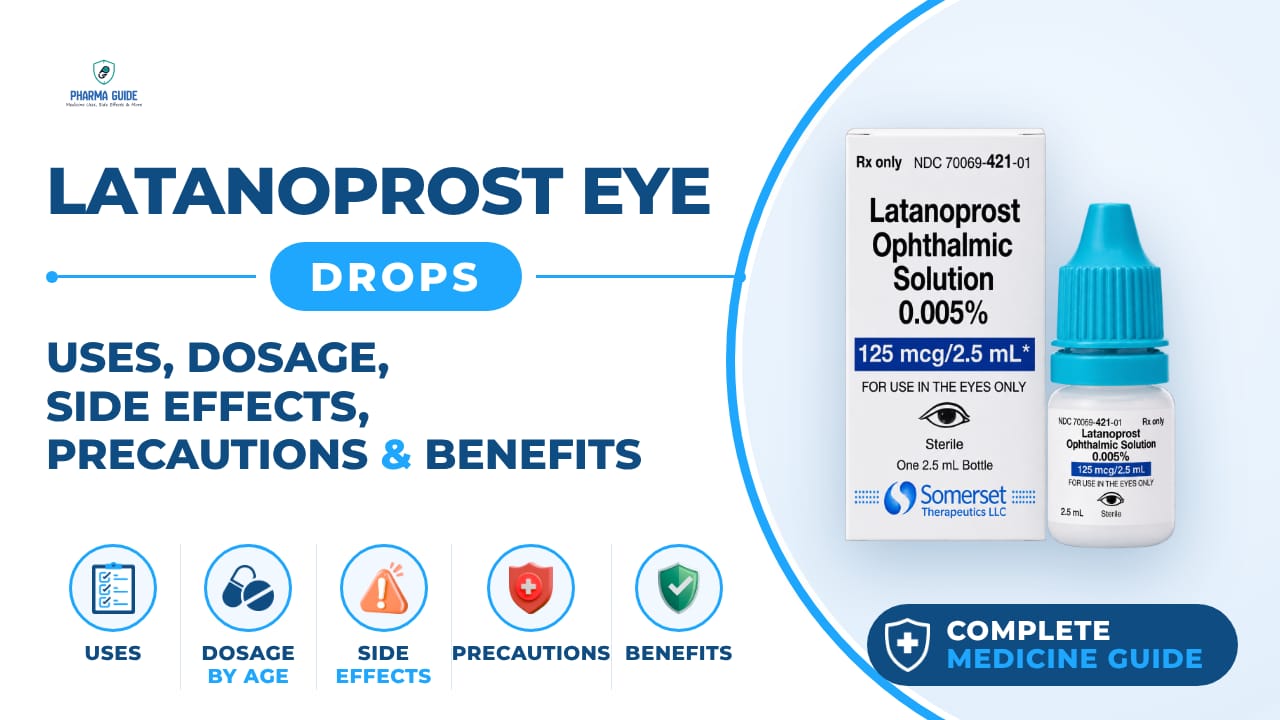
Latanoprost Eye Drops: Uses, Dosage, Side Effects, Precautions and Alternates
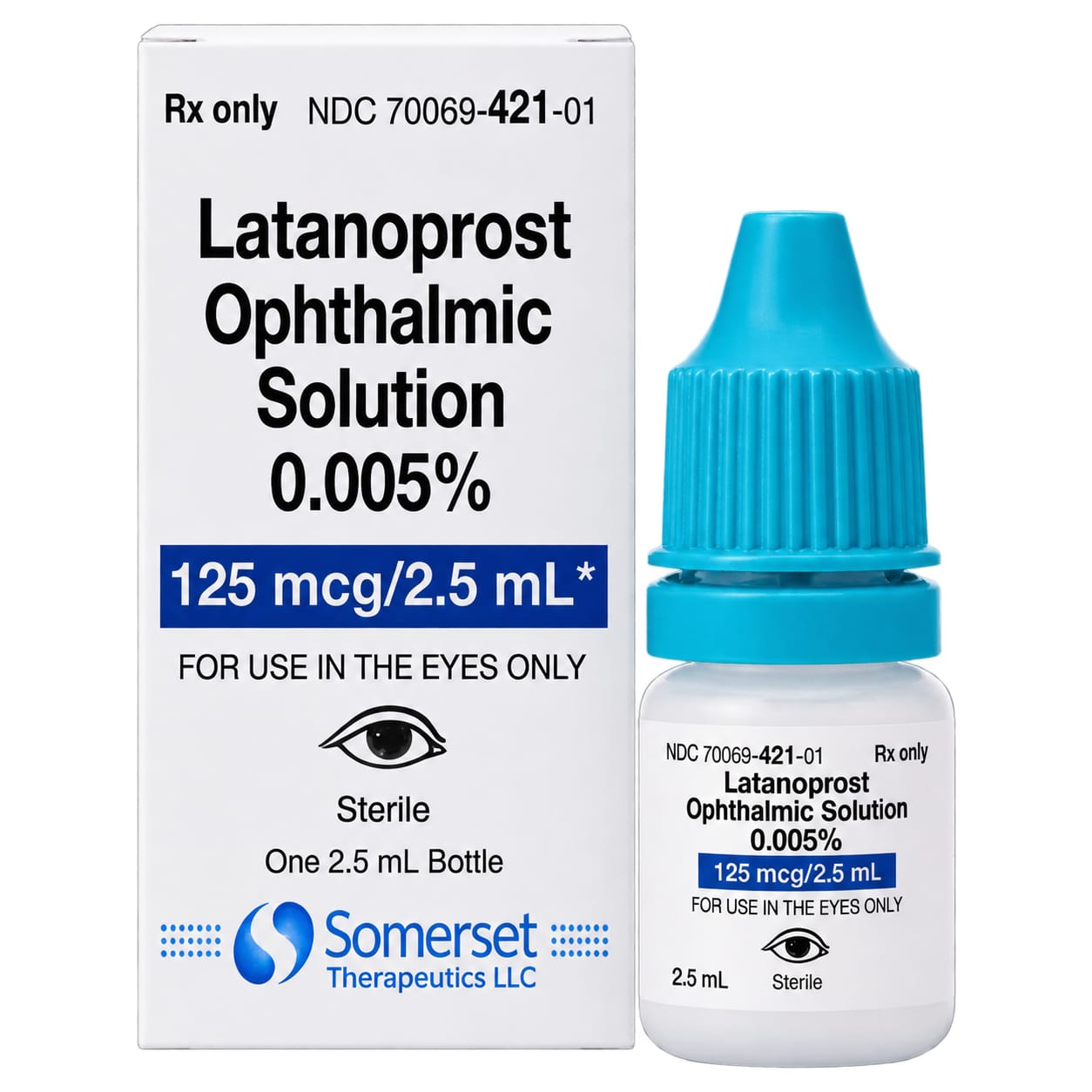
| Generic name | Latanoprost |
|---|---|
| Drug class | Prostaglandin F2α analogue (prostaglandin agonist) |
| Forms | Ophthalmic solution (eye drops) |
Quick overview
Latanoprost Eye Drops contain the active ingredient Latanoprost, a prostaglandin F2α analogue (prostaglandin agonist). This prescription eye drop is used to lower high pressure inside the eye in people with open-angle glaucoma or ocular hypertension. It works by helping fluid drain out of the eye more easily, and it is typically used once daily in the evening.
What is Latanoprost Eye Drops
Latanoprost is a prescription eye drop medicine used to lower high pressure inside the eye. It belongs to a group of medicines called prostaglandin analogues.
Latanoprost Eye Drops uses
- Lowering raised pressure in the eye in people with open-angle glaucoma
- Lowering raised pressure in the eye in people with ocular hypertension
Benefits of Latanoprost Eye Drops
- Helps control eye pressure to reduce the risk of vision loss from glaucoma
- Convenient once-daily dosing
- Can be used alone or together with other eye pressure medicines
How Latanoprost Eye Drops works
Latanoprost lowers eye pressure by helping more fluid drain out of the eye through a pathway called the uveoscleral outflow route.
Latanoprost Eye Drops dosage
Use one drop in the affected eye or eyes, usually in the evening, unless your doctor tells you otherwise. Take out soft contact lenses before using the drops, and wait 15 minutes after using the drops before putting lenses back in. If you use other eye drops as well, wait at least 5 minutes between using each different eye drop.
Try not to let the tip of the bottle touch your eye, eyelid, or anything else, to avoid contaminating the drops. You may find it easier to put the drops in while sitting or lying down. Shake the bottle once before each use.
Keep using the drops every day for as long as your doctor tells you to, even though it does not cure the condition. If you miss a dose, skip it and use your next dose at the normal time; do not use a double dose.
| Age group | Dose |
|---|---|
| Under 18 Years | Use only if prescribed by an eye specialist |
| Adults (18–64 Years) | 1 drop in affected eye(s) once daily in the evening |
| Older Adults (65+ years) | 1 drop in affected eye(s) once daily in the evening; monitor response |
Available forms and strengths
- Ophthalmic solution (eye drops)
Side effects of Latanoprost Eye Drops
Common
- Change in eye colour (usually browner) over time
- Blurred or double vision
- Feeling like something is in the eye
- Eye pain
- Redness, burning, or watering of the eye
- Discharge or itching of the eye, crusty eyelashes
- Longer, thicker, darker, or more numerous eyelashes
- Misdirected eyelashes
- Darkening of the skin of the eyelids
- Crusting, redness, thickening, itching, or burning of the eyelids
- Sensitivity to light
- Skin rash
- Headache
- Muscle or joint pain
- Painful, urgent, or frequent urination
- Dry eyes
- Cold, flu, or upper respiratory infection symptoms
Serious
- Wheezing or difficulty breathing (asthma or worsening asthma)
- Shortness of breath
- Chest pain
- Strong, rapid, or irregular heartbeats
- Dizziness
- Nausea and vomiting
- Swelling of the face, lips, mouth, tongue, or throat which may cause difficulty swallowing or breathing
- White or cloudy deposits on the front of the eye
- Signs of eye infection, injury, or the need for eye surgery
Warnings and precautions
- This medicine can gradually and permanently darken the color of the iris, and it may also darken the eyelid skin and eyelashes.
- Do not use two or more prostaglandin-type eye drops at the same time, as this can raise eye pressure instead of lowering it.
- This medicine should be used carefully or avoided in people with active eye inflammation, a history of herpes eye infection, or certain other eye conditions, because it may make these problems worse.
- Contaminated eye drop bottles have been linked to serious eye infections, so avoid letting the dropper tip touch the eye or any surface.
- This medicine is not recommended for use in children because its safety and effectiveness have not been established in this age group.
- Talk to your doctor before using this medicine if you are pregnant or planning to become pregnant, since animal studies showed possible risks to the unborn baby, and the doctor will weigh benefits against risks.
- Talk to your doctor if you are breastfeeding, as the medicine and its breakdown products may pass into breast milk, so it should be used with caution.
- This medicine has not been studied in people with kidney problems, so it should be used carefully in these patients.
- This medicine has not been studied in people with liver problems, so it should be used carefully in these patients.
- Your vision may become blurred for a short time after using the drops. Do not drive or use machines until your sight is clear again.
Storage
- Before opening: keep the bottle in its box and store in a refrigerator (2°C to 8°C), protected from light. Do not freeze
- After opening: keep the bottle in its box, protected from light, in a cool, dry place below 25°C; you do not need to refrigerate it after opening
- Throw away any remaining solution four weeks after opening the bottle
- Do not use after the expiry date on an unopened bottle, or more than four weeks after opening
- Keep out of reach and sight of children
- Take unused or expired medicine to a pharmacy for safe disposal
When to see a doctor
- Get medical help right away if you have wheezing, trouble breathing, chest pain, a fast or irregular heartbeat, dizziness, nausea or vomiting, or swelling of the face, lips, mouth, tongue, or throat.
- Contact your doctor if your eye develops an infection, is injured, or needs surgery, since you may need to stop or change your treatment.
- Seek urgent medical attention if you or someone else may have swallowed this medicine, even if there are no symptoms.
Alternatives
- Timolol Eye Drops
- Bimatoprost Eye Drops
- Brimonidine Eye Drops
Watch the video
FAQs
How often should I use Latanoprost Eye Drops?
Use one drop in the affected eye or eyes once daily, usually in the evening, unless your doctor tells you otherwise.
What should I do if I miss a dose of Latanoprost Eye Drops?
If you miss a dose, skip it and use your next dose at the normal time; do not use a double dose.
Can Latanoprost Eye Drops change my eye colour?
Yes, this medicine can gradually and permanently darken the colour of the iris, and it may also darken the eyelid skin and eyelashes.
How long can I keep using Latanoprost Eye Drops after opening the bottle?
You should throw away any remaining solution four weeks after opening the bottle, and it should be kept in a cool, dry place below 25°C after opening.
Can I wear contact lenses while using Latanoprost Eye Drops?
Take out soft contact lenses before using the drops, and wait 15 minutes after using the drops before putting the lenses back in.
General information, not medical advice
Your prescriber and the leaflet in your pack know your situation. This page does not.
- Follow your prescriber and the leaflet
- Don't start, stop, or change a dose on your own
- Doses and warnings differ by country and product
Sources
- https://www.safetyandquality.gov.au/medicine-finder/latanoprost-sandoz-eye-drops
- https://www.ncbi.nlm.nih.gov/books/NBK540978/
- Bausch & Lomb Latanoprost Ophthalmic Solution Prescribing Information
- New Zealand Data Sheet - LATANOPROST (Teva)
Video
Related medicines

Injectafer Injection: Uses, Dosage, Side Effects, Precautions and Alternates
Iron products
Injectafer (ferric carboxymaltose) treats iron deficiency anemia and heart failure-related iron deficiency via IV. Learn uses, dosage, side effects, and

Gliclazide Tablet: Uses, Dosage, Side Effects, Precautions and Alternates
Sulfonylurea (hypoglycemic/antidiabetic agent)
Gliclazide Tablet is a sulfonylurea for type 2 diabetes that boosts insulin release. Learn about dosage, side effects, warnings, and precautions.