
Safety
General information, not medical advice
Your prescriber and the leaflet in your pack know your situation. This page does not.
- Follow your prescriber and the leaflet
- Don't start, stop, or change a dose on your own
- Doses and warnings differ by country and product
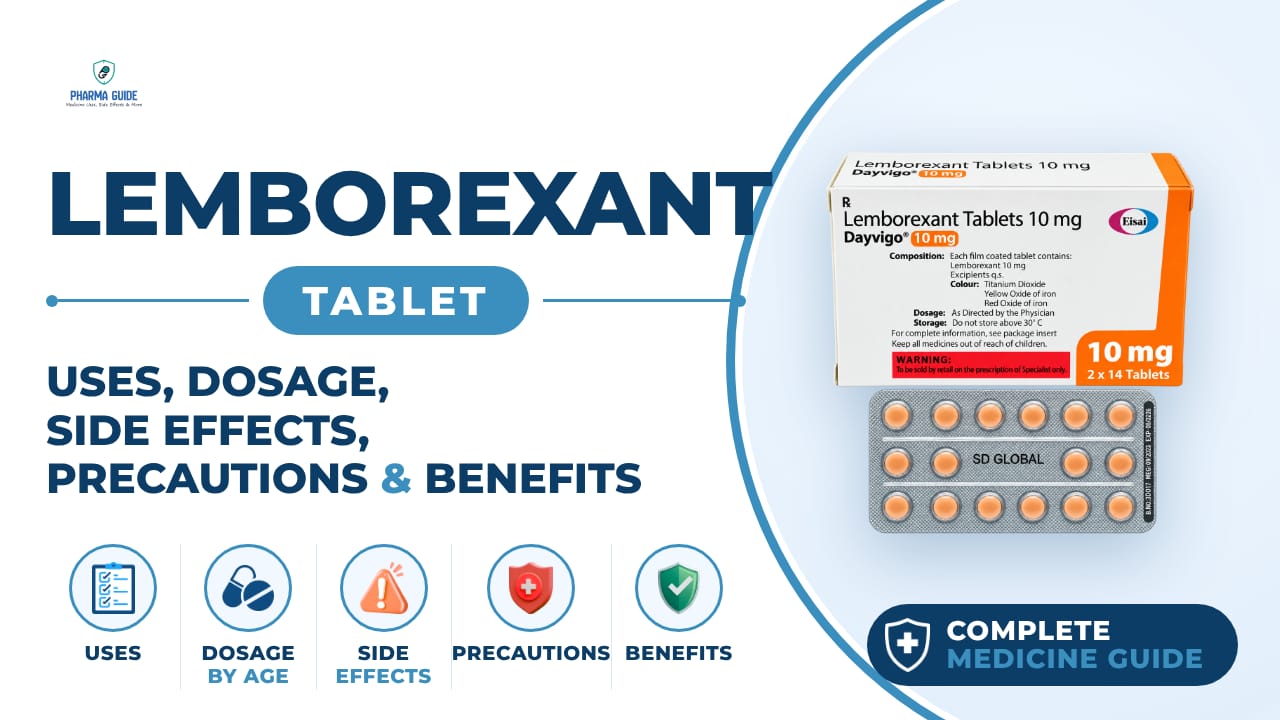
Lemborexant Tablet: Uses, Dosage, Side Effects, Precautions and Alternates
| Generic name | Lemborexant |
|---|---|
| Drug class | Dual orexin receptor antagonist (DORA) / hypnotic, miscellaneous anxiolytics, sedatives and hypnotics |
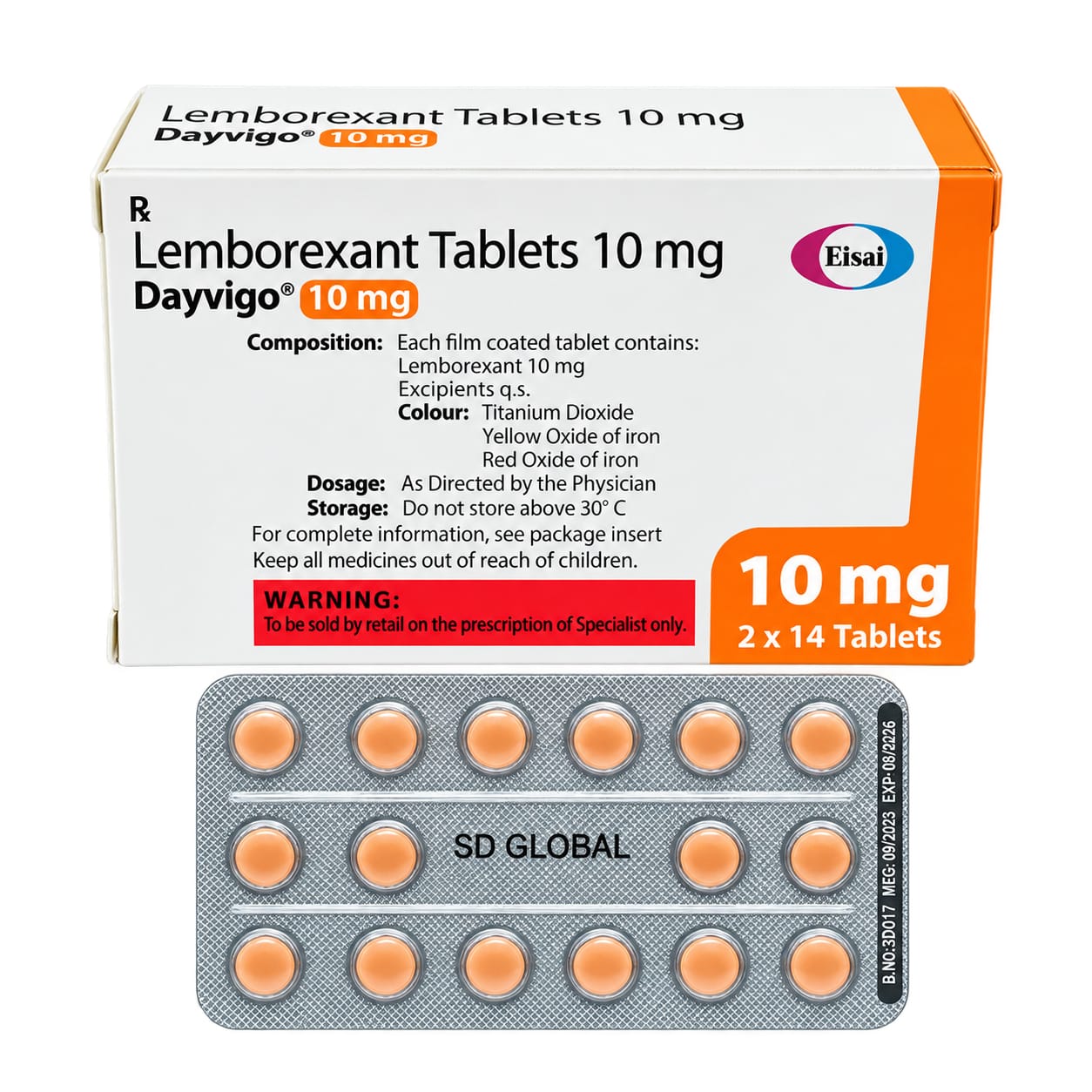
| Forms | Tablet (5 mg and 10 mg strengths) |
Quick overview
Lemborexant Tablet is a prescription sleep medicine used to treat insomnia, including trouble falling asleep and trouble staying asleep, in adults. It belongs to a class of medicines called dual orexin receptor antagonists that slow down brain activity to allow sleep by blocking wake-promoting brain signals rather than acting as a strong sedative. It is taken once nightly, right before bed, and is available as 5 mg and 10 mg tablets.
What is Lemborexant Tablet
Lemborexant is a prescription sleep medicine used to treat insomnia, including trouble falling asleep or staying asleep. It belongs to a class of medicines called central nervous system depressants that slow down brain activity to allow sleep. It works differently from older sleep medicines by blocking brain signals that keep you awake rather than acting as a strong sedative.
Lemborexant Tablet uses
- Treats insomnia in adults, including trouble falling asleep (sleep onset) and trouble staying asleep (sleep maintenance).
- Treats insomnia
- Helps with difficulty falling asleep
- Helps with difficulty staying asleep
- May improve overall sleep duration
Benefits of Lemborexant Tablet
- Helps you fall asleep faster and reduces nighttime awakenings.
- May preserve more normal sleep patterns compared to older sedatives, with less next-day grogginess when enough sleep time is allowed.
- Provides once-nightly dosing
- Targets the brain's orexin wake-promoting system
- Can improve both sleep onset and sleep maintenance
- Uses a different mechanism from benzodiazepines
How Lemborexant Tablet works
Lemborexant blocks orexin receptors in the brain (orexin A and orexin B), which turns down wake-promoting signals so you can fall asleep and stay asleep more easily, rather than forcing heavy sedation.
Lemborexant Tablet dosage
Take it right before getting into bed, only when you are ready to go to sleep. Only use it when you can stay in bed for at least 7 hours before you need to be active again. Avoid taking it with food or right after a meal, since food can delay how quickly it works. Swallow the tablet whole with water; do not crush, chew, or split it. You do not need to take it on a regular schedule — only use it on nights you need it. Call your doctor if your sleep problems do not improve, or get worse, after about 7 to 10 nights of use. Do not take more than prescribed, more often than prescribed, or for longer than prescribed.
| Age group | Dose |
|---|---|
| Under 18 years | Safety and effectiveness are not established; no standard pediatric dose |
| 18–64 years | Usually 5 mg once nightly immediately before bedtime; may be increased to 10 mg once nightly if needed and tolerated |
| 65–74 years | Usually 5 mg once nightly; may be increased cautiously to 10 mg |
| 75 years and older | Usually start with 5 mg once nightly; use the lowest effective dose because sedation and falls may be more likely |
Available forms and strengths
- Tablet (5 mg and 10 mg strengths)
Side effects of Lemborexant Tablet
Common
- Daytime drowsiness or unusual tiredness
- Headache
- Vivid, unusual dreams or nightmares
- Fatigue or weakness
Serious
- Doing activities while not fully awake and not remembering them, such as sleepwalking, driving, making phone calls, or preparing and eating food
- Temporary inability to move or talk while falling asleep or waking up (sleep paralysis)
- Sudden, temporary weakness in the legs (cataplexy-like symptoms)
- New or worsening depression or anxiety
- Confusion or hallucinations
- Thoughts of suicide or self-harm
- Pounding heartbeat
- Signs of an allergic reaction such as hives, difficulty breathing, or swelling of the face, lips, tongue, or throat
Warnings and precautions
- Do not use this medicine if you have narcolepsy.
- Only take this medicine if you can stay in bed for at least 7 hours before you need to be active again, or you may still feel drowsy and have memory problems.
- Some people have done things like driving, sleepwalking, making phone calls, or preparing and eating food while not fully awake, and have no memory of it afterward.
- This medicine may cause or worsen depression, anxiety, confusion, hallucinations, or thoughts of suicide.
- This medicine may be habit-forming; do not take more than prescribed or for longer than prescribed.
- Combining this medicine with alcohol can cause severe drowsiness, breathing problems, and loss of coordination.
- Tell your doctor if you are pregnant or planning to become pregnant. There isn't enough research to know the full risk to the baby, and your name may be added to a registry that tracks outcomes.
- There isn't enough research on how this medicine affects a breastfeeding baby. Talk with your doctor to weigh the benefits against possible risks before using it while breastfeeding.
- Use with caution if you have severe kidney disease, since the medicine may build up in your body.
- Use with caution if you have mild to moderate liver disease, because the medicine may not clear from your body as quickly. It is not recommended if you have severe liver disease.
- Do not drink alcohol while taking this medicine. Combining them can cause dangerous drowsiness and other serious effects.
- Your alertness and reaction time may still be impaired the next morning, even if you feel awake. Do not drive or operate machinery until you know how this medicine affects you.
Storage
- Store the medicine in a closed container at room temperature, away from heat, moisture, and direct light.
- Keep from freezing.
- Keep out of the reach of children.
- Do not keep outdated medicine or medicine no longer needed.
- Ask your healthcare professional how you should dispose of any medicine you do not use.
- Keep the medication in the container it came in, tightly closed, and store away from excess heat and moisture (not in the bathroom).
- Dispose of unneeded medication through a medicine take-back program rather than flushing it down the toilet.
When to see a doctor
- Get emergency help right away if you have signs of an allergic reaction, such as hives, trouble breathing, or swelling of your face, lips, tongue, or throat.
- Call your doctor right away if you experience trouble moving or talking when you first wake up, leg weakness, unusual thoughts or behavior, anxiety, agitation, depression, memory problems, confusion, hallucinations, or thoughts of hurting yourself.
- Call your doctor right away if you do things while not fully awake, such as driving, sleepwalking, or preparing and eating food, that you don't remember afterward.
- If you experience a serious side effect, stop taking the medicine and call your doctor immediately.
- Seek emergency help if someone has collapsed, had a seizure, has trouble breathing, or cannot be woken up after taking too much of this medicine.
Alternatives
- Suvorexant
- Quviviq
- Daridorexant
- Dayvigo
Watch the video
FAQs
What is Lemborexant Tablet used for?
It is a prescription sleep medicine used to treat insomnia in adults, including trouble falling asleep and trouble staying asleep.
How should I take Lemborexant Tablet?
Take it right before getting into bed, only when ready to sleep and able to stay in bed for at least 7 hours. Swallow the tablet whole with water and avoid taking it with food, since food can delay how quickly it works.
What is the usual dosage of Lemborexant Tablet?
Adults 18–64 usually take 5 mg once nightly, which may be increased to 10 mg if needed. Older adults, especially those 75 and up, usually start at 5 mg and use the lowest effective dose.
What are the serious side effects of Lemborexant Tablet?
Serious effects include doing activities while not fully awake (like sleepwalking or driving) with no memory of it, sleep paralysis, leg weakness, worsening depression or anxiety, confusion, hallucinations, and thoughts of self-harm.
Can I drink alcohol while taking Lemborexant Tablet?
No, combining this medicine with alcohol can cause severe drowsiness, breathing problems, and loss of coordination.
General information, not medical advice
Your prescriber and the leaflet in your pack know your situation. This page does not.
- Follow your prescriber and the leaflet
- Don't start, stop, or change a dose on your own
- Doses and warnings differ by country and product
Sources
Video
Related medicines

Injectafer Injection: Uses, Dosage, Side Effects, Precautions and Alternates
Iron products
Injectafer (ferric carboxymaltose) treats iron deficiency anemia and heart failure-related iron deficiency via IV. Learn uses, dosage, side effects, and

Gliclazide Tablet: Uses, Dosage, Side Effects, Precautions and Alternates
Sulfonylurea (hypoglycemic/antidiabetic agent)
Gliclazide Tablet is a sulfonylurea for type 2 diabetes that boosts insulin release. Learn about dosage, side effects, warnings, and precautions.