
Safety
General information, not medical advice
Your prescriber and the leaflet in your pack know your situation. This page does not.
- Follow your prescriber and the leaflet
- Don't start, stop, or change a dose on your own
- Doses and warnings differ by country and product
Lenvima Capsule: Uses, Dosage, Side Effects, Precautions and Alternates
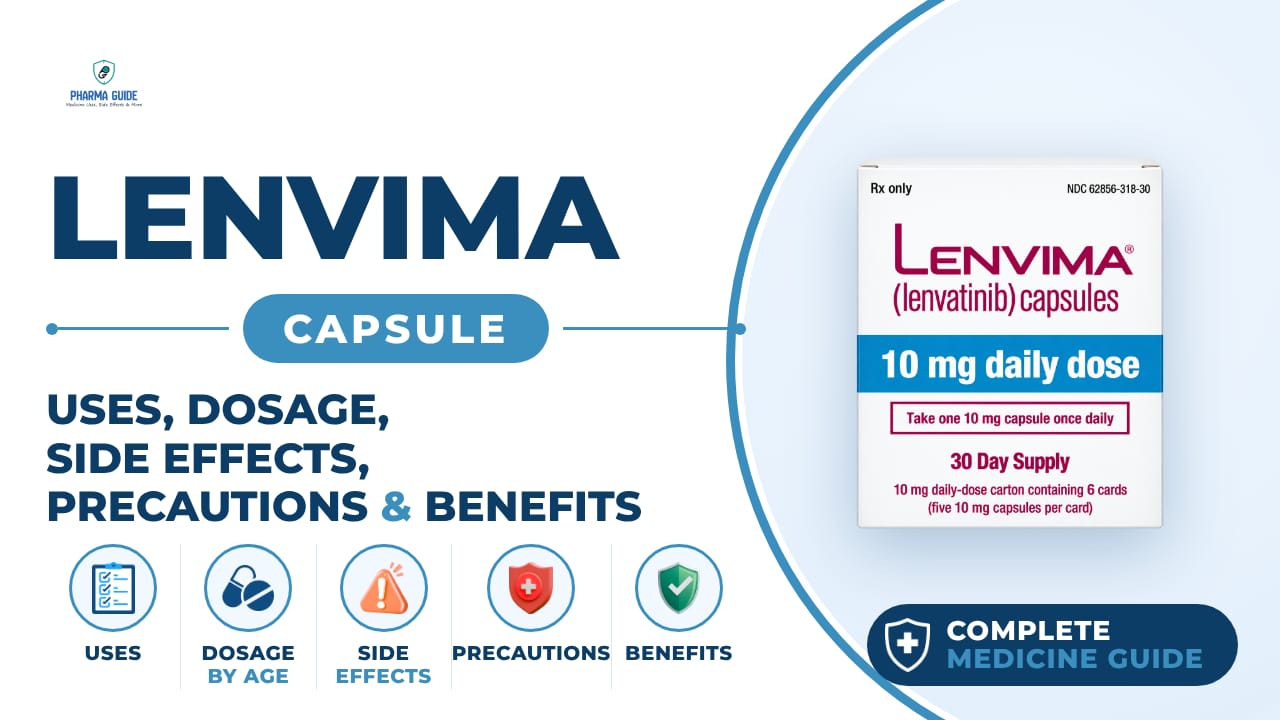
| Generic name | lenvatinib (as lenvatinib mesylate) |
|---|---|
| Drug class | Kinase inhibitor (antineoplastic agent) |
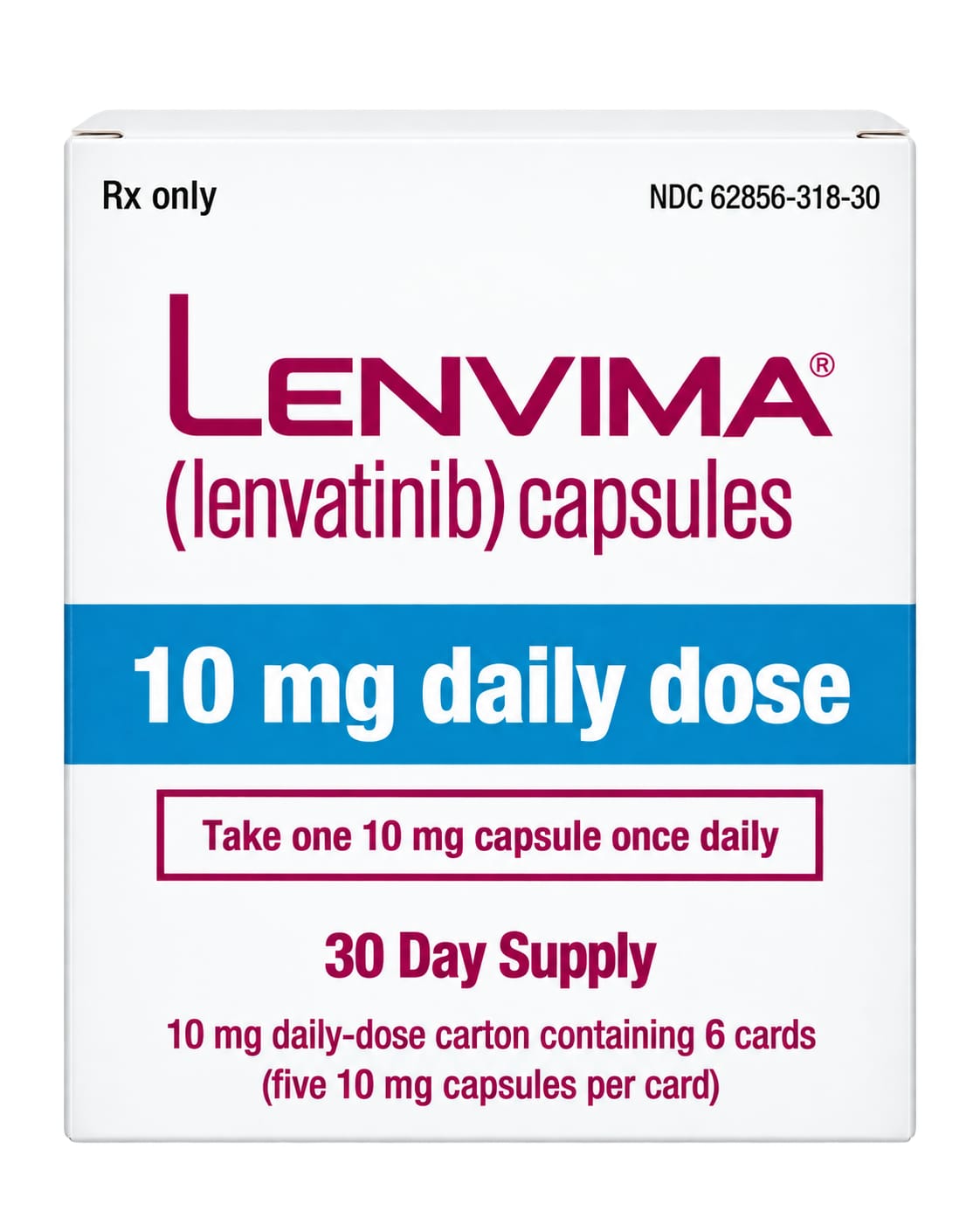
| Forms | Capsules (4 mg and 10 mg strengths) |
Quick overview
Lenvima Capsule contains lenvatinib (as lenvatinib mesylate), a kinase inhibitor used as an antineoplastic agent. It is a prescription cancer medicine taken by mouth that blocks proteins involved in tumor blood vessel growth and cancer cell growth. It is used alone or with other cancer medicines to treat certain thyroid, kidney, liver, and uterine (endometrial) cancers.
What is Lenvima Capsule
Lenvima is a prescription cancer medicine taken as a capsule by mouth. It is a targeted therapy that blocks proteins involved in tumor blood vessel growth and cancer cell growth, used alone or with other cancer medicines to treat certain thyroid, kidney, liver, and uterine (endometrial) cancers.
Lenvima Capsule uses
- Treatment of locally recurrent or metastatic, progressive, radioactive iodine-refractory differentiated thyroid cancer (DTC)
- In combination with everolimus, for treatment of adults with advanced RCC following one prior VEGF-targeted therapy
- First-line treatment of adults with unresectable hepatocellular carcinoma (HCC)
Benefits of Lenvima Capsule
- Treats certain thyroid cancers
- Treats selected renal cell carcinomas
- Treats unresectable hepatocellular carcinoma
- Used with pembrolizumab for certain advanced endometrial cancers
- Blocks several tyrosine kinases involved in tumor growth and blood-vessel formation
How Lenvima Capsule works
Lenvima blocks a group of proteins (kinases) that tumors use to build new blood vessels and to grow. By blocking these proteins, it cuts off the tumor's blood, oxygen, and nutrient supply, which slows or stops tumor growth. It can also act directly on cancer cells to slow their growth or kill them.
Lenvima Capsule dosage
Take Lenvima once a day at the same time each day, with or without food. Swallow capsules whole with water; do not open, chew, crush, or split the capsules.
If capsules cannot be swallowed whole, they can be mixed into a small amount of water or apple juice: let sit for at least 10 minutes, stir for at least 3 minutes, then drink the mixture, then rinse the glass with more liquid and drink that too.
Continue taking the daily dose unless your healthcare professional tells you to stop or change it. If taking with pembrolizumab or everolimus, follow the separate dosing schedule for those medicines as directed by your healthcare professional.
If you miss a dose and it has been less than 12 hours, take it as soon as you remember; if more than 12 hours have passed, skip the missed dose and take the next dose at the usual time.
Elderly patients (65 years and older), especially those 75 and older, may tolerate this medicine less well and may need closer monitoring.
| Age group | Dose |
|---|---|
| 18–64 years – differentiated thyroid cancer | 24 mg once daily |
| 18–64 years – unresectable hepatocellular carcinoma, ≥60 kg | 12 mg once daily |
Available forms and strengths
- Capsules (4 mg and 10 mg strengths)
Side effects of Lenvima Capsule
Common
- High blood pressure
- Diarrhea
- Decreased appetite and weight loss
- Nausea, vomiting, constipation, abdominal pain
- Tiredness (fatigue)
- Mouth sores, hoarseness, voice changes
- Muscle, joint, and back pain
- Rash, redness, itching, or blistering and peeling of skin on hands and feet
- Protein in urine
- Nosebleeds
- Headache, dizziness
- Swelling in arms, hands, legs, or feet
- Change in taste
- Dry mouth
- Trouble sleeping
- Cough, trouble breathing
- Weakness
Serious
- High blood pressure and its complications, including artery dissection
- Heart failure
- Blood clots (arterial thromboembolism), including heart attack or stroke
- Gastrointestinal perforation (tear in stomach or intestine) or fistula formation
- Liver problems, including liver failure
- Kidney problems, including kidney failure
- Serious bleeding, including fatal bleeding
- Posterior Reversible Encephalopathy Syndrome (PRES) — headache, seizures, confusion, vision changes
- QT interval prolongation (abnormal heart rhythm)
- Low blood calcium (hypocalcemia)
- Thyroid hormone problems (underactive thyroid)
- Osteonecrosis of the jaw (severe jaw bone problems)
- Wound healing problems
- Infections, including pneumonia and sepsis
- Dehydration
- Pancreatitis
- Adrenal insufficiency (when combined with pembrolizumab)
- Pneumonitis/myocarditis/other immune-related reactions (when combined with pembrolizumab)
- Tumor lysis syndrome
Warnings and precautions
- Lenvima should only be prescribed and managed by a healthcare professional experienced in cancer treatment, due to risk of serious or life-threatening side effects including high blood pressure complications, heart failure, blood clots, gastrointestinal perforation or fistula, liver injury, kidney injury, serious bleeding, and PRES.
- Blood pressure must be well controlled before starting treatment and monitored regularly during treatment, since high blood pressure is very common and can be serious.
- Serious and sometimes fatal gastrointestinal perforation or fistula formation has occurred, particularly in patients with prior surgery or radiotherapy.
- Lenvima may impair wound healing, so it should be stopped before planned surgery.
- Serious jaw bone problems (osteonecrosis of the jaw) have occurred, especially with dental procedures or use of bone-related medicines like bisphosphonates.
- Lenvima can cause fetal harm and women of childbearing potential should avoid pregnancy and use effective contraception during and after treatment.
- Lenvima may decrease fertility in both men and women.
- Lenvima is likely to harm an unborn baby and should not be used during pregnancy unless clearly necessary.
- Women who can become pregnant should use effective contraception during treatment and for at least one month after the last dose.
- It is not known if Lenvima passes into breast milk, but because of potential harm to a nursing infant, breastfeeding should not be done during treatment.
- Lenvima can cause serious kidney problems including kidney failure. Dose may need to be reduced in patients with severe kidney impairment, and regular kidney function and urine protein tests are needed during treatment.
- Lenvima can cause serious liver problems including liver failure. Liver function should be monitored before and regularly during treatment, with dose adjustment or discontinuation depending on severity.
- The source materials do not describe a direct interaction between Lenvima and alcohol, but alcohol may worsen certain side effects like nausea, diarrhea, fatigue, and liver problems, so it's best to discuss alcohol use with your healthcare provider.
- The product monograph does not specifically address driving, but Lenvima can cause dizziness, fatigue, headache, and vision changes, which could affect the ability to drive or operate machinery safely.
Storage
- Store between 15°C and 30°C
- Keep out of reach and sight of children
- Do not use capsules that are out of date or no longer needed; ask your healthcare professional how to safely dispose of them
- Any unused medicine or waste material should be disposed of according to local requirements
When to see a doctor
- Get emergency help for symptoms of a blood clot such as chest pain or pressure, pain spreading to arms, back, neck or jaw, shortness of breath, numbness or weakness on one side of the body, trouble talking, sudden severe headache, or sudden vision changes.
- Seek immediate medical help for signs of severe bleeding such as black, tarry, or bloody stools, coughing up blood, or a sudden severe headache with nausea, vomiting, and loss of consciousness.
- Seek immediate medical help for symptoms of gastrointestinal perforation or fistula, such as severe abdominal pain, chills, fever, nausea, vomiting, or sudden chest pain and difficulty breathing from an air leak into the chest.
- Seek immediate medical help for symptoms of PRES (a brain condition), including severe headache, seizures, weakness, confusion, high blood pressure, or loss of vision or vision changes.
- Stop the medicine and get immediate medical help for symptoms of a heart attack, such as chest pain or pressure that may spread to the arms, back, neck, or jaw.
- Call your healthcare professional right away if you experience signs of liver problems such as yellowing of the skin or eyes, dark urine, abdominal pain, nausea, vomiting, loss of appetite, easy bruising or bleeding, itchiness, or feeling very tired.
- Contact your healthcare professional immediately to report any new chest pain, changes in heartbeat, palpitations, dizziness, lightheadedness, or fainting, which could indicate a dangerous heart rhythm problem.
Alternatives
- Sorafenib
- Cabozantinib
- Axitinib
Watch the video
FAQs
What is Lenvima Capsule used for?
Lenvima is used to treat certain thyroid cancers, advanced renal cell carcinoma (with everolimus), unresectable hepatocellular carcinoma, and is used with pembrolizumab for certain advanced endometrial cancers.
How should I take Lenvima Capsule?
Take Lenvima once a day at the same time each day, with or without food. Swallow capsules whole with water; do not open, chew, crush, or split them. If needed, capsules can be mixed into water or apple juice following specific preparation steps.
What is the dosage of Lenvima for thyroid cancer?
For adults aged 18–64 years with differentiated thyroid cancer, the dose is 24 mg once daily.
What are the serious side effects of Lenvima Capsule?
Serious side effects include high blood pressure complications, heart failure, blood clots, gastrointestinal perforation or fistula, liver and kidney problems, serious bleeding, PRES, QT interval prolongation, and osteonecrosis of the jaw.
What should I do if I miss a dose of Lenvima?
If less than 12 hours have passed since the missed dose, take it as soon as you remember. If more than 12 hours have passed, skip the missed dose and take the next dose at the usual time.
General information, not medical advice
Your prescriber and the leaflet in your pack know your situation. This page does not.
- Follow your prescriber and the leaflet
- Don't start, stop, or change a dose on your own
- Doses and warnings differ by country and product
Sources
Video
Related medicines
Stivarga Tablet: Uses, Dosage, Side Effects, Precautions and Alternates
Kinase inhibitor (antineoplastic agent)
Stivarga Tablet (regorafenib) is a kinase inhibitor for metastatic colorectal cancer, GIST, and liver cancer. Learn uses, dosage, side effects, and warnings.

Injectafer Injection: Uses, Dosage, Side Effects, Precautions and Alternates
Iron products
Injectafer (ferric carboxymaltose) treats iron deficiency anemia and heart failure-related iron deficiency via IV. Learn uses, dosage, side effects, and