
Safety
General information, not medical advice
Your prescriber and the leaflet in your pack know your situation. This page does not.
- Follow your prescriber and the leaflet
- Don't start, stop, or change a dose on your own
- Doses and warnings differ by country and product
Stivarga Tablet: Uses, Dosage, Side Effects, Precautions and Alternates
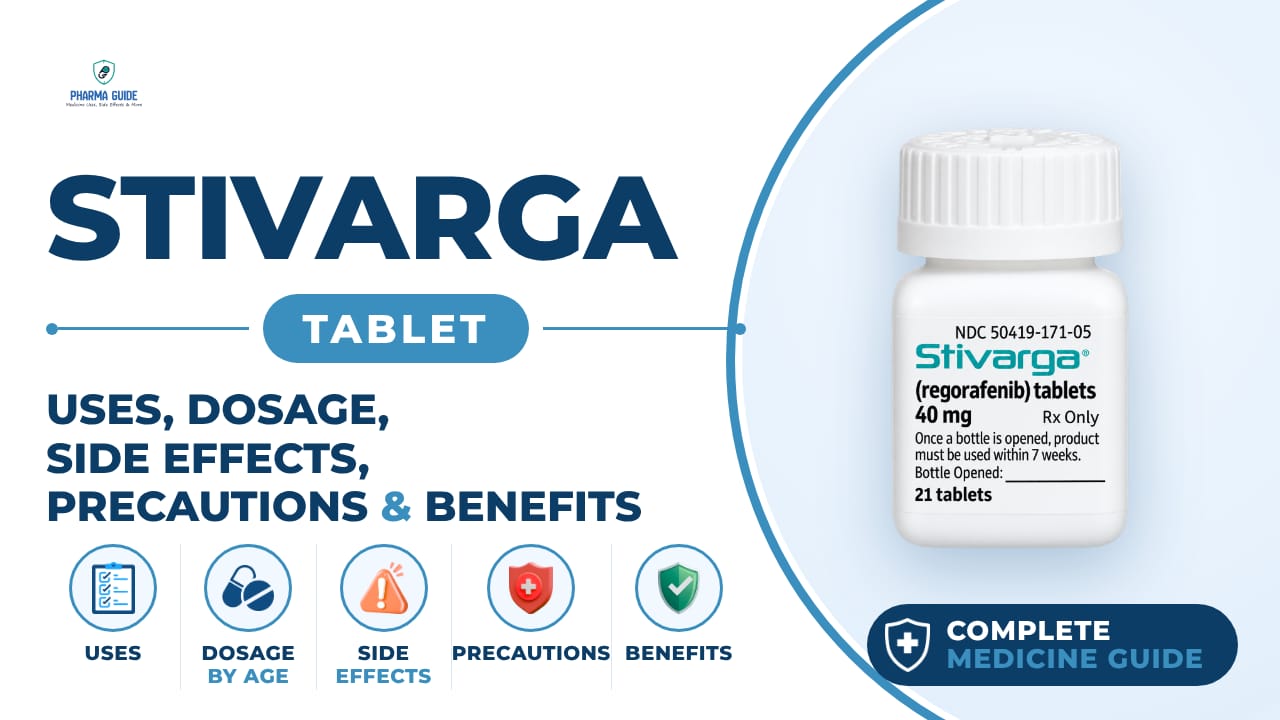
| Generic name | regorafenib |
|---|---|
| Drug class | Kinase inhibitor (antineoplastic agent) |
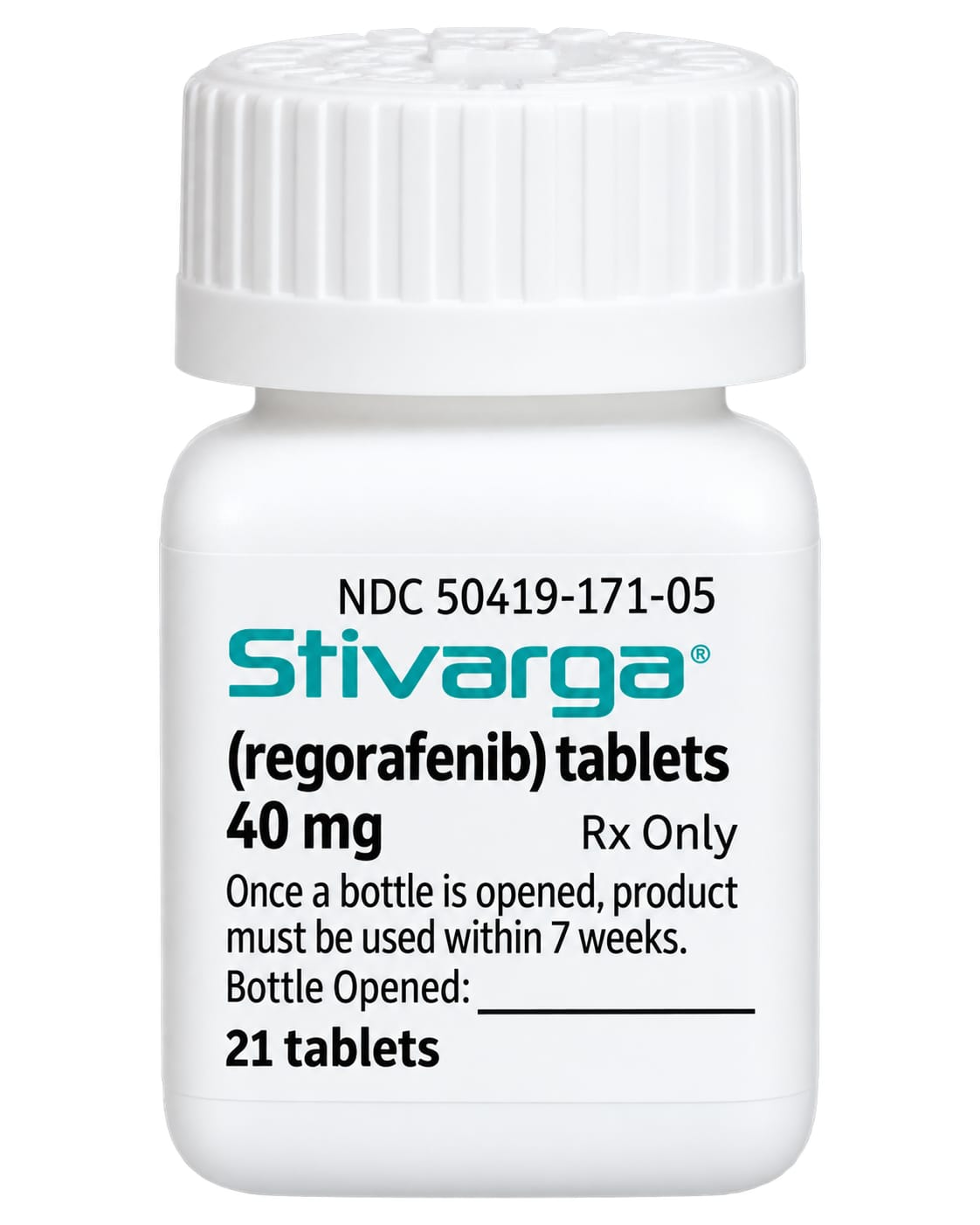
| Forms | Film-coated tablet (40 mg) |
Quick overview
Stivarga Tablet (generic name: regorafenib) is a prescription kinase inhibitor used in cancer treatment. It works by slowing the growth and spread of cancer cells and by cutting off the blood supply that helps cancer grow. It is taken by mouth and is used for certain metastatic colorectal cancers, gastrointestinal stromal tumors (GIST), and hepatocellular carcinoma after earlier treatments have been tried. It carries important warnings, including a boxed warning for liver damage.
What is Stivarga Tablet
Stivarga is a prescription cancer medicine that belongs to the kinase inhibitor class of antineoplastic agents. It works by slowing down the growth and spread of cancer cells and cutting off the blood supply that helps cancer grow. It comes as a tablet taken by mouth.
Stivarga Tablet uses
- Metastatic colorectal cancer (colon or rectal cancer that has spread) in patients previously treated with certain chemotherapy and other cancer medicines
- Gastrointestinal stromal tumor (GIST), a cancer of the stomach or bowel, in patients previously treated with imatinib and sunitinib
- Hepatocellular carcinoma (a type of liver cancer) in patients previously treated with sorafenib
Benefits of Stivarga Tablet
- Treats certain metastatic colorectal cancers
- Treats certain gastrointestinal stromal tumors (GIST)
- Treats certain hepatocellular carcinomas
- Blocks multiple kinases involved in tumor growth and blood-vessel formation
- Provides an oral targeted-therapy option
How Stivarga Tablet works
Stivarga blocks several proteins (kinases) that cancer cells use to grow, form new blood vessels, and spread to other parts of the body. By blocking these signals, it helps slow tumor growth and cuts off the blood supply tumors need.
Stivarga Tablet dosage
Take Stivarga at the same time each day, after a low-fat meal that is not high in calories or fat. Swallow the tablet whole with water; do not crush or chew it. If you miss a dose, take it the same day as soon as you remember; do not take two doses in one day to make up for a missed dose. If you vomit after taking a dose, do not take an extra tablet. This medicine is usually taken once daily for 21 days followed by 7 days off, making up one treatment cycle; repeat as instructed by your doctor. Avoid grapefruit juice and St. John's Wort while taking this medicine.
| Age group | Dose |
|---|---|
| 18–39 years | 160 mg once daily on Days 1–21 of each 28-day cycle |
| 40–64 years | 160 mg once daily on Days 1–21 of each 28-day cycle |
| 65–74 years | Usually 160 mg once daily on Days 1–21, with closer monitoring |
Available forms and strengths
- Film-coated tablet (40 mg)
Side effects of Stivarga Tablet
Common
- Pain, including stomach-area (abdominal) pain
- Tiredness, weakness, fatigue
- Diarrhea
- Decreased appetite
- Infection
- Weight loss
- Voice changes or hoarseness
- High blood pressure
- Fever
- Mouth sores (mucositis)
- Rash
- Nausea
- Hand-foot skin reaction (redness, pain, blisters, swelling of palms/soles)
- Increase in certain liver function tests
Serious
- Severe liver problems, including liver failure (yellowing of skin/eyes, dark urine, confusion)
- Serious or fatal bleeding (vomiting blood, black or bloody stools, coughing up blood, unusual bruising)
- Gastrointestinal perforation or fistula (severe stomach pain, swelling, fever, chills, vomiting)
- Severe infections (fever, severe cough, sore throat, burning when urinating)
- Severe skin reactions including Stevens-Johnson syndrome and toxic epidermal necrolysis
- Severe or uncontrolled high blood pressure, including hypertensive crisis
- Heart attack or decreased blood flow to the heart (chest pain, shortness of breath, feeling faint)
- Reversible posterior leukoencephalopathy syndrome/PRES (severe headache, seizures, confusion, vision changes)
- Wound healing problems after surgery
- Blood clotting problems in small blood vessels (thrombotic microangiopathy)
- Hyperammonemic encephalopathy (confusion, sleepiness, trembling)
- Aneurysms or tears in blood vessel walls
Warnings and precautions
- This medicine carries a boxed warning for severe and sometimes fatal liver damage. Liver function must be checked before starting and regularly during treatment.
- This medicine can cause serious or fatal bleeding anywhere in the body.
- This medicine can cause a tear (perforation) or abnormal connection (fistula) in the stomach or intestines, which can be fatal.
- This medicine increases the risk of serious infections, some of which have been fatal.
- This medicine can cause high blood pressure, including severe hypertensive crises.
- This medicine can cause heart problems such as reduced blood flow to the heart or a heart attack.
- This medicine can cause wound healing problems, so treatment should be stopped before planned surgery.
- This medicine can cause fetal harm; effective birth control is needed during and after treatment for both men and women.
- This medicine can harm an unborn baby and should not be used during pregnancy unless clearly necessary. Women who can become pregnant should use effective birth control during treatment and for a period after the last dose, and should tell their doctor right away if they become pregnant.
- Breastfeeding should be avoided during treatment and for a period after the last dose, since it is not known if the medicine passes into breast milk and it could harm a nursing baby.
- No dose change is generally needed for people with kidney problems, including severe kidney impairment, but this medicine has not been studied in people on dialysis.
- This medicine is processed mainly by the liver and can cause serious liver injury. Liver function will be checked before and during treatment. It is not recommended for people with severe liver problems.
- Patients should tell their doctor if they drink alcohol.
- It isn't known exactly how this medicine affects driving ability, so patients should avoid driving or using machinery if they have symptoms that affect concentration or reaction time.
Storage
- Store at room temperature, with excursions permitted between 15 to 30°C (59 to 86°F)
- Store tablets in the original bottle and do not remove the desiccant
- Keep the bottle tightly closed after first opening
- Discard any unused tablets 7 weeks after opening the bottle
- Keep out of the sight and reach of children
- Dispose of unused tablets according to local requirements
When to see a doctor
- Get medical help right away for signs of liver damage, such as yellowing skin or eyes, dark urine, or confusion.
- Seek immediate help for signs of bleeding such as vomiting blood, black or bloody stools, or coughing up blood.
- Contact a healthcare provider immediately for severe stomach pain, swelling, fever, chills, nausea, vomiting, or dehydration, which may signal a tear in the stomach or intestine.
- Seek emergency help immediately for chest pain, shortness of breath, dizziness, or feeling like passing out, which may be signs of a heart problem.
- Contact a doctor right away for severe headache, seizures, confusion, or vision changes, which may be signs of a rare brain condition (PRES).
- Tell your healthcare provider right away about signs of infection such as fever, severe cough, sore throat, or pain when urinating.
Alternatives
- Trifluridine/tipiracil
- Fruquintinib
- Sorafenib
Watch the video
FAQs
What is Stivarga Tablet used for?
Stivarga is used to treat metastatic colorectal cancer, gastrointestinal stromal tumors (GIST), and hepatocellular carcinoma in patients who have already tried certain earlier treatments.
How does Stivarga Tablet work?
It blocks several kinases that cancer cells use to grow, form new blood vessels, and spread, which helps slow tumor growth and cuts off the blood supply tumors need.
How should Stivarga Tablet be taken?
Stivarga is taken at the same time each day after a low-fat, lower-calorie meal, swallowed whole with water. It is usually taken once daily for 21 days followed by 7 days off, making up one treatment cycle.
What are the serious risks of Stivarga Tablet?
Stivarga carries a boxed warning for severe, sometimes fatal liver damage, and can also cause serious bleeding, gastrointestinal perforation or fistula, severe infections, severe skin reactions, high blood pressure, heart problems, and a rare brain condition called PRES.
Can Stivarga Tablet be used during pregnancy?
No, it can harm an unborn baby and should not be used during pregnancy unless clearly necessary; effective birth control is needed during and after treatment, and breastfeeding should be avoided.
General information, not medical advice
Your prescriber and the leaflet in your pack know your situation. This page does not.
- Follow your prescriber and the leaflet
- Don't start, stop, or change a dose on your own
- Doses and warnings differ by country and product
Sources
Video
Related medicines
Lenvima Capsule: Uses, Dosage, Side Effects, Precautions and Alternates
Kinase inhibitor (antineoplastic agent)
Lenvima Capsule (lenvatinib) is a kinase inhibitor for thyroid, kidney, liver, and uterine cancers. Learn uses, dosage, side effects, and warnings.

Injectafer Injection: Uses, Dosage, Side Effects, Precautions and Alternates
Iron products
Injectafer (ferric carboxymaltose) treats iron deficiency anemia and heart failure-related iron deficiency via IV. Learn uses, dosage, side effects, and