
Safety
General information, not medical advice
Your prescriber and the leaflet in your pack know your situation. This page does not.
- Follow your prescriber and the leaflet
- Don't start, stop, or change a dose on your own
- Doses and warnings differ by country and product
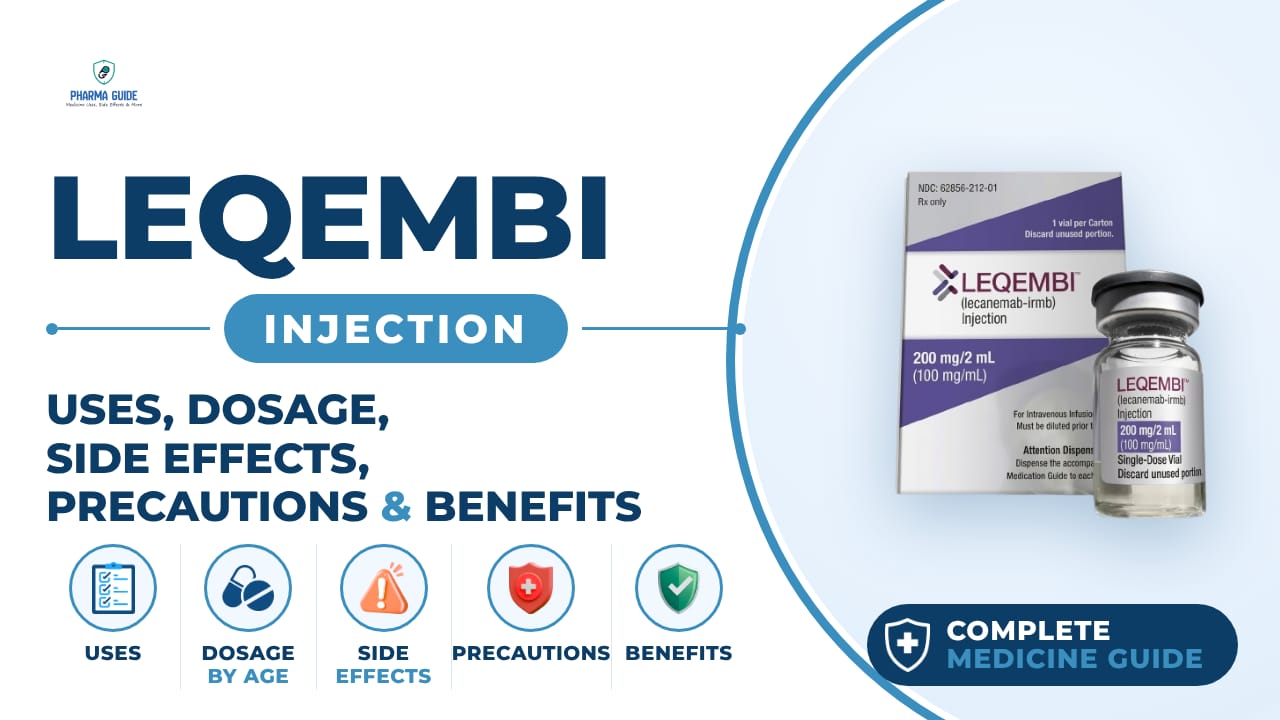
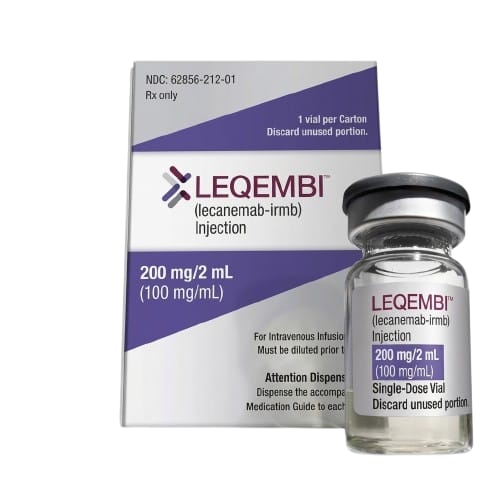
Leqembi Injection: Uses, Dosage, Side Effects, Precautions and Alternates
| Generic name | lecanemab-irmb |
|---|---|
| Drug class | Amyloid beta-directed antibody (monoclonal antibody / miscellaneous central nervous system agent) |
| Forms | Injection |
Quick overview
Leqembi Injection (lecanemab-irmb) is a prescription amyloid beta-directed antibody used to treat early Alzheimer's disease, including mild cognitive impairment or mild dementia. It does not cure or fully stop Alzheimer's disease, but it can help slow its progression. It is given either as an intravenous infusion by a healthcare provider or as a self-injection under the skin using the IQLIK autoinjector.
What is Leqembi Injection
Leqembi is a prescription medicine given by injection that is used to treat people with early Alzheimer's disease, including mild cognitive impairment or mild dementia. It does not cure Alzheimer's disease or stop it completely, but it can help slow its progression.
Leqembi Injection uses
- Treats Alzheimer's disease in people with mild cognitive impairment (MCI) or mild dementia stage of disease
- Used only after the presence of amyloid beta pathology has been confirmed
Benefits of Leqembi Injection
- Treats early Alzheimer's disease.
- Helps slow disease progression.
- Targets amyloid-beta protein buildup in the brain.
- May slow decline in memory and thinking.
- May help preserve daily functioning for longer.
How Leqembi Injection works
Leqembi is an antibody that attaches to clumped forms of a brain protein called amyloid beta, including both soluble clumps and the solid plaques that build up in Alzheimer's disease. By binding to these clumps, it helps the body clear amyloid beta and reduce plaque buildup in the brain, which is thought to help slow the decline in memory, thinking, and behavior.
Leqembi Injection dosage
Leqembi is given either as an infusion into a vein by a healthcare provider, or as a self-injection under the skin using the IQLIK autoinjector. A healthcare provider will guide you through your first doses of the self-injection before deciding if you or a caregiver can give it at home.
Self-injections are given into the front of the thighs or the stomach area; a healthcare provider or caregiver may also inject into the back of the upper arm. Do not inject into moles, scars, bruises, tattoos, or skin that is red, hard, tender, or injured. Use a different injection site each time, at least 1 inch away from the last site, and avoid the area within 2 inches of the belly button. Do not inject through clothing or shake the autoinjector.
Wash your hands before preparing to inject. Let the autoinjector sit at room temperature for the stated warm-up time before use, and do not try to speed up the warming process. If your dose requires two injections, give the second one right away after the first, using a site at least 1 inch from the first injection.
If you miss a self-injection dose, give it as soon as you can, up to 6 days after the missed dose, then go back to your regular schedule. If you miss an infusion dose, contact your provider to get the next dose as soon as possible.
| Age group | Dose |
|---|---|
| Under 18 years | Not recommended |
| 18–64 years | 10 mg/kg, once every 2 weeks |
| 65+ years | 10 mg/kg, once every 2 weeks |
Available forms and strengths
- Injection
Side effects of Leqembi Injection
Common
- Infusion-related reactions (with IV use)
- Injection-related reactions such as redness, swelling, heat, pain, itching, rash, bump, bruising, or blood collection under the skin at the injection site
- Headache
- Amyloid-Related Imaging Abnormalities (ARIA), seen on brain scans
- Cough
- Diarrhea
- Chills, fatigue, or fever after an injection
Serious
- ARIA (brain swelling or bleeding) which can sometimes be serious or life-threatening
- Serious allergic reactions, including swelling of the face, lips, mouth, or tongue, hives, or difficulty breathing
- Severe infusion-related reactions with fever, changes in blood pressure, or trouble breathing
- Irregular heart rhythm (atrial fibrillation)
- Decreased white blood cell (lymphocyte) counts
- Large brain hemorrhage (bleeding) greater than 1 cm in diameter
Warnings and precautions
- Leqembi carries the FDA's strongest warning for a brain-related side effect called ARIA, which involves swelling or bleeding in the brain seen on MRI scans. It usually causes no symptoms but can rarely be serious or fatal.
- People with a certain genetic trait (having two copies of the ApoE4 gene) have a higher risk of ARIA. Testing can show if you carry this gene, and your provider should discuss this with you before testing.
- Taking blood-thinning medicines, including aspirin, while on Leqembi may raise the risk of bleeding in the brain.
- Your healthcare provider will order MRI brain scans before you start treatment and at set points during treatment to check for ARIA.
- You should carry information stating that you are being treated with Leqembi, since ARIA symptoms can look like a stroke.
- Do not use Leqembi if you have had a serious allergic reaction to it or any of its ingredients.
- It is not known if Leqembi can harm an unborn baby. Tell your healthcare provider if you are pregnant, plan to become pregnant, or become pregnant during treatment.
- It is not known if Leqembi passes into breast milk. Talk with your healthcare provider about the best way to feed your baby if you are breastfeeding during treatment.
- There is no known direct interaction between Leqembi and alcohol, but experts suggest people with Alzheimer's disease avoid alcohol because it can worsen confusion and memory problems, and regular alcohol use may affect how well the medicine works.
Storage
- Store LEQEMBI IQLIK autoinjectors in a refrigerator between 36°F and 46°F (2°C to 8°C)
- Do not freeze
- Keep the autoinjector in its original carton until ready to use, to protect it from light
- LEQEMBI IQLIK may be stored at room temperature up to 77°F (25°C) for up to 14 days in the original carton; do not put it back in the refrigerator once it has reached room temperature
- Throw away LEQEMBI IQLIK that is out of date, or that has not been stored the right way
- Keep the autoinjector and all medicines out of the reach of children
- Do not shake LEQEMBI IQLIK
- Throw away (dispose of) the autoinjector in an FDA-cleared sharps disposal container, not in the household trash
When to see a doctor
- Call your healthcare provider or go to the nearest emergency room right away if you have headache, confusion, dizziness, vision changes, nausea, difficulty walking, seizures, difficulty speaking, or muscle weakness, since these may be signs of ARIA.
- Get medical help right away if you notice swelling of the face, lips, mouth, or tongue, hives, or difficulty breathing, as these can be signs of a serious allergic reaction.
- Tell your healthcare provider right away if you notice fever, flu-like symptoms, nausea or vomiting, dizziness, changes in heart rate, trouble breathing, or changes in blood pressure during or after an infusion.
Alternatives
- Aducanumab (Aduhelm)
- Donanemab (Kisunla)
Watch the video
FAQs
What is Leqembi Injection used for?
Leqembi is used to treat early Alzheimer's disease, including mild cognitive impairment or mild dementia, after amyloid beta pathology has been confirmed. It does not cure Alzheimer's disease but can help slow its progression.
How is Leqembi given?
Leqembi is given either as an intravenous infusion by a healthcare provider or as a self-injection under the skin using the IQLIK autoinjector, into the thighs or stomach area (or upper arm by a provider/caregiver).
What is the dosage for Leqembi?
For adults 18 years and older, the dose is 10 mg/kg once every 2 weeks. It is not recommended for use in those under 18 years old.
What are the serious side effects of Leqembi?
Serious side effects include ARIA (brain swelling or bleeding), serious allergic reactions, severe infusion-related reactions, irregular heart rhythm, decreased white blood cell counts, and large brain hemorrhage.
What is ARIA and why is it a concern with Leqembi?
ARIA (Amyloid-Related Imaging Abnormalities) involves swelling or bleeding in the brain seen on MRI scans. Leqembi carries the FDA's strongest warning for this risk, which usually causes no symptoms but can rarely be serious or fatal, especially in people with two copies of the ApoE4 gene.
General information, not medical advice
Your prescriber and the leaflet in your pack know your situation. This page does not.
- Follow your prescriber and the leaflet
- Don't start, stop, or change a dose on your own
- Doses and warnings differ by country and product
Sources
Video
Related medicines

Injectafer Injection: Uses, Dosage, Side Effects, Precautions and Alternates
Iron products
Injectafer (ferric carboxymaltose) treats iron deficiency anemia and heart failure-related iron deficiency via IV. Learn uses, dosage, side effects, and

Gliclazide Tablet: Uses, Dosage, Side Effects, Precautions and Alternates
Sulfonylurea (hypoglycemic/antidiabetic agent)
Gliclazide Tablet is a sulfonylurea for type 2 diabetes that boosts insulin release. Learn about dosage, side effects, warnings, and precautions.