
Safety
General information, not medical advice
Your prescriber and the leaflet in your pack know your situation. This page does not.
- Follow your prescriber and the leaflet
- Don't start, stop, or change a dose on your own
- Doses and warnings differ by country and product
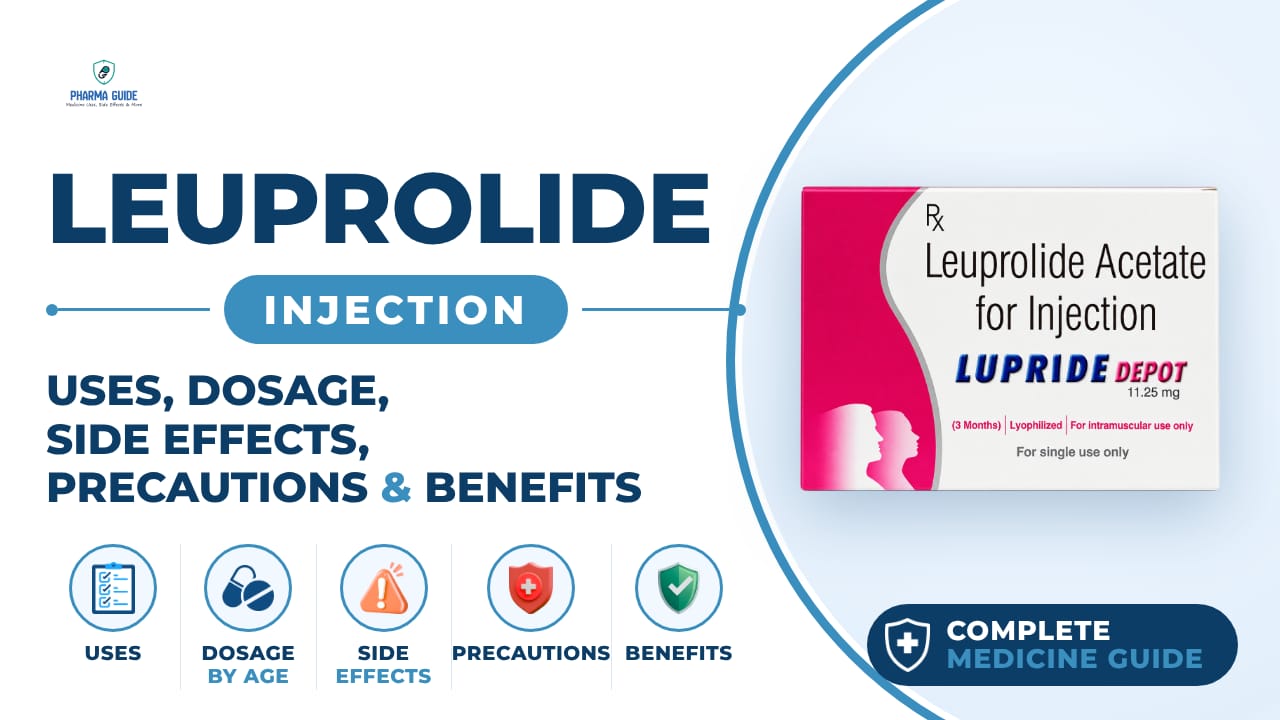
Leuprolide Injection: Uses, Dosage, Side Effects, Precautions and Alternates
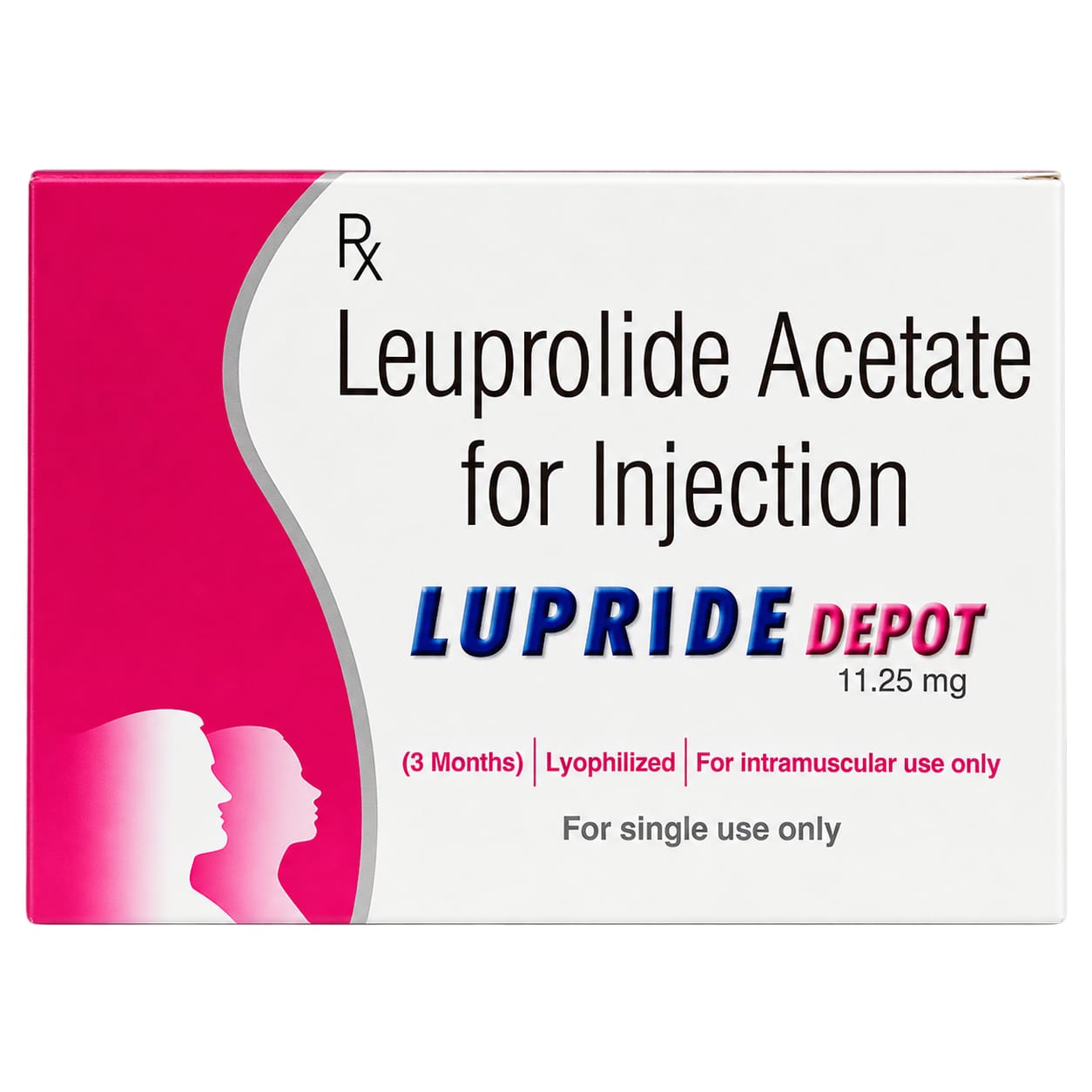
| Generic name | leuprolide acetate |
|---|---|
| Drug class | GnRH agonist (gonadotropin-releasing hormone agonist) |
| Forms | Injection |
Quick overview
Leuprolide Injection (leuprolide acetate) is a GnRH agonist given by injection under the skin. It is used mainly to lower testosterone levels in advanced prostate cancer, and also to treat central precocious puberty, endometriosis, and anemia caused by uterine fibroids, as well as in certain fertility-treatment protocols. It works by interrupting the body's normal hormone signaling, causing testosterone levels to drop to very low levels with regular use. The usual adult dose is 7.5 mg once a month, given exactly as prescribed.
What is Leuprolide Injection
Leuprolide acetate injection is a man-made version of a hormone that occurs naturally in your body called gonadotropin releasing hormone (GnRH or LH-RH). It is a sterile liquid that is injected under the skin to treat advanced prostate cancer by lowering testosterone levels.
Leuprolide Injection uses
- Advanced prostate cancer
- Central precocious puberty (early puberty in children)
- Endometriosis
- Anemia caused by uterine fibroids
- Certain fertility-treatment protocols
Benefits of Leuprolide Injection
- Treats advanced prostate cancer
- Helps manage endometriosis
- Can reduce symptoms from uterine fibroids
- Treats central precocious puberty
- Suppresses production of certain sex hormones
How Leuprolide Injection works
Leuprolide works like the natural hormone GnRH, but interrupts the normal chain of events that leads to testosterone production. At first it causes a brief rise in testosterone, but with daily use it lowers testosterone down to very low (castrate) levels within two to four weeks. If you stop the drug, your body starts making testosterone again.
Leuprolide Injection dosage
Wash your hands thoroughly with soap and water before preparing an injection. Check the liquid in the vial each time; it should look clear with no particles — do not use it if it looks cloudy or has particles in it. Wipe the rubber stopper and metal ring with an alcohol wipe each time before use. Inject the medicine under the skin (subcutaneously) at a different injection site each day to protect your skin.
You need an injection every day for the medicine to keep working — do not stop your injections just because you feel better. Toward the end of a two-week period, take extra care to keep the needle tip in the liquid while drawing up your dose, since less liquid will be left in the vial. Do not try to draw out every last drop from the vial, since this increases the risk of drawing in air and getting an incomplete dose.
Use a disposable syringe only once and dispose of it safely afterward. If you need an alternative to the syringe supplied, low-dose insulin syringes may be used instead.
| Age group | Dose |
|---|---|
| Under 18 years | Not recommended |
| 18–64 years | 7.5 mg, once/month |
| 65+ years | 7.5 mg, once/month |
Available forms and strengths
- Injection
Side effects of Leuprolide Injection
Common
- Hot flashes/sweats
- Decreased testicular size
- Breast tenderness or enlargement (gynecomastia)
- Impotence
- General pain
- Headache
- Insomnia/sleep disorders
- Dizziness/lightheadedness
- Bone pain
- Nausea or vomiting
- Constipation
- High blood pressure
- Swelling (peripheral edema)
- Weakness (asthenia)
- Frequent or urgent urination
- Blood in urine
- Dermatitis/skin reactions
- Injection site reactions such as burning, itching, or swelling
Serious
- Severe allergic reaction (hives, difficulty breathing, swelling of face or throat)
- Severe skin reactions such as Stevens-Johnson syndrome, DRESS, or AGEP (fever, sore throat, burning eyes, skin pain, blistering or peeling rash, swollen glands)
- Spinal cord compression or paralysis
- Ureteral (urinary tract) obstruction
- Worsening bone pain or new nerve symptoms (weakness, numbness, tingling) in the first weeks of treatment
- Sudden severe headache, vomiting, vision changes, or altered mental status (possible pituitary apoplexy)
- Heart attack, stroke, or sudden cardiac death
- High blood sugar or new diabetes
- Severe liver problems (loss of appetite, stomach pain, dark urine, yellowing of skin or eyes)
- Seizures
- Suicidal thoughts or attempts
- Decreased bone density with long-term use
Warnings and precautions
At the start of treatment, this medicine causes a temporary rise in testosterone, which can briefly worsen prostate cancer symptoms or cause increased bone pain during the first few weeks. Blockage of the urinary tract and spinal cord compression have occurred with this type of medicine, which may lead to paralysis or even death in rare cases.
This medicine can cause severe skin reactions that can be life-threatening, including conditions involving organ damage or needing skin grafts. Men using this medicine have a higher chance of developing high blood sugar or diabetes. There is an increased risk of heart attack, sudden cardiac death, and stroke in men using this type of medicine.
This medicine may affect the heart's electrical rhythm (QT interval), which can be risky for people with certain heart conditions or electrolyte problems. Rare but serious allergic reactions have occurred with GnRH agonist medicines like this one.
This medicine may harm an unborn baby and should not be used during pregnancy. It is not meant for use in women who are or may become pregnant.
It isn't known if this medicine passes into breast milk, and it could cause serious side effects in a nursing baby. A decision should be made to either stop breastfeeding or stop the medicine.
How this medicine behaves in people with kidney problems has not been studied. How this medicine behaves in people with liver problems has not been studied, and serious liver injury has been reported.
No major direct interaction with alcohol is established, but excessive alcohol may worsen bone loss and other treatment-related effects.
Dizziness, weakness, or visual symptoms may occur; avoid driving if affected.
Storage
- Store below 25°C (77°F)
- Do not freeze
- Protect from light
- Store vial in carton until contents are used
- Do not store near a radiator or other very warm place
- Keep this and all other medications out of reach of children
- Do not leave your drug or hypodermic syringes where anyone can pick them up
- Put used needles, syringes, and vials in an FDA-cleared sharps disposal container right away after use; do not throw them away in household trash
When to see a doctor
Get emergency help right away if you have signs of a serious allergic reaction, such as hives, trouble breathing, or swelling of the face or throat.
Call your doctor right away if you have a seizure, sudden mood or behavior changes, severe headaches, ringing in your ears, dizziness, fainting, a fast or pounding heartbeat, nausea, vision problems, or pain behind your eyes.
Call your doctor right away if you have bone pain with loss of movement in any part of your body, muscle weakness, loss of bladder or bowel control, or numbness, weakness, or tingling in your back, legs, or feet.
Seek medical help immediately if you have symptoms of a possible pituitary problem, such as a sudden severe headache, vomiting, vision changes, or changes in mood or behavior.
Get medical help right away for signs of a heart attack (chest pain or pressure spreading to the jaw or shoulder, nausea, sweating) or stroke (sudden numbness or weakness, severe headache, slurred speech, vision or balance problems).
Tell your doctor if you develop signs of liver problems, such as loss of appetite, stomach pain, tiredness, itching, dark urine, or yellowing of the skin or eyes.
Contact your doctor if symptoms such as increased bone pain, difficulty urinating, or new nerve symptoms continue beyond the first few weeks of treatment.
Alternatives
- Goserelin
- Triptorelin
- Histrelin implant
Watch the video
FAQs
What is Leuprolide Injection used for?
It is used mainly to lower testosterone in advanced prostate cancer, and also to treat central precocious puberty, endometriosis, anemia from uterine fibroids, and in certain fertility-treatment protocols.
How does Leuprolide Injection work?
It works like the natural hormone GnRH but interrupts the normal chain of events leading to testosterone production. It causes a brief rise in testosterone at first, then lowers it to very low castrate levels within two to four weeks with regular use.
What is the usual dose of Leuprolide Injection?
The usual adult dose is 7.5 mg given once a month, exactly as prescribed. It is not recommended for use in people under 18 years old.
What are the common side effects of Leuprolide Injection?
Common side effects include hot flashes, decreased testicular size, breast tenderness, impotence, headache, insomnia, dizziness, bone pain, nausea, constipation, high blood pressure, swelling, weakness, urinary changes, and injection site reactions.
Can Leuprolide Injection be used during pregnancy?
No, this medicine may harm an unborn baby and should not be used during pregnancy or in women who are or may become pregnant.
General information, not medical advice
Your prescriber and the leaflet in your pack know your situation. This page does not.
- Follow your prescriber and the leaflet
- Don't start, stop, or change a dose on your own
- Doses and warnings differ by country and product
Sources
- Leuprolide Acetate Injection Prescribing Information (Meitheal Pharmaceuticals Inc)
- Lupron Injection Prescribing Information (Abbott Laboratories / accessdata.fda.gov)
- Drugs.com - Leuprolide
Video
Related medicines

Injectafer Injection: Uses, Dosage, Side Effects, Precautions and Alternates
Iron products
Injectafer (ferric carboxymaltose) treats iron deficiency anemia and heart failure-related iron deficiency via IV. Learn uses, dosage, side effects, and

Gliclazide Tablet: Uses, Dosage, Side Effects, Precautions and Alternates
Sulfonylurea (hypoglycemic/antidiabetic agent)
Gliclazide Tablet is a sulfonylurea for type 2 diabetes that boosts insulin release. Learn about dosage, side effects, warnings, and precautions.