
Safety
General information, not medical advice
Your prescriber and the leaflet in your pack know your situation. This page does not.
- Follow your prescriber and the leaflet
- Don't start, stop, or change a dose on your own
- Doses and warnings differ by country and product
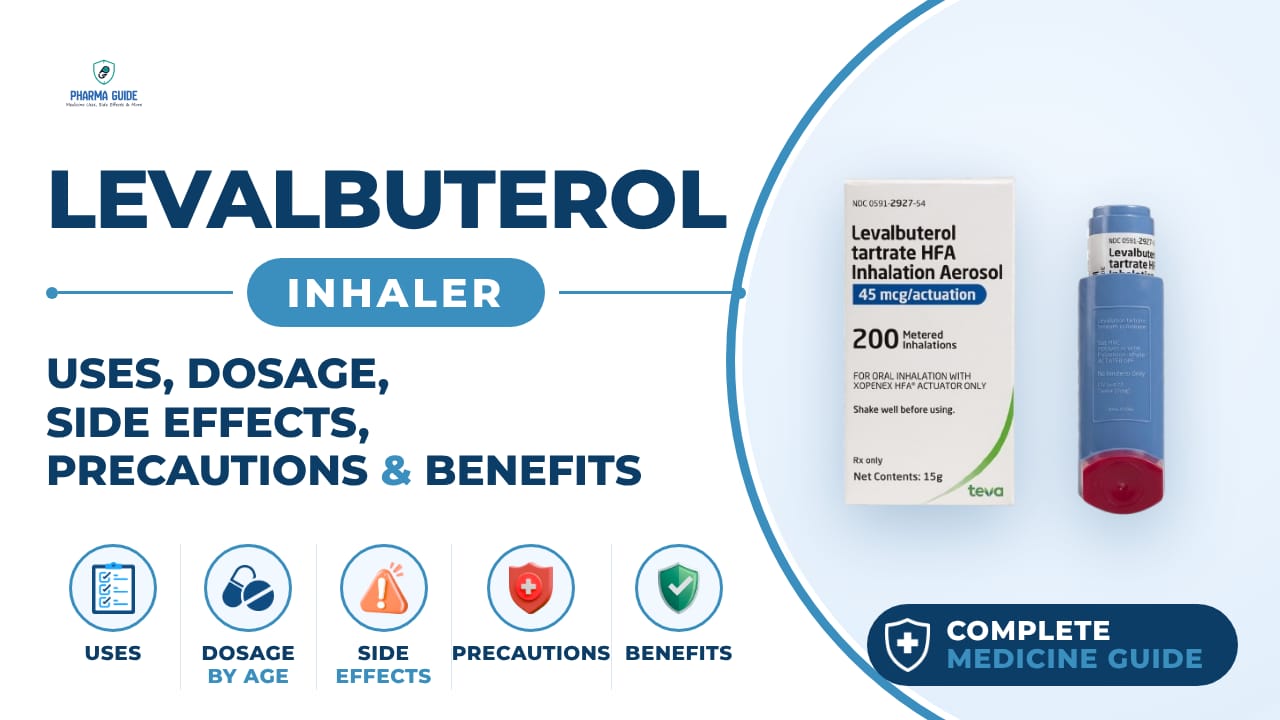
Levalbuterol Inhaler: Uses, Dosage, Side Effects, Precautions and Alternates
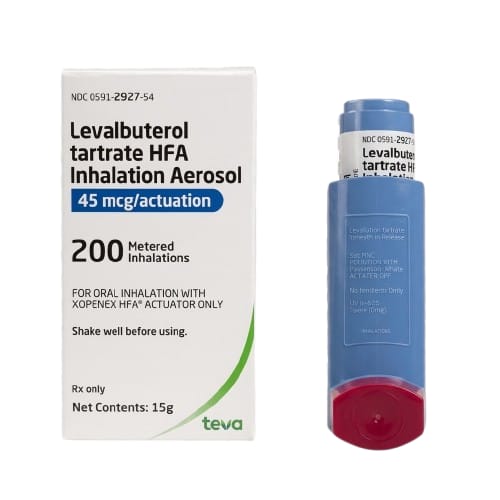
| Generic name | levalbuterol, levalbuterol HCl, levalbuterol hydrochloride, levalbuterol tartrate |
|---|---|
| Drug class | beta-adrenergic agonist, bronchodilator (adrenergic bronchodilator) |
| Forms | aerosol metered-dose inhaler |
Quick overview
Levalbuterol Inhaler is a short-acting inhaled medicine used to treat or prevent breathing problems caused by lung diseases like asthma and COPD. It comes as an inhaler and as a liquid solution used with a nebulizer. It works by relaxing the muscles around the airways, making breathing easier. It belongs to the beta-adrenergic agonist (bronchodilator) class of medicines.
What is Levalbuterol Inhaler
Levalbuterol is a short-acting inhaled medicine used to treat or prevent breathing problems caused by lung diseases like asthma and COPD. It comes as an inhaler and as a liquid solution used with a nebulizer. The generic names for this medicine include levalbuterol, levalbuterol HCl, levalbuterol hydrochloride, and levalbuterol tartrate.
Levalbuterol Inhaler uses
- Prevent or relieve wheezing, shortness of breath, coughing, and chest tightness caused by asthma
- Treat or prevent bronchospasm (tightening of the airway muscles) in people with reversible obstructive airway disease
- Used for COPD (chronic obstructive pulmonary disease) symptoms
Benefits of Levalbuterol Inhaler
- Provides fast relief from breathing difficulty by relaxing airway muscles
- Helps control asthma and COPD symptoms so breathing is easier
How Levalbuterol Inhaler works
Levalbuterol works by relaxing the muscles around your airways, which opens them up and makes breathing easier.
Levalbuterol Inhaler dosage
This medicine is inhaled into your mouth, either through an inhaler or a nebulizer machine. If using an inhaler, shake it well before each use. Prime the inhaler by spraying it into the air before your first use or if it hasn't been used in a few days.
Breathe out fully, then close your lips around the mouthpiece and breathe in slowly while pressing the canister. Hold your breath for about 10 seconds after inhaling, then breathe out slowly. If you need more than one puff, wait at least one minute and shake the inhaler again before the next puff.
If using a nebulizer, sit upright and breathe calmly and evenly until no more mist forms, which usually takes 5 to 15 minutes. Do not mix the nebulizer solution with other medicines unless your doctor tells you to. Only use the nebulizer solution if it looks clear and colorless.
Continue using this medicine regularly as prescribed, even if you feel well; it controls symptoms but does not cure the underlying lung disease. An adult should supervise a child using this medicine. Be careful not to get the medicine in your eyes. Do not use the inhaler near open flame or heat sources.
| Age group | Dose |
|---|---|
| Under 4 years | Not recommended |
| 4–11 years | 1–2 puffs, 3 times/day |
| 12–60 years | 2 puffs, 3 times/day |
| 60+ years | 2 puffs, 3 times/day |
Available forms and strengths
- Aerosol metered-dose inhaler
Side effects of Levalbuterol Inhaler
Common
- Dizziness, nervousness, or shaking (tremor)
- Headache
- Sore throat, runny nose, or stuffy nose
- Chest pain or tightness
- Irregular heartbeats
- Vomiting or nausea
- Feeling of skipped heartbeats
- Fast heartbeat
- Inflammation of the airways (bronchitis)
- Heartburn
- Cough
- Weakness, fever, diarrhea, muscle pain, or leg cramps
Serious
- Signs of a serious allergic reaction: hives, rash, itching, swelling of the face, lips, mouth, tongue, or throat, trouble breathing or swallowing
- Sudden worsening breathing problems or wheezing right after using the medicine
- Fast or pounding heartbeat, fluttering in the chest, or chest pain
- High blood pressure readings (top number 180 or higher, or bottom number 120 or higher)
- Signs of low potassium: muscle weakness or cramps, leg cramps, constipation, irregular heartbeats, extreme thirst, increased urination, numbness or tingling
Warnings and precautions
- This medicine can sometimes cause sudden wheezing or trouble breathing right after you use it, especially the first time you use a new inhaler canister. Call your doctor right away if this happens, and do not use it again until your doctor says it's okay.
- Using too much of this medicine or using it too often can cause life-threatening side effects, including effects on the heart.
- If your breathing symptoms get worse or you need to use this medicine more often than usual, this could mean your asthma is getting worse. Contact your doctor right away instead of using extra doses.
- Do not use this medicine if you are allergic to levalbuterol or albuterol.
- This medicine can cause low potassium levels in the blood, which can be serious and in rare cases life-threatening.
- It is not known if levalbuterol can harm an unborn baby. Tell your doctor if you are pregnant or planning to become pregnant.
- It is not known if levalbuterol passes into breast milk. Tell your doctor if you are breastfeeding or plan to breastfeed so they can advise you.
- People with kidney disease should tell their doctor, since this may affect how the medicine is handled by the body.
- It is not known whether drinking alcohol affects this medicine.
Storage
- Store the inhaler at room temperature, between 68 F and 77 F (20 C and 25 C); it can tolerate brief exposure to 59 F to 86 F (15 C to 30 C), such as during transport
- Store in a cool, dry place; do not freeze or expose to heat, flames, or direct sunlight
- Keep the cap on the inhaler when not in use, and store it standing up with the cap and mouthpiece on the bottom
- Store nebulizer solution vials in the foil pouch, protected from light and excessive heat, at room temperature
- If the foil pouch has more than one vial, use all vials within two weeks of opening the pouch
- If a vial is taken out of the pouch and not used right away, protect it from light and use within one week
- Do not puncture the inhaler canister and do not throw it into a fire or incinerator
- Dispose of unneeded medicine through a medicine take-back program rather than flushing it down the toilet
- Keep all medicine out of the sight and reach of children
When to see a doctor
- Stop using the medicine and get help right away if you have signs of a serious allergic reaction, such as breathing problems, swelling of the face, lips, mouth, tongue or throat, hives, or trouble swallowing.
- Stop using the medicine and contact your doctor right away if your breathing gets worse instead of better immediately after using it.
- Get medical attention right away if you have a very high blood pressure reading, chest pain, a fast or irregular heartbeat, or if you feel your heartbeat more than usual.
- If you think you have used too much of this medicine, get emergency medical help or contact a poison control center right away, since an overdose can be fatal.
Alternatives
- Salbutamol
- Albuterol
- Budesonide
Watch the video
FAQs
What is Levalbuterol Inhaler used for?
It is used to prevent or relieve wheezing, shortness of breath, coughing, and chest tightness caused by asthma, and to treat or prevent bronchospasm in people with reversible obstructive airway disease, including COPD.
How does Levalbuterol Inhaler work?
It works by relaxing the muscles around the airways, which opens them up and makes breathing easier.
What is the typical dosage for Levalbuterol Inhaler?
Dosing depends on age: children 4–11 years take 1–2 puffs three times a day, while people aged 12 and older, including those over 60, take 2 puffs three times a day. It is not recommended for children under 4 years.
What are the common side effects of Levalbuterol Inhaler?
Common side effects include dizziness, nervousness or shaking, headache, sore or stuffy nose, chest pain or tightness, irregular or fast heartbeats, nausea or vomiting, bronchitis, heartburn, cough, and weakness, fever, diarrhea, muscle pain, or leg cramps.
What warnings should I know before using Levalbuterol Inhaler?
It can cause sudden wheezing or trouble breathing right after use, especially with a new canister, and overuse can lead to life-threatening heart effects or low potassium levels. Do not use it if you are allergic to levalbuterol or albuterol.
General information, not medical advice
Your prescriber and the leaflet in your pack know your situation. This page does not.
- Follow your prescriber and the leaflet
- Don't start, stop, or change a dose on your own
- Doses and warnings differ by country and product
Sources
Video
Related medicines

Injectafer Injection: Uses, Dosage, Side Effects, Precautions and Alternates
Iron products
Injectafer (ferric carboxymaltose) treats iron deficiency anemia and heart failure-related iron deficiency via IV. Learn uses, dosage, side effects, and

Gliclazide Tablet: Uses, Dosage, Side Effects, Precautions and Alternates
Sulfonylurea (hypoglycemic/antidiabetic agent)
Gliclazide Tablet is a sulfonylurea for type 2 diabetes that boosts insulin release. Learn about dosage, side effects, warnings, and precautions.