
Safety
General information, not medical advice
Your prescriber and the leaflet in your pack know your situation. This page does not.
- Follow your prescriber and the leaflet
- Don't start, stop, or change a dose on your own
- Doses and warnings differ by country and product
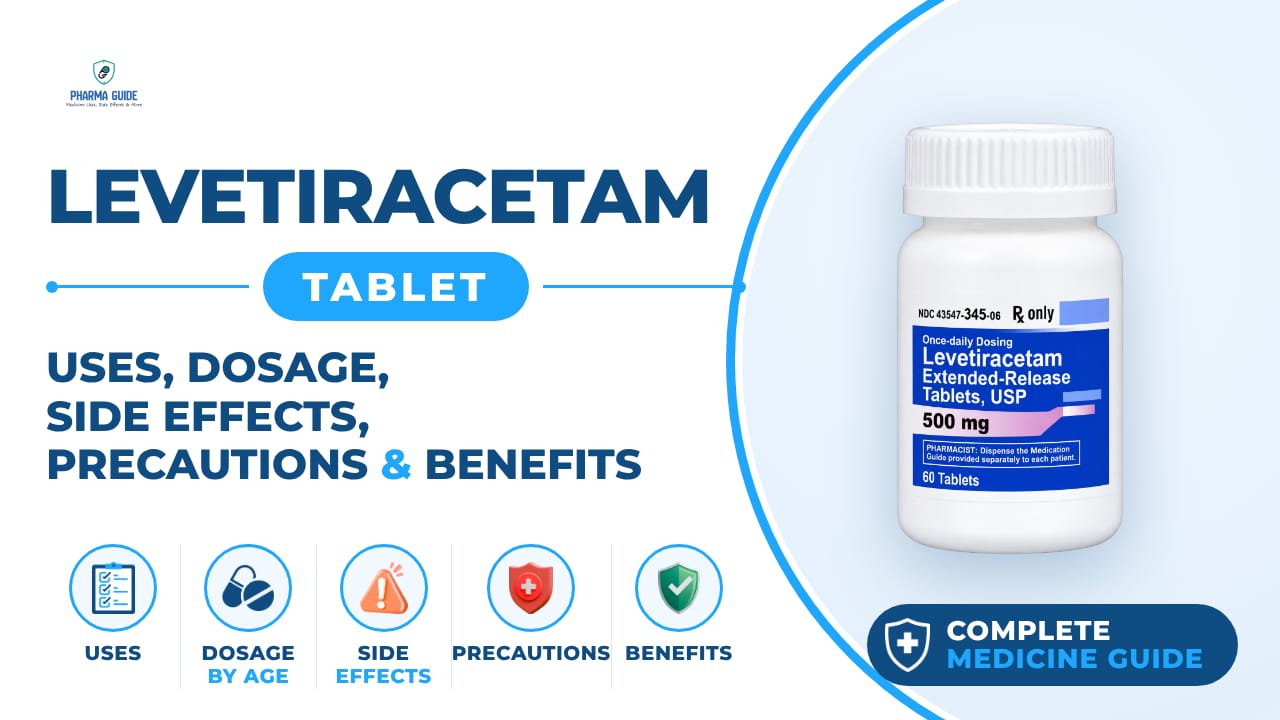
Levetiracetam Tablet: Uses, Dosage, Side Effects, Precautions and Alternates
| Generic name | Levetiracetam |
|---|---|
| Drug class | Antiepileptic (anticonvulsant) |
| Forms | Tablet (film-coated), Oral solution/liquid, Granules, Orodispersible tablets (dissolve in the mouth), Intravenous (IV) infusion |
Quick overview
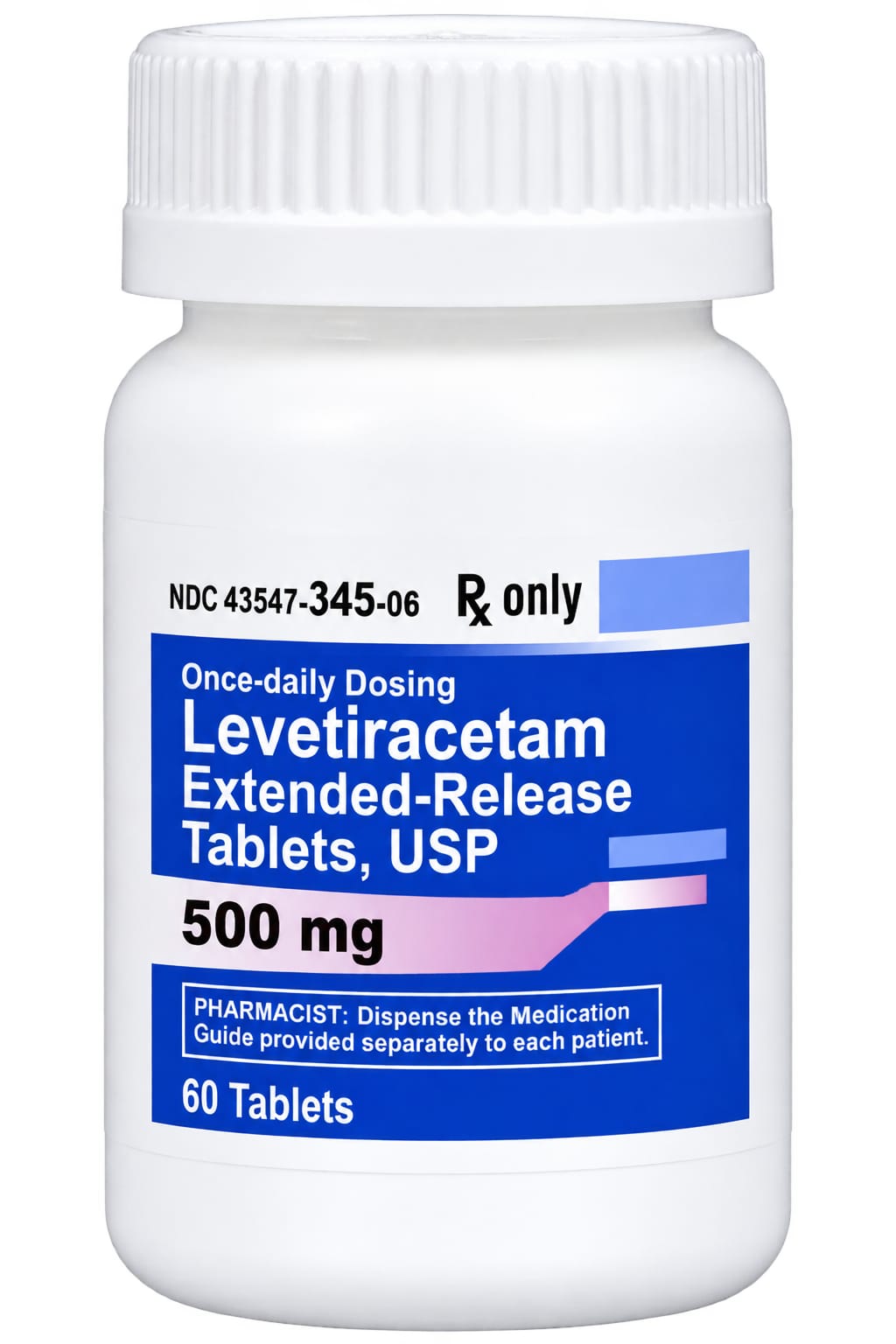
Levetiracetam Tablet (generic name levetiracetam) is a prescription antiepileptic medicine, also called an anticonvulsant, used to help control certain types of seizures. It is given as an add-on therapy alongside other seizure medicines for partial onset, myoclonic, and primary generalized tonic-clonic seizures. It works by reducing abnormal brain activity that leads to seizures and is chemically unrelated to other epilepsy medicines.
What is Levetiracetam Tablet
Levetiracetam is a prescription antiepileptic medicine used to help control seizures. It belongs to a class of drugs called anticonvulsants and is chemically unrelated to other epilepsy medicines. It works by reducing abnormal activity in the brain that causes seizures.
Levetiracetam Tablet uses
- Prevent seizures caused by epilepsy
- Adjunctive (add-on) therapy for partial onset (focal) seizures in adults and children 1 month of age and older
- Adjunctive therapy for myoclonic seizures in adults and juvenile myoclonic epilepsy in adolescents 12 years and older
- Adjunctive therapy for primary generalized tonic-clonic seizures in adults and children with idiopathic generalized epilepsy
Benefits of Levetiracetam Tablet
- Reduces the frequency of partial onset, myoclonic, and tonic-clonic seizures when added to other seizure medicines
- Has a distinct mechanism of action and fewer drug interactions than many other antiepileptic drugs
- Can be used safely across a wide age range, including children as young as 1 month to 4 years old depending on the formulation
How Levetiracetam Tablet works
Levetiracetam works by blocking the brain signals that can cause seizures. Scientists believe it attaches to a protein called SV2A in nerve cells, which is involved in releasing chemical messengers between nerve cells. This binding may help prevent abnormal, excessive nerve signaling that leads to seizures, without affecting normal brain activity.
Levetiracetam Tablet dosage
Take levetiracetam exactly as prescribed, usually twice a day at about the same times each day, such as once in the morning and once in the evening. Levetiracetam can be taken with or without food. Swallow tablets whole with a glass of water; do not chew or crush them.
If prescribed granules, swallow them straight from the packet without chewing, and drink water with or after them. If prescribed the liquid, use the syringe or spoon provided to measure the correct dose; it can be diluted in water if desired. If prescribed orodispersible tablets, place them on your tongue and let them fully dissolve.
Your doctor may start you on a lower dose and increase it gradually over time. If you miss a dose, take it as soon as you remember unless it is almost time for your next dose; do not take a double dose to make up for a missed one. Keep taking levetiracetam even if you feel well; do not stop suddenly without talking to your doctor, as this can cause seizures to return or worsen. Older adults may need a lower dose and closer monitoring of kidney function.
| Age group | Dose |
|---|---|
| Under 1 Month | Not recommended unless prescribed by a specialist |
| 1 Month–4 Years | Dose based on body weight; adjusted by doctor |
| 4–16 Years | Usually 10 mg/kg twice daily initially; adjusted based on response |
| 16 Years and Above (Adults) | Usually 500 mg twice daily initially; may increase based on condition |
| Older Adults (65+ years) | Dose adjusted based on kidney function and response |
Available forms and strengths
- Tablet (film-coated)
- Oral solution/liquid
- Granules
- Orodispersible tablets (dissolve in the mouth)
- Intravenous (IV) infusion
Side effects of Levetiracetam Tablet
Common
- Sleepiness, drowsiness, or fatigue
- Dizziness
- Headache
- Weakness (asthenia)
- Difficulty with coordination or muscle control
- Nausea or vomiting
- Shaking or tremors
- Feeling agitated, irritable, or aggressive
- Infection (such as common cold, sore throat, or runny nose)
Serious
- Extreme sleepiness, tiredness, and weakness
- Problems with muscle coordination (trouble walking or moving)
- Mood and behavior changes such as aggression, agitation, anger, anxiety, depression, hostility, and irritability
- Psychotic symptoms such as hallucinations or unusual beliefs (delusions)
- Thoughts of suicide or self-harm
- Severe allergic reaction (anaphylaxis) with swelling of the face, lips, tongue, or throat, hives, or difficulty breathing
- Serious skin reactions such as Stevens-Johnson syndrome, toxic epidermal necrolysis, or DRESS syndrome, which can cause blistering, peeling skin, fever, and organ problems
- Kidney problems, including passing very little urine, tiredness, confusion, or swelling of legs, ankles, or feet
- Worsening seizures
- Low blood cell counts (which can increase risk of infection, bruising, or bleeding)
- Liver problems, including yellowing of skin or eyes, dark urine, nausea, or loss of appetite
Warnings and precautions
- Levetiracetam can cause serious mood and behavior changes, including aggression, agitation, anxiety, depression, and in rare cases psychotic symptoms such as hallucinations or unusual beliefs. Tell your doctor right away about any of these changes.
- This medicine can cause serious, potentially life-threatening allergic and skin reactions, including anaphylaxis, angioedema, Stevens-Johnson syndrome, toxic epidermal necrolysis, and DRESS syndrome (a severe reaction with rash and organ involvement).
- Do not stop taking this medicine suddenly unless your doctor tells you to, since stopping abruptly can cause seizures that do not stop, which is a very serious medical emergency.
- Levetiracetam may cause your seizures to become worse, especially at the start of treatment or after a dose increase.
- There have been reports of suicidal thoughts and behavior, including completed suicide, in people taking levetiracetam and other antiepileptic drugs.
- Tell your doctor if you are pregnant or planning to become pregnant. Levetiracetam can be used in pregnancy if needed, but it should only be used if the potential benefit justifies the potential risk to the baby. Levels of the drug in the blood can change during pregnancy, so your doctor may need to monitor you closely.
- Levetiracetam passes into breast milk and may affect a nursing baby. You and your doctor should decide whether you will take levetiracetam or breastfeed, not both, unless your doctor decides the benefits outweigh the risks.
- People with kidney disease may need a lower dose of levetiracetam because the kidneys remove most of this drug from the body. Your doctor may want to monitor your kidney function during treatment.
- People with severe liver problems may need a reduced dose, since severe liver disease can reduce how quickly the body clears the drug, though this is mainly linked to decreased kidney function in these patients.
- It is best to avoid alcohol while taking levetiracetam, as it can increase the risk of side effects such as sleepiness.
- Levetiracetam can cause dizziness and sleepiness. Do not drive, operate machinery, or do other hazardous activities until you know how this medicine affects you.
Storage
- Store at room temperature away from heat and light
- Store between 15-30°C (59-86°F)
- Keep out of the reach and sight of children
- Dispense in a tight, light-resistant container with a child-resistant closure
When to see a doctor
- Get emergency medical help right away if you have signs of a severe allergic reaction, such as swelling of the face, lips, tongue, or throat, difficulty breathing, or hives.
- Get emergency medical help right away if you develop a serious skin reaction, such as blistering or peeling skin, especially with fever, sore throat, or swollen glands.
- Call your healthcare provider right away if you have extreme sleepiness, tiredness, weakness, or problems with muscle coordination such as trouble walking or moving.
- Call your healthcare provider right away if you have thoughts of suicide or harming yourself, or notice new or worsening mood and behavior changes such as aggression, anger, anxiety, depression, or unusual behavior.
- Seek medical advice if you notice signs of kidney problems, such as passing very little urine, feeling tired or confused, or swelling in the legs, ankles, or feet.
- Tell your healthcare provider if your seizures get worse or if you experience any new types of seizures.
Alternatives
- Lamotrigine
- Carbamazepine
- Topiramate
Watch the video
FAQs
What is Levetiracetam Tablet used for?
It is used as an add-on therapy with other seizure medicines to help control partial onset, myoclonic, and primary generalized tonic-clonic seizures caused by epilepsy.
How does Levetiracetam Tablet work?
It works by blocking brain signals that cause seizures, likely by attaching to a protein called SV2A in nerve cells that is involved in releasing chemical messengers, helping prevent abnormal, excessive nerve signaling.
What is the usual dosage of Levetiracetam Tablet for adults?
Adults 16 years and above are usually started on 500 mg twice daily, which may be increased based on their condition and response.
Can I stop taking Levetiracetam Tablet suddenly?
No, you should not stop taking it suddenly without talking to your doctor, as this can cause seizures to return, worsen, or lead to a seizure emergency.
What are the serious side effects of Levetiracetam Tablet?
Serious side effects include extreme sleepiness, coordination problems, mood and behavior changes, psychotic symptoms, thoughts of suicide, severe allergic reactions, serious skin reactions, kidney or liver problems, and low blood cell counts.
General information, not medical advice
Your prescriber and the leaflet in your pack know your situation. This page does not.
- Follow your prescriber and the leaflet
- Don't start, stop, or change a dose on your own
- Doses and warnings differ by country and product
Sources
- StatPearls: Levetiracetam (NCBI Bookshelf, NBK499890)
- FDA-approved prescribing information: Levetiracetam Tablets, State of Florida DOH Central Pharmacy
- CareHospitals: Levetiracetam medicine information page
- JAMP-Levetiracetam Product Monograph, JAMP Pharma Corporation (Health Canada)
- NHS: Levetiracetam medicine overview
Video
Related medicines

Injectafer Injection: Uses, Dosage, Side Effects, Precautions and Alternates
Iron products
Injectafer (ferric carboxymaltose) treats iron deficiency anemia and heart failure-related iron deficiency via IV. Learn uses, dosage, side effects, and

Gliclazide Tablet: Uses, Dosage, Side Effects, Precautions and Alternates
Sulfonylurea (hypoglycemic/antidiabetic agent)
Gliclazide Tablet is a sulfonylurea for type 2 diabetes that boosts insulin release. Learn about dosage, side effects, warnings, and precautions.