
Safety
General information, not medical advice
Your prescriber and the leaflet in your pack know your situation. This page does not.
- Follow your prescriber and the leaflet
- Don't start, stop, or change a dose on your own
- Doses and warnings differ by country and product
Levodopa + Carbidopa Tablet: Uses, Dosage, Side Effects, Precautions and Alternates
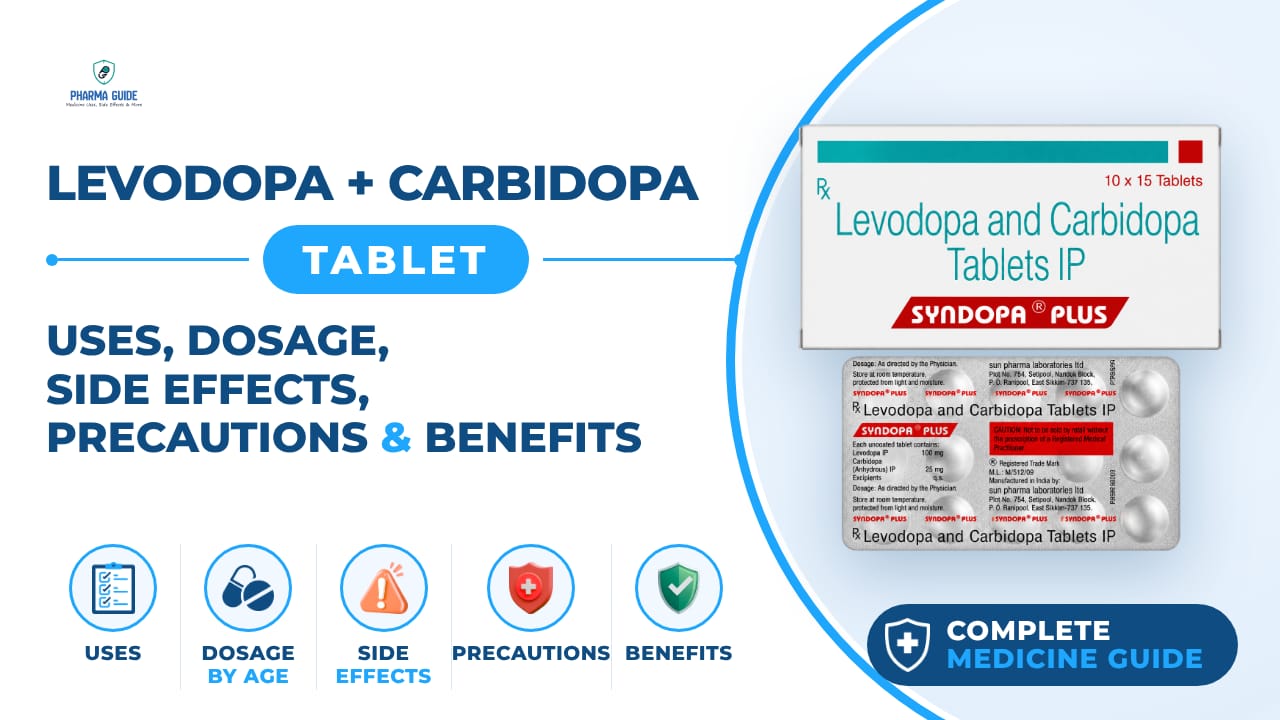
| Generic name | Carbidopa and Levodopa |
|---|---|
| Drug class | Central nervous system agent (levodopa) and decarboxylase inhibitor (carbidopa) |
| Forms | Tablet, Extended-release (long-acting) capsule, Orally disintegrating tablet, Extended-release tablet |
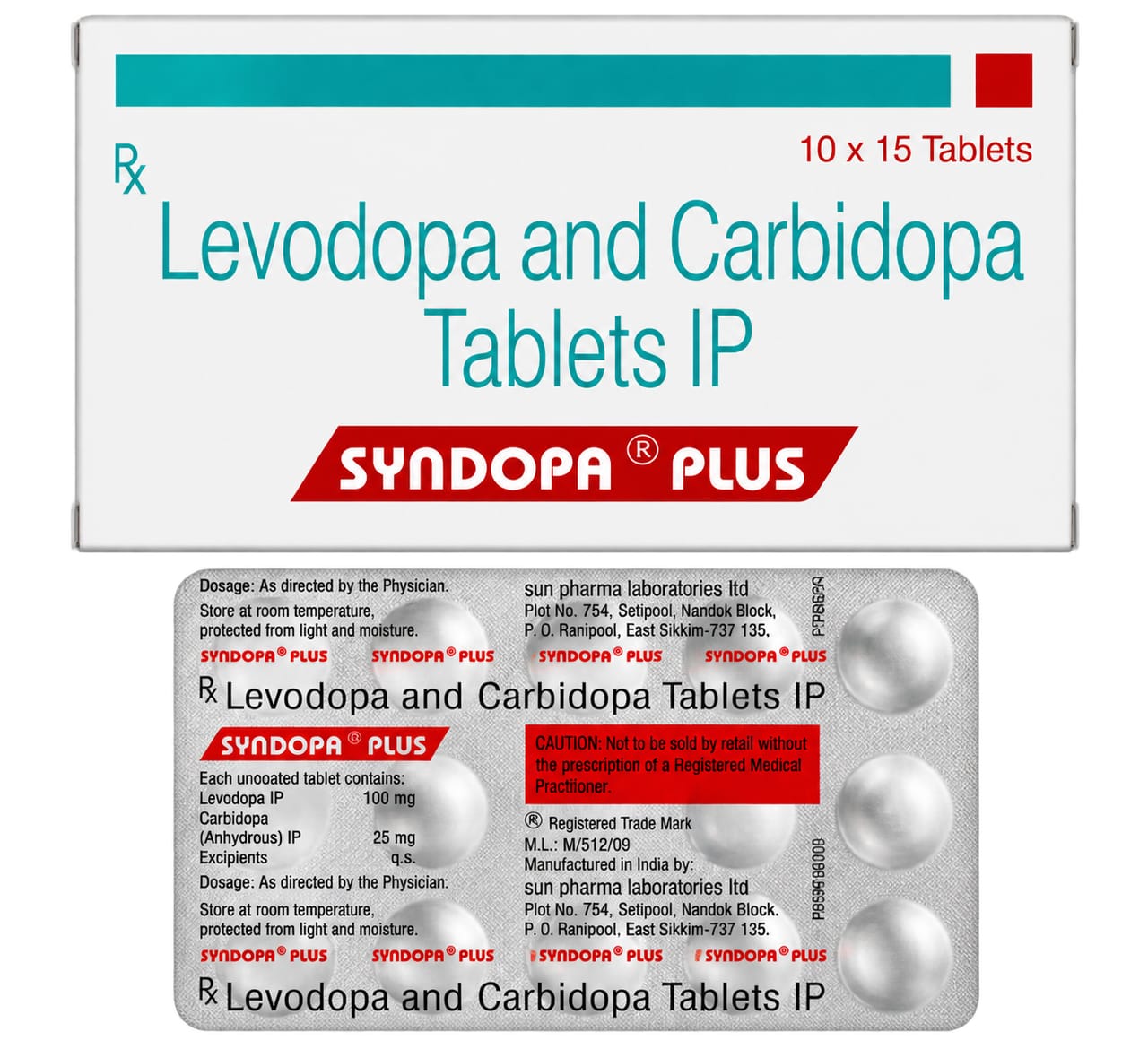
Quick overview
Levodopa + Carbidopa Tablet combines levodopa, a central nervous system agent, with carbidopa, a decarboxylase inhibitor, to treat Parkinson's disease and related movement symptoms. Levodopa is converted into dopamine in the brain, while carbidopa helps more levodopa reach the brain and reduces side effects like nausea. It is available in several forms, including regular tablets, extended-release capsules and tablets, and orally disintegrating tablets.
What is Levodopa + Carbidopa Tablet
This medicine combines two drugs, levodopa and carbidopa, used together to treat Parkinson's disease and similar movement symptoms. Levodopa is converted into dopamine in the brain, while carbidopa helps more levodopa reach the brain and reduces side effects like nausea.
Levodopa + Carbidopa Tablet uses
- Treats symptoms of Parkinson's disease
- Treats Parkinson's-like symptoms that can develop after encephalitis (brain swelling)
- Treats parkinsonism caused by carbon monoxide poisoning
- Treats parkinsonism caused by manganese poisoning
Benefits of Levodopa + Carbidopa Tablet
- Helps control shaking, stiffness, and slow movement
- Helps you perform daily activities such as dressing, walking, and using utensils
- Lets you use a much lower dose of levodopa, which causes less nausea and vomiting
- May allow more rapid increases in dose because of reduced nausea and vomiting
How Levodopa + Carbidopa Tablet works
Levodopa crosses into the brain and is converted there into dopamine, the substance that is low in people with Parkinson's disease and that helps control movement. Carbidopa does not enter the brain itself, but it stops levodopa from being broken down in the rest of the body before it gets there. This means more levodopa reaches the brain, so a lower dose can be used, which causes less nausea and vomiting.
Levodopa + Carbidopa Tablet dosage
Take this medicine exactly as your doctor tells you, at around the same times every day. Do not take more or less than prescribed, or take it more often than prescribed. You can take it with or without food; taking it with food may help decrease nausea. It is best to avoid a high-protein diet during treatment unless your doctor says otherwise, since protein can reduce how much medicine your body absorbs. Try to space your daily protein intake evenly throughout the day, or as your doctor directs.
Separate your dose from iron supplements or multivitamins containing iron by as many hours as possible, since iron can reduce how much medicine your body absorbs. Do not crush or chew regular or extended-release tablets/capsules; swallow them whole unless they have a score line and your doctor says it is okay to split them. If you have trouble swallowing extended-release capsules, you may open them and sprinkle the contents on a small amount of apple sauce and eat the mixture right away; do not save the mixture for later. For orally disintegrating tablets, keep your hands dry, do not remove the tablet from the bottle until you are ready to take it, and place it on top of your tongue to dissolve.
Continue taking this medicine even if you feel well; it controls Parkinson's disease but does not cure it, and it may take several months to feel the full benefit. Do not stop taking this medicine suddenly without talking to your doctor, since stopping suddenly can cause a serious reaction with fever, stiff muscles, unusual movements, and confusion. If you use the suspension form given through a pump, follow your doctor's and pharmacist's instructions closely and do not change pump settings yourself. Older adults may be more sensitive to certain effects, such as seeing or hearing things that are not there, so doctors may watch them more closely.
| Age group | Dose |
|---|---|
| Under 18 Years | Not routinely recommended unless prescribed by a specialist |
| Adults (18–64 Years) | 100/25 mg tablet 1–3 times daily initially; adjusted according to response |
| Older Adults (65+ Years) | 100/25 mg tablet once or twice daily initially; adjusted by doctor |
Available forms and strengths
- Tablet
- Extended-release (long-acting) capsule
- Orally disintegrating tablet
- Extended-release tablet
The 100/25 mg tablet strength is noted in the dosage information above.
Side effects of Levodopa + Carbidopa Tablet
Common
- Dizziness
- Loss of appetite
- Diarrhea or constipation
- Dry mouth; mouth and throat pain; change in taste
- Forgetfulness or confusion
- Nervousness
- Nightmares
- Difficulty falling asleep or staying asleep
- Headache
- Weakness
- Nausea and vomiting
- Lightheadedness
- Unusual dreams
- Twitching, twisting, or uncontrolled repetitive movements of the tongue, lips, face, arms, or legs
Serious
- Unusual or uncontrolled movements of the mouth, tongue, face, head, neck, arms, and legs
- Chest pain or pressure; fast or irregular heartbeat; increased sweating
- Depression; thoughts of death or suicide
- Hallucinating (seeing things or hearing voices that are not real)
- Swelling of the face, throat, tongue, lips, eyes, hands, feet, ankles, or lower legs; hoarseness; difficulty swallowing or breathing; hives
- Weakness, numbness, or loss of sensation in the fingers or feet
- Drainage, redness, swelling, pain, or warmth around a PEG-J tube (for suspension users)
- Black and tarry stools; red blood in stools; abdominal pain; nausea; vomiting including material that looks like coffee grounds
- Seizures
- Signs of neuroleptic malignant syndrome: fever, severe muscle stiffness, confusion, sweating, fast or irregular heartbeat, high or low blood pressure, loss of bladder control
- New or worsening uncontrolled movements or muscle spasms
- Vision changes, eye pain, greatly increased eye blinking or twitching
- Signs of infection such as sore throat that doesn't go away, fever, chills
- Easy bleeding or bruising
- Unusual strong urges such as increased gambling, spending, eating, or sexual urges
- Fainting
Warnings and precautions
- Tell your doctor if you are pregnant or planning to become pregnant. This medicine should only be used during pregnancy if clearly needed, and you should discuss the risks and benefits with your doctor. Levodopa passes into breast milk, and it is not known if carbidopa does. Talk with your doctor before breastfeeding while taking this medicine.
- Tell your doctor if you have or have had kidney disease, since this medicine should be used with caution in people with kidney problems. Tell your doctor if you have or have had liver disease, since this medicine should be used with caution in people with liver problems. Ask your doctor about the safe use of alcohol while taking this medicine, since alcohol can make side effects worse.
- This medicine can make you drowsy or cause you to suddenly fall asleep during normal activities without warning. Do not drive, operate machinery, work at heights, or do other risky activities until you know how this medicine affects you.
- Do not suddenly stop taking this medicine without talking to your doctor. Stopping suddenly can cause a serious condition with fever, stiff muscles, unusual movements, and confusion.
- This medicine should not be taken together with certain older antidepressants called nonselective MAO inhibitors, and these must be stopped at least two weeks before starting this medicine.
- This medicine should not be used by people with narrow-angle glaucoma or by anyone allergic to any part of the medicine.
- This medicine has caused hallucinations, psychosis, and problems controlling urges such as gambling, overeating, overspending, or increased sex drive. Tell your doctor right away if you notice any of these changes.
- People with Parkinson's disease have a higher chance of developing melanoma (a type of skin cancer), so your skin should be checked regularly while on this medicine.
- This medicine can cause dizziness or fainting when you stand up quickly, especially when you first start taking it. Get up slowly to reduce this risk.
Storage
- Keep this medication in the container it came in, tightly closed, and out of reach of children
- Store it at room temperature and away from excess heat and moisture (not in the bathroom)
- Store cassettes containing the enteral suspension in the refrigerator in their original carton, protected from light; do not freeze the suspension
- Dispose of unneeded medication so that pets, children, and other people cannot take it
- Do not flush this medication down the toilet
- Use a medicine take-back program; ask your pharmacist about take-back programs in your community
When to see a doctor
- Get emergency help right away if you have chest pain, fainting, or seizures.
- Call your doctor immediately or get emergency care if you notice unusual or uncontrolled movements of the mouth, tongue, face, head, neck, arms, or legs.
- Call your doctor immediately if you have chest pain or pressure, a fast or irregular heartbeat, or increased sweating.
- Call your doctor immediately if you feel depressed or have thoughts of death or suicide.
- Call your doctor immediately if you experience hallucinations (seeing or hearing things that are not real).
- Get emergency help right away if you have swelling of the face, throat, tongue, lips, eyes, hands, feet, ankles, or lower legs; hoarseness; trouble swallowing or breathing; or hives, as these can be signs of a serious allergic reaction.
- Call your doctor immediately if you notice weakness, numbness, or loss of feeling in your fingers or feet.
- Call your doctor immediately if you have black and tarry stools, red blood in stools, stomach pain, or vomiting that looks like coffee grounds.
- Get medical help right away if you have symptoms of neuroleptic malignant syndrome, such as fever, severe muscle stiffness, confusion, sweating, or a fast or irregular heartbeat, especially after stopping or lowering your dose.
- Call your doctor if you suddenly fall asleep during normal activities like watching television, talking, eating, or riding in a car, or if you feel very drowsy, especially during the day.
Alternatives
- Pramipexole
- Ropinirole
- Amantadine
Watch the video
FAQs
What is Levodopa + Carbidopa Tablet used for?
It treats symptoms of Parkinson's disease, Parkinson's-like symptoms after encephalitis, and parkinsonism caused by carbon monoxide or manganese poisoning.
How does Levodopa + Carbidopa Tablet work?
Levodopa crosses into the brain and converts into dopamine, which is low in Parkinson's disease. Carbidopa stops levodopa from breaking down before it reaches the brain, allowing a lower dose that causes less nausea and vomiting.
Can I take Levodopa + Carbidopa Tablet with food?
Yes, it can be taken with or without food, and taking it with food may help decrease nausea. However, it is best to avoid a high-protein diet since protein can reduce absorption.
Can I stop taking Levodopa + Carbidopa Tablet suddenly?
No, you should not stop suddenly without talking to your doctor, as this can cause a serious reaction with fever, stiff muscles, unusual movements, and confusion.
What are the serious side effects of Levodopa + Carbidopa Tablet?
Serious side effects include uncontrolled movements, chest pain, irregular heartbeat, hallucinations, depression, signs of allergic reaction, seizures, and symptoms of neuroleptic malignant syndrome.
General information, not medical advice
Your prescriber and the leaflet in your pack know your situation. This page does not.
- Follow your prescriber and the leaflet
- Don't start, stop, or change a dose on your own
- Doses and warnings differ by country and product
Sources
Video
Related medicines

Injectafer Injection: Uses, Dosage, Side Effects, Precautions and Alternates
Iron products
Injectafer (ferric carboxymaltose) treats iron deficiency anemia and heart failure-related iron deficiency via IV. Learn uses, dosage, side effects, and

Gliclazide Tablet: Uses, Dosage, Side Effects, Precautions and Alternates
Sulfonylurea (hypoglycemic/antidiabetic agent)
Gliclazide Tablet is a sulfonylurea for type 2 diabetes that boosts insulin release. Learn about dosage, side effects, warnings, and precautions.