
Safety
General information, not medical advice
Your prescriber and the leaflet in your pack know your situation. This page does not.
- Follow your prescriber and the leaflet
- Don't start, stop, or change a dose on your own
- Doses and warnings differ by country and product
Levomilnacipran Capsule: Uses, Dosage, Side Effects, Precautions and Alternates
| Generic name | levomilnacipran |
|---|---|
| Drug class | SNRI (serotonin-norepinephrine reuptake inhibitor) |
| Forms | Extended-release capsule (20 mg, 40 mg, 80 mg, 120 mg) |
Quick overview
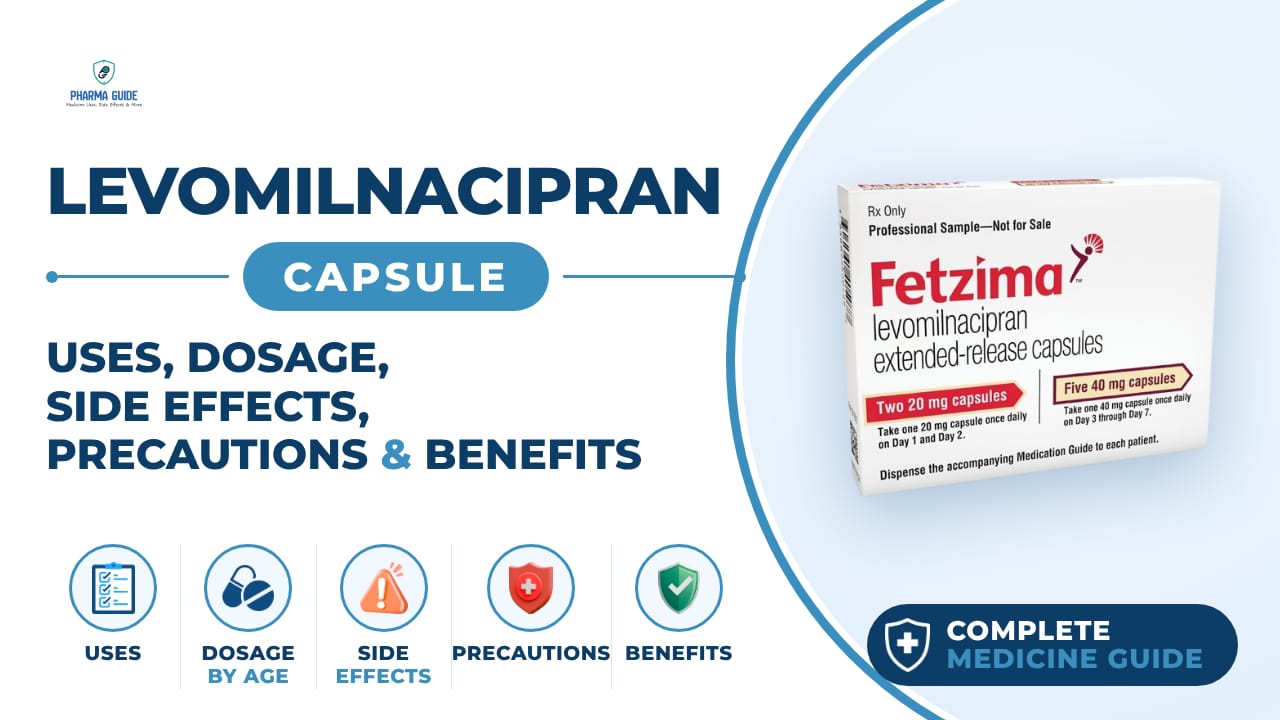
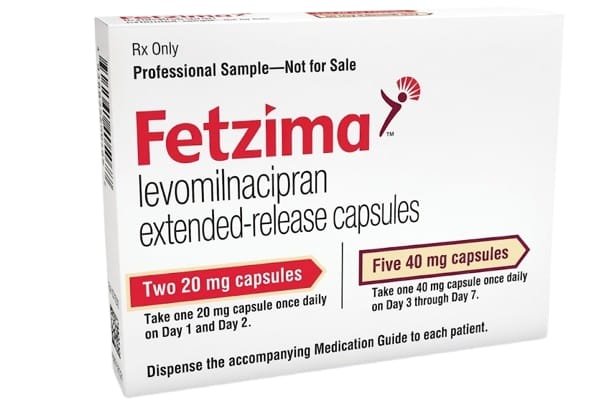
Levomilnacipran is a prescription antidepressant belonging to a class of medicines called SNRIs (serotonin-norepinephrine reuptake inhibitors). It is sold under the brand name Fetzima and comes as an extended-release capsule taken once a day. It is used to treat major depressive disorder in adults and is taken under medical supervision.
What is Levomilnacipran Capsule
Levomilnacipran is a prescription antidepressant that belongs to a group of medicines called serotonin-norepinephrine reuptake inhibitors (SNRIs). It is sold under the brand name Fetzima and comes as an extended-release capsule taken once a day.
Levomilnacipran Capsule uses
- Treatment of major depressive disorder (MDD) in adults.
- Management of persistent depressive episodes.
- Treatment of depression that interferes with daily activities.
- Management of depressive symptoms under medical supervision.
Benefits of Levomilnacipran Capsule
- May improve motivation and energy.
- May help improve concentration.
- May restore interest in daily activities.
- May support better emotional functioning.
- May improve daily functioning as depression symptoms improve.
How Levomilnacipran Capsule works
Levomilnacipran works by blocking proteins that normally reabsorb serotonin and norepinephrine back into nerve cells. By blocking this reabsorption, more of these brain chemicals stay available for signaling, which may help improve mood over time as the brain adapts.
Levomilnacipran Capsule dosage
Take this medicine once daily at around the same time each day. It can be taken with or without food, though taking it with food may help reduce nausea and vomiting. Swallow the capsule whole; do not open, crush, or chew it. Do not stop taking this medicine suddenly without talking to your doctor, since this can cause withdrawal symptoms. If you miss a dose, take it as soon as you remember, but if it is almost time for the next dose, skip the missed dose and continue your regular schedule; do not take a double dose.
| Age group | Dose |
|---|---|
| Under 18 years | Not recommended |
| 18–64 years | 40 mg, once/day |
| 65+ years | 40 mg, once/day |
Available forms and strengths
- Extended-release capsule (20 mg, 40 mg, 80 mg, 120 mg)
Side effects of Levomilnacipran Capsule
Common
- Nausea and vomiting
- Headache
- Dry mouth
- Constipation
- Abdominal discomfort
- Increased sweating
- Dizziness
- Insomnia
- Increased heart rate
- Palpitations (feeling of skipped or pounding heartbeats)
- Reduced appetite
- Urinary hesitation
- Sexual problems, such as difficulty getting or keeping an erection, delayed ejaculation, or reduced sex drive
Serious
- Severe allergic reactions (swelling of face, lips, tongue, or throat; trouble breathing; hives)
- Suicidal thoughts or actions, especially in children, teens, and young adults
- Serotonin syndrome (agitation, confusion, fast heartbeat, fever, sweating, muscle twitching or rigidity, seizures)
- High blood pressure
- Increased heart rate
- Abnormal bleeding or bruising
- Angle-closure glaucoma (eye pain, redness, vision changes)
- Urinary retention or difficulty urinating
- Mania or hypomania in people with bipolar disorder
- Seizures
- Low sodium levels (hyponatremia) causing headache, confusion, weakness, or seizures in severe cases
Warnings and precautions
- This medicine should not be combined with MAOIs (a type of medicine used for depression or Parkinson's disease), because together they can cause a dangerous reaction called serotonin syndrome. Wait the recommended number of days between stopping one medicine and starting the other, as directed by your doctor.
- This medicine can raise blood pressure and heart rate. Your doctor should check these before you start and regularly during treatment.
- This medicine can increase the risk of bleeding, especially when combined with aspirin, NSAIDs like ibuprofen or naproxen, or blood thinners such as warfarin.
- This medicine may cause or worsen narrow-angle glaucoma, which can lead to vision loss if not treated.
- This medicine can cause low sodium levels in the blood, which may be more likely in older adults or people taking water pills (diuretics) or who are dehydrated.
- Stopping this medicine suddenly can cause withdrawal symptoms. Your doctor will usually lower your dose gradually instead of stopping all at once.
- Taking this medicine later in pregnancy may increase the risk of certain problems in the baby. Tell your healthcare provider if you are or plan to become pregnant so they can help you weigh the risks and benefits.
- It is not known for certain if this medicine passes into breast milk. Tell your healthcare provider if you are breastfeeding or plan to breastfeed.
- Kidney function affects how this medicine is cleared from the body, so your dose may need to be lowered if you have reduced kidney function, and it should not be used if you have end-stage kidney disease.
- No dose change is generally needed for mild, moderate, or severe liver problems, because this medicine is mainly removed from the body by the kidneys rather than the liver.
- Avoid drinking alcohol while taking this medicine, since it can cause faster release of the drug from the capsule and may worsen side effects like drowsiness.
- This medicine can make you feel drowsy or affect your thinking, judgment, and reaction time. Do not drive or operate machinery until you know how it affects you.
Storage
- Keep this medication in the container it came in, tightly closed, and out of reach of children
- Store it at room temperature and away from light, excess heat and moisture (not in the bathroom)
- Dispose of unneeded medications in a way so that pets, children, and other people cannot take them
- Do not flush this medication down the toilet; use a medicine take-back program
When to see a doctor
- Get emergency help right away if you notice signs of a serious allergic reaction, such as swelling of the face, lips, tongue or throat, trouble breathing, or a severe rash.
- Call your doctor right away if you or your child have new or worsening thoughts of suicide, sudden mood changes, or unusual behavior changes.
- Get emergency help if you notice signs of serotonin syndrome, such as agitation, confusion, fast heartbeat, high fever, muscle twitching or stiffness, or seizures.
- Seek medical attention right away if your blood pressure reading shows a very high top number or bottom number, or if you have a sudden severe headache, chest pain, trouble breathing, or vision changes.
- Call your healthcare provider right away if you notice eye pain, redness, blurred vision, or seeing halos around lights, as these can be signs of a serious eye problem.
- Call your healthcare provider right away if you are unable to empty your bladder.
- Stop taking the medicine and call your healthcare provider if you have signs that a seizure is happening or could happen, such as muscle twitching, stiffening, falling, or loss of consciousness.
Alternatives
- Sertraline
- Desvenlafaxine
- Venlafaxine
Watch the video
FAQs
What is Levomilnacipran Capsule used for?
It is used to treat major depressive disorder in adults, including managing persistent depressive episodes and depressive symptoms that interfere with daily activities.
How should I take Levomilnacipran Capsule?
Take it once daily at the same time, with or without food, swallowing the capsule whole without opening, crushing, or chewing it. Do not stop suddenly without talking to your doctor.
What is the usual dose of Levomilnacipran Capsule?
For adults aged 18 to 64 and those 65 and older, the typical dose is 40 mg once a day. It is not recommended for use in people under 18 years old.
What are the common side effects of Levomilnacipran Capsule?
Common side effects include nausea, vomiting, headache, dry mouth, constipation, dizziness, insomnia, increased heart rate, and sexual problems.
Can I drink alcohol while taking Levomilnacipran Capsule?
Alcohol should be avoided while taking this medicine because it can cause faster release of the drug from the capsule and may worsen side effects like drowsiness.
General information, not medical advice
Your prescriber and the leaflet in your pack know your situation. This page does not.
- Follow your prescriber and the leaflet
- Don't start, stop, or change a dose on your own
- Doses and warnings differ by country and product
Sources
Video
Related medicines

Injectafer Injection: Uses, Dosage, Side Effects, Precautions and Alternates
Iron products
Injectafer (ferric carboxymaltose) treats iron deficiency anemia and heart failure-related iron deficiency via IV. Learn uses, dosage, side effects, and

Gliclazide Tablet: Uses, Dosage, Side Effects, Precautions and Alternates
Sulfonylurea (hypoglycemic/antidiabetic agent)
Gliclazide Tablet is a sulfonylurea for type 2 diabetes that boosts insulin release. Learn about dosage, side effects, warnings, and precautions.