
Safety
General information, not medical advice
Your prescriber and the leaflet in your pack know your situation. This page does not.
- Follow your prescriber and the leaflet
- Don't start, stop, or change a dose on your own
- Doses and warnings differ by country and product
Levophed Injection: Uses, Dosage, Side Effects, Precautions and Alternates
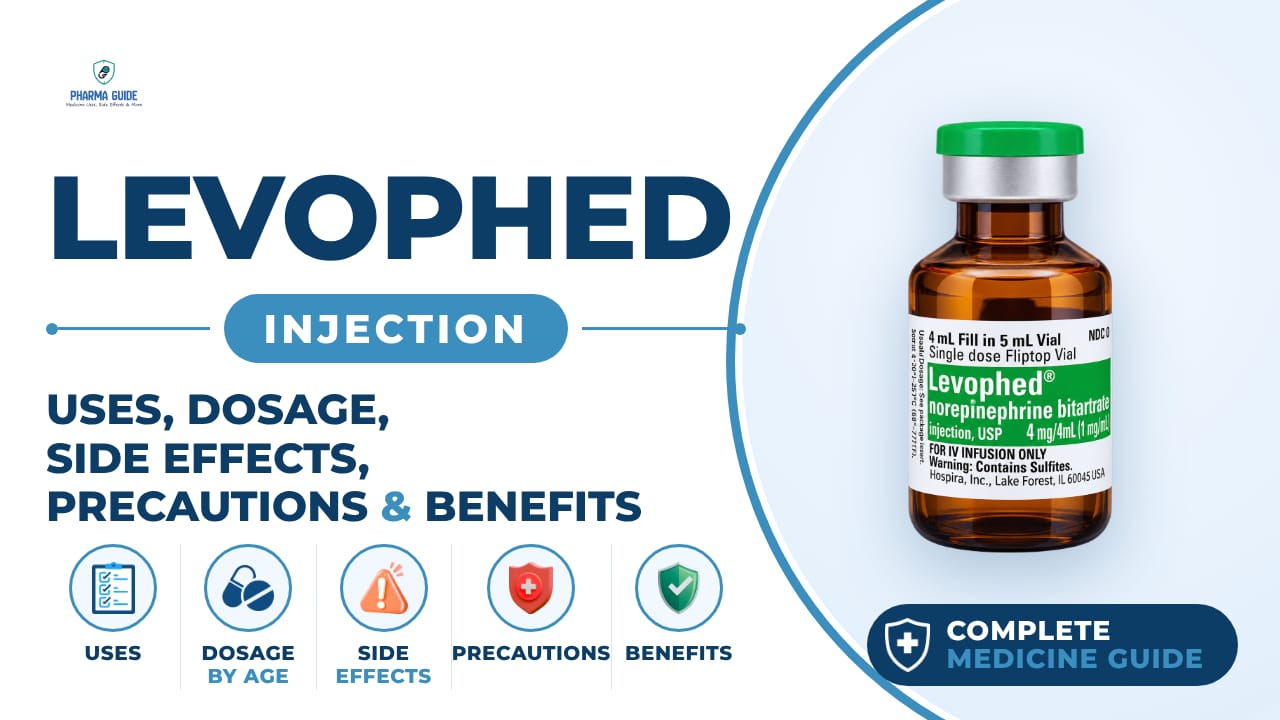
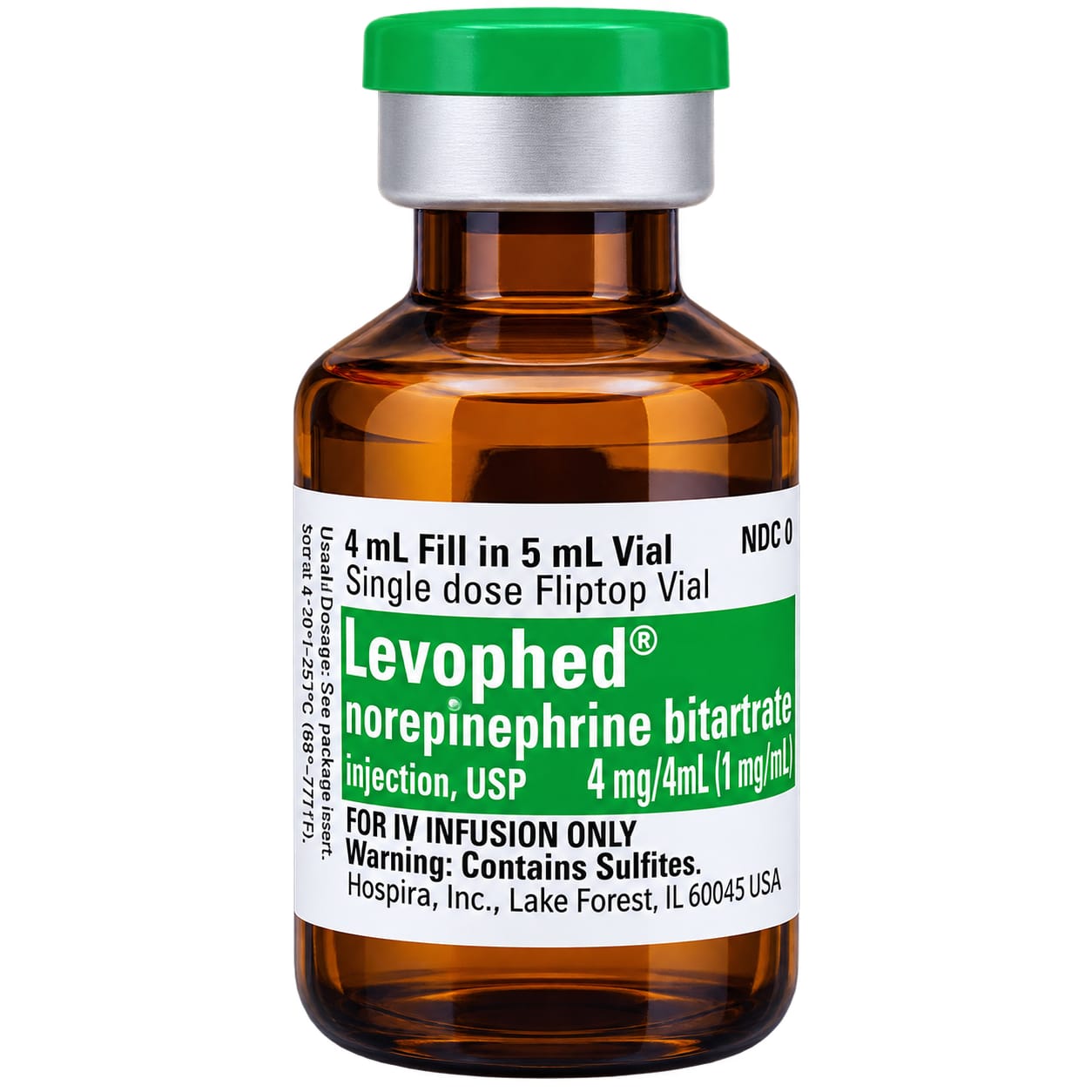
| Generic name | norepinephrine bitartrate |
|---|---|
| Drug class | Catecholamine / Vasopressor |
| Forms | Injection (solution) in single-dose glass vials, Injection (solution) in single-dose glass ampules |
Quick overview
Levophed Injection (norepinephrine bitartrate) is a catecholamine vasopressor given as a continuous infusion into a vein in hospital settings to raise dangerously low blood pressure. It is used in adults for severe acute hypotension, including after certain surgeries, severe infections, transfusion or drug reactions, heart attack, and during cardiac arrest alongside CPR. It works by narrowing blood vessels and strengthening heart contractions to restore blood flow to vital organs. Treatment is closely monitored and dosed according to blood pressure response.
What is Levophed Injection
Levophed is a medicine similar to adrenaline that is given as an infusion into a vein in hospital settings to raise dangerously low blood pressure. Its generic name is norepinephrine bitartrate, and it belongs to the catecholamine/vasopressor drug class.
Levophed Injection uses
- Treats severe, acute low blood pressure in adults
- Used for blood pressure control in certain acute low blood pressure conditions, such as after certain surgeries, severe infections, blood transfusion reactions, drug reactions, or heart attack
- Used as an additional treatment during cardiac arrest and profound low blood pressure, often during CPR
Benefits of Levophed Injection
- Raises blood pressure quickly to help maintain blood flow to vital organs
- Increases the strength of heart contractions, which can help during cardiac resuscitation
- Raises dangerously low blood pressure
- Helps restore blood flow to vital organs
- Produces rapid vasoconstriction
- Commonly used for severe acute hypotension and shock
- Allows continuous dose adjustment according to blood-pressure response
How Levophed Injection works
Levophed narrows blood vessels and makes the heart pump more strongly, which raises blood pressure and improves blood flow to important organs.
Levophed Injection dosage
Levophed is given only by a healthcare provider as a continuous infusion into a large vein, and it is never injected directly without dilution. It must be diluted in a dextrose-containing solution before use and should not be given in saline solution alone. The infusion rate is adjusted based on blood pressure response, and blood pressure is checked often during treatment. It should not be given into leg veins in elderly patients or those with blood vessel disease. When stopping treatment, the infusion rate is reduced gradually rather than stopped suddenly, to avoid a sudden drop in blood pressure. Treatment may continue for several days until the body responds and blood pressure stabilizes without it. Caregivers should be told right away about any pain, burning, irritation, or discoloration at the injection site.
| Age group | Dose |
|---|---|
| Under 18 years | Safety and effectiveness have not been established in the official U.S. label; pediatric critical-care dosing is specialist-directed |
| 18–64 years | Initial IV infusion: 8–12 mcg/min, then adjusted according to blood-pressure response |
Available forms and strengths
- Injection (solution) in single-dose glass vials
- Injection (solution) in single-dose glass ampules
Side effects of Levophed Injection
Common
- Anxiety
- Transient headache
- Breathing difficulty
- Slow heart rate (bradycardia)
Serious
- Tissue damage (necrosis) and sloughing if the medicine leaks out of the vein
- Irregular heart rhythms (arrhythmias)
- Allergic reactions, including severe or life-threatening asthma-type reactions, due to a sulfite ingredient
- Little or no urination
- Blue lips or fingernails, mottled skin
- Sudden numbness, weakness, or cold feeling anywhere in the body
- Problems with vision, speech, or balance
- Severe headache, blurred vision, or pounding in the neck or ears
- Gangrene of the extremities in patients with blood vessel disease or after prolonged or high-dose infusions
Warnings and precautions
- Avoid letting the medicine leak out of the vein into surrounding tissue, since this can cause tissue death; it should be given into a large vein and the injection site checked often.
- Stopping the infusion suddenly can cause a sharp drop in blood pressure; the rate should be reduced gradually instead.
- This medicine may cause abnormal heart rhythms, so heart function should be monitored, especially in people with existing heart disease.
- This medicine contains a sulfite preservative that can cause allergic reactions, including severe asthma-like attacks, in sensitive people.
- Combining this medicine with certain antidepressants or MAO inhibitor drugs can cause severe, prolonged high blood pressure.
- Using this medicine with certain anesthesia gases can cause dangerous fast or irregular heartbeats.
- This medicine can lower the body's sensitivity to insulin and raise blood sugar, so glucose levels should be monitored in people with diabetes.
- Levophed should only be given to a pregnant woman if clearly needed; limited data have not shown an increased risk of major birth defects or miscarriage, but life-saving treatment for the mother should not be withheld over concerns about effects on the baby.
- It is not known if this medicine passes into breast milk, but significant exposure to a breastfed infant is not expected because the drug does not stay in the body long and is poorly absorbed by mouth.
- Kidney perfusion and function require close monitoring during shock and vasopressor therapy.
- Elderly patients with reduced liver function may need a more cautious, lower starting dose.
- Not appropriate during an acute critical illness requiring norepinephrine when combined with alcohol.
- Not applicable to driving; Levophed is administered in a monitored medical setting.
Storage
- Store at 20°C to 25°C (68°F to 77°F); excursions permitted to 15°C to 30°C (59°F to 86°F)
- Store in original carton until time of administration to protect from light
- Discard unused portion
- Do not use the solution if its color is pinkish or darker than slightly yellow or if it contains a precipitate
When to see a doctor
- Get emergency help right away for signs of an allergic reaction, such as hives, difficulty breathing, or swelling of the face, lips, tongue, or throat.
- Tell caregivers immediately about pain, burning, irritation, discoloration, or skin changes where the injection was given.
- Report sudden numbness, weakness, or a cold feeling anywhere in the body right away.
- Seek help immediately for a slow or uneven heartbeat.
- Report blue lips or fingernails or blotchy skin right away.
- Tell caregivers immediately if there is little or no urination.
- Seek help right away for trouble breathing.
- Report any problems with vision, speech, or balance right away.
- Seek help immediately for a severe headache, blurred vision, or pounding feeling in the neck or ears, which can be signs of dangerously high blood pressure.
Alternatives
- Epinephrine
- Phenylephrine
- Vasopressin
Watch the video
FAQs
What is Levophed Injection used for?
Levophed is used to treat severe, acute low blood pressure in adults, including after certain surgeries, severe infections, transfusion or drug reactions, heart attack, and as an additional treatment during cardiac arrest alongside CPR.
How does Levophed Injection work?
Levophed narrows blood vessels and makes the heart pump more strongly, which raises blood pressure and improves blood flow to important organs.
What is the dosage of Levophed Injection?
Levophed is given only by a healthcare provider as a continuous infusion into a large vein after dilution in a dextrose-containing solution. The typical initial IV infusion for adults 18-64 years is 8-12 mcg/min, then adjusted according to blood-pressure response. Safety and effectiveness have not been established for those under 18 years.
What are the common side effects of Levophed Injection?
Common side effects include anxiety, transient headache, breathing difficulty, and slow heart rate (bradycardia).
What precautions should be followed with Levophed Injection?
The medicine should not leak out of the vein as it can cause tissue death, the infusion should not be stopped suddenly, heart function should be monitored, and it should be used cautiously with certain antidepressants, MAO inhibitors, or anesthesia gases due to risks of severe blood pressure changes or irregular heartbeats.
General information, not medical advice
Your prescriber and the leaflet in your pack know your situation. This page does not.
- Follow your prescriber and the leaflet
- Don't start, stop, or change a dose on your own
- Doses and warnings differ by country and product
Sources
Video
Related medicines

Injectafer Injection: Uses, Dosage, Side Effects, Precautions and Alternates
Iron products
Injectafer (ferric carboxymaltose) treats iron deficiency anemia and heart failure-related iron deficiency via IV. Learn uses, dosage, side effects, and

Gliclazide Tablet: Uses, Dosage, Side Effects, Precautions and Alternates
Sulfonylurea (hypoglycemic/antidiabetic agent)
Gliclazide Tablet is a sulfonylurea for type 2 diabetes that boosts insulin release. Learn about dosage, side effects, warnings, and precautions.