
Safety
General information, not medical advice
Your prescriber and the leaflet in your pack know your situation. This page does not.
- Follow your prescriber and the leaflet
- Don't start, stop, or change a dose on your own
- Doses and warnings differ by country and product
Levorphanol Tablet: Uses, Dosage, Side Effects, Precautions and Alternates
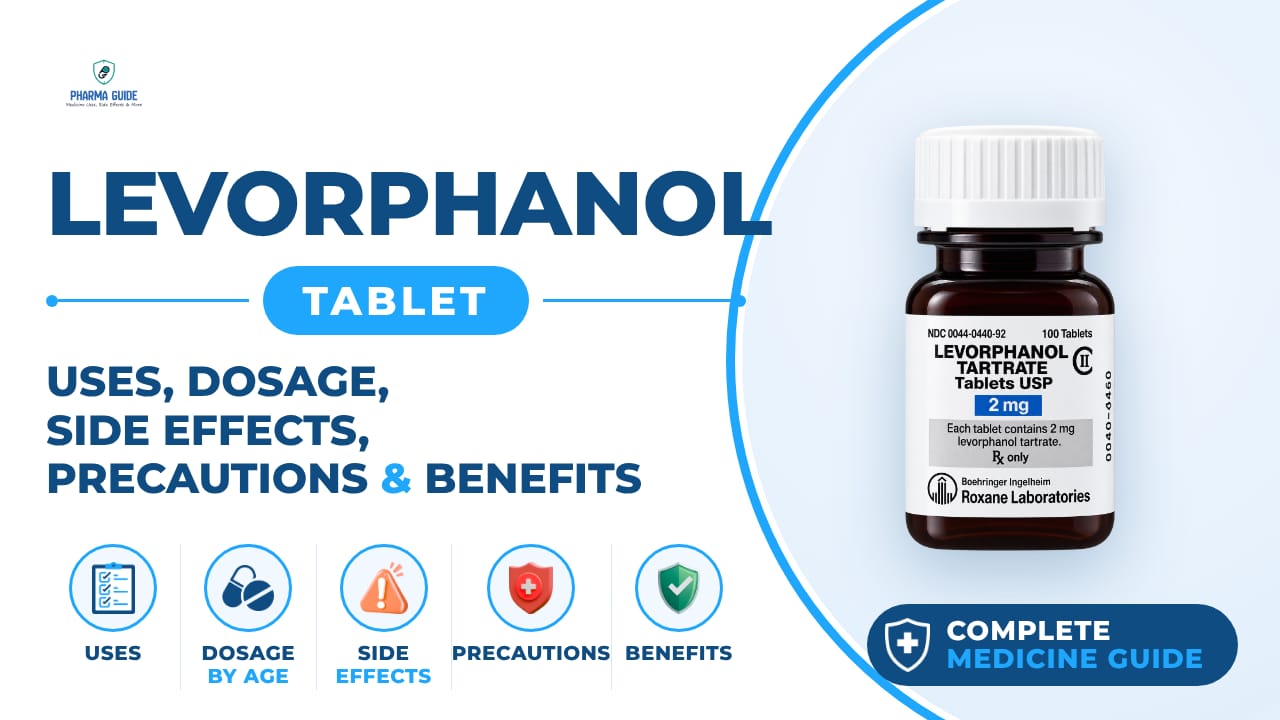
| Generic name | Levorphanol tartrate |
|---|---|
| Drug class | Opioid analgesic |
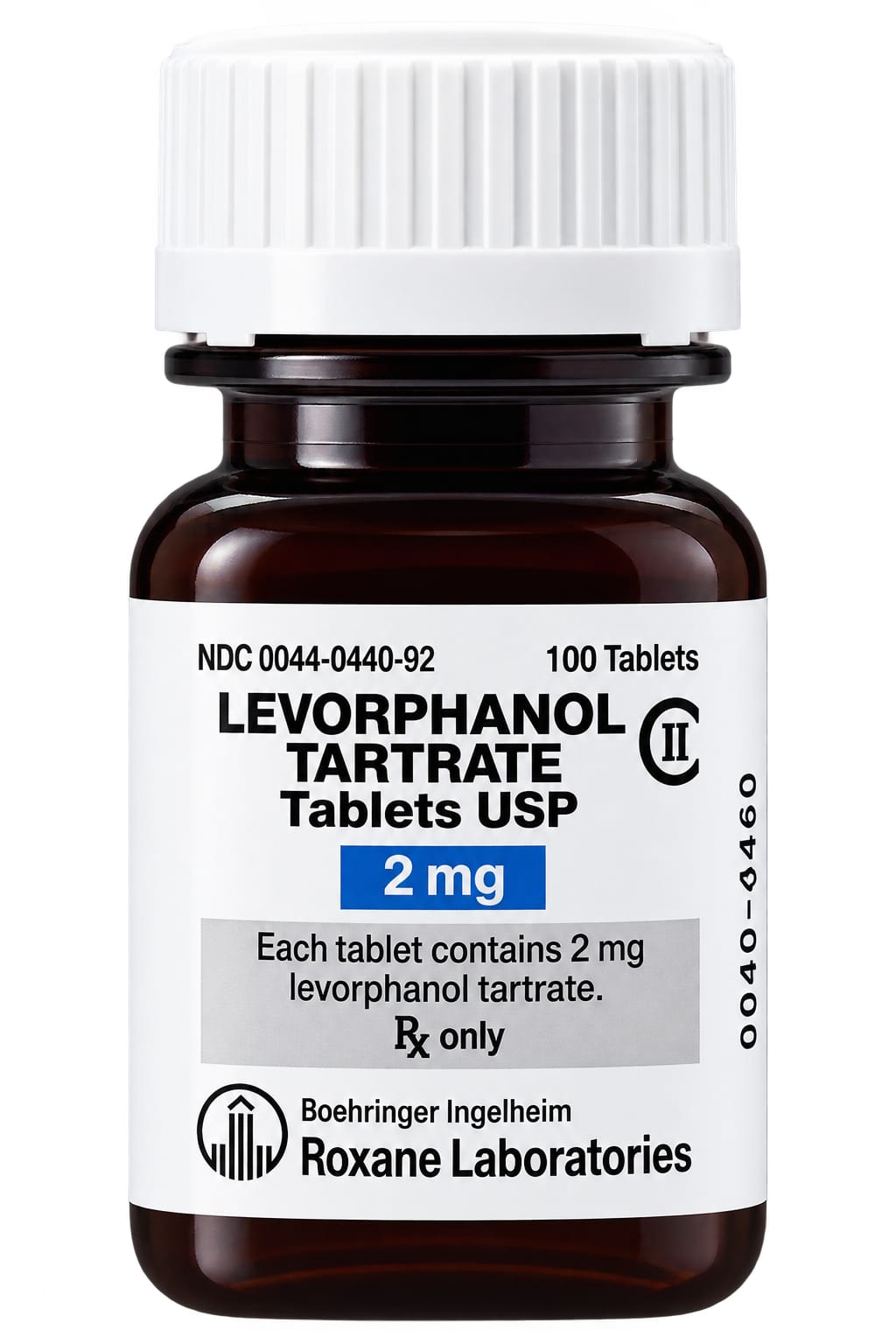
| Forms | Oral tablet (2 mg), Oral tablet (3 mg) |
Quick overview
Levorphanol Tablet (levorphanol tartrate) is an opioid analgesic used to manage pain severe enough to require an opioid, especially when other treatments are not effective enough or cannot be tolerated. It works on opioid receptors in the brain and spinal cord to change how the body senses and responds to pain. It is a strong prescription medicine that must be used exactly as directed due to serious risks, including addiction, overdose, and life-threatening breathing problems.
What is Levorphanol Tablet
Levorphanol is an opioid medicine that is used to treat moderate to severe pain. It is a strong prescription pain medicine that contains an opioid (narcotic).
Levorphanol Tablet uses
- Management of pain severe enough to require an opioid analgesic and for which alternative treatments are inadequate
- Used when other pain treatments such as non-opioid pain medicines do not treat pain well enough or cannot be tolerated
Benefits of Levorphanol Tablet
- Provides relief from severe pain that requires an opioid analgesic.
- Helps reduce pain intensity when non-opioid treatments are inadequate or not tolerated.
- Can be used for acute or persistent severe pain when a clinician determines opioid treatment is appropriate.
- Has a longer duration of action than some other opioid pain medicines, which may be useful in selected chronic-pain patients.
- May improve comfort and daily functioning when severe pain is adequately controlled.
How Levorphanol Tablet works
Levorphanol acts on opioid receptors in the brain and spinal cord to change how the body feels and responds to pain.
Levorphanol Tablet dosage
Follow the directions on your prescription label and read all medication guides. Never use levorphanol in larger amounts, or for longer than prescribed. Tell your doctor if you feel an increased urge to take more of levorphanol. Do not stop using levorphanol suddenly after long-term use without talking to your doctor, since this could cause serious withdrawal symptoms. Never crush or break a levorphanol pill to inhale the powder or mix it into a liquid to inject the drug.
Take your prescribed dose on a regular schedule as needed for pain, and do not take more than prescribed. If you miss a dose, skip it if it is almost time for your next dose; do not take two doses at one time. For short-term (acute) pain, you may only need to take it for a few days. Older adults may need a reduced starting amount and should be monitored closely by their doctor.
| Age group | Dose |
|---|---|
| Under 18 years | Safety and effectiveness not established; specialist use only |
| 18–64 years – Opioid-naïve | Usually 1–2 mg orally every 6–8 hours as needed for severe pain |
| Opioid-tolerant adults | Dose must be individualized carefully when converting from another opioid |
| 65+ years | Start at the lowest effective dose and titrate cautiously |
| Kidney/liver impairment | Use lower doses and/or longer intervals with close monitoring |
Available forms and strengths
- Oral tablet (2 mg)
- Oral tablet (3 mg)
Side effects of Levorphanol Tablet
Common
- Nausea, vomiting, stomach pain
- Constipation
- Dizziness, drowsiness
- Tiredness
- Headache
Serious
- Noisy breathing, sighing, shallow breathing, or breathing that stops
- Slow heart rate or weak pulse
- Light-headed feeling, like you might pass out
- Mood changes, unusual thoughts or behavior
- Severe stomach pain, severe constipation
- High serotonin levels: agitation, hallucinations, fever, sweating, shivering, fast heart rate, muscle stiffness, twitching, loss of coordination, nausea, vomiting, diarrhea
- Low cortisol levels: nausea, vomiting, loss of appetite, dizziness, worsening tiredness or weakness
- Signs of allergic reaction: hives, difficult breathing, swelling of face, lips, tongue, or throat
- Severe drowsiness, confusion, or trouble staying awake
- Slow or shallow breathing, bluish color to lips or fingernails
- Signs of low blood pressure: fainting, dizziness, confusion, weakness
Warnings and precautions
- Misuse of this opioid medicine can cause addiction, overdose, or death. Keep it where others cannot access it.
- Serious, life-threatening, or fatal breathing problems can occur, especially when starting the medicine or after a dose increase.
- Accidental swallowing of even one dose, especially by a child, can be fatal.
- Using this medicine together with benzodiazepines, alcohol, or other drugs that slow breathing can cause profound sedation, breathing problems, coma, and death.
- Using opioids for an extended time during pregnancy can cause a serious and possibly life-threatening withdrawal condition in the newborn.
- Do not stop this medicine suddenly after long-term use, as this could cause serious withdrawal symptoms; ask your doctor how to stop safely.
- This medicine should not be used by anyone with severe asthma or breathing problems, or a stomach/bowel blockage.
- This medicine is not approved for use in anyone younger than 18 years old.
- Using this opioid medicine during pregnancy for an extended period of time may cause life-threatening withdrawal symptoms in the newborn baby. Tell your doctor if you are pregnant or planning to become pregnant.
- Levorphanol passes into breast milk and may harm the baby. Ask your doctor before using this medicine if you are breastfeeding, and watch for signs of sleepiness, breathing trouble, or limpness in the baby.
- This drug is substantially removed by the kidneys, so people with reduced kidney function may have a greater risk of side effects. Tell your doctor if you have kidney disease.
- Use with caution in people with extensive liver disease, who may be more vulnerable to excess sedation due to increased sensitivity or slower drug breakdown.
- Do not drink alcohol while taking this medicine, since dangerous side effects or death could occur.
- Avoid driving or hazardous activities until you know how this medicine affects you, since dizziness or drowsiness can cause falls, accidents, or severe injuries.
Storage
- Store at 20–25°C (68–77°F) at controlled room temperature.
- Keep in a cool, dry place away from excessive heat and moisture.
- Keep tablets in the original, tightly closed container.
- Protect from direct light and avoid hot or humid storage areas.
- Store securely to prevent accidental ingestion, misuse, or unauthorized access.
- Keep out of reach and sight of children and pets.
When to see a doctor
- Get emergency medical help right away if you have signs of a serious allergic reaction, such as hives, trouble breathing, or swelling of the face, lips, tongue, or throat.
- Get emergency help if breathing is slow with long pauses, lips turn blue, or the person is hard to wake up — a caregiver should give naloxone if available and seek emergency care.
- Seek emergency medical attention right away if you think you or someone else has taken too much of this medicine (overdose).
- Call your doctor right away if you have noisy or shallow breathing, breathing that stops, a slow heart rate, feeling faint, mood changes, severe stomach pain or constipation, or signs of high serotonin or low cortisol levels.
- Get emergency help if you have new or worsening stomach pain, especially in the upper right area that spreads to the back or shoulder, with or without nausea and vomiting.
- Talk to your doctor right away if your pain gets worse, or you feel unusually sensitive to pain, instead of taking more medicine on your own.
Alternatives
- Buprenorphine
- Hydrocodone
- Oxycodone
- Hydromorphone
- Morphine
Watch the video
FAQs
What is Levorphanol Tablet used for?
It is used to manage pain severe enough to require an opioid analgesic, especially when other treatments like non-opioid pain medicines do not work well enough or cannot be tolerated.
How does Levorphanol Tablet work?
It acts on opioid receptors in the brain and spinal cord to change how the body feels and responds to pain.
What is the usual dose of Levorphanol for adults?
Opioid-naïve adults aged 18–64 usually take 1–2 mg orally every 6–8 hours as needed for severe pain, while opioid-tolerant adults require individualized dosing when converting from another opioid.
What are the serious side effects of Levorphanol Tablet?
Serious side effects include slow or shallow breathing, slow heart rate, light-headedness, mood changes, severe stomach pain or constipation, signs of high serotonin or low cortisol levels, and allergic reactions like hives or swelling of the face, lips, tongue, or throat.
Can I drink alcohol while taking Levorphanol Tablet?
No, you should not drink alcohol while taking this medicine, since dangerous side effects or death could occur.
General information, not medical advice
Your prescriber and the leaflet in your pack know your situation. This page does not.
- Follow your prescriber and the leaflet
- Don't start, stop, or change a dose on your own
- Doses and warnings differ by country and product
Sources
Video
Related medicines
Butorphanol Nasal Spray: Uses, Dosage, Side Effects, Precautions and Alternates
Opioid analgesic
Butorphanol Nasal Spray is a prescription opioid for short-term moderate to severe pain in adults, used for up to 3 days with careful dosing.
Methadone Tablet: Uses, Dosage, Side Effects, Precautions and Alternates
Opioid analgesic
Methadone Tablet is an opioid used for severe pain and opioid addiction treatment. Learn about its uses, dosage, side effects, and safety warnings.