
Safety
General information, not medical advice
Your prescriber and the leaflet in your pack know your situation. This page does not.
- Follow your prescriber and the leaflet
- Don't start, stop, or change a dose on your own
- Doses and warnings differ by country and product
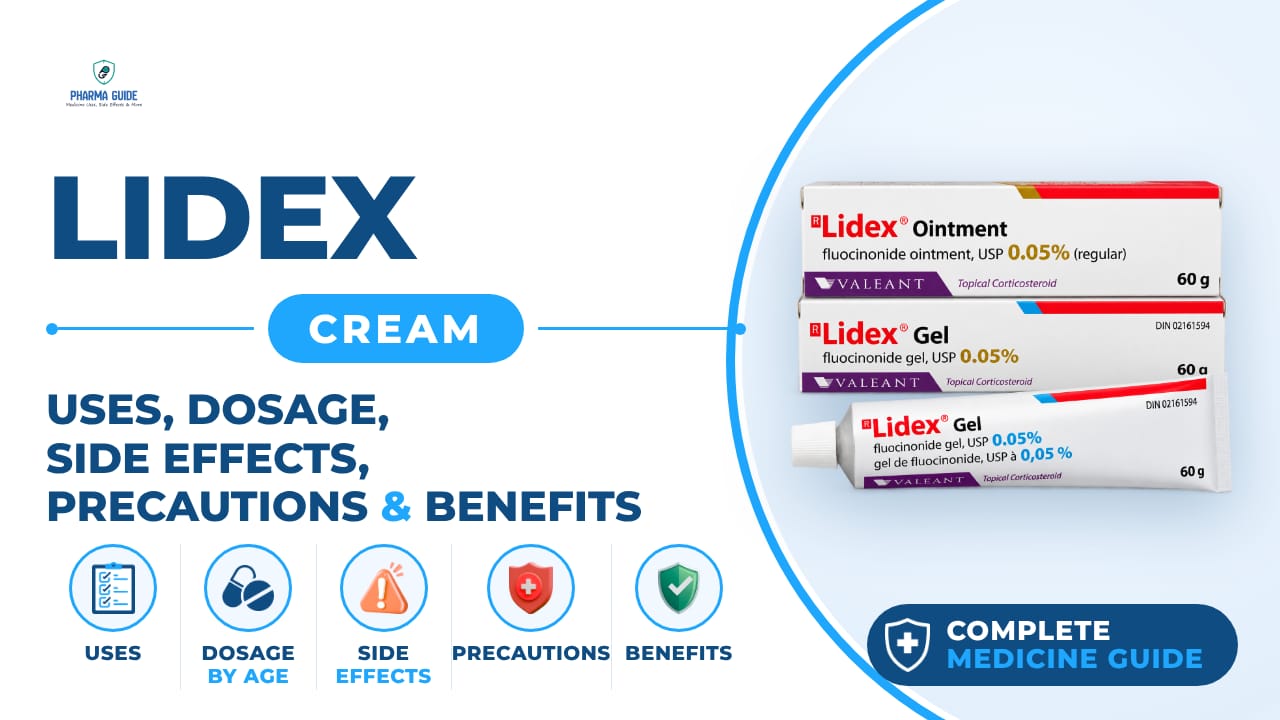
Lidex Cream: Uses, Dosage, Side Effects, Precautions and Alternates
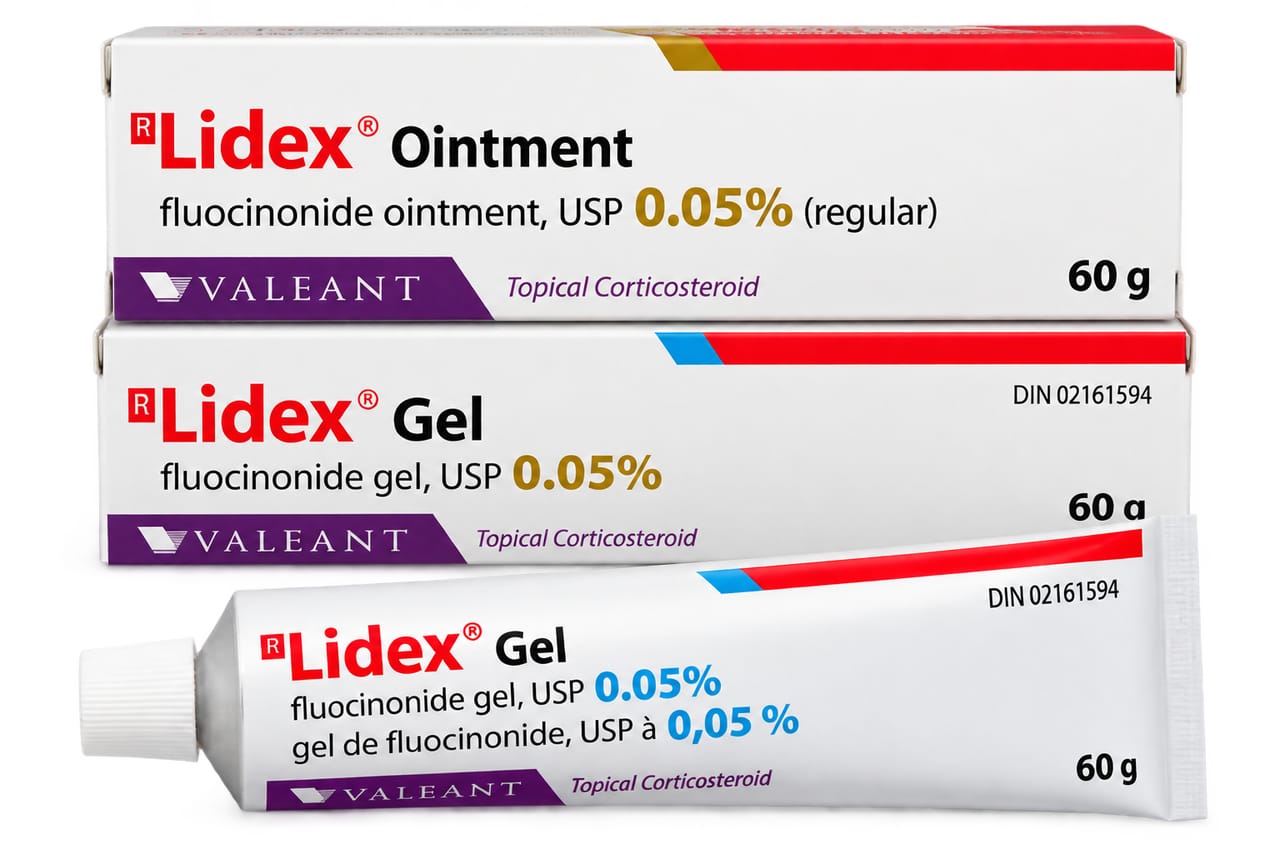
| Generic name | fluocinonide |
|---|---|
| Drug class | Corticosteroids, Topical |
| Forms | Cream, Gel, Ointment, Topical solution |
Quick overview
Lidex Cream contains fluocinonide, a strong topical corticosteroid. It is used to relieve inflammation and itching caused by corticosteroid-responsive skin conditions such as eczema, dermatitis, psoriasis, and allergic reactions, including plaque psoriasis. It works by reducing inflammation, itching, and narrowing blood vessels in the skin. It should be used exactly as directed, generally for no longer than 2 weeks unless a doctor says otherwise.
What is Lidex Cream
Lidex is a topical (skin) steroid cream used to treat inflammation and itching caused by a number of skin conditions such as allergic reactions, eczema, and psoriasis. It is a strong corticosteroid.
Lidex Cream uses
- Relief of inflammation and itching from corticosteroid-responsive skin conditions such as eczema, dermatitis, psoriasis, and allergic reactions
- Treatment of plaque psoriasis
Benefits of Lidex Cream
- Reduces swelling, itching, and redness caused by certain skin conditions
- Eases inflammation and itching
How Lidex Cream works
Lidex is a corticosteroid that works by reducing inflammation, itching, and narrowing blood vessels in the skin. The exact way it reduces inflammation is not fully understood.
Lidex Cream dosage
Use this medication as directed by your doctor; it is for external use only, so avoid contact with your eyes. Do not use it for any condition other than the one it was prescribed for. Wash and dry your hands before applying the medication, then clean and dry the affected area. Apply a thin film to the affected area and gently rub in as directed by your doctor.
Do not use this medication on the face, groin, or underarms unless your doctor tells you to. Do not cover, bandage, or wrap the treated area unless your doctor tells you to. After applying, wash your hands unless you are treating your hands.
If using near the eyes, be careful not to get it in your eyes, as this may cause or worsen glaucoma; avoid getting it in your nose or mouth. If you get the medication in your eyes, nose, or mouth, rinse with plenty of water.
Do not use longer than 2 weeks in a row or over large areas of skin unless your doctor tells you to. Tell your doctor if your condition lasts or gets worse after 2 weeks of treatment.
Do not use tight-fitting diapers or plastic pants on a child being treated in the diaper area, since these can act like an occlusive covering.
If you miss a dose, apply it as soon as you remember; if it is almost time for your next dose, skip the missed one and do not double up. Do not use cosmetics or other skin care products on the treated areas.
| Age group | Dose |
|---|---|
| Under 12 years | Not established; use only if specifically prescribed by a doctor |
| 12–17 years | Apply a thin film 2–4 times daily; use the smallest amount needed |
| 18–64 years | Apply a thin film 2–4 times daily to affected areas |
| 65 years and older | Apply a thin film 2–4 times daily; use the lowest effective amount |
Available forms and strengths
- Cream
- Gel
- Ointment
- Topical solution
Side effects of Lidex Cream
Common
- Skin burning, stinging, or itching
- Irritation
- Peeling or dryness of the skin
- Headache
- Stuffy or runny nose
- Sore throat
- Thinning or softening of the skin
- Skin rash or irritation around the mouth
- Swollen hair follicles
- Changes in color of treated skin
- Blisters
- Pimples
- Crusting of treated skin
- Stretch marks
- Fever
- Muscle aches
- Unusual tiredness or weakness
Serious
- Stretch marks
- Skin thinning or discoloration
- Acne
- Extreme or unwanted hair growth
- Small red bumps on the skin (folliculitis)
- Skin infections getting worse
- Signs of too much corticosteroid absorbed into the body: unusual or extreme tiredness, weight loss, headache, swelling of ankles or feet, increased thirst or urination, vision problems
- Signs of adrenal gland problems: blurred vision, dizziness or fainting, fast/irregular/pounding heartbeat, increased thirst or urination, irritability, unusual tiredness or weakness
- Signs of a serious allergic reaction: rash, itching or swelling especially of the face/tongue/throat, severe dizziness, trouble breathing
- Blistering, burning, crusting, dryness, or flaking of the skin
- Severe redness, soreness, or swelling of the skin
- Redness and scaling around the mouth
- Thinning of the skin with easy bruising, especially on the face or in skin folds
Warnings and precautions
- Do not use this medicine if there is an infection or sore present in the area you plan to treat, and skin infections can get worse when this medicine is used, so tell your doctor if redness, swelling, or irritation does not improve.
- Using too much of this medicine or using it for a long time can be absorbed into the bloodstream and cause effects of too much corticosteroid in the body, including hypothalamic-pituitary-adrenal (HPA) axis suppression and Cushing's syndrome. This risk is higher in children and in people using large amounts over long periods or large areas of skin.
- Prolonged use may cause thinning of the skin and underlying tissue, and this can happen even with short-term use on the face or in skin folds.
- Children may absorb larger amounts of this medicine through the skin than adults and may be more likely to have body-wide side effects, including slowed growth, delayed weight gain, and signs of increased pressure in the brain such as bulging soft spots on the head, headaches, and eye swelling.
- This medicine should not be used by people who are allergic to it or to any of its ingredients.
- Do not cover the treated area with a bandage or wrap unless your doctor tells you to, since this increases how much medicine your body absorbs.
- During pregnancy, Lidex should be used only when clearly needed and prescribed by your doctor.
- It is not known whether this drug passes into breast milk when applied to the skin. Similar medications do pass into breast milk when taken by mouth, so talk to your doctor before breastfeeding.
- Corticosteroids absorbed into the body are broken down mainly by the liver.
- Ask your doctor for advice before drinking alcohol. Although alcohol does not directly interact with Lidex, it can potentially make underlying skin conditions worse.
Storage
- Store at room temperature
- Avoid excessive heat, above 40°C (104°F)
- Different brands of this medication have different storage needs; check the product package for instructions or ask your pharmacist
- Keep all medications away from children and pets
- Do not flush medications down the toilet or pour them into a drain unless instructed to do so
- Properly discard this product when it is expired or no longer needed; consult your pharmacist or local waste disposal company
When to see a doctor
- Stop using this medicine and check with your doctor right away if you have a skin rash, burning, stinging, swelling, or irritation on the skin.
- Talk to your doctor right away if you have more than one of these symptoms while using this medicine: blurred vision; dizziness or fainting; a fast, irregular, or pounding heartbeat; increased thirst or urination; irritability; or unusual tiredness or weakness.
- Get medical help right away if you notice signs of a serious allergic reaction, such as rash; itching or swelling especially of the face, tongue, or throat; severe dizziness; or trouble breathing.
- If someone swallows this medicine and has serious symptoms such as passing out or trouble breathing, get emergency help right away; otherwise, contact your local poison control center.
- Tell your doctor if your condition does not improve or gets worse after two weeks of treatment.
Alternatives
- Clobetasol propionate 0.05% Cream
- Mometasone furoate 0.1% Cream
- Hydrocortisone valerate 0.2% (Westcort) Cream
Watch the video
FAQs
What is Lidex Cream used for?
Lidex Cream is used to relieve inflammation and itching from corticosteroid-responsive skin conditions such as eczema, dermatitis, psoriasis, and allergic reactions, including plaque psoriasis.
How long can I use Lidex Cream?
Lidex Cream should generally not be used for longer than 2 weeks in a row or over large areas of skin unless your doctor tells you otherwise. Tell your doctor if your condition lasts or worsens after 2 weeks.
How is Lidex Cream applied?
Wash and dry your hands, clean and dry the affected area, then apply a thin film and gently rub it in as directed by your doctor. Avoid using it on the face, groin, or underarms unless instructed, and do not cover or bandage the treated area.
What are the serious side effects of Lidex Cream?
Serious side effects include skin thinning or discoloration, stretch marks, acne, folliculitis, worsening skin infections, signs of too much corticosteroid absorption (fatigue, weight loss, swelling, increased thirst), adrenal gland problems, and signs of a serious allergic reaction.
Can children use Lidex Cream?
Use in children under 12 is not established and should only occur if specifically prescribed, since children may absorb more medicine through the skin and have a higher risk of body-wide side effects like slowed growth and increased pressure in the brain.
General information, not medical advice
Your prescriber and the leaflet in your pack know your situation. This page does not.
- Follow your prescriber and the leaflet
- Don't start, stop, or change a dose on your own
- Doses and warnings differ by country and product
Sources
Video
Related medicines
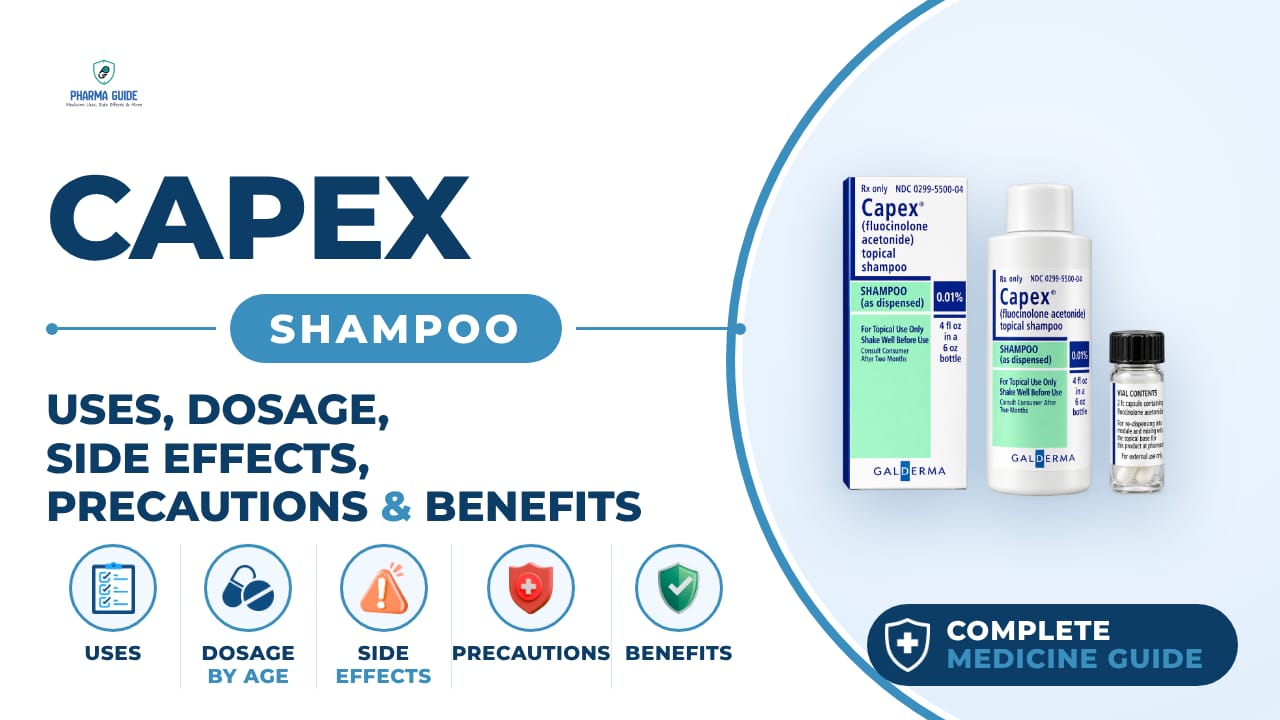
Capex Shampoo: Uses, Dosage, Side Effects, Precautions and Alternates
Corticosteroids, Topical
Capex Shampoo is a prescription corticosteroid shampoo for scalp seborrheic dermatitis. Learn its uses, dosage, side effects, warnings, and alternatives.
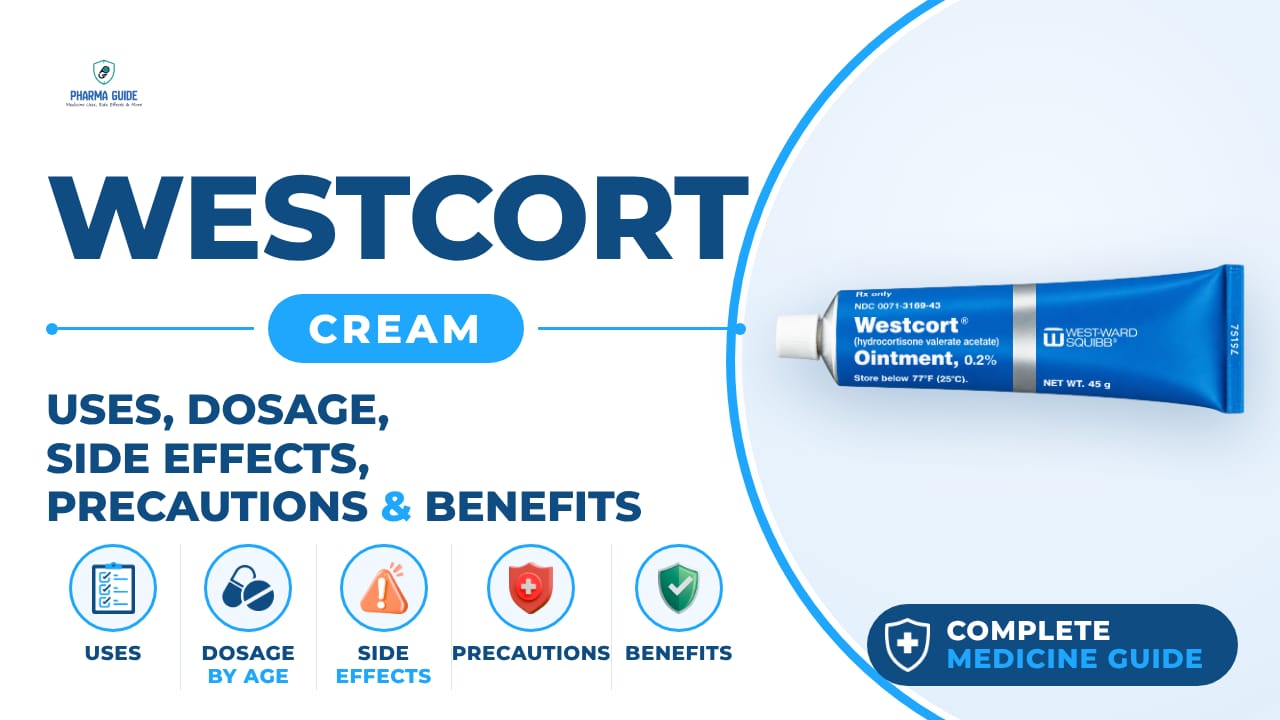
Westcort Cream: Uses, Dosage, Side Effects, Precautions and Alternates
Corticosteroids, Topical
Westcort Cream (hydrocortisone valerate) treats eczema, dermatitis, and psoriasis by reducing skin inflammation, itching, and redness. Learn dosage, uses, and