
Safety
General information, not medical advice
Your prescriber and the leaflet in your pack know your situation. This page does not.
- Follow your prescriber and the leaflet
- Don't start, stop, or change a dose on your own
- Doses and warnings differ by country and product
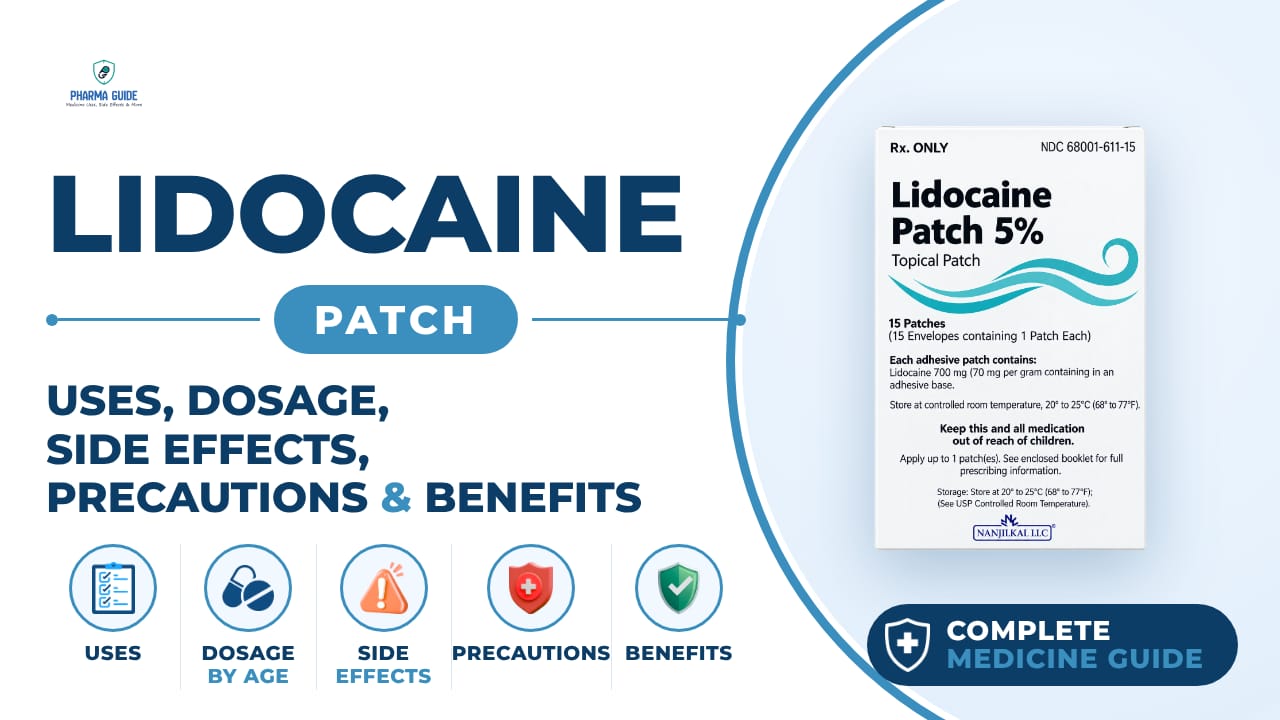
Lidocaine Patch: Uses, Dosage, Side Effects, Precautions and Alternates
| Generic name | lidocaine |
|---|---|
| Drug class | local anesthetic |
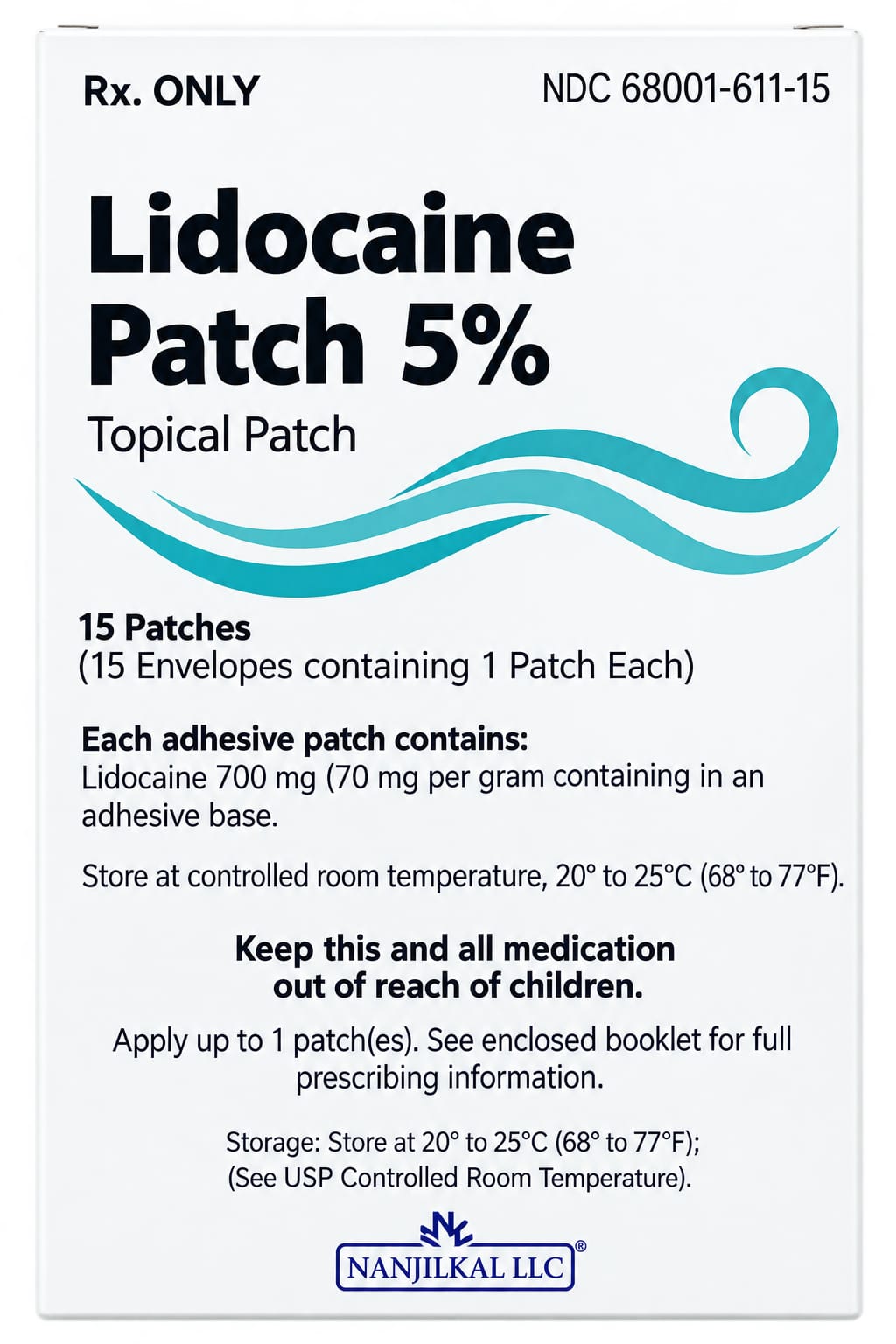
| Forms | Transdermal patch |
Quick overview
Lidocaine Patch is a skin patch containing the local anesthetic lidocaine, used to numb a specific area of skin and reduce pain. It is used for pain relief from post-herpetic neuralgia and, in nonprescription form, for minor pain in the shoulders, arms, back, neck, and legs in adults and children 12 years and older. It works by calming overactive nerves in the treated area so pain signals are not sent to the brain.
What is Lidocaine Patch
Lidocaine Patch is a skin patch that contains a local anesthetic called lidocaine. It is placed on the skin to numb a specific area and reduce pain.
Lidocaine Patch uses
- Relief of pain from post-herpetic neuralgia (nerve pain that can happen after a shingles infection)
- Nonprescription lidocaine patches relieve minor pain in the shoulders, arms, back, neck, and legs in adults and children 12 years and older
Benefits of Lidocaine Patch
- Numbs the area quickly, often within minutes
- Available in a patch form that avoids the need for pills or messy creams
- Only a small amount of the drug enters the bloodstream when used as directed, which lowers the chance of whole-body side effects
How Lidocaine Patch works
Lidocaine works by calming overactive nerves in the treated area. It blocks the tiny channels nerves use to send pain signals, so the brain doesn't get the message that something hurts.
Lidocaine Patch dosage
Apply the patch to clean, dry, unbroken skin over the most painful area. Patches may be cut into smaller pieces with scissors before removing the liner, to fit the painful area. Clothing may be worn over the patch.
Only apply one set of patches at a time, worn for up to 12 hours within a 24 hour period, followed by a 12-hour patch-free period. Smaller treatment areas are recommended for frail patients or those with poor elimination of the drug.
If irritation or burning occurs, remove the patch and do not reapply until the irritation goes away. Avoid getting the patch wet — do not bathe, shower, or swim while wearing it, since it may not stick if it gets wet. Wash your hands after handling the patch, and avoid touching your eyes with it.
If a dose is missed and patches are meant to be used regularly, apply the missed patch as soon as remembered, but skip it if it is almost time for the next one — do not double up.
| Age group | Dose |
|---|---|
| Under 12 years | Not recommended |
| 12–17 years | 1 patch, once/day |
| 18–60 years | 1 patch, once/day |
| 60+ years | 1 patch, once/day |
Available forms and strengths
- Transdermal patch
Side effects of Lidocaine Patch
Common
- Burning or discomfort where the patch was applied
- Redness or swelling of the skin under the patch
- Itching
- Mild tingling sensation
Serious
- Hives, rash, itching, or blisters
- Bruising
- Difficulty breathing or swallowing; swelling of the face, throat, tongue, lips, eyes, hands, feet, ankles, or lower legs; hoarseness; fast pulse or breathing
- Unusual thirst
- Nausea or vomiting
- Confusion, weakness, dizziness, or fainting
- Pale, gray, or blue colored skin; headache; shortness of breath; lightheadedness; or fatigue
- A serious blood disorder called methemoglobinemia, which lowers the amount of oxygen your blood can carry
Warnings and precautions
- Even a used patch still contains a large amount of lidocaine. A child or pet could be seriously harmed from chewing or swallowing a new or used patch, so store and throw away patches where children and pets cannot reach them.
- Using too many patches, wearing them too long, or applying them over too large an area can cause too much lidocaine to be absorbed into the blood, leading to serious side effects.
- Do not apply heating pads or electric blankets over the patch, as this may increase the amount of lidocaine absorbed.
- Keep the patch away from your eyes. If it does contact your eye, rinse right away with water or saline and protect the eye until feeling returns.
- Only use this patch on unbroken, healthy skin. Do not apply it to broken, irritated, or inflamed skin, as this may increase the amount absorbed into the blood.
- Do not use this medicine if you are allergic to lidocaine or other similar local anesthetics, or to any ingredient in the product.
- It isn't known for certain if this patch is safe during pregnancy. Tell your doctor if you are or plan to become pregnant, and use it only if your doctor says it is clearly needed.
- Lidocaine passes into breast milk, so caution is needed if you are breastfeeding. Talk to your doctor before using it.
- People with severe liver disease are at higher risk of high lidocaine levels in the blood because their liver can't break down the drug normally.
- It isn't known if drinking alcohol affects this medicine.
Storage
- Do not store the patch outside its sealed envelope
- Apply the patch immediately after removing it from its protective envelope
- Keep out of the reach of children and pets
- Fold used patches so the sticky side sticks to itself before throwing away, in a place children and pets cannot reach
- Store at room temperature, away from excess heat and moisture (not in the bathroom)
- Do not flush patches down the toilet; use a medicine take-back program when available
When to see a doctor
- Get medical help right away if you notice signs of an overdose, such as dizziness, confusion, blurred vision, ringing in the ears, seizures, difficulty breathing, or irregular heartbeat.
- Seek medical attention right away for signs of an allergic reaction, such as rash, swelling, itching, or trouble breathing.
- Call your doctor if numbness or skin irritation lasts longer than expected after using the patch.
- If someone collapses, has a seizure, has trouble breathing, or cannot be woken up after using or swallowing a lidocaine patch, call emergency services right away.
- Stop using the non-prescription patch and call your doctor if your pain lasts longer than 7 days or if your pain gets better and then worse again.
Alternatives
- Menthol Patch
- Diclofenac Gel
- Capsaicin Patch
Watch the video
FAQs
What is Lidocaine Patch used for?
It relieves pain from post-herpetic neuralgia, and nonprescription versions treat minor pain in the shoulders, arms, back, neck, and legs in adults and children 12 and older.
How does Lidocaine Patch work?
It calms overactive nerves in the treated area by blocking the channels nerves use to send pain signals, so the brain doesn't register that something hurts.
How long can you wear a Lidocaine Patch?
Apply only one set of patches at a time, worn for up to 12 hours within a 24-hour period, followed by a 12-hour patch-free period.
Can children or pets be harmed by a used Lidocaine Patch?
Yes, even a used patch still contains a large amount of lidocaine, and a child or pet could be seriously harmed from chewing or swallowing a new or used patch, so store and dispose of patches out of their reach.
When should you stop using the nonprescription Lidocaine Patch and call a doctor?
Stop using it and call your doctor if your pain lasts longer than 7 days or if your pain gets better and then worse again.
General information, not medical advice
Your prescriber and the leaflet in your pack know your situation. This page does not.
- Follow your prescriber and the leaflet
- Don't start, stop, or change a dose on your own
- Doses and warnings differ by country and product
Sources
Video
Related medicines

Injectafer Injection: Uses, Dosage, Side Effects, Precautions and Alternates
Iron products
Injectafer (ferric carboxymaltose) treats iron deficiency anemia and heart failure-related iron deficiency via IV. Learn uses, dosage, side effects, and

Gliclazide Tablet: Uses, Dosage, Side Effects, Precautions and Alternates
Sulfonylurea (hypoglycemic/antidiabetic agent)
Gliclazide Tablet is a sulfonylurea for type 2 diabetes that boosts insulin release. Learn about dosage, side effects, warnings, and precautions.