
Safety
General information, not medical advice
Your prescriber and the leaflet in your pack know your situation. This page does not.
- Follow your prescriber and the leaflet
- Don't start, stop, or change a dose on your own
- Doses and warnings differ by country and product
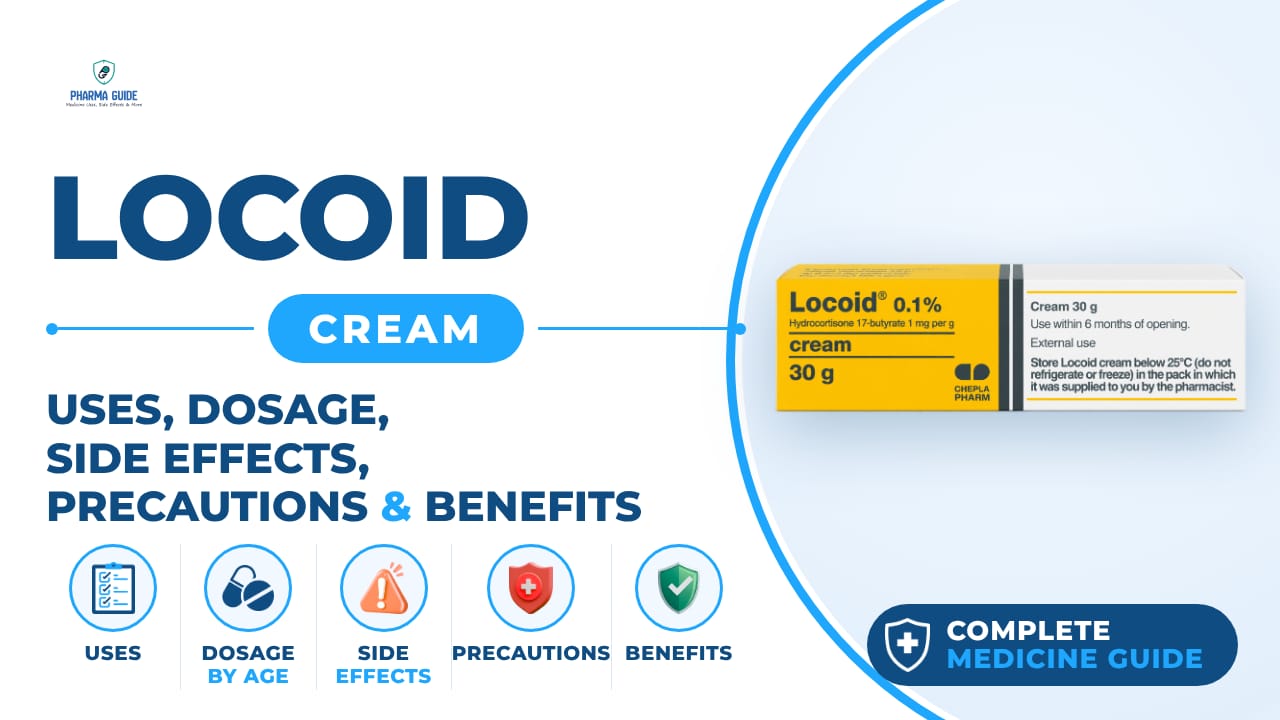
Locoid Cream: Uses, Dosage, Side Effects, Precautions and Alternates
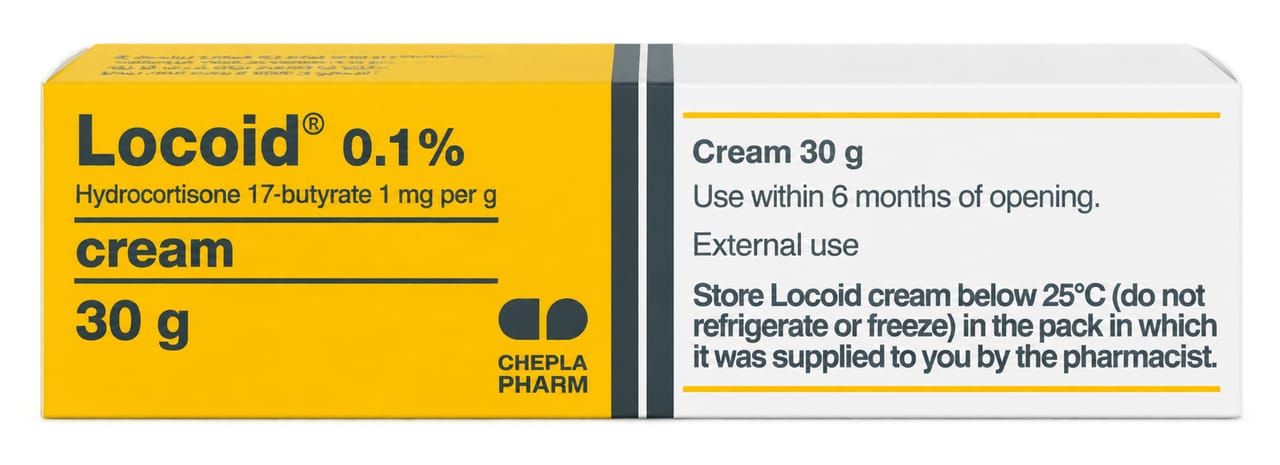
| Generic name | hydrocortisone butyrate |
|---|---|
| Drug class | Topical steroids (corticosteroid, moderately potent) |
| Forms | Cream, Lotion, Lipocream |
Quick overview
Locoid Cream contains hydrocortisone butyrate, a moderately potent topical corticosteroid. It is a prescription cream applied to the skin to calm inflamed, itchy skin conditions by reducing swelling, itching, and redness. It is used for conditions such as eczema, dermatitis, and certain types of psoriasis and dandruff.
What is Locoid Cream
Locoid Cream is a prescription steroid cream applied to the skin. It contains hydrocortisone butyrate and is used to calm inflamed, itchy skin conditions.
Locoid Cream uses
- Eczema
- Dermatitis
- Skin allergies or skin rash
- Psoriasis (excluding widespread plaque psoriasis)
- Severe dandruff caused by seborrheic dermatitis
- Mild to moderate atopic dermatitis
Benefits of Locoid Cream
- Reduces swelling, itching and redness caused by skin conditions
- Calms inflamed and itchy skin
How Locoid Cream works
Locoid reduces inflammation, itching, and redness in the skin. It is thought to work by blocking the release of natural substances in the body that cause inflammation.
Locoid Cream dosage
Wash and dry your hands before applying the cream. Clean and dry the affected skin area first, then apply a thin layer to the affected skin and rub in gently. Do not bandage, cover, or wrap the treated area unless your doctor tells you to. Do not apply to the face, groin, or armpits unless your doctor says to. If used in a baby's diaper area, avoid using tight diapers or plastic pants. Wash your hands after applying, unless you are treating your hands. Avoid contact with the eyes, nose, and mouth; rinse with plenty of water if you get it in these areas by accident. Do not use on skin that has cuts, scrapes, burns, or infections. Do not use for longer than your doctor has prescribed. Tell your doctor if your skin condition lasts or gets worse after 2 weeks of use. Do not use other steroid-containing products at the same time without checking with your doctor first.
| Age group | Dose |
|---|---|
| Under 3 months | Not established / not recommended |
| 3 months–17 years | Apply a thin layer twice daily to affected areas for atopic dermatitis |
| 18–64 years | Apply a thin layer 2–3 times daily for corticosteroid-responsive dermatoses |
| 65+ years | Apply a thin layer 2–3 times daily; use the lowest effective amount |
Available forms and strengths
- Cream
- Lotion
- Lipocream
Side effects of Locoid Cream
Common
- Stinging
- Burning
- Itching
- Irritation
- Dryness
- Redness
- Peeling at the application site when first used
Serious
- Stretch marks
- Thinning or darkening of the skin
- Acne
- Unwanted excessive hair growth
- Folliculitis
- Blistering skin
- Blurred vision or seeing halos around lights
- Uneven heartbeats
- Sleep problems (insomnia)
- Weight gain or unusual weight loss
- Puffiness or swelling in the face
- Feeling unusually tired
- Headache
- Swelling of the ankles or feet
- Increased thirst
- Increased urination
- Vision problems
- Skin infections that worsen or don't improve
Warnings and precautions
- This medicine can affect your body's hormone system (the HPA axis) if used on large areas, for a long time, or under a bandage/dressing, which can lead to adrenal gland problems. Your doctor may want to check for this with periodic tests.
- Using this medicine can increase the risk of cataracts and glaucoma. Tell your doctor if you notice any changes in your vision.
- Do not use this medicine on skin that already has an infection, since it may make the infection worse.
- Stopping long-term use suddenly can cause a rebound flare with intense redness, burning, and stinging that can spread beyond where you were treating. If your skin condition comes back soon after treatment ends, tell your doctor.
- Children may absorb more of this medicine through their skin than adults, which can cause serious side effects, including slowed growth. Follow your doctor's instructions carefully if giving this to a child.
- Do not smoke or go near open flames while using this cream, as it can increase the risk of severe burns, and clothing or bedding that has touched the cream can catch fire more easily.
- Avoid getting this cream in your eyes, as it should not be applied to the eyelids because of the risk of glaucoma or cataracts.
- For external skin use only — do not use in the eyes, mouth, or vagina. Avoid contact with the eyes. Topical corticosteroids around the eyes may increase the risk of glaucoma and cataracts.
- Do not use under tight/occlusive dressings unless specifically directed by a doctor.
- Avoid the diaper area in children, because diapers or plastic pants can act as occlusive coverings. Avoid applying to the face, underarms, or groin unless specifically prescribed.
- Do not apply to large areas of skin or use for prolonged periods without medical supervision. Prolonged or excessive use can cause skin thinning, systemic corticosteroid effects, and HPA-axis suppression.
- Children are more susceptible to systemic absorption because of their larger skin-surface-to-body-weight ratio.
- Do not use on untreated skin infections; appropriate treatment should be started if an infection develops.
- Pregnancy: There isn't enough research on using this medicine during pregnancy.
- It should only be used during pregnancy if your doctor decides the benefits are greater than the possible risks to the baby.
- Breastfeeding: It isn't known if this medicine passes into breast milk when applied to the skin.
- To be safe, use it on the smallest area of skin for the shortest time possible while breastfeeding, and wash off any cream from areas your baby may touch directly before feeding.
- This medicine is not known to affect your ability to drive or use machines.
Storage
- Store the medicine in a closed container at room temperature, away from heat, moisture, and direct light.
- Keep from freezing.
- Keep out of the reach of children.
- Do not keep outdated medicine or medicine no longer needed.
- Ask your healthcare professional how you should dispose of any medicine you do not use.
When to see a doctor
Get medical help right away if you notice signs of a serious allergic reaction, such as skin rash, itching, facial swelling, dizziness, or trouble breathing.
Contact your doctor immediately if you notice unusual tiredness, unexplained weight loss, headache, swelling of the ankles or feet, increased thirst, increased urination, or vision problems, as these could be signs the medicine has affected your whole body.
If someone swallows this medicine and has serious symptoms like passing out or trouble breathing, get emergency medical help right away.
Tell your doctor if your skin rash, swelling, or irritation does not improve, since skin infections can get worse while using this medicine.
Alternatives
- Hydrocortisone 1% Cream
- Hydrocortisone valerate 0.2% Cream
- Fluticasone propionate 0.05% Cream
Watch the video
FAQs
What is Locoid Cream used for?
Locoid Cream is used to treat eczema, dermatitis, skin allergies or rash, certain types of psoriasis (excluding widespread plaque psoriasis), severe dandruff caused by seborrheic dermatitis, and mild to moderate atopic dermatitis.
How should I apply Locoid Cream?
Wash and dry your hands, clean and dry the affected area, then apply a thin layer and rub it in gently. Do not bandage or cover the area unless your doctor says to, and avoid applying to the face, groin, or armpits unless instructed.
What are the common side effects of Locoid Cream?
Common side effects include stinging, burning, itching, irritation, dryness, redness, and peeling at the application site when first used.
Can Locoid Cream be used on children?
Locoid Cream is not recommended for infants under 3 months. For children 3 months to 17 years, it may be applied twice daily for atopic dermatitis, but children absorb more medicine through their skin, which can increase the risk of serious side effects including slowed growth.
What precautions should I take while using Locoid Cream?
Avoid using it on infected, cut, or burned skin, avoid contact with the eyes, do not use under tight dressings unless directed, and avoid smoking or open flames near the cream since it can increase the risk of severe burns.
General information, not medical advice
Your prescriber and the leaflet in your pack know your situation. This page does not.
- Follow your prescriber and the leaflet
- Don't start, stop, or change a dose on your own
- Doses and warnings differ by country and product
Sources
Video
Related medicines

Injectafer Injection: Uses, Dosage, Side Effects, Precautions and Alternates
Iron products
Injectafer (ferric carboxymaltose) treats iron deficiency anemia and heart failure-related iron deficiency via IV. Learn uses, dosage, side effects, and

Gliclazide Tablet: Uses, Dosage, Side Effects, Precautions and Alternates
Sulfonylurea (hypoglycemic/antidiabetic agent)
Gliclazide Tablet is a sulfonylurea for type 2 diabetes that boosts insulin release. Learn about dosage, side effects, warnings, and precautions.