
Safety
General information, not medical advice
Your prescriber and the leaflet in your pack know your situation. This page does not.
- Follow your prescriber and the leaflet
- Don't start, stop, or change a dose on your own
- Doses and warnings differ by country and product
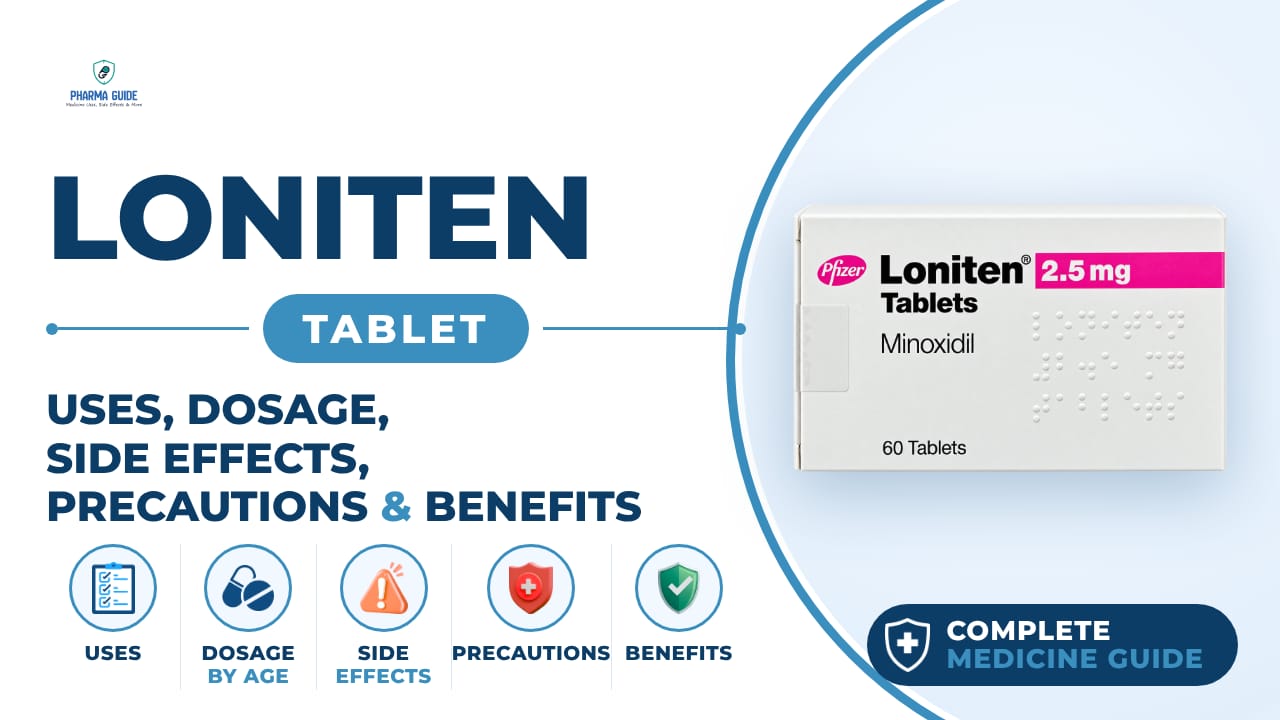
Loniten Tablet: Uses, Dosage, Side Effects, Precautions and Alternates
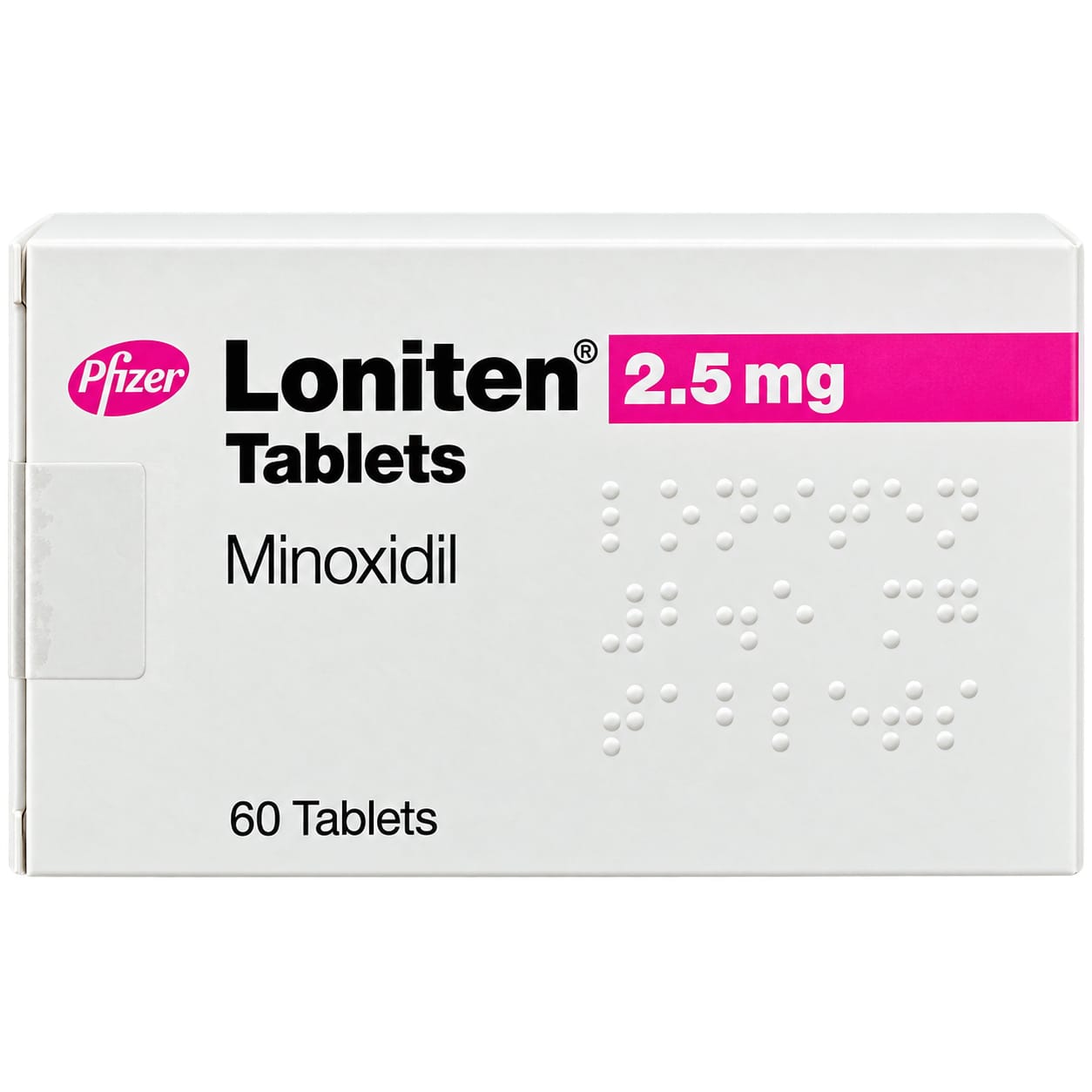
| Generic name | minoxidil |
|---|---|
| Drug class | Vasodilator |
| Forms | Tablets |
Quick overview
Loniten Tablet contains minoxidil, a vasodilator used to treat severe high blood pressure that has not responded to other treatments. It is usually given together with a diuretic and another blood-pressure medicine such as a beta-blocker. It works by relaxing and widening small blood vessels so blood flows more easily, which lowers blood pressure.
What is Loniten Tablet
Loniten contains minoxidil, a powerful medicine that lowers blood pressure by relaxing and widening certain small blood vessels so blood flows through them more easily. It is used for severe high blood pressure that has not responded to other treatments.
Loniten Tablet uses
- Treatment of severe high blood pressure (hypertension) that is causing symptoms or damaging vital organs and has not been controlled by other medicines
- Used as an add-on treatment together with a diuretic (water pill) and another blood-pressure medicine such as a beta-blocker
Benefits of Loniten Tablet
- Lowers severely high blood pressure that has not responded to other treatments, which can reduce the risk of damage to vital organs
- Treats severe resistant hypertension
- Directly relaxes arterial blood vessels
- Can substantially lower high blood pressure
- May be effective when several other antihypertensive medicines have been inadequate
How Loniten Tablet works
Minoxidil relaxes the muscle in the walls of small blood vessels, causing them to widen. This lowers the resistance the heart has to pump against, which reduces blood pressure.
Loniten Tablet dosage
Take exactly as your doctor tells you, with water or other liquids, either with or between meals. Your doctor will usually prescribe this medicine together with a water tablet (diuretic) and a beta-blocker or similar medicine to help prevent side effects such as fluid retention and a fast heartbeat. Tablets are scored so they can be broken in half if your doctor prescribes a half tablet.
Do not stop taking this medicine or change your dose without checking with your doctor first. Keep taking this medicine even if you feel well, since high blood pressure often has no symptoms. Weigh yourself every day and tell your doctor if you gain weight quickly, as this can be a sign of fluid retention. Your doctor may check your heart rate, blood pressure, and run occasional heart tests (ECG) while you are on this medicine.
If you miss a dose, take it when you remember unless it is almost time for your next dose; do not take a double dose. This tablet form should not be used to grow scalp hair; only the topical form of minoxidil is used for that purpose.
| Age group | Dose |
|---|---|
| 18–39 years | Usually 5 mg once daily initially |
| 40–64 years | Usually 5 mg once daily initially |
| 65–74 years | Often 2.5–5 mg once daily initially, with cautious adjustment |
Available forms and strengths
Tablets
Side effects of Loniten Tablet
Common
- Changes in color, length, or thickness of body or facial hair
- Nausea, vomiting
- Rash
- Breast pain or tenderness
- Fluid retention, swelling of face, eyes, or hands
- Fast heartbeat (tachycardia)
Serious
- New or worsening chest pain, or chest pain spreading to the jaw or shoulder
- Fast or pounding heartbeats
- Swelling in the legs, ankles, or feet, or rapid weight gain especially in the face and midsection
- Shortness of breath, including while lying down
- A light-headed feeling, like you might pass out
- Fluid build-up in the lungs with pain when breathing, wheezing, gasping for breath, or cough with foamy mucus
- Severe skin reaction with fever, sore throat, swelling of the face or tongue, burning eyes, skin pain, followed by a red or purple rash that spreads and causes blistering and peeling
- Signs of an allergic reaction such as hives, difficulty breathing, or swelling of the face, lips, tongue, or throat
- Low blood count problems (leukopenia, thrombocytopenia)
Warnings and precautions
- This medicine can cause the body to retain salt and water, which can lead to swelling, breathlessness, and heart problems if not managed with a diuretic.
- Inflammation of the sac around the heart (pericarditis), fluid buildup around the heart, and in rare cases dangerous pressure on the heart (tamponade) have occurred with this medicine. Patients should be monitored for signs of these problems.
- This medicine can speed up the heart rate, which may bring on chest pain (angina) in people with underlying heart artery disease unless they are also given a medicine to control heart rate.
- Most people taking this medicine develop longer, thicker, darker body or facial hair, usually starting on the face within a few weeks of starting treatment. This goes away within a few months after stopping the medicine.
- This medicine should only be used after a heart attack once the patient's condition has become stable.
- This medicine contains lactose and should not be used by people with certain rare inherited conditions affecting sugar processing.
- This medicine should not be used by people with a hormone-producing adrenal gland tumor (pheochromocytoma), as it may trigger release of hormones from the tumor.
- This medicine is not recommended during pregnancy. It should not be used by pregnant women or women who could become pregnant unless they are using contraception, because it may cause excess hair growth in a newborn baby.
- This medicine passes into breast milk and could harm a nursing baby, so breastfeeding is not recommended while taking it.
- People with kidney failure or who are on dialysis may need smaller doses and should be closely monitored by their doctor.
- This medicine should not be used by people with severe liver problems. For mild to moderate liver impairment, the doctor will start with a lower dose.
- Alcohol can worsen dizziness and hypotension.
- It is not known exactly how this medicine affects driving or operating machinery, since this has not been specifically studied. Because individual responses to treatment can vary, especially when starting therapy, caution is advised.
Storage
- Store at controlled room temperature (15 to 30°C)
- Protect from moisture
- Protect from light
- Keep out of reach and sight of children
When to see a doctor
Get emergency help right away if you have signs of an allergic reaction such as hives, trouble breathing, or swelling of the face, lips, tongue, or throat.
Call your doctor immediately if you have new or worsening chest pain, chest pain spreading to the jaw or shoulder, a fast or pounding heartbeat, swelling in your legs, ankles, or feet, rapid weight gain, shortness of breath, or feel like you might pass out.
Seek help immediately if you have signs of fluid in the lungs, such as pain when breathing, shortness of breath while lying down, wheezing, gasping for breath, or coughing up foamy mucus.
Seek urgent medical care for a severe skin reaction with fever, sore throat, facial or tongue swelling, burning eyes, skin pain, followed by a red or purple rash that spreads and causes blistering and peeling.
If you think you have taken too much of this medicine, contact your doctor or local poison control center right away, even if you feel fine.
Alternatives
- Hydralazine
- Amlodipine
- Nifedipine
Watch the video
FAQs
What is Loniten Tablet used for?
Loniten Tablet is used to treat severe high blood pressure that is causing symptoms or damaging vital organs and has not been controlled by other medicines. It is usually given as an add-on treatment with a diuretic and another blood-pressure medicine such as a beta-blocker.
How does Loniten Tablet work?
Loniten contains minoxidil, which relaxes the muscle in the walls of small blood vessels, causing them to widen. This lowers the resistance the heart has to pump against, reducing blood pressure.
Can Loniten Tablet be used to grow hair?
No, this tablet form should not be used to grow scalp hair. Only the topical form of minoxidil is used for that purpose.
What are the common side effects of Loniten Tablet?
Common side effects include changes in color, length, or thickness of body or facial hair, nausea, vomiting, rash, breast pain or tenderness, fluid retention, swelling of the face, eyes, or hands, and fast heartbeat.
Is Loniten Tablet safe during pregnancy or breastfeeding?
Loniten is not recommended during pregnancy and should not be used by pregnant women or women who could become pregnant unless using contraception, as it may cause excess hair growth in a newborn baby. It also passes into breast milk and breastfeeding is not recommended while taking it.
General information, not medical advice
Your prescriber and the leaflet in your pack know your situation. This page does not.
- Follow your prescriber and the leaflet
- Don't start, stop, or change a dose on your own
- Doses and warnings differ by country and product
Sources
Video
Related medicines

Injectafer Injection: Uses, Dosage, Side Effects, Precautions and Alternates
Iron products
Injectafer (ferric carboxymaltose) treats iron deficiency anemia and heart failure-related iron deficiency via IV. Learn uses, dosage, side effects, and

Gliclazide Tablet: Uses, Dosage, Side Effects, Precautions and Alternates
Sulfonylurea (hypoglycemic/antidiabetic agent)
Gliclazide Tablet is a sulfonylurea for type 2 diabetes that boosts insulin release. Learn about dosage, side effects, warnings, and precautions.