
Safety
General information, not medical advice
Your prescriber and the leaflet in your pack know your situation. This page does not.
- Follow your prescriber and the leaflet
- Don't start, stop, or change a dose on your own
- Doses and warnings differ by country and product
Lopressor Tablet: Uses, Dosage, Side Effects, Precautions and Alternates
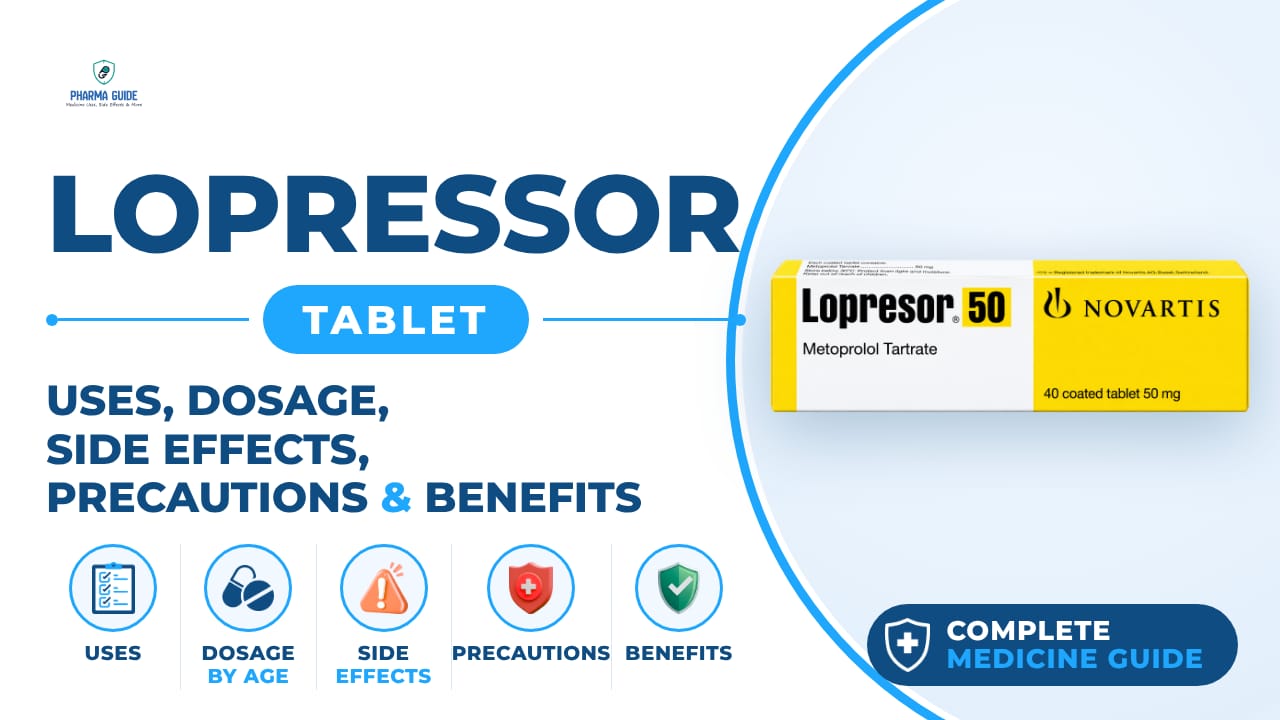
| Generic name | metoprolol tartrate |
|---|---|
| Drug class | Cardioselective beta blocker |
| Forms | Tablets, Injectable solution |
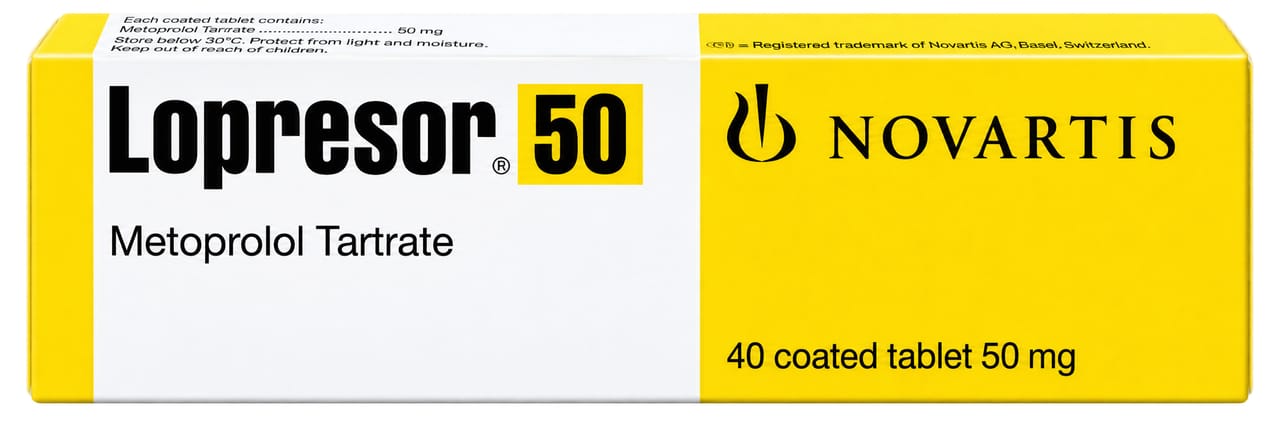
Quick overview
Lopressor Tablet contains metoprolol tartrate, a cardioselective beta blocker. It is used to treat angina and hypertension, lower the risk of death or hospitalization from heart failure, and reduce the risk of death after a known or possible heart attack. It works by blocking beta-1 receptors in the heart, which lowers heart rate, blood pressure, and the workload on the heart. Lopressor is available as tablets and as an injectable solution.
What is Lopressor Tablet
Lopressor is a beta-blocker that affects the heart and circulation (blood flow through arteries and veins). It contains the active drug metoprolol tartrate.
Lopressor Tablet uses
- Treat angina (chest pain)
- Treat hypertension (high blood pressure), alone or with other blood pressure medications
- Lower the risk of death or hospitalization from heart failure
- Reduce the risk of death in people who had a known or possible heart attack
Benefits of Lopressor Tablet
- Lowers blood pressure
- Decreases chest pain
- Reduces stress on the heart
How Lopressor Tablet works
Lopressor is a beta-blocker that works on beta-1 receptors in the heart. It blocks the hormones epinephrine and norepinephrine from attaching to these receptors, which lowers heart rate, blood pressure, and the workload on the heart.
Lopressor Tablet dosage
Take Lopressor with a meal or shortly after eating, and take it at the same time each day. Swallow tablets whole; do not crush or chew them, though tablets can be cut in half or fourths if your doctor tells you to. If using a liquid form, measure it carefully with a dosing syringe or medicine dose-measuring device, not a kitchen spoon. Do not stop taking this medicine suddenly, as this may make your condition worse. Keep taking this medicine even if you feel well, since high blood pressure often has no symptoms. Tell your surgeon ahead of time if you need surgery and are using this medicine. If you miss a dose, skip it and take your next dose at the regular time; do not take two doses at once. This medicine has not been studied in children and should not be given to a child without medical advice.
| Age group | Dose |
|---|---|
| Under 18 years | Safety/effectiveness not established for Lopressor tablets |
| 18–64 years | Hypertension: 100 mg/day initially, as a single or divided dose; maintenance 100–450 mg/day |
| 65+ years | Usually start cautiously at the lower end of the adult dosing range |
Available forms and strengths
- Tablets
- Injectable solution
Side effects of Lopressor Tablet
Common
- Dizziness
- Tired feeling
- Depression, confusion, memory problems
- Nightmares, trouble sleeping
- Diarrhea
- Mild itching or rash
- Abdominal pain
- Breathing problems, such as shortness of breath or wheezing
- Dry mouth
- Flatulence (gas)
- Heartburn
- Heart palpitations
- Nausea and vomiting
- Weight gain
- Hair loss
- Constipation
- Insomnia
Serious
- Very slow heartbeats (bradycardia)
- Light-headed feeling, like you might pass out
- Shortness of breath (even with mild exertion), swelling, rapid weight gain
- Cold feeling in your hands and feet
- Low blood pressure
- Heart failure
- Heart block
- Raynaud's disease (poor blood circulation in fingers and toes)
- Bronchospasm (tightening and spasm of muscles in airways)
- Peripheral edema (swelling in hands, legs, or feet)
- Cardiogenic shock
- Allergic reaction: hives, difficulty breathing, swelling of face, lips, tongue, or throat
- Depression
Warnings and precautions
- Do not use this medicine if you have a serious heart problem such as heart block, sick sinus syndrome, or a very slow heart rate, severe circulation problems, severe heart failure, or a history of fainting from slow heartbeats.
- Do not stop taking this medicine suddenly, as it may cause serious heart problems including heart attack, worsened chest pain, or dangerous changes in heart rhythm.
- Tell your doctor if you have asthma, COPD, sleep apnea, or other breathing disorders, since beta-blockers can cause breathing problems.
- This medicine may hide signs of low blood sugar if you have diabetes, making it harder to notice.
- Tell your doctor if you have pheochromocytoma (a tumor of the adrenal gland), since this medicine could raise blood pressure in that condition.
- This medicine may hide symptoms of an overactive thyroid (hyperthyroidism), and stopping it suddenly could trigger a dangerous condition called thyroid storm.
- It isn't known if Lopressor is safe during pregnancy. It hasn't been studied in pregnant people, though treating high blood pressure may have benefits that outweigh risks to the baby.
- Ask a doctor before using this medicine while breastfeeding. Small amounts pass into breast milk and could cause dry skin, dry mouth, diarrhea, constipation, or slow heartbeats in the baby.
- There aren't any known issues with taking Lopressor if you have kidney problems.
- If you have liver problems, your doctor may start you on a lower dose and increase it slowly over time.
- Drinking alcohol can increase certain side effects of this medicine, and there is no known direct interaction, but heavy drinking can raise blood pressure and increase risks of dizziness or falls.
- Avoid driving or hazardous activity until you know how this medicine affects you, since it can cause dizziness or tiredness that may impair your reactions.
Storage
- Store at room temperature away from moisture and heat.
- Lopressor tablets should be stored at room temperature (77°F/25°C) in a tightly sealed container away from light. Avoid storing this medication in areas where it could get damp or wet, such as in bathrooms.
- For short periods of time, Lopressor can be stored at a temperature from 59°F to 86°F (15°C to 30°C).
When to see a doctor
- Get emergency medical help right away if you have signs of a serious allergic reaction, such as hives, difficulty breathing, or swelling of your face, lips, tongue, or throat.
- Call your doctor right away if you have very slow heartbeats, feel like you might pass out, have shortness of breath even with mild activity, sudden swelling or rapid weight gain, or cold hands and feet.
- If you think you have taken too much of this medicine, contact your doctor or your local poison control center right away, or seek emergency care if symptoms are severe.
- If you have thoughts of harming yourself while feeling depressed on this medicine, seek emergency help immediately.
Alternatives
- Lisinopril
- Labetalol
- Propranolol
- Bisoprolol
- Metoprolol Succinate
Watch the video
FAQs
What is Lopressor Tablet used for?
Lopressor is used to treat angina, treat hypertension, lower the risk of death or hospitalization from heart failure, and reduce the risk of death after a known or possible heart attack.
How does Lopressor Tablet work?
Lopressor is a beta-blocker that blocks beta-1 receptors in the heart, preventing epinephrine and norepinephrine from attaching to them, which lowers heart rate, blood pressure, and the workload on the heart.
How should I take Lopressor Tablet?
Take Lopressor with a meal or shortly after eating, at the same time each day. Swallow tablets whole without crushing or chewing, unless your doctor tells you to cut them. Do not stop taking it suddenly, as this may worsen your condition.
What are the common side effects of Lopressor Tablet?
Common side effects include dizziness, tiredness, depression, confusion, memory problems, nightmares, trouble sleeping, diarrhea, mild itching or rash, abdominal pain, breathing problems, dry mouth, nausea, vomiting, weight gain, and constipation.
Can I drink alcohol while taking Lopressor Tablet?
There is no known direct interaction, but heavy drinking can raise blood pressure and increase the risk of dizziness or falls, so alcohol can increase certain side effects of this medicine.
General information, not medical advice
Your prescriber and the leaflet in your pack know your situation. This page does not.
- Follow your prescriber and the leaflet
- Don't start, stop, or change a dose on your own
- Doses and warnings differ by country and product
Sources
Video
Related medicines

Injectafer Injection: Uses, Dosage, Side Effects, Precautions and Alternates
Iron products
Injectafer (ferric carboxymaltose) treats iron deficiency anemia and heart failure-related iron deficiency via IV. Learn uses, dosage, side effects, and

Gliclazide Tablet: Uses, Dosage, Side Effects, Precautions and Alternates
Sulfonylurea (hypoglycemic/antidiabetic agent)
Gliclazide Tablet is a sulfonylurea for type 2 diabetes that boosts insulin release. Learn about dosage, side effects, warnings, and precautions.