
Safety
General information, not medical advice
Your prescriber and the leaflet in your pack know your situation. This page does not.
- Follow your prescriber and the leaflet
- Don't start, stop, or change a dose on your own
- Doses and warnings differ by country and product
Lotrisone Cream: Uses, Dosage, Side Effects, Precautions and Alternates
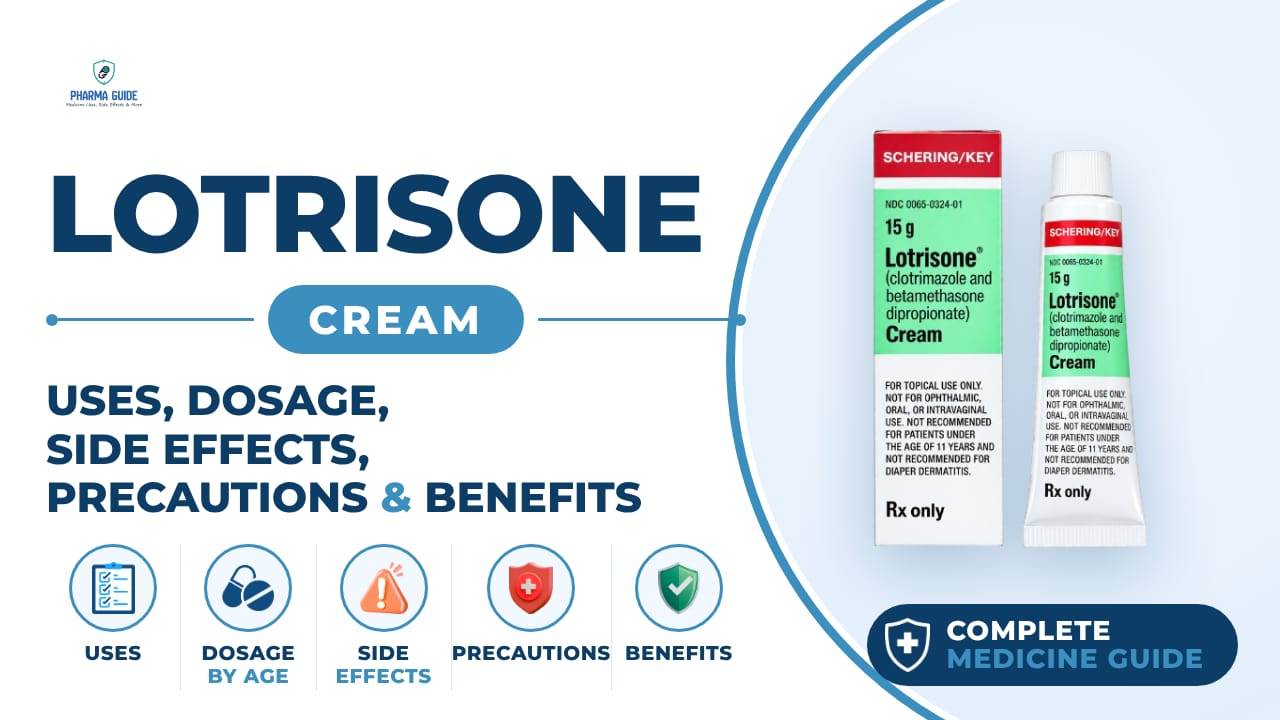
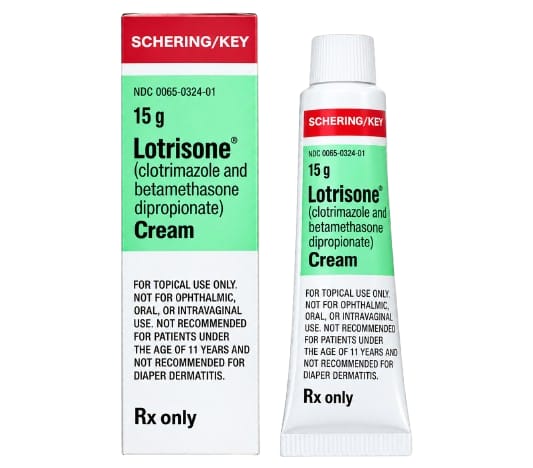
| Generic name | clotrimazole and betamethasone dipropionate |
|---|---|
| Drug class | Antifungal/Corticosteroid Topicals |
| Forms | Cream, Lotion |
Quick overview
Lotrisone Cream combines clotrimazole, an antifungal, with betamethasone dipropionate, a corticosteroid, to treat fungal skin infections that are inflamed and itchy. It is applied to the skin and is used in people 17 years and older. It helps treat athlete's foot, jock itch, and ringworm while relieving associated itching, redness, and inflammation.
What is Lotrisone Cream
Lotrisone is a prescription cream or lotion applied to the skin. It combines an antifungal medicine (clotrimazole) with a corticosteroid (betamethasone dipropionate) to treat fungal skin infections that are inflamed and itchy. It is used in people 17 years and older.
Lotrisone Cream uses
- Treats athlete's foot.
- Treats jock itch.
- Treats ringworm.
- Relieves itching associated with certain fungal skin infections.
- Reduces redness and inflammation associated with these infections.
Benefits of Lotrisone Cream
- Treats certain fungal skin infections.
- Helps relieve itching.
- Reduces redness and inflammation.
- Helps treat athlete's foot.
- Helps treat ringworm and jock itch.
How Lotrisone Cream works
Lotrisone combines two medicines that work in different ways. Clotrimazole kills the fungus by stopping it from making a substance it needs to keep its outer membrane intact, which stops it from growing. Betamethasone is a steroid that reduces redness, swelling, and itching by lowering inflammation-causing chemicals in the body.
Lotrisone Cream dosage
Gently massage the cream or lotion into the affected skin and the surrounding area twice a day, in the morning and evening. Use for the full length of time your doctor prescribes, even if your symptoms improve sooner. For groin infections, apply sparingly and wear loose-fitting clothing. Do not bandage, cover, or wrap the treated skin unless your doctor tells you to. Do not use on the face or underarms. Wash your hands after applying, unless you are treating your hands. This medicine is for use on the skin only — avoid the eyes, mouth, and vagina. Shake the lotion well before each use. Do not use for diaper rash.
Use exactly as prescribed by your doctor or pharmacist.
Available forms and strengths
- Cream
- Lotion
Side effects of Lotrisone Cream
Common
- Tingling, numbness, or stinging
- Rash
- Skin dryness
- Swelling
- New or secondary infection
Serious
- Signs of an allergic reaction such as hives, difficulty breathing, or swelling of the face, lips, tongue, or throat
- Worsening of the skin condition or severe irritation, redness, warmth, swelling, or oozing of treated skin
- Blurred vision, tunnel vision, eye pain, or seeing halos around lights
- Signs of high blood sugar such as increased thirst, increased urination, dry mouth, or fruity breath odor
- Signs that too much medicine has been absorbed into the body, such as weight gain (especially in the face or upper back), slow wound healing, thinning or discolored skin, increased body hair, muscle weakness, nausea, diarrhea, tiredness, mood changes, or menstrual or sexual changes
- Adrenal gland problems (changes in stress hormone levels) from the body absorbing too much steroid
- Skin thinning, stretch marks, or skin atrophy, especially with long-term or covered use
- In children: slowed growth and Cushing's syndrome (a hormone imbalance)
Warnings and precautions
- This medicine is not recommended for anyone under 17 years old, because children can absorb more of the steroid through their skin and are at greater risk of side effects, including slowed growth and hormone problems.
- Do not use this medicine to treat diaper rash. Steroid-related side effects have occurred when it was used this way.
- Using too much of this medicine, using it for too long, applying it to large areas, or covering the treated area can let too much steroid absorb into the body and cause your adrenal glands to make less of their natural hormones.
- Do not cover the treated skin with bandages or tight wrapping unless your doctor says to, since this increases how much medicine gets absorbed into the body.
- Do not use more than the maximum recommended weekly amount, and do not use longer than directed, since this is linked to side effects.
- This medicine can raise the risk of eye problems such as cataracts and glaucoma.
- Tell your doctor if you are pregnant or planning to become pregnant. This medicine should only be used in pregnancy if your doctor decides the benefit is worth the possible risk to the baby.
- It isn't known if enough of this medicine passes into breast milk to affect a nursing baby, so caution is advised if you are breastfeeding while using it.
- Do not cover with tight bandages unless advised.
- People with liver problems may be more likely to have the steroid absorbed into the body and affect their hormone levels.
- Do not use on the face, groin, or underarms unless prescribed.
- Avoid prolonged use because it may cause skin thinning.
Storage
- Store the cream at 25°C (77°F); brief changes between 15°-30°C (59°-86°F) are allowed
- Store the lotion at 25°C (77°F) in the upright position only; brief changes between 15°C and 30°C (59°F and 86°F) are allowed
- Shake lotion well before each use
- Keep out of the reach of children
When to see a doctor
- Get emergency help right away if you have signs of a serious allergic reaction, such as hives, trouble breathing, or swelling of your face, lips, tongue, or throat.
- Call your doctor if your skin condition gets worse, or if the treated skin becomes red, warm, swollen, oozing, or severely irritated.
- Call your doctor if you have vision changes such as blurred vision, tunnel vision, eye pain, or seeing halos around lights.
- Call your doctor if you notice signs the medicine may be absorbing into your body too much, such as unusual weight gain, slow healing wounds, thinning or discolored skin, increased body hair, muscle weakness, nausea, diarrhea, tiredness, mood changes, or menstrual or sexual changes.
- Tell your doctor if there is no improvement after one week of treatment for groin or body infections, or after two weeks for foot infections.
- Seek emergency medical attention if someone accidentally swallows this medicine.
Alternatives
- Ketoconazole
- Clotrimazole
- Econazole
Watch the video
FAQs
What is Lotrisone Cream used for?
It treats fungal skin infections like athlete's foot, jock itch, and ringworm, while relieving associated itching, redness, and inflammation.
How do you apply Lotrisone Cream?
Gently massage the cream or lotion into the affected skin and surrounding area twice a day, in the morning and evening, for the full length of time prescribed, avoiding the face, underarms, eyes, mouth, and vagina.
Can Lotrisone Cream be used on children?
No, it is not recommended for anyone under 17 years old because children can absorb more steroid through their skin, raising the risk of side effects like slowed growth and hormone problems.
What are the serious side effects of Lotrisone Cream?
Serious side effects include allergic reactions, worsening skin irritation, vision changes like blurred vision or eye pain, signs of high blood sugar, excess steroid absorption symptoms, adrenal gland problems, and skin thinning or stretch marks.
Can Lotrisone Cream be used for diaper rash?
No, it should not be used to treat diaper rash, as steroid-related side effects have occurred with this use.
General information, not medical advice
Your prescriber and the leaflet in your pack know your situation. This page does not.
- Follow your prescriber and the leaflet
- Don't start, stop, or change a dose on your own
- Doses and warnings differ by country and product
Sources
Video
Related medicines

Injectafer Injection: Uses, Dosage, Side Effects, Precautions and Alternates
Iron products
Injectafer (ferric carboxymaltose) treats iron deficiency anemia and heart failure-related iron deficiency via IV. Learn uses, dosage, side effects, and

Gliclazide Tablet: Uses, Dosage, Side Effects, Precautions and Alternates
Sulfonylurea (hypoglycemic/antidiabetic agent)
Gliclazide Tablet is a sulfonylurea for type 2 diabetes that boosts insulin release. Learn about dosage, side effects, warnings, and precautions.