
Safety
General information, not medical advice
Your prescriber and the leaflet in your pack know your situation. This page does not.
- Follow your prescriber and the leaflet
- Don't start, stop, or change a dose on your own
- Doses and warnings differ by country and product
Loxapine Capsule: Uses, Dosage, Side Effects, Precautions and Alternates
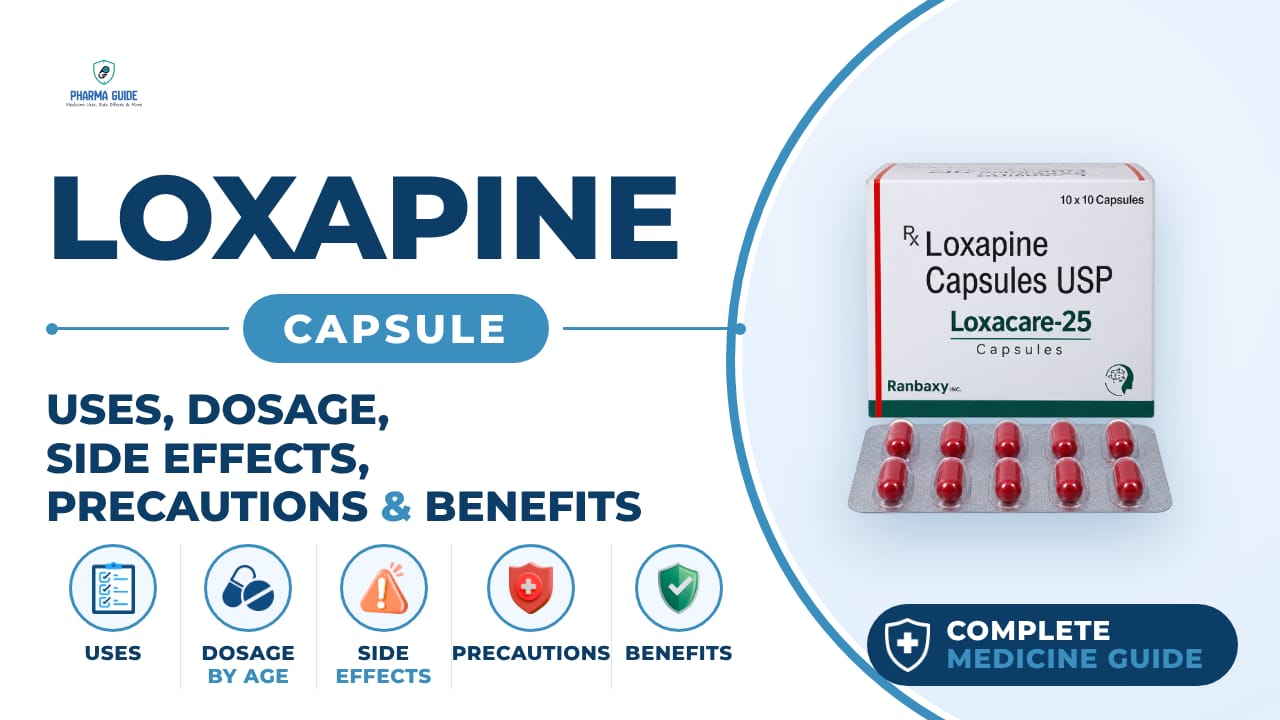
| Generic name | loxapine |
|---|---|
| Drug class | Antipsychotic (dibenzoxazepine / miscellaneous antipsychotic agent) |
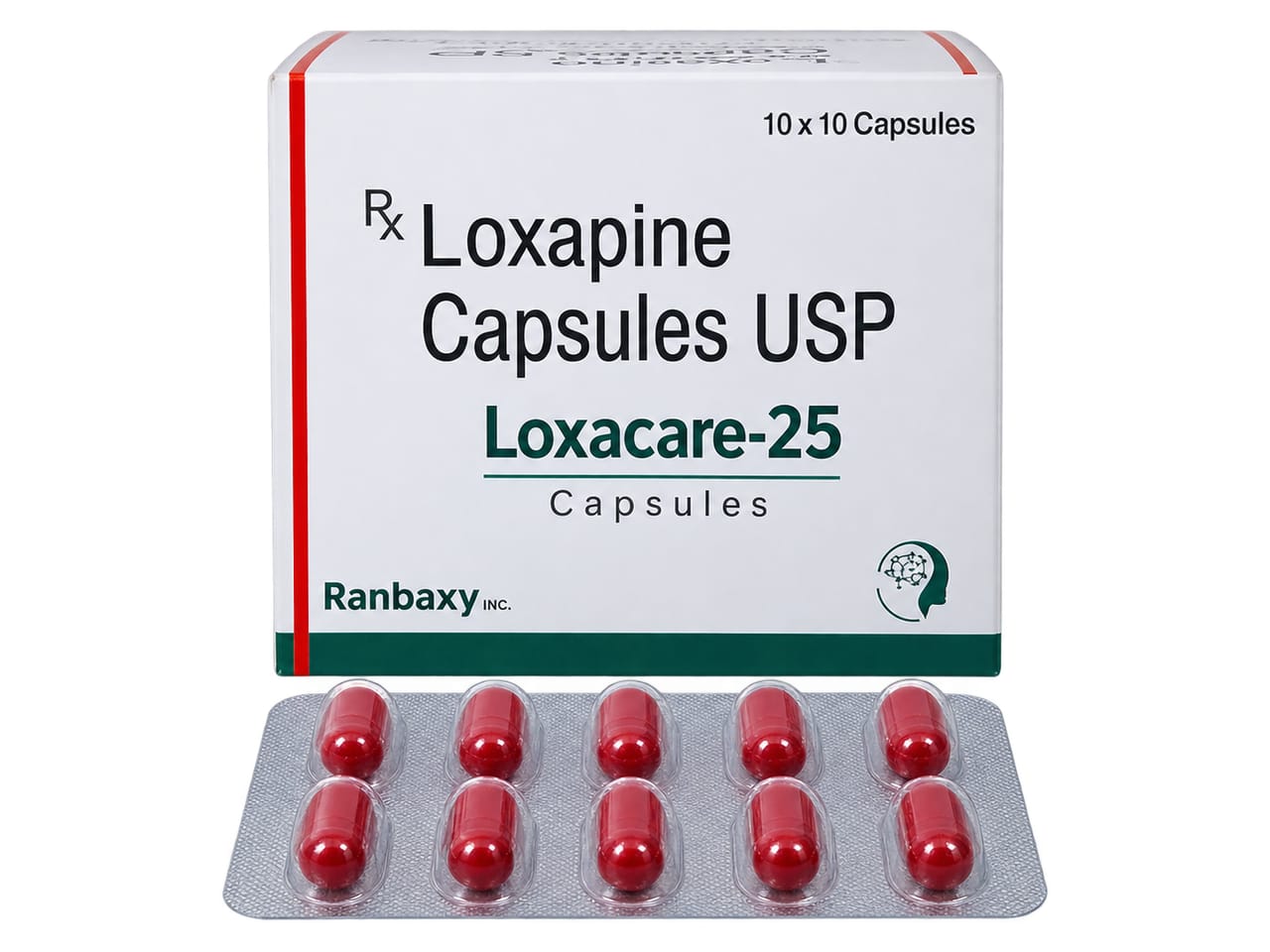
| Forms | Oral capsule, Oral tablet, Oral solution/liquid, Intramuscular injection |
Quick overview
Loxapine Capsule (generic name: loxapine) is a prescription antipsychotic medicine belonging to the dibenzoxazepine class. It is used to treat schizophrenia, helping manage symptoms such as hallucinations, delusions, and disorganized thinking. It works by blocking dopamine and serotonin in the brain. As with all antipsychotics, it carries possible side effects and precautions that should be discussed with a doctor.
What is Loxapine Capsule
Loxapine is a prescription antipsychotic medicine used to treat schizophrenia, a serious mental illness that affects how a person thinks, feels, and behaves.
Loxapine Capsule uses
- Treats schizophrenia, including symptoms like hallucinations, delusions, and disorganized thinking
- May help with both positive symptoms (hallucinations, delusions) and negative symptoms (apathy, social withdrawal) of schizophrenia
- May be used off-label for other conditions as directed by a doctor
Benefits of Loxapine Capsule
- Treats schizophrenia
- Helps reduce hallucinations
- Helps reduce delusions
- Helps manage disorganized thinking
- Helps control psychotic symptoms
How Loxapine Capsule works
Loxapine works by blocking dopamine and serotonin, two brain chemicals involved in mood, thinking, and perception. In schizophrenia, overactive dopamine signaling is thought to cause symptoms like hallucinations and delusions; by blocking dopamine receptors, loxapine helps calm this overactivity. It also decreases abnormal excitement in the brain.
Loxapine Capsule dosage
Loxapine is taken by mouth, usually in divided doses, two to four times a day. Try to take it at around the same times every day. It can be taken with or without food. Your doctor may start you on a low dose and increase it over the first 7 to 10 days until symptoms are controlled. Continue taking it even if you feel well; do not stop without talking to your doctor. It may take several weeks or longer to feel the full benefit. If you miss a dose, take it as soon as you remember, but skip it if it is almost time for your next dose — do not double up.
| Age group | Dose |
|---|---|
| Under 18 years | Not recommended |
| 18–64 years | 10 mg, twice/day |
| 65+ years | 10 mg, twice/day |
Available forms and strengths
- Oral capsule
- Oral tablet
- Oral solution/liquid
- Intramuscular injection
Side effects of Loxapine Capsule
Common
- Drowsiness or sedation
- Dizziness
- Dry mouth
- Constipation
- Blurred vision
- Weight gain
- Tremors
- Restlessness or agitation
- Difficulty sleeping (insomnia)
- Skin rash or itching
- Nasal congestion
- Problems with balance or walking
- Swelling in the face
- Numbness or weakness
- Nausea, vomiting
Serious
- Neuroleptic malignant syndrome (high fever, muscle rigidity, confusion, irregular heartbeat, sweating)
- Tardive dyskinesia (uncontrollable, rhythmic movements of the face, mouth, tongue, or body)
- Seizures
- Low blood pressure or fainting (orthostatic hypotension)
- Blood disorders such as low white blood cell counts (fever, chills, mouth sores, sore throat, infections)
- Elevated liver enzymes, jaundice, or hepatitis
- Fast or irregular heartbeat
- Severe constipation or little to no urination
- Falls leading to fractures or other injuries
- Allergic reaction (hives, difficulty breathing, swelling of face, lips, tongue, or throat)
Warnings and precautions
- Older adults with dementia-related psychosis have a higher risk of death when treated with antipsychotic drugs like loxapine; it is not approved for this use.
- Loxapine can cause tardive dyskinesia, a movement disorder with uncontrollable face and body movements that may not go away even after stopping the drug.
- A rare but life-threatening condition called neuroleptic malignant syndrome can occur, with high fever, stiff muscles, and confusion.
- Loxapine can lower the seizure threshold, raising the risk of seizures, especially in people with epilepsy.
- Loxapine may cause drowsiness, low blood pressure on standing, and balance problems, which can increase the risk of falls and injuries.
- Do not use loxapine if you have reduced alertness from alcohol or certain other drugs, or if you are in a coma.
- Loxapine should only be used during pregnancy if the benefits outweigh the risks, since it may harm the developing baby. Babies exposed in the last three months of pregnancy may have withdrawal or movement symptoms after birth.
- Breastfeeding while taking loxapine is not recommended, as it can pass into breast milk and may harm the nursing baby.
- Loxapine is removed from the body partly through the kidneys, and dose adjustments may be needed in people with kidney problems.
- Loxapine is broken down by the liver, and people with liver problems may need a different dose; it is not recommended for people with severe liver disease.
- Avoid drinking alcohol while taking loxapine, as it can cause dangerous side effects and worsen drowsiness.
- Loxapine can cause drowsiness and affect your thinking and movements, so avoid driving or operating machinery until you know how it affects you.
Storage
- Store at room temperature away from excess heat and moisture (not in the bathroom)
- Keep the medication in the container it came in, tightly closed, and out of reach of children
- Dispose of unneeded medication through a medicine take-back program rather than flushing it down the toilet
When to see a doctor
- Get emergency help right away for signs of an allergic reaction, such as hives, difficulty breathing, or swelling of the face, lips, tongue, or throat.
- Call your doctor right away if you notice uncontrolled movements of the arms, legs, or face, a fast heart rate, feeling like you might faint, confusion, slurred speech, agitation, trouble sleeping, or seizures.
- Seek medical help immediately for signs of low white blood cells, like fever, chills, mouth sores, sore throat, or trouble breathing, or for a severe nervous system reaction with stiff muscles, high fever, sweating, and fast heartbeat.
- If you suspect an overdose, get emergency medical attention or contact poison control right away.
- If a serious side effect occurs, such as little or no urinating, or severe constipation, contact your doctor promptly.
Alternatives
- Quetiapine
- Risperidone
- Haloperidol
Watch the video
FAQs
What is Loxapine Capsule used for?
Loxapine is a prescription antipsychotic used to treat schizophrenia, helping manage symptoms like hallucinations, delusions, and disorganized thinking.
How does Loxapine Capsule work?
Loxapine works by blocking dopamine and serotonin in the brain, which helps calm overactive dopamine signaling thought to cause hallucinations and delusions in schizophrenia.
What is the typical dosage of Loxapine Capsule?
For adults aged 18 to 64 and those 65 and older, the typical dose is 10 mg twice a day, usually taken in divided doses two to four times daily. It is not recommended for those under 18.
What are the serious side effects of Loxapine Capsule?
Serious side effects include neuroleptic malignant syndrome, tardive dyskinesia, seizures, low blood pressure or fainting, blood disorders, liver problems, irregular heartbeat, and severe constipation or urination issues.
Can Loxapine Capsule be used during pregnancy or breastfeeding?
Loxapine should only be used in pregnancy if benefits outweigh risks, as it may harm the baby. Breastfeeding is not recommended since the drug can pass into breast milk.
General information, not medical advice
Your prescriber and the leaflet in your pack know your situation. This page does not.
- Follow your prescriber and the leaflet
- Don't start, stop, or change a dose on your own
- Doses and warnings differ by country and product
Sources
Video
Related medicines

Injectafer Injection: Uses, Dosage, Side Effects, Precautions and Alternates
Iron products
Injectafer (ferric carboxymaltose) treats iron deficiency anemia and heart failure-related iron deficiency via IV. Learn uses, dosage, side effects, and

Gliclazide Tablet: Uses, Dosage, Side Effects, Precautions and Alternates
Sulfonylurea (hypoglycemic/antidiabetic agent)
Gliclazide Tablet is a sulfonylurea for type 2 diabetes that boosts insulin release. Learn about dosage, side effects, warnings, and precautions.