
Safety
General information, not medical advice
Your prescriber and the leaflet in your pack know your situation. This page does not.
- Follow your prescriber and the leaflet
- Don't start, stop, or change a dose on your own
- Doses and warnings differ by country and product
Lubiprostone Capsule: Uses, Dosage, Side Effects, Precautions and Alternates
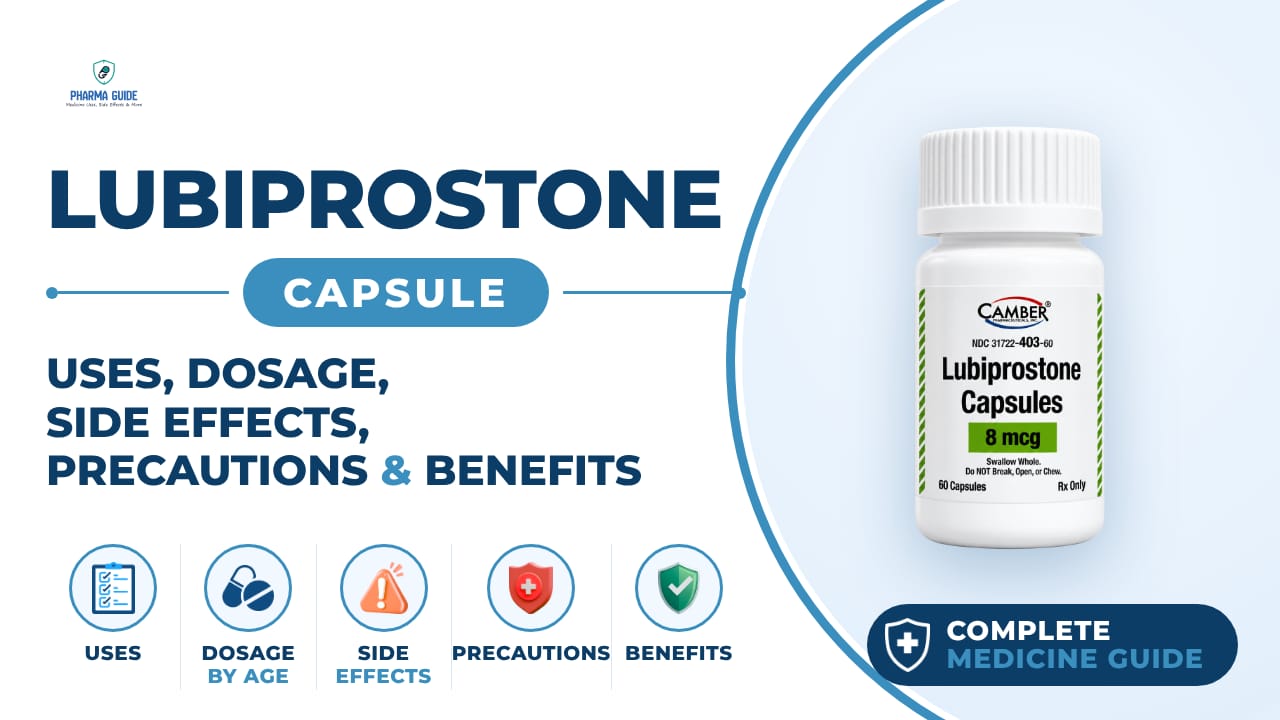
| Generic name | lubiprostone |
|---|---|
| Drug class | chloride channel activator |
| Forms | Capsule (soft gelatin, liquid filled) |
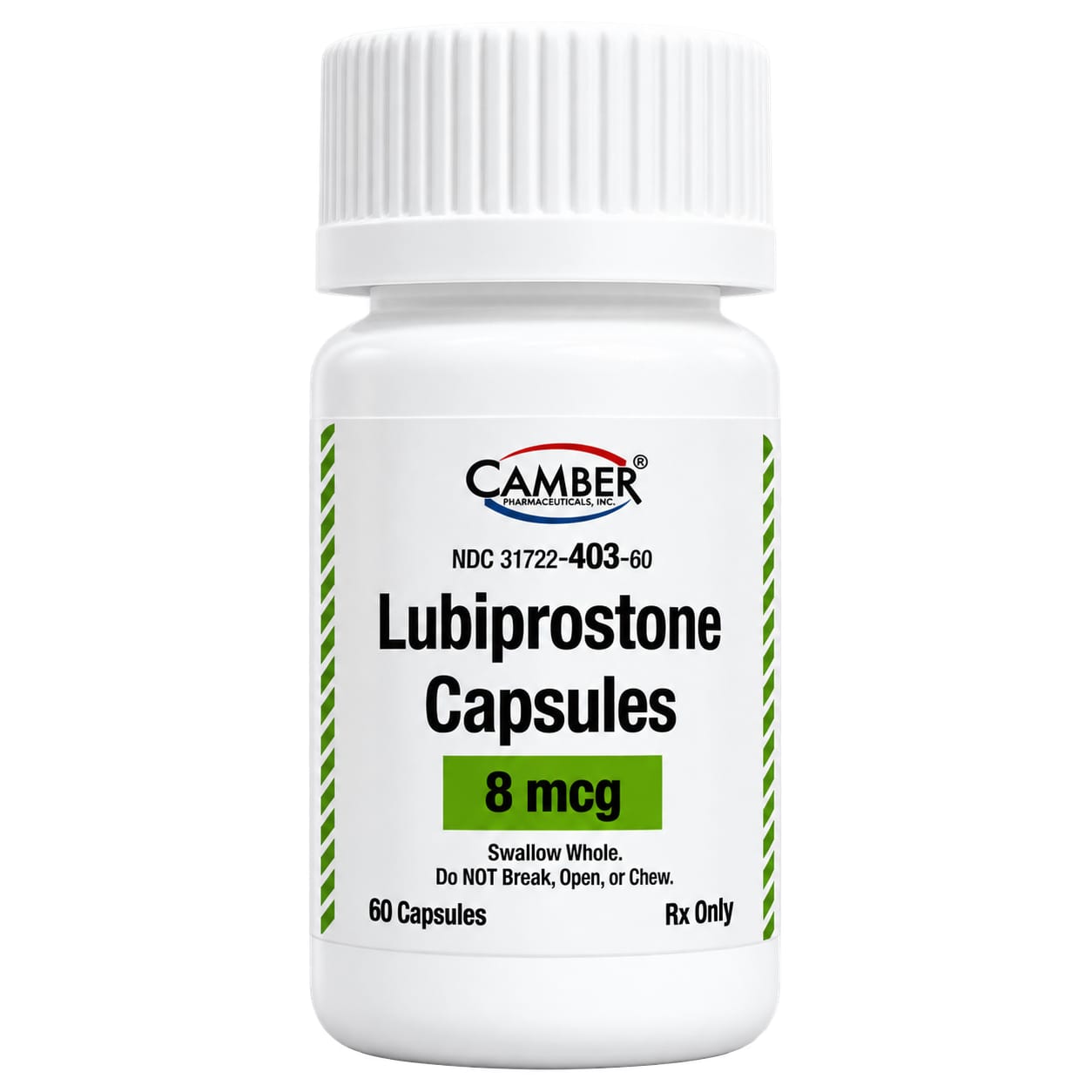
Quick overview
Lubiprostone Capsule, known generically as lubiprostone, is a prescription medicine belonging to the chloride channel activator drug class. It is used to treat certain types of long-lasting constipation and is also known by the brand name Amitiza. It works within the digestive system to help soften stool and ease bowel movements.
What is Lubiprostone Capsule
Lubiprostone is a prescription capsule medicine used to treat certain types of long-lasting constipation. It is known by the brand name Amitiza.
Lubiprostone Capsule uses
- Chronic idiopathic constipation (long-lasting constipation with no known cause) in adults
- Irritable bowel syndrome with constipation (IBS-C) in adult women
- Constipation caused by long-term opioid pain medicines in adults with chronic pain not caused by cancer
Benefits of Lubiprostone Capsule
- Makes stool softer and easier to pass
- Reduces the need to strain during bowel movements
- Helps relieve bloating and abdominal discomfort
- Increases how often you have bowel movements
- Lessens the feeling of not fully emptying your bowels
How Lubiprostone Capsule works
Lubiprostone works by activating a channel in the gut wall that increases fluid in the intestines. This extra fluid softens the stool and helps it move through the bowel more easily.
Lubiprostone Capsule dosage
Take this medicine by mouth with food and water. Swallow the capsule whole. Do not cut, crush, break, or chew it. Take it at the same times each day, usually twice a day. Keep taking it unless your care team tells you to stop. Drink plenty of liquids each day to help soften the stool further. This medicine is not approved for use in children.
If you miss a dose, take it as soon as you remember, but if it is almost time for your next dose, skip the missed one — do not double up.
| Age group | Dose |
|---|---|
| Under 18 years | Safety and effectiveness not established; no approved pediatric dosage |
| 18–74 years | CIC/OIC: 24 mcg twice daily; IBS-C: 8 mcg twice daily for eligible women |
| 75 years and older | CIC/OIC: 24 mcg twice daily; IBS-C: 8 mcg twice daily for eligible women, with careful monitoring |
Available forms and strengths
- Capsule (soft gelatin, liquid filled)
Side effects of Lubiprostone Capsule
Common
- Nausea
- Diarrhea or loose stools
- Headache
- Dizziness
- Stomach pain or cramping
- Gas or bloating
- Vomiting
- Dry mouth
- Fatigue
- Joint or muscle aches
Serious
- Severe or persistent diarrhea
- Fainting, lightheadedness, or sudden drop in blood pressure
- Chest tightness, shortness of breath, or trouble breathing
- Signs of a severe allergic reaction such as rash, hives, or swelling of the face, lips, tongue, or throat
- Signs of a bowel blockage such as severe stomach cramping, being unable to pass stool or gas, loss of appetite, or vomiting
- Fast, pounding, or irregular heartbeat
Warnings and precautions
- Do not take this medicine if you have a known or suspected blockage in your bowel or stomach.
- Avoid this medicine if you have severe diarrhea. Stop taking it and contact your doctor right away if you get severe diarrhea while on treatment.
- Fainting and low blood pressure can happen after the first dose or later doses. This usually goes away before the next dose but can come back. Stop the medicine and call your doctor if this happens.
- Some people feel sudden chest tightness or trouble catching their breath within an hour of the first dose. This usually clears up within a few hours but may happen again with later doses.
- If you have symptoms that suggest a bowel blockage, your doctor should check for this before you start taking the medicine.
- Talk to your doctor before taking this medicine if you are pregnant or trying to become pregnant. Animal studies suggest it could harm a developing baby, though there isn't enough information from human studies to be sure.
- There isn't enough information to know if this medicine is safe while breastfeeding. If you breastfeed while taking it, watch your baby for diarrhea.
- No routine renal dose adjustment is established. Patients with significant kidney disease should receive individualized medical assessment.
- Use with caution if you have moderate to severe liver disease, since the medicine may stay in your body longer and increase side effects. Your doctor may need to adjust your dose.
- Alcohol: No major direct interaction is established, but alcohol may worsen dizziness, dehydration, or gastrointestinal discomfort.
- This medicine can cause dizziness, lightheadedness, or fainting, especially when standing up quickly. Be careful with activities that need alertness until you know how it affects you.
Storage
- Store at room temperature, away from heat, moisture, and direct light.
- Keep from freezing.
- Keep out of the reach of children and pets.
- Do not keep outdated medicine or medicine no longer needed.
- Ask your healthcare professional how you should dispose of any medicine you do not use.
- Do not flush medications down the toilet or pour them into a drain unless instructed to do so.
When to see a doctor
- Get medical help right away if you have signs of an allergic reaction, such as rash, itching, hives, or swelling of the face, lips, tongue, or throat.
- Get medical help right away if you have signs of a bowel blockage, such as stomach cramping, being unable to pass stool or gas, loss of appetite, or vomiting.
- Get medical help right away if you feel dizzy, faint, lightheaded, or have blurry vision, which could mean your blood pressure has dropped too low.
- Get medical help right away if you have shortness of breath or trouble breathing.
- If you think you have taken too much of this medicine, contact a poison control center or go to an emergency room right away.
Alternatives
- Amitiza
- Motegrity
- Trulance
- Linzess
Watch the video
FAQs
What is Lubiprostone Capsule used for?
It treats chronic idiopathic constipation in adults, irritable bowel syndrome with constipation (IBS-C) in adult women, and constipation caused by long-term opioid pain medicines in adults with chronic pain not caused by cancer.
How does Lubiprostone Capsule work?
It activates a channel in the gut wall that increases fluid in the intestines, which softens the stool and helps it move through the bowel more easily.
How should I take Lubiprostone Capsule?
Take it by mouth with food and water, swallowing the capsule whole without cutting, crushing, breaking, or chewing it. It is usually taken twice a day at the same times each day.
What are the common side effects of Lubiprostone Capsule?
Common side effects include nausea, diarrhea or loose stools, headache, dizziness, stomach pain or cramping, gas or bloating, vomiting, dry mouth, fatigue, and joint or muscle aches.
What precautions should I know before taking Lubiprostone Capsule?
Avoid it if you have a known or suspected bowel blockage or severe diarrhea. It can cause fainting, low blood pressure, or chest tightness after a dose, so caution is needed, especially with activities requiring alertness.
General information, not medical advice
Your prescriber and the leaflet in your pack know your situation. This page does not.
- Follow your prescriber and the leaflet
- Don't start, stop, or change a dose on your own
- Doses and warnings differ by country and product
Sources
Video
Related medicines
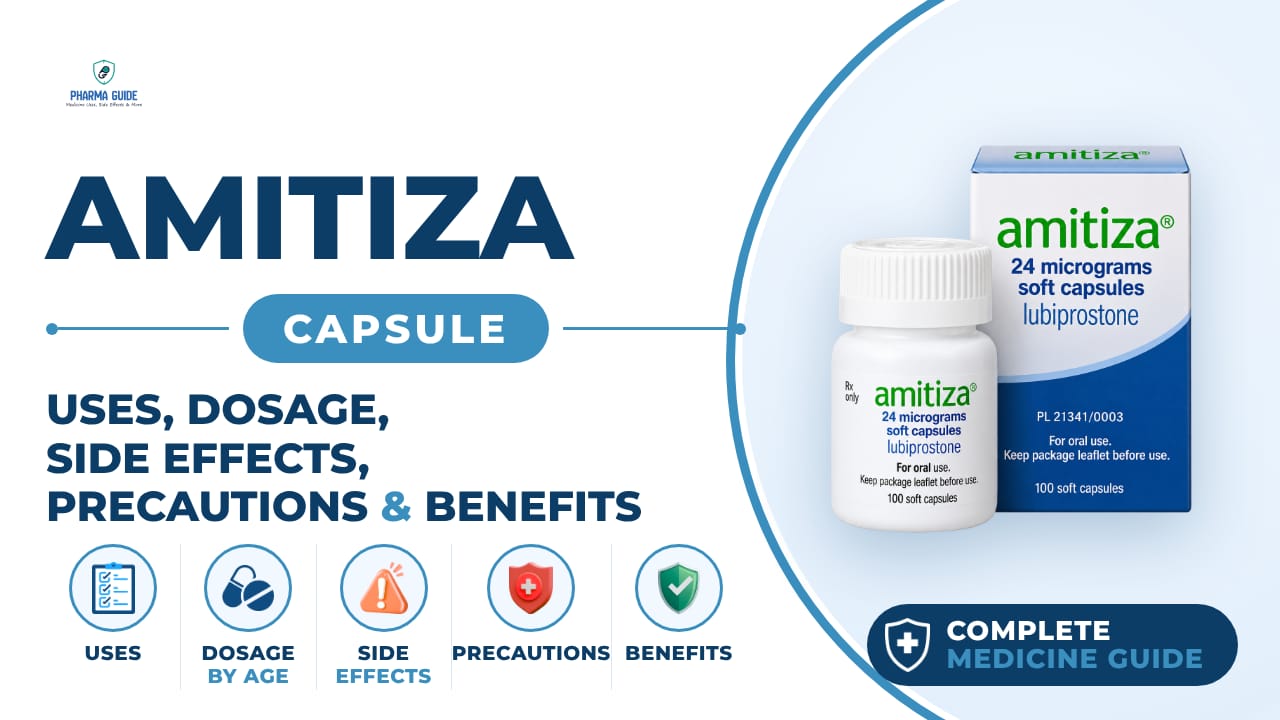
Amitiza Capsule: Uses, Dosage, Side Effects, Precautions and Alternates
Chloride channel activator
Amitiza Capsule (lubiprostone) treats chronic constipation, IBS-C, and opioid-induced constipation by boosting intestinal fluid. Learn dosage, side effects,

Injectafer Injection: Uses, Dosage, Side Effects, Precautions and Alternates
Iron products
Injectafer (ferric carboxymaltose) treats iron deficiency anemia and heart failure-related iron deficiency via IV. Learn uses, dosage, side effects, and