
Safety
General information, not medical advice
Your prescriber and the leaflet in your pack know your situation. This page does not.
- Follow your prescriber and the leaflet
- Don't start, stop, or change a dose on your own
- Doses and warnings differ by country and product
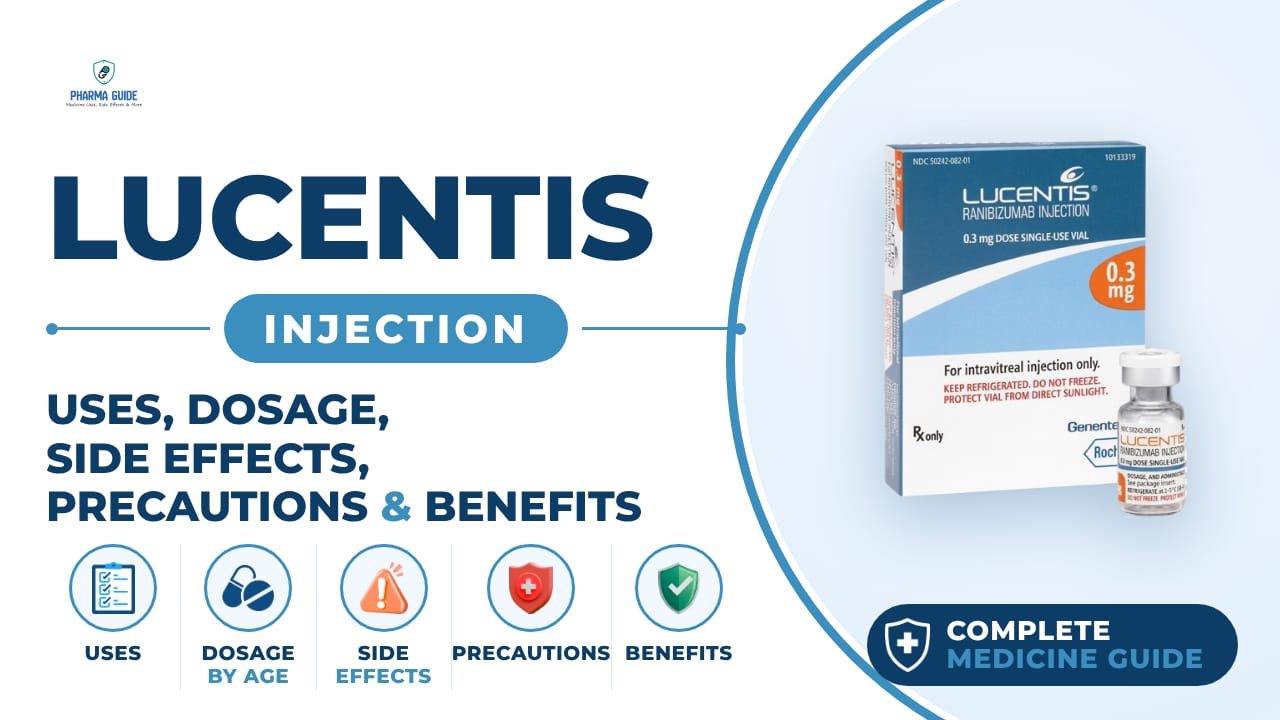
Lucentis Injection: Uses, Dosage, Side Effects, Precautions and Alternates
| Generic name | Ranibizumab |
|---|---|
| Drug class | Antineovascularisation agent |
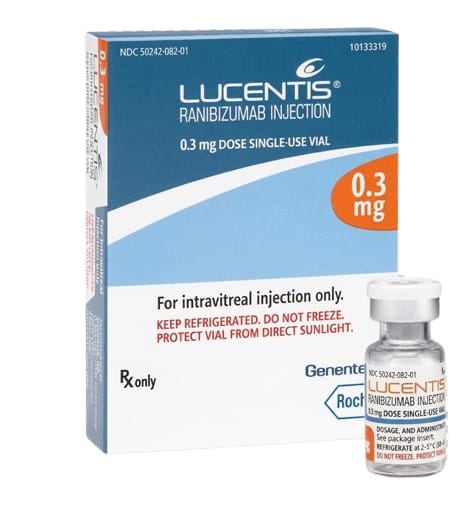
| Forms | Solution for injection in a vial |
Quick overview
Lucentis Injection contains the active substance ranibizumab and belongs to a class of medicines called antineovascularisation agents. It is a clear solution injected into the eye by an eye doctor to treat conditions such as wet age-related macular degeneration and diabetic macular edema. Lucentis works by blocking a protein called VEGF-A to help stop abnormal blood vessel growth and swelling in the eye. Treatment is given by a healthcare professional and typically starts with monthly injections.
What is Lucentis Injection
Lucentis is a clear solution that is injected into the eye by an eye doctor. It belongs to a group of medicines called antineovascularisation agents and contains the active substance ranibizumab.
Lucentis Injection uses
- Wet age-related macular degeneration
- Diabetic macular edema
- Diabetic retinopathy
- Macular edema following retinal vein occlusion
- Myopic choroidal neovascularization
Benefits of Lucentis Injection
- Helps preserve vision
- May improve visual acuity
- Helps reduce retinal swelling
- Helps control abnormal blood vessel growth
- May reduce vision loss from retinal disease
How Lucentis Injection works
Lucentis attaches to a protein in the eye called VEGF-A. Too much VEGF-A causes abnormal, leaky blood vessels to grow and causes swelling in the eye, which can damage vision. By blocking VEGF-A, Lucentis helps stop this abnormal growth and swelling.
Lucentis Injection dosage
Lucentis is given by an eye doctor (ophthalmologist) as an injection into the eye under local anaesthetic. Before the injection, you will be given eye drops to numb the eye and to kill germs on the eye and surrounding skin.
Treatment usually starts with one injection per month, and your doctor will decide if and when you need further injections based on how your eye responds. The time between two doses given into the same eye should not be shorter than one month.
If you miss a treatment appointment, contact your doctor to arrange another one as soon as possible, since stopping treatment may make your eye disease worse.
| Age group | Dose |
|---|---|
| Under 18 years | Not recommended |
| 18–64 years | 0.5 mg/0.05 mL, once/month |
| 65+ years | 0.5 mg/0.05 mL, once/month |
Available forms and strengths
- Solution for injection in a vial
Side effects of Lucentis Injection
Common
- Eye discomfort
- Feeling of having something in the eye or the eye not feeling normal
- Dry eye
- Spots in front of the eye (floaters)
- Teary eyes
- Pain/irritation at injection site
- Allergic reactions (rash, itching, redness of the skin)
- Sore throat
- Headache
- Joint pain
- Flu-like symptoms
- Fatigue
- General feeling of being unwell
- Anxiety
- Cough
- Nausea
- Increased eye pressure
Serious
- Bloodshot eye
- Bleeding in the eye
- Inflammation or infection of the eyelids
- Blurred vision or possible temporary blindness
- Discharge from the eye
- Itching redness of the eye
- Small marks on the eye surface
- Swelling or irritated eye lid
- Pus on the eye
- Urinary tract infection (burning, stinging or pain when passing urine)
- Retinal detachment or tear
- Cataract
- Infection inside the eye (endophthalmitis)
- Signs of a stroke, such as weakness or paralysis of limbs or face, difficulty speaking or understanding
Warnings and precautions
- Do not use Lucentis if you have ever had an allergic reaction to ranibizumab or any of its ingredients.
- Do not use Lucentis if you have, or might have, an infection in or around your eye, or if you have pain or redness in your eye.
- Eye injections like this can increase eye pressure, which you may not notice yourself—your doctor will check for this.
- A serious eye infection or eye disorder can sometimes develop after an injection into the eye.
- Lucentis should not be given together with other anti-VEGF medicines, whether taken by mouth/injection elsewhere in the body or used in the eye.
- There is a theoretical risk of stroke or heart attack-type events after eye injections of this type of medicine; people with a past stroke or mini-stroke should be carefully evaluated by their doctor.
- Talk to your doctor if you are pregnant or planning to become pregnant.
- It's recommended to use effective birth control during treatment and for at least three months after the last injection, because Lucentis should not be used during pregnancy unless the benefit outweighs the risk to the baby.
- Talk to your doctor if you are breastfeeding or plan to breastfeed. Lucentis is not recommended while breastfeeding because it is not known if it passes into breast milk.
- No dose change is needed for people with kidney problems.
- Lucentis has not been specifically studied in people with liver problems, but no special precautions are considered necessary.
- There are no known interactions between Lucentis and alcohol.
- Do not drive or operate machinery if your vision is poor, either because of your disease or because of the treatment, until your vision returns to normal.
Storage
- Store in a refrigerator (2°C - 8°C)
- Do not freeze
- Keep the vial or pre-filled syringe in the outer carton in order to protect from light
- Prior to use, the unopened vial or sealed tray may be kept at room temperature (25°C) for up to 24 hours
- Do not use this medicine after the expiry date
- Do not use any pack that is damaged
- Keep out of the sight and reach of children
When to see a doctor
- Tell your doctor immediately if you notice signs of eye inflammation or infection, such as redness, eye pain, sensitivity to light, vision changes, or seeing flashes of light with floaters, which could progress to loss of sight or blurred vision.
- Go to the nearest hospital emergency department immediately if you notice signs of a stroke, such as weakness or paralysis of the limbs or face, or difficulty speaking or understanding.
- Tell your doctor straight away if you notice bloodshot eye, bleeding in the eye, eyelid infection, blurred or decreased vision, or temporary or permanent blindness.
- Tell your doctor if you become pregnant while being treated with this medicine.
- If you are being treated for vision loss from diabetic macular oedema or RVO, tell your doctor if you think the treatment effect is wearing off.
Alternatives
- Vabysmo
- Avastin
- Eylea
Watch the video
FAQs
What is Lucentis Injection used for?
Lucentis is used to treat wet age-related macular degeneration, diabetic macular edema, diabetic retinopathy, macular edema following retinal vein occlusion, and myopic choroidal neovascularization.
How does Lucentis Injection work?
Lucentis attaches to a protein called VEGF-A, which causes abnormal, leaky blood vessels and swelling in the eye. By blocking VEGF-A, Lucentis helps stop this abnormal growth and swelling, helping preserve vision.
How often is Lucentis given?
Treatment usually starts with one injection per month into the eye, given by an eye doctor. Your doctor will decide if and when further injections are needed, but the time between two doses in the same eye should not be shorter than one month.
What are the serious side effects of Lucentis Injection?
Serious side effects include bloodshot eye, bleeding in the eye, eyelid infection or inflammation, blurred or temporary vision loss, retinal detachment or tear, cataract, infection inside the eye, and signs of stroke such as weakness or difficulty speaking.
What are the alternatives to Lucentis Injection?
Alternatives mentioned include Vabysmo, Avastin, and Eylea.
General information, not medical advice
Your prescriber and the leaflet in your pack know your situation. This page does not.
- Follow your prescriber and the leaflet
- Don't start, stop, or change a dose on your own
- Doses and warnings differ by country and product
Sources
- Lucentis Consumer Medicine Information (CMI), Novartis Pharmaceuticals Australia, December 2025
- Lucentis Summary of Product Characteristics, European Medicines Agency / European Commission, Annex I
- Lucentis Package Leaflet, European Commission
- Lucentis Singapore Package Insert, Novartis, Feb 2022
Video
Related medicines

Injectafer Injection: Uses, Dosage, Side Effects, Precautions and Alternates
Iron products
Injectafer (ferric carboxymaltose) treats iron deficiency anemia and heart failure-related iron deficiency via IV. Learn uses, dosage, side effects, and

Gliclazide Tablet: Uses, Dosage, Side Effects, Precautions and Alternates
Sulfonylurea (hypoglycemic/antidiabetic agent)
Gliclazide Tablet is a sulfonylurea for type 2 diabetes that boosts insulin release. Learn about dosage, side effects, warnings, and precautions.