
Safety
General information, not medical advice
Your prescriber and the leaflet in your pack know your situation. This page does not.
- Follow your prescriber and the leaflet
- Don't start, stop, or change a dose on your own
- Doses and warnings differ by country and product
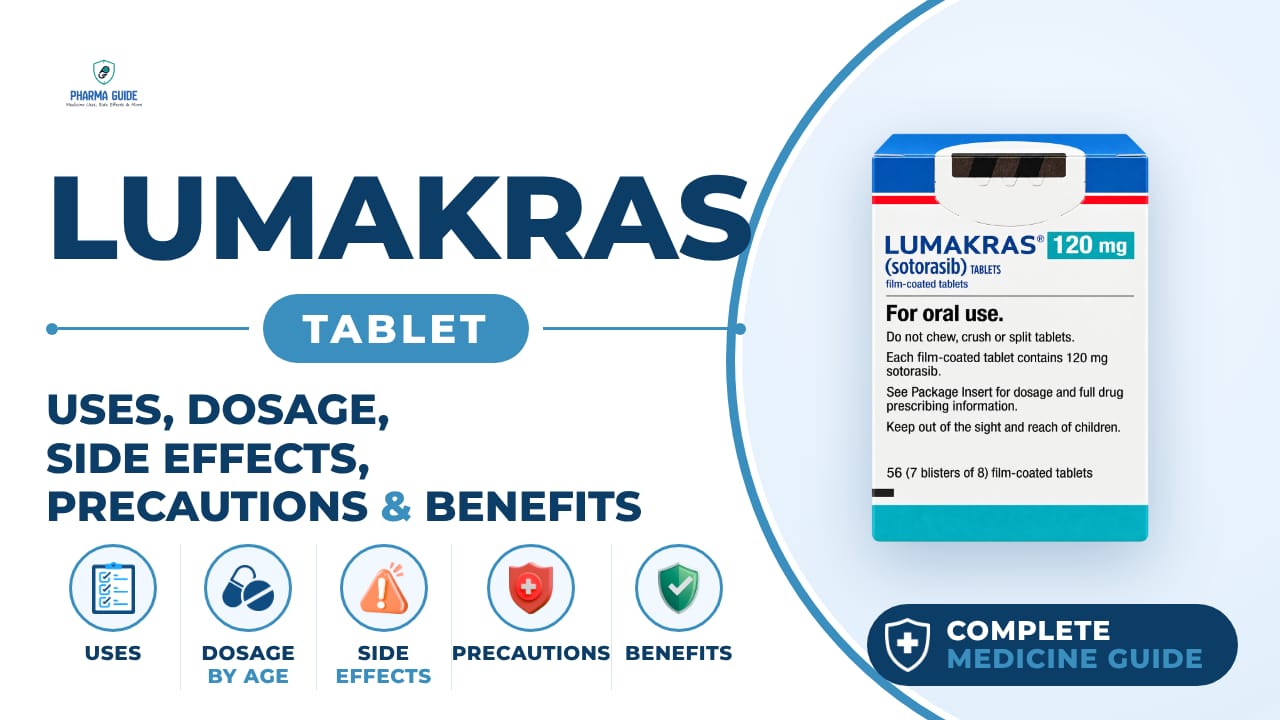
Lumakras Tablet: Uses, Dosage, Side Effects, Precautions and Alternates
| Generic name | sotorasib |
|---|---|
| Drug class | Miscellaneous antineoplastics |
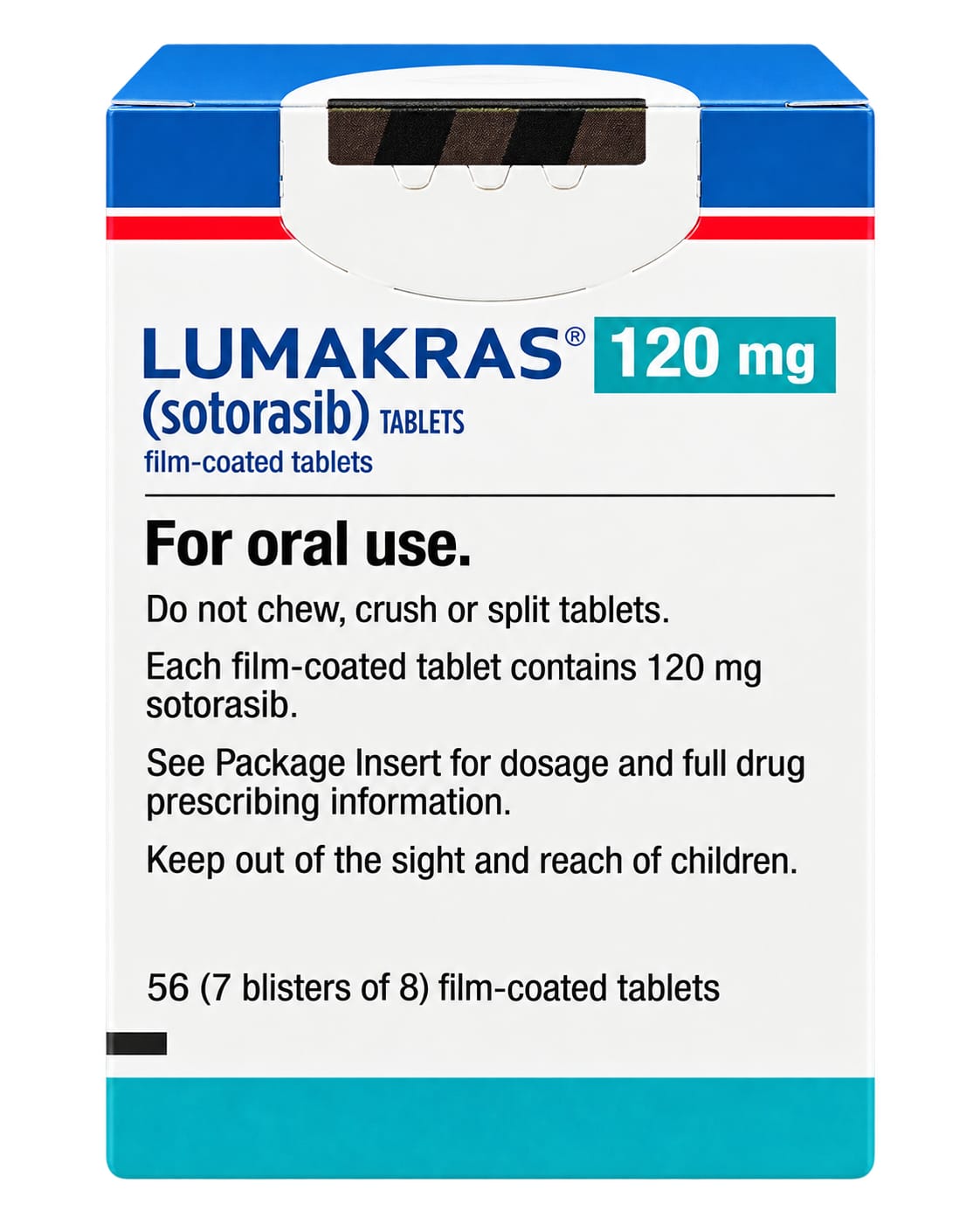
| Forms | Oral tablets (120 mg, 240 mg, 320 mg) |
Quick overview
Lumakras is a prescription tablet containing sotorasib, a medicine from the miscellaneous antineoplastics class. It is used to treat non-small cell lung cancer (NSCLC) with a specific KRAS G12C abnormal protein, and can also be used together with panitumumab for KRAS G12C-mutated metastatic colorectal cancer. It works by targeting the abnormal KRAS G12C protein to help slow or stop cancer cell growth.
What is Lumakras Tablet
Lumakras is a prescription tablet that contains the active ingredient sotorasib. It is used to treat a type of lung cancer called non-small cell lung cancer (NSCLC), and it can also be used together with another medicine for a type of colorectal (bowel) cancer.
Lumakras Tablet uses
- Treating non-small cell lung cancer (NSCLC) that has a specific abnormal protein called KRAS G12C, in people who have already had other cancer treatment and whose cancer is advanced or has spread
- Treating KRAS G12C-mutated metastatic colorectal cancer, used together with panitumumab, in people who have already had certain chemotherapy
Benefits of Lumakras Tablet
- Treats certain KRAS G12C-mutated non-small-cell lung cancers
- Targets the abnormal KRAS G12C protein
- Can help shrink tumors
- May help slow cancer progression
- Provides an oral targeted-therapy option
How Lumakras Tablet works
Lumakras attaches to an abnormal protein called KRAS G12C that helps cancer cells grow, locking it in an 'off' position so it cannot tell the cancer cells to multiply. This slows down or stops the tumor from growing, affecting only cells with this specific mutation.
Lumakras Tablet dosage
Lumakras can be taken with or without food. Swallow the tablets whole; do not break, crush, or chew them. Take your dose at about the same time each day.
If you cannot swallow the tablets whole, they can be mixed in a specific way with room temperature water and the mixture drunk right away or within 2 hours of preparing — do not chew the pieces.
If you need to take an antacid medicine, take this medicine either several hours before or several hours after the antacid.
If you vomit after taking a dose, do not take an extra dose — take your next dose at the regular scheduled time. If you forget a dose, take it as soon as you remember if it has only been a short while since your usual time; if it has been longer, skip the missed dose and take your next dose at the usual time the next day — do not take a double dose.
This medicine has not been studied in people younger than 18 years of age.
| Age group | Dose |
|---|---|
| 18–64 years | 960 mg once daily |
| 65 years and older | 960 mg once daily, with individualized oncology monitoring |
Available forms and strengths
- Oral tablets (120 mg, 240 mg, 320 mg)
Side effects of Lumakras Tablet
Common
- Diarrhoea
- Nausea
- Vomiting
- Stomach pain or discomfort
- Fatigue (feeling tired)
- Abnormal levels of some liver enzymes
- Muscle or bone pain
- Cough
- Skin rash
- Dry skin
- Mouth sores (when used with panitumumab for colorectal cancer)
Serious
- Signs of liver problems: pain, aching, or tenderness on the right side of your stomach area; yellowing of skin or the white part of your eyes (jaundice); dark or tea-coloured urine; light coloured stools; tiredness or weakness; nausea or vomiting; bleeding or bruising; loss of appetite
- Signs of lung inflammation: new or worsening shortness of breath, cough, or fever
- Signs of a serious allergic reaction
Warnings and precautions
- Do not take this medicine if you are allergic to sotorasib or any of its ingredients.
- This medicine can cause liver problems, which are common and can sometimes be severe. Your doctor will check your liver with blood tests before and during treatment.
- This medicine may cause inflammation of the lungs, which can be life-threatening.
- Do not change your dose or stop taking this medicine unless your healthcare provider tells you to.
- Do not give this medicine to anyone else, even if they have the same condition as you.
- Tell your doctor about all other medicines you take, including over-the-counter products, vitamins, and supplements, since many can interfere with how this medicine works.
- Pregnancy: Check with your doctor if you are pregnant or planning to become pregnant. It isn't known if this medicine could harm an unborn baby.
- Breastfeeding: Do not breastfeed while taking this medicine and for 1 week after your last dose, since it isn't known if it passes into breast milk.
- Kidney: No routine dose adjustment is generally required for mild-to-moderate renal impairment; severe impairment requires specialist assessment.
- Liver: Tell your doctor if you have liver problems. Your doctor may do blood tests to check your liver function before and during treatment, and may lower your dose or stop treatment if your liver test results are abnormal.
- Alcohol: There isn't information available on how drinking alcohol affects this medicine, but tell your doctor if you drink alcohol.
- Driving: This medicine isn't expected to affect your ability to drive or use machines, but be careful until you know how it affects you.
Storage
- Store LUMAKRAS tablets below 30°C in the original carton
- Store the pack in a cool dry place away from moisture, heat or sunlight
- Do not store it in the bathroom or near a sink, or in the car or on window sills
- Keep it where young children cannot reach it
- If you no longer need to use this medicine or it is out of date, take it to any pharmacy for safe disposal
- Do not use this medicine after the expiry date
When to see a doctor
- Call your doctor right away or go straight to the Emergency Department if you notice signs of liver problems, such as yellowing skin or eyes, dark urine, light-coloured stools, unusual tiredness, nausea or vomiting, bleeding or bruising, or loss of appetite.
- Get emergency medical help right away if you have new or worsening shortness of breath, cough, or fever, which could be signs of lung inflammation.
- Call your doctor straight away if you show signs of a serious allergic reaction.
- If you think you have taken too much of this medicine, get urgent medical attention immediately — contact your healthcare provider, call your local poison control center, or go to the Emergency Department of your nearest hospital and take the medicine pack with you, even if you feel fine.
Alternatives
- Adagrasib
- Other KRAS G12C–targeted therapy
- Platinum-based chemotherapy
Watch the video
FAQs
What is Lumakras tablet used for?
Lumakras is used to treat non-small cell lung cancer (NSCLC) with a specific KRAS G12C abnormal protein in people who have already had other cancer treatment, and can also be used together with panitumumab for KRAS G12C-mutated metastatic colorectal cancer in people who have already had certain chemotherapy.
How does Lumakras work?
Lumakras attaches to an abnormal protein called KRAS G12C that helps cancer cells grow, locking it in an 'off' position so it cannot tell cancer cells to multiply. This slows or stops tumor growth, affecting only cells with this specific mutation.
What is the dosage of Lumakras tablet?
The recommended dose is 960 mg once daily for adults aged 18 and older, taken with or without food. Tablets should be swallowed whole and not broken, crushed, or chewed.
What are the common side effects of Lumakras?
Common side effects include diarrhoea, nausea, vomiting, stomach pain or discomfort, fatigue, abnormal liver enzyme levels, muscle or bone pain, cough, skin rash, and dry skin. Mouth sores can occur when used with panitumumab.
What precautions should I know before taking Lumakras?
Lumakras can cause liver problems and lung inflammation, so your doctor will monitor your liver with blood tests. You should not breastfeed during treatment and for 1 week after the last dose, and should check with your doctor if pregnant or planning pregnancy.
General information, not medical advice
Your prescriber and the leaflet in your pack know your situation. This page does not.
- Follow your prescriber and the leaflet
- Don't start, stop, or change a dose on your own
- Doses and warnings differ by country and product
Sources
Video
Related medicines

Injectafer Injection: Uses, Dosage, Side Effects, Precautions and Alternates
Iron products
Injectafer (ferric carboxymaltose) treats iron deficiency anemia and heart failure-related iron deficiency via IV. Learn uses, dosage, side effects, and

Gliclazide Tablet: Uses, Dosage, Side Effects, Precautions and Alternates
Sulfonylurea (hypoglycemic/antidiabetic agent)
Gliclazide Tablet is a sulfonylurea for type 2 diabetes that boosts insulin release. Learn about dosage, side effects, warnings, and precautions.