
Safety
General information, not medical advice
Your prescriber and the leaflet in your pack know your situation. This page does not.
- Follow your prescriber and the leaflet
- Don't start, stop, or change a dose on your own
- Doses and warnings differ by country and product
Lynparza Tablet: Uses, Dosage, Side Effects, Precautions and Alternates
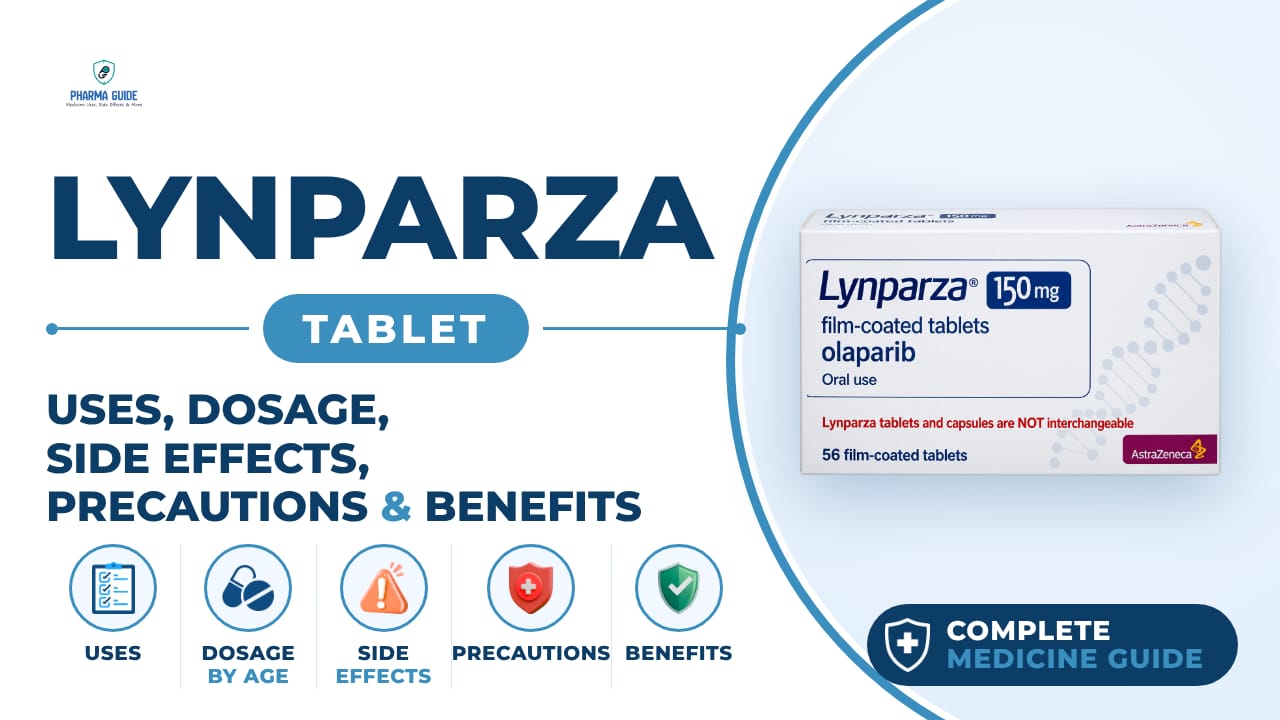
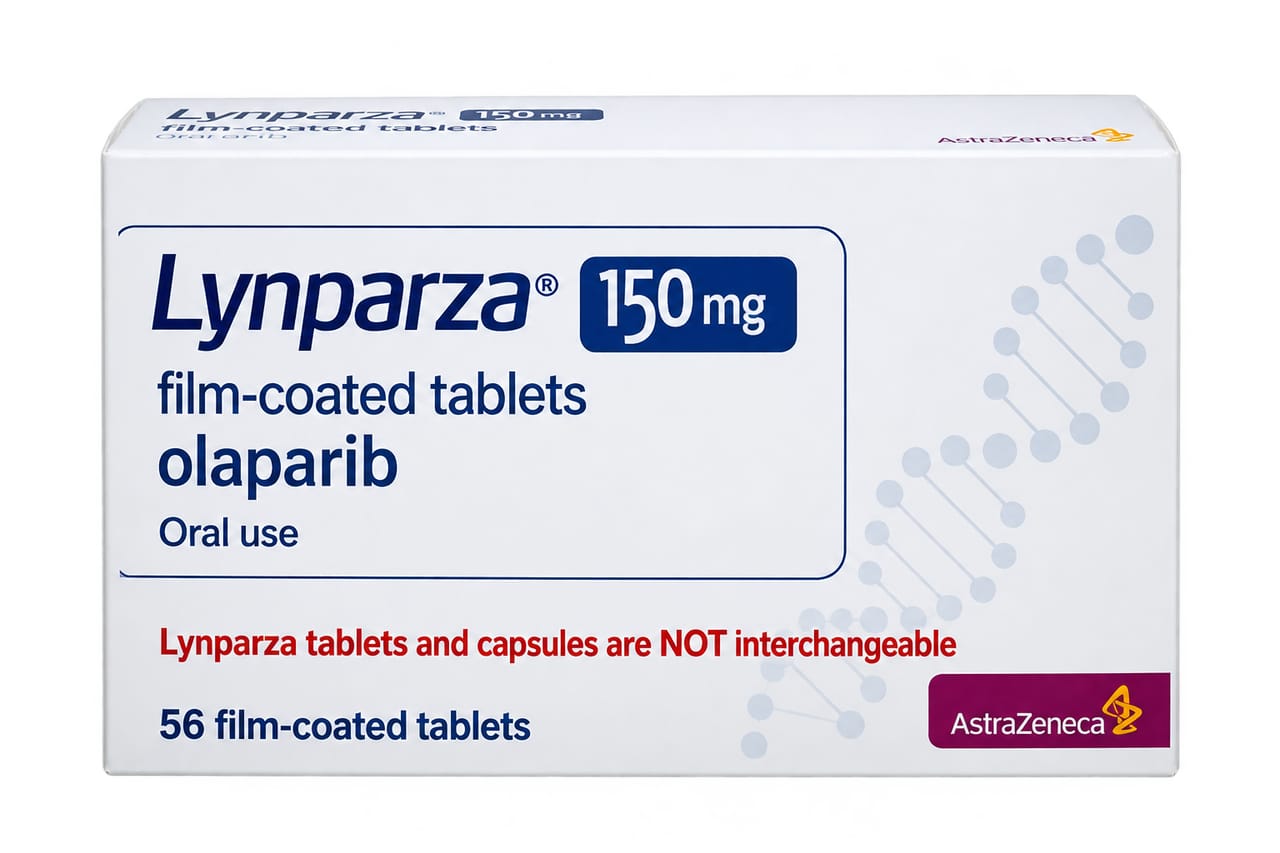
| Generic name | olaparib |
|---|---|
| Drug class | PARP inhibitor |
| Forms | Tablets (150 mg), Tablets (100 mg) |
Quick overview
Lynparza Tablet (olaparib) is a prescription PARP inhibitor used to treat certain adults with ovarian, fallopian tube, primary peritoneal, breast, pancreatic, or prostate cancer who have specific gene changes, such as an abnormal BRCA gene. A doctor will test for these gene changes to determine if Lynparza is right for a patient. It is taken by mouth twice a day and carries specific warnings around bone marrow, lung, blood clot, and liver risks.
What is Lynparza Tablet
Lynparza is a prescription medicine used to treat certain adults with ovarian, fallopian tube, primary peritoneal, breast, pancreatic, or prostate cancer that have specific gene changes, such as an abnormal BRCA gene. A doctor will test for these gene changes to see if Lynparza is right for you.
Lynparza Tablet uses
- Maintenance treatment of advanced ovarian, fallopian tube, or primary peritoneal cancer with an abnormal BRCA gene after response to first platinum-based chemotherapy
- Advanced ovarian, fallopian tube, or primary peritoneal cancer in combination with bevacizumab when HRD-positive, after response to first platinum-based chemotherapy
- Maintenance treatment of recurrent ovarian, fallopian tube, or primary peritoneal cancer with an abnormal BRCA gene after response to platinum-based chemotherapy
- Adjuvant treatment of HER2-negative high-risk early breast cancer with an inherited abnormal BRCA gene after chemotherapy and surgery
- Treatment of HER2-negative metastatic breast cancer with an inherited abnormal BRCA gene after chemotherapy
- Maintenance treatment of metastatic pancreatic cancer with an inherited abnormal BRCA gene after first-line platinum-based chemotherapy
- Treatment of metastatic castration-resistant prostate cancer with abnormal HRR genes after prior treatment with enzalutamide or abiraterone
- Treatment of BRCA-mutated metastatic castration-resistant prostate cancer in combination with abiraterone and prednisone or prednisolone
Benefits of Lynparza Tablet
- Can help slow down or stop the growth of certain BRCA-mutated or HRD-positive cancers
- Shown in clinical trials to improve progression-free survival compared with placebo or other treatments in several cancer types
How Lynparza Tablet works
PARP is a protein that helps damaged cells repair themselves, including some cancer cells. Lynparza blocks PARP so that cancer cells with certain faulty DNA-repair genes cannot repair their DNA, which causes those cancer cells to die.
Lynparza Tablet dosage
Take Lynparza tablets exactly as your healthcare provider tells you, and do not change your dose or stop taking it unless told to. Take Lynparza by mouth two times a day, with or without food. Take each dose about 12 hours apart, at about the same time each morning and evening.
Swallow tablets whole with a glass of water; do not chew, crush, dissolve, or divide them, as this may affect how quickly the drug gets into your body. If you are taking Lynparza for early breast cancer with hormone receptor-positive disease, continue hormonal therapy during treatment. If you are taking Lynparza for prostate cancer and receiving GnRH analog therapy, continue this treatment unless you have had surgery to remove both testicles.
If you miss a dose, take your next dose at the usual scheduled time; do not take an extra dose to make up for a missed one. Continue taking your medicine for as long as your doctor tells you, even if you feel well.
| Age group | Dose |
|---|---|
| Under 18 years | Not recommended |
| 18–64 years | 300 mg, twice/day |
| 65+ years | 300 mg, twice/day |
Available forms and strengths
- Tablets (150 mg)
- Tablets (100 mg)
Side effects of Lynparza Tablet
Common
- Tiredness or weakness
- Low red blood cell counts (anemia)
- Diarrhea
- Loss of appetite
- Headache
- Changes in the way food tastes
- Cough
- Low white blood cell counts
- Shortness of breath
- Dizziness
- Indigestion or heartburn
- Low platelet counts
- Nausea or vomiting
- Urinary tract infection (when used with bevacizumab)
- Stomach-area (abdominal) pain (when used with abiraterone)
Serious
- Bone marrow problems such as Myelodysplastic Syndrome (MDS) or Acute Myeloid Leukemia (AML)
- Lung problems (pneumonitis)
- Blood clots (venous thromboembolism), including clots in the leg or lungs (pulmonary embolism)
- Liver problems, including drug-induced liver injury
- Severe allergic reaction with swelling of the face, lips, tongue, or throat, and difficulty breathing
- Severe skin reactions including rash, blistering, or peeling of the skin
Warnings and precautions
- Lynparza may cause serious bone marrow problems called Myelodysplastic Syndrome (MDS) or Acute Myeloid Leukemia (AML), which may lead to death, especially in people who have had previous chemotherapy or radiotherapy.
- Lynparza can cause serious lung problems (pneumonitis) that can lead to death.
- Blood clots can form in a deep vein (usually the leg) or in the lungs, which may be severe or lead to death.
- Liver problems, including drug-induced liver injury, may occur and can be severe or lead to death.
- Avoid grapefruit, grapefruit juice, Seville oranges, and Seville orange juice during treatment, as they may raise the level of Lynparza in your blood.
- Do not take other anti-cancer medicines while taking Lynparza tablets unless directed by your doctor.
- Lynparza can harm an unborn baby and may cause miscarriage. Women who can become pregnant should use effective birth control during treatment and for 6 months after the last dose. Men should use effective birth control for 3 months after their last dose if their partner can become pregnant.
- It is not known if Lynparza passes into breast milk. Do not breastfeed during treatment and for 1 month after the last dose.
- Tell your doctor if you have kidney problems, as your dose may need to be changed.
- No starting dose adjustment is needed for mild or moderate liver problems; there is no information for patients with severe liver impairment.
- Lynparza may cause dizziness and tiredness in some people. Be careful driving or operating machinery until you know how this medicine affects you.
Storage
- Keep your tablets in the blister pack or original bottle until it is time to take them
- Keep tablets in a cool dry place where the temperature stays below 30°C; store at room temperature between 68°F to 77°F (20°C to 25°C)
- Do not store in the bathroom or near a sink, on a window sill, or in the car, as heat and dampness can destroy some medicines
- Keep out of reach of children; a locked cupboard at least one-and-a-half metres above the ground is a good place to store medicines
- If your doctor tells you to stop taking this medicine or the expiry date has passed, ask your pharmacist what to do with leftover medicine
- Medicines should not be disposed of via wastewater or household waste; ask your pharmacist how to dispose of medicines no longer required
When to see a doctor
- Call your doctor right away if you notice weakness, weight loss, fever, frequent infections, blood in urine or stool, shortness of breath, feeling very tired, or bruising or bleeding more easily, as these may be signs of serious bone marrow problems.
- Tell your doctor about any new or worsening shortness of breath, fever, cough, or wheezing, which could be signs of lung problems.
- Tell your doctor right away about pain or swelling in an arm or leg, shortness of breath, chest pain, rapid breathing, or a fast heartbeat, which could signal a blood clot.
- Tell your doctor right away if you notice discomfort on the right side of your stomach area, dark or tea-colored urine, or yellowing of your skin or eyes, which could mean liver problems.
- Get emergency help if you have signs of a severe allergic reaction, such as swelling of the face, lips, tongue, or throat, or difficulty breathing.
- Seek medical attention right away if you think you or someone else has taken too much Lynparza, even if there are no symptoms.
Alternatives
- Rubraca
- Zejula
- Talzenna
Watch the video
FAQs
What is Lynparza Tablet used for?
Lynparza is a prescription medicine used to treat certain adults with ovarian, fallopian tube, primary peritoneal, breast, pancreatic, or prostate cancer who have specific gene changes, such as an abnormal BRCA gene, as determined by a doctor's test.
How is Lynparza Tablet taken?
Lynparza is taken by mouth two times a day, with or without food, about 12 hours apart at the same time each morning and evening. Tablets should be swallowed whole with water and not chewed, crushed, dissolved, or divided.
What is the dosage of Lynparza for adults?
For adults aged 18 to 64 and those 65 and older, the dose is 300 mg taken twice a day. Lynparza is not recommended for use in people under 18 years.
What are the serious side effects of Lynparza Tablet?
Serious side effects include bone marrow problems such as Myelodysplastic Syndrome (MDS) or Acute Myeloid Leukemia (AML), lung problems (pneumonitis), blood clots, liver problems, severe allergic reactions, and severe skin reactions.
What should be avoided while taking Lynparza Tablet?
Patients should avoid grapefruit, grapefruit juice, Seville oranges, and Seville orange juice during treatment, as they may raise Lynparza levels in the blood. Other anti-cancer medicines should not be taken unless directed by a doctor.
General information, not medical advice
Your prescriber and the leaflet in your pack know your situation. This page does not.
- Follow your prescriber and the leaflet
- Don't start, stop, or change a dose on your own
- Doses and warnings differ by country and product
Sources
Video
Related medicines
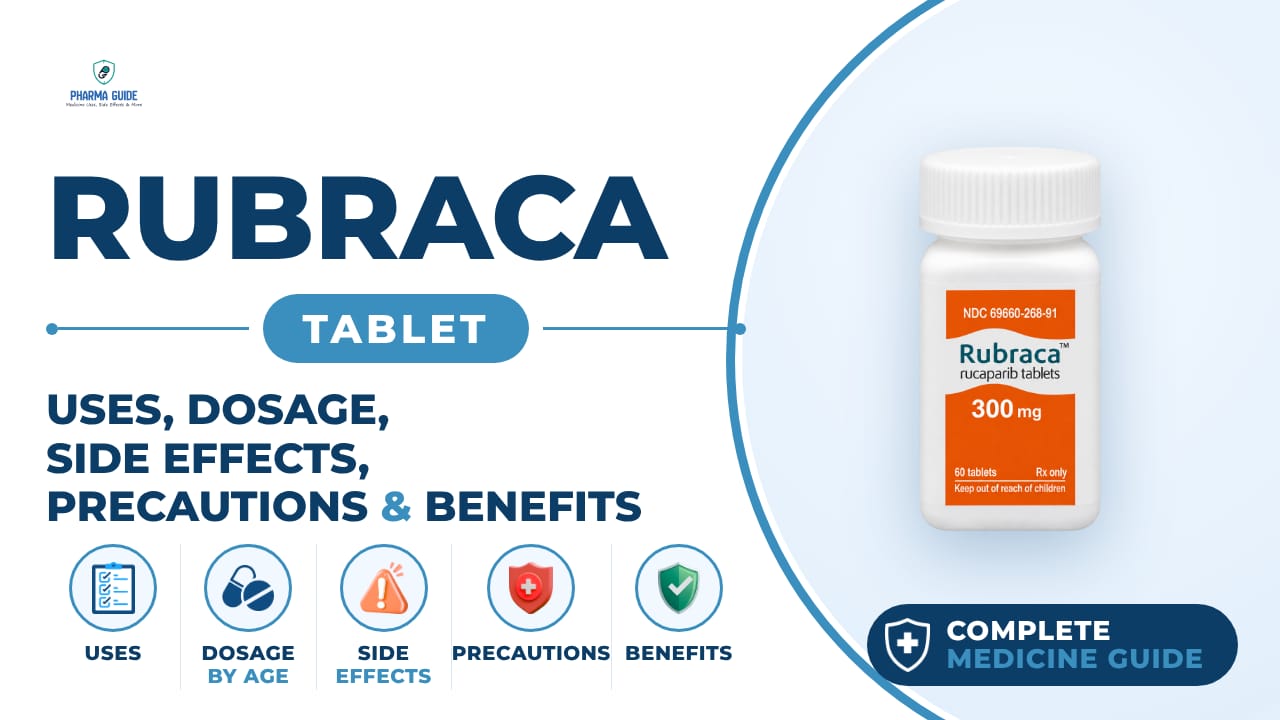
Rubraca Tablet: Uses, Dosage, Side Effects, Precautions and Alternates
PARP inhibitor
Rubraca Tablet (rucaparib) is a PARP inhibitor used for certain ovarian, fallopian tube, peritoneal, and prostate cancers. Learn uses, dosage, and side effects.
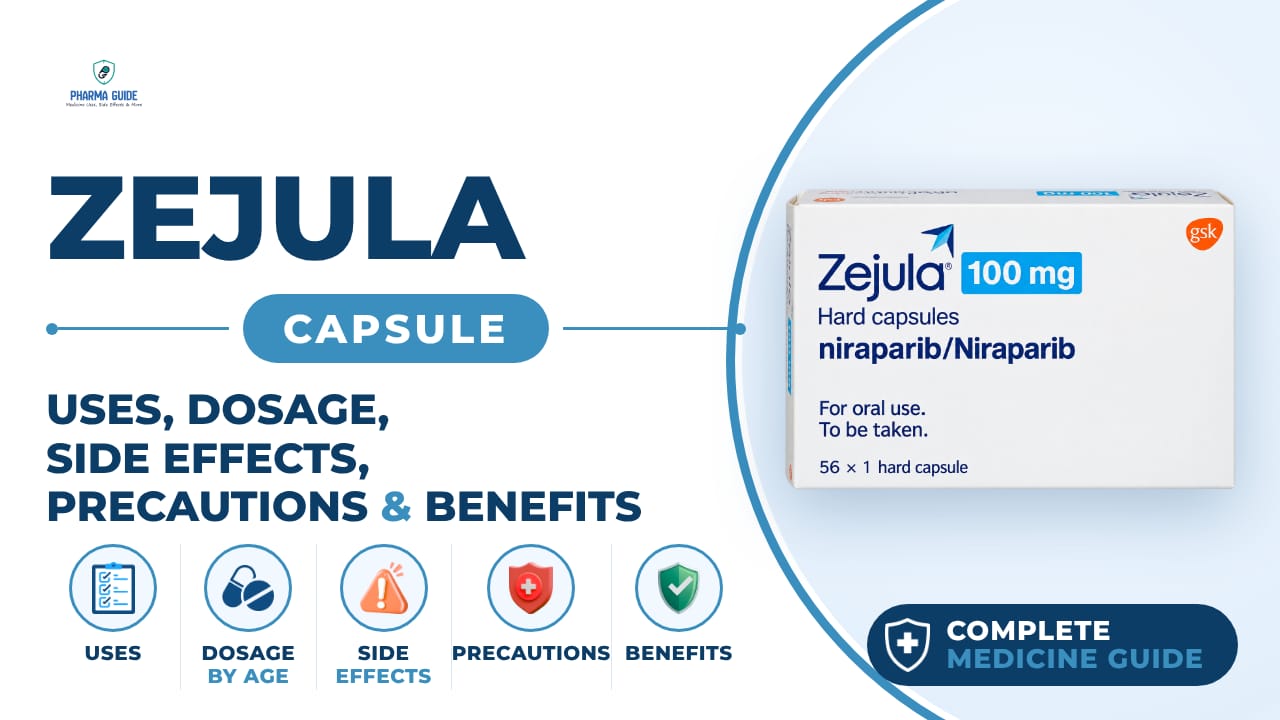
Zejula Capsule: Uses, Dosage, Side Effects, Precautions and Alternates
PARP inhibitor
Zejula Capsule (niraparib) is a PARP inhibitor used as maintenance therapy for ovarian, fallopian tube, or peritoneal cancer. Learn dosage, side effects, and