
Safety
General information, not medical advice
Your prescriber and the leaflet in your pack know your situation. This page does not.
- Follow your prescriber and the leaflet
- Don't start, stop, or change a dose on your own
- Doses and warnings differ by country and product
Rubraca Tablet: Uses, Dosage, Side Effects, Precautions and Alternates
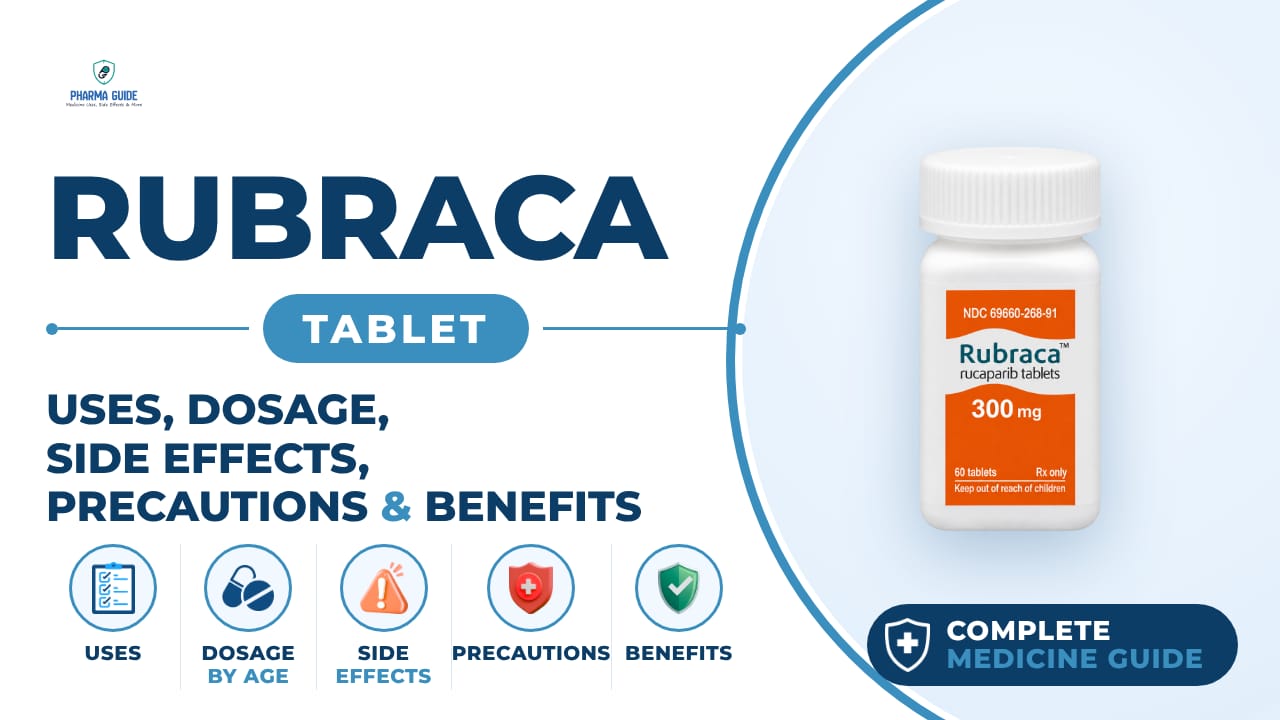
| Generic name | rucaparib |
|---|---|
| Drug class | PARP inhibitor |
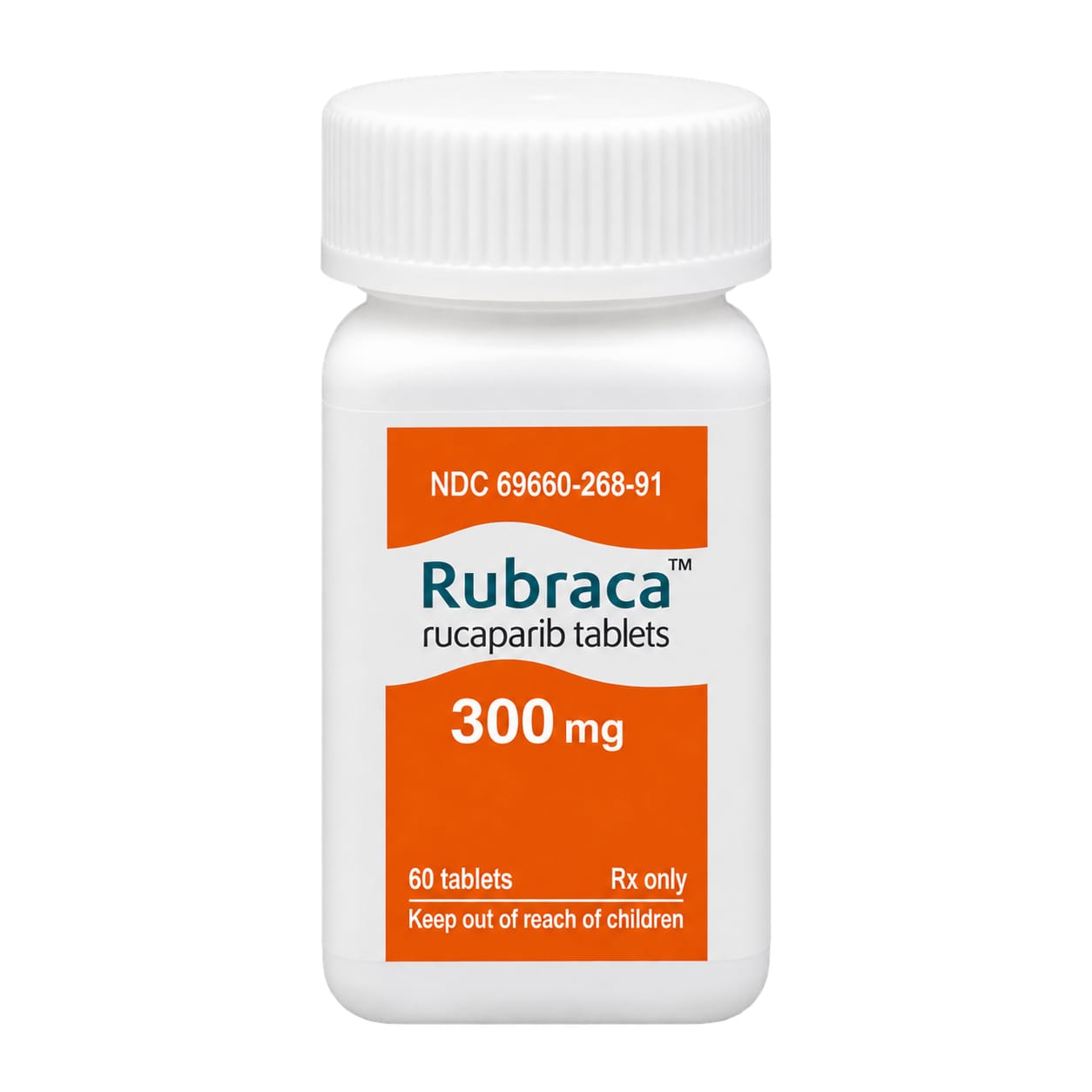
| Forms | Film-coated tablets (200 mg, 250 mg, and 300 mg strengths) |
Quick overview
Rubraca Tablet contains rucaparib, a PARP inhibitor used in the treatment of certain ovarian, fallopian tube, primary peritoneal, and prostate cancers. It works by blocking an enzyme that cancer cells use to repair their DNA, which can help slow or stop tumor growth. Rubraca is taken by mouth and requires regular monitoring for certain serious side effects. It is not recommended during pregnancy or breastfeeding.
What is Rubraca Tablet
Rubraca contains the active substance rucaparib. It is an anti-cancer medicine known as a PARP (poly adenosine diphosphate-ribose polymerase) inhibitor.
Rubraca Tablet uses
- Maintenance treatment of adult patients with recurrent epithelial ovarian, fallopian tube, or primary peritoneal cancer who are in complete or partial response to platinum-based chemotherapy
- Treatment of adult patients with BRCA-mutated epithelial ovarian, fallopian tube, or primary peritoneal cancer who have already had two or more rounds of chemotherapy
- Maintenance treatment of advanced high-grade epithelial ovarian, fallopian tube, or primary peritoneal cancer after response to first-line platinum-based chemotherapy
- Treatment of BRCA mutation-positive metastatic castration-resistant prostate cancer in patients previously treated with androgen receptor-directed therapy
Benefits of Rubraca Tablet
- Treats certain BRCA-mutated recurrent ovarian cancers
- Treats certain BRCA-mutated metastatic castration-resistant prostate cancers
- Can help slow cancer progression
- Provides an oral targeted-treatment option
How Rubraca Tablet works
Rubraca blocks an enzyme called PARP that cancer cells use to repair damaged DNA. By stopping this repair process, the medicine causes damage to build up in the cancer cells, leading to their death, which can slow or stop tumor growth. It works especially well in cancer cells that already have problems repairing DNA, such as those with BRCA gene changes.
Rubraca Tablet dosage
Rubraca is taken by mouth, with or without food. Take the two daily doses about 12 hours apart (for example, once in the morning and once in the evening). If you vomit after taking a dose, do not take another dose — just take your next dose at the regular scheduled time. If you miss a dose, skip it and take your next dose at the usual time; do not double up. Treatment is usually continued until the disease gets worse or side effects become too difficult to manage. No dose change is needed for elderly patients, though some older patients may be more sensitive to side effects.
| Age group | Dose |
|---|---|
| 18–64 years | 600 mg twice daily |
| 65 years and older | 600 mg twice daily, with individualized oncology monitoring |
Available forms and strengths
Film-coated tablets (200 mg, 250 mg, and 300 mg strengths)
Side effects of Rubraca Tablet
Common
- Nausea
- Vomiting
- Fatigue/tiredness or weakness
- Diarrhea
- Constipation
- Abdominal pain or distention
- Changes in sense of taste (dysgeusia)
- Decreased appetite
- Rash
- Increased sensitivity to sunlight (photosensitivity)
- Dizziness
- Shortness of breath
- Headache
- Indigestion (dyspepsia)
- Abnormal liver function test results (AST/ALT elevation)
- Abnormal kidney function test results (increased creatinine)
- High cholesterol
Serious
- Low red blood cell count (anemia) causing tiredness, pale skin, or fast heartbeat
- Low platelet count (thrombocytopenia) causing easy bruising or bleeding
- Low white blood cell count (neutropenia) causing fever or infection
- Myelodysplastic syndrome (MDS) or acute myeloid leukemia (AML), serious and potentially fatal bone marrow conditions
- Intestinal obstruction (blockage in the gut or bowel)
- Severe allergic reaction with swelling of the face, lips, tongue, or throat, hives, or difficulty breathing
- Blood in urine or stool
Warnings and precautions
- Rubraca can cause a serious and sometimes fatal bone marrow condition called myelodysplastic syndrome (MDS) or a blood cancer called acute myeloid leukemia (AML). Your doctor will check your blood counts regularly before and during treatment, and may refer you to a blood specialist if there are signs of this condition.
- This medicine can make your skin much more sensitive to sunlight, increasing the risk of sunburn. Avoid direct sunlight and tanning beds, wear protective clothing, and use a high-SPF sunscreen and lip balm.
- Rubraca can cause stomach and bowel problems such as nausea and vomiting, which are usually mild but should be managed promptly to avoid dehydration or hospital stays. A blockage in the intestine has also occurred in some patients, including rare fatal cases.
- Rubraca can harm an unborn baby. Women who can become pregnant must use effective birth control during treatment and for 6 months after the last dose.
- Rubraca is not recommended during pregnancy because it may harm the unborn baby. Women who could become pregnant should have a pregnancy test before starting treatment and should use effective birth control during treatment and for 6 months after the last dose.
- Breastfeeding is not allowed during treatment with Rubraca and for 2 weeks after the last dose, because it is not known if the medicine passes into breast milk and could harm a nursing baby.
- No starting dose change is needed for people with mild or moderate kidney problems. The medicine has not been studied in people with severe kidney impairment, and these patients should be carefully monitored.
- No starting dose change is needed for people with mild or moderate liver problems, though those with moderate impairment should be closely monitored. The medicine is not recommended for people with severe liver impairment because it hasn't been studied in this group.
- Rubraca may affect your ability to drive or use machines, especially if you feel tired, sick to your stomach, or dizzy. Be careful when driving or using tools or machines if you have these symptoms.
Storage
- Store below 25°C
- Use within 30 days after first opening the bottle, and continue to store below 25°C
- Store at room temperature away from moisture and heat
- Keep out of the sight and reach of children
- Do not throw away medicines via wastewater or household waste; ask your pharmacist how to dispose of medicines you no longer use
When to see a doctor
- Get emergency medical help right away if you have signs of a serious allergic reaction, such as hives, difficulty breathing, or swelling of your face, lips, tongue, or throat.
- Call your doctor right away if you notice blood in your urine, or signs of low blood cell counts such as fever, chills, tiredness, mouth sores, skin sores, easy bruising, unusual bleeding, pale skin, cold hands and feet, or feeling light-headed or short of breath.
- If you think you have taken too much of this medicine, seek emergency medical attention right away.
- Tell your doctor straight away if a pregnancy occurs while taking this medicine, since it could harm the baby.
Alternatives
- Olaparib
- Niraparib
- Talazoparib
Watch the video
FAQs
What is Rubraca Tablet used for?
Rubraca is used for maintenance treatment of recurrent epithelial ovarian, fallopian tube, or primary peritoneal cancer after response to platinum-based chemotherapy, for BRCA-mutated versions of these cancers after prior chemotherapy, and for BRCA mutation-positive metastatic castration-resistant prostate cancer previously treated with androgen receptor-directed therapy.
How is Rubraca Tablet taken?
Rubraca is taken by mouth, with or without food, as two daily doses about 12 hours apart, such as once in the morning and once in the evening. The usual dose is 600 mg twice daily.
What should I do if I miss a dose or vomit after taking Rubraca?
If you vomit after taking a dose, do not take another dose—just take your next dose at the regular scheduled time. If you miss a dose, skip it and take your next dose at the usual time without doubling up.
What are the serious side effects of Rubraca Tablet?
Serious side effects include low red blood cell, platelet, or white blood cell counts, myelodysplastic syndrome or acute myeloid leukemia, intestinal obstruction, severe allergic reactions, and blood in urine or stool.
Can Rubraca be used during pregnancy or breastfeeding?
No, Rubraca is not recommended during pregnancy because it may harm the unborn baby, and breastfeeding is not allowed during treatment and for 2 weeks after the last dose.
General information, not medical advice
Your prescriber and the leaflet in your pack know your situation. This page does not.
- Follow your prescriber and the leaflet
- Don't start, stop, or change a dose on your own
- Doses and warnings differ by country and product
Sources
Video
Related medicines
Lynparza Tablet: Uses, Dosage, Side Effects, Precautions and Alternates
PARP inhibitor
Lynparza Tablet (olaparib) treats BRCA-mutated or HRD-positive ovarian, breast, pancreatic, or prostate cancers. Learn uses, dosage, side effects, and warnings.
Zejula Capsule: Uses, Dosage, Side Effects, Precautions and Alternates
PARP inhibitor
Zejula Capsule (niraparib) is a PARP inhibitor used as maintenance therapy for ovarian, fallopian tube, or peritoneal cancer. Learn dosage, side effects, and