
Safety
General information, not medical advice
Your prescriber and the leaflet in your pack know your situation. This page does not.
- Follow your prescriber and the leaflet
- Don't start, stop, or change a dose on your own
- Doses and warnings differ by country and product
Maraviroc Tablet: Uses, Dosage, Side Effects, Precautions and Alternates
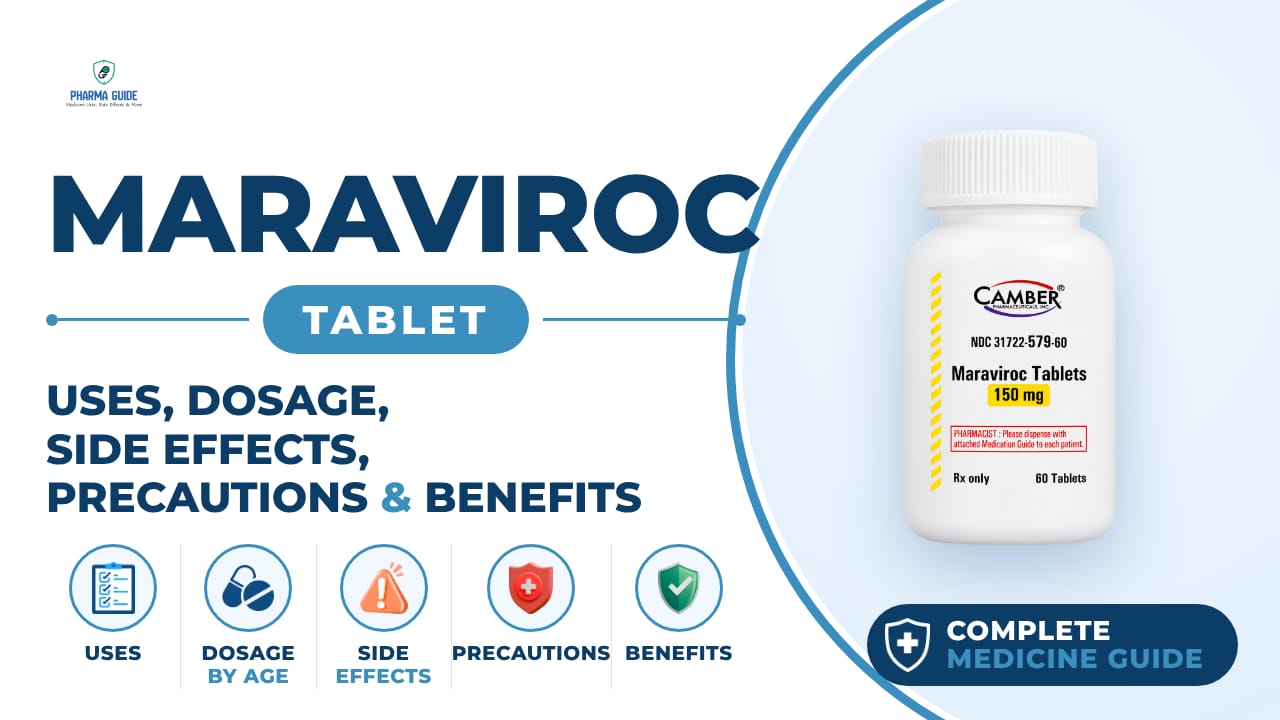
| Generic name | Maraviroc |
|---|---|
| Drug class | CCR5 antagonist (CCR5 co-receptor antagonist) |
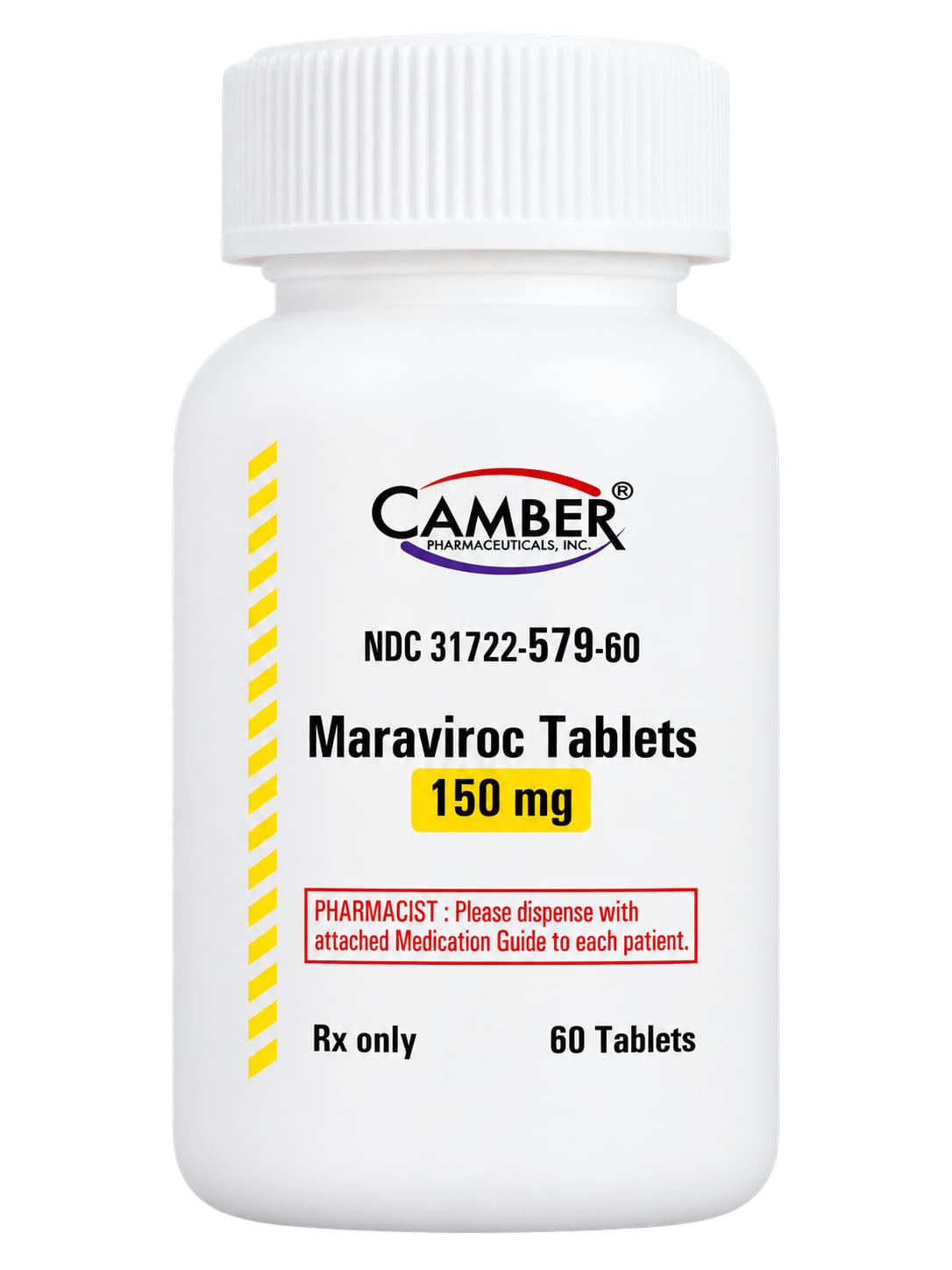
| Forms | Film-coated tablets, 150 mg, Film-coated tablets, 300 mg, Oral liquid (20 mg/mL) |
Quick overview
Maraviroc Tablet (generic name: Maraviroc) is a CCR5 antagonist used to treat HIV-1 infection. It is always used together with other HIV medicines, never alone, and only works against a type of HIV known as CCR5-tropic virus. It works by blocking the CCR5 receptor that this type of HIV uses to enter white blood cells, helping to lower viral load and support immune health.
What is Maraviroc Tablet
Maraviroc is an antiretroviral medicine used to treat HIV-1 infection. It is always used together with other HIV medicines, not on its own, and only works against a type of HIV called CCR5-tropic virus.
Maraviroc Tablet uses
- Treatment of HIV-1 infection in adults, taken together with other antiretroviral (anti-HIV) medicines
- Used only in people whose HIV is confirmed to be CCR5-tropic through a special blood test before starting treatment
Benefits of Maraviroc Tablet
- Can lower the amount of HIV in the blood (viral load)
- Can increase the number of CD4 (T) cells, a type of white blood cell that helps fight infection
- May help reduce the risk of illnesses linked to HIV infection
How Maraviroc Tablet works
Maraviroc blocks a receptor called CCR5 on certain white blood cells. HIV normally uses this receptor to get into the cells and infect them, so blocking it stops this type of HIV from entering and multiplying in the body.
Maraviroc Tablet dosage
Take Maraviroc every day in combination with other HIV medicines, exactly as your healthcare professional has told you. It can be taken with or without food. Swallow the tablet whole with plenty of water; do not chew the tablet. Do not stop or change any of your HIV medicines without talking to your healthcare professional first. Keep a supply on hand and get a refill before you run out, since stopping even briefly can let the virus increase in the blood. Maraviroc is not recommended for use in children. Caution is advised in elderly patients, who may be more likely to have reduced liver or kidney function or other health conditions.
| Age group | Dose |
|---|---|
| 18–64 years | Commonly 300 mg twice daily; may be adjusted to 150 mg twice daily or 600 mg twice daily depending on interacting medicines |
Available forms and strengths
- Film-coated tablets, 150 mg
- Film-coated tablets, 300 mg
- Oral liquid (20 mg/mL)
Side effects of Maraviroc Tablet
Common
- Cough
- Fever
- Upper respiratory tract infections (colds, sinus infections)
- Rash
- Muscle, joint, or body aches
- Abdominal pain
- Dizziness
- Constipation
- Itching
- Difficulty sleeping
- Diarrhea
- Nausea
- Headache
Serious
- Liver problems (liver toxicity), sometimes with allergic features
- Severe allergic or skin reactions, including Stevens-Johnson syndrome and toxic epidermal necrolysis
- Heart problems, including heart attack and chest pain
- Postural hypotension (low blood pressure on standing), which can cause dizziness or fainting
- Immune Reconstitution Inflammatory Syndrome (inflammation from hidden infections as the immune system recovers)
- Autoimmune disorders such as Graves' disease, Guillain-Barré syndrome, polymyositis, and autoimmune hepatitis
- Increased risk of certain infections due to effects on the immune system
- Bone marrow problems such as low blood cell counts
- Osteonecrosis (bone tissue death from reduced blood supply)
Warnings and precautions
- Liver problems, sometimes serious, have happened in people taking maraviroc. These can sometimes be preceded by signs of an allergic reaction. Seek medical help right away if you notice an itchy rash, yellowing of skin or eyes, dark urine, vomiting, or pain in the upper right side of the stomach.
- Severe, potentially life-threatening allergic and skin reactions have occurred with maraviroc, including swelling of the face or tongue, difficulty breathing, widespread rash, and blistering or peeling skin. Treatment must be stopped right away if these occur.
- Maraviroc should be used carefully in people with heart disease or risk factors for heart problems, since heart attacks and chest pain related to reduced blood flow to the heart have been reported more often in people taking maraviroc.
- Starting HIV treatment can sometimes trigger an inflammatory reaction to hidden infections or cause autoimmune conditions, which may appear months after starting the medicine.
- Because maraviroc affects certain immune cells, it may potentially increase the risk of developing infections or, over the long term, possibly cancer, although clinical studies have not shown a clear increase.
- St. John's Wort should not be taken with maraviroc, as it can significantly reduce maraviroc levels in the blood and cause the medicine to stop working properly against HIV.
- Maraviroc has not been well studied in pregnant women. It should only be used during pregnancy if the potential benefit to the mother is felt to outweigh the possible risk to the unborn baby.
- Women with HIV should not breastfeed at all, to avoid passing HIV to the baby. It isn't known if maraviroc passes into human breast milk.
- People with severe kidney problems may need special caution, especially if they are also taking certain other medicines, because maraviroc levels in the blood can increase and raise the risk of low blood pressure when standing up.
- Caution is needed in people with existing liver problems or those infected with hepatitis B or C, since there is only limited information on using maraviroc in these groups, and liver function may need close monitoring.
- Maraviroc can cause dizziness or lightheadedness. If this happens, avoid driving or operating machinery until you know how the medicine affects you.
Storage
- Store between 15°C to 30°C
- Do not take after the expiry date shown on the package
- Keep out of reach and sight of children
When to see a doctor
- Stop taking maraviroc and get medical help right away if you notice an itchy rash, yellow skin or eyes, dark urine, vomiting, or pain in the upper right side of your stomach — these can be signs of liver problems or an allergic reaction.
- Get help right away if you notice swelling of the face, lips, or tongue, difficulty breathing, a widespread rash, or blisters and peeling skin, especially around the mouth, nose, eyes, and genitals.
- Seek medical attention for symptoms that may indicate a change in your immune system, such as fever, redness, rash or swelling, fatigue, joint or muscle pain, numbness or tingling, chest pain, or yellowing of skin or eyes.
- If you feel dizzy or faint when standing up, this could be a sign of low blood pressure (postural hypotension); tell your healthcare professional, and avoid driving or hazardous tasks if this happens.
- If you think you have taken too much maraviroc, contact a healthcare professional, hospital emergency department, or your regional poison control center right away, even if you do not have any symptoms.
Alternatives
- Dolutegravir-based regimens
- Bictegravir-based regimens
- Raltegravir-based regimens
Watch the video
FAQs
What is Maraviroc Tablet used for?
Maraviroc is used to treat HIV-1 infection in adults, always in combination with other antiretroviral medicines, and only in people whose HIV is confirmed to be CCR5-tropic through a blood test before starting treatment.
How does Maraviroc work?
Maraviroc blocks a receptor called CCR5 on certain white blood cells. HIV normally uses this receptor to enter and infect these cells, so blocking it stops CCR5-tropic HIV from entering and multiplying in the body.
What is the usual dose of Maraviroc?
For adults aged 18-64, the common dose is 300 mg twice daily, though it may be adjusted to 150 mg or 600 mg twice daily depending on other interacting medicines. It should be taken every day with or without food, swallowed whole with water.
What are the serious side effects of Maraviroc?
Serious side effects include liver problems, severe allergic or skin reactions such as Stevens-Johnson syndrome, heart problems including heart attack, postural hypotension, immune reconstitution inflammatory syndrome, autoimmune disorders, and bone marrow problems.
Can Maraviroc be taken during pregnancy or breastfeeding?
Maraviroc has not been well studied in pregnant women and should only be used if the potential benefit outweighs the possible risk to the unborn baby. Women with HIV should not breastfeed at all, to avoid passing HIV to the baby.
General information, not medical advice
Your prescriber and the leaflet in your pack know your situation. This page does not.
- Follow your prescriber and the leaflet
- Don't start, stop, or change a dose on your own
- Doses and warnings differ by country and product
Sources
Video
Related medicines

Injectafer Injection: Uses, Dosage, Side Effects, Precautions and Alternates
Iron products
Injectafer (ferric carboxymaltose) treats iron deficiency anemia and heart failure-related iron deficiency via IV. Learn uses, dosage, side effects, and

Gliclazide Tablet: Uses, Dosage, Side Effects, Precautions and Alternates
Sulfonylurea (hypoglycemic/antidiabetic agent)
Gliclazide Tablet is a sulfonylurea for type 2 diabetes that boosts insulin release. Learn about dosage, side effects, warnings, and precautions.