
Safety
General information, not medical advice
Your prescriber and the leaflet in your pack know your situation. This page does not.
- Follow your prescriber and the leaflet
- Don't start, stop, or change a dose on your own
- Doses and warnings differ by country and product
Mavenclad Tablet: Uses, Dosage, Side Effects, Precautions and Alternates
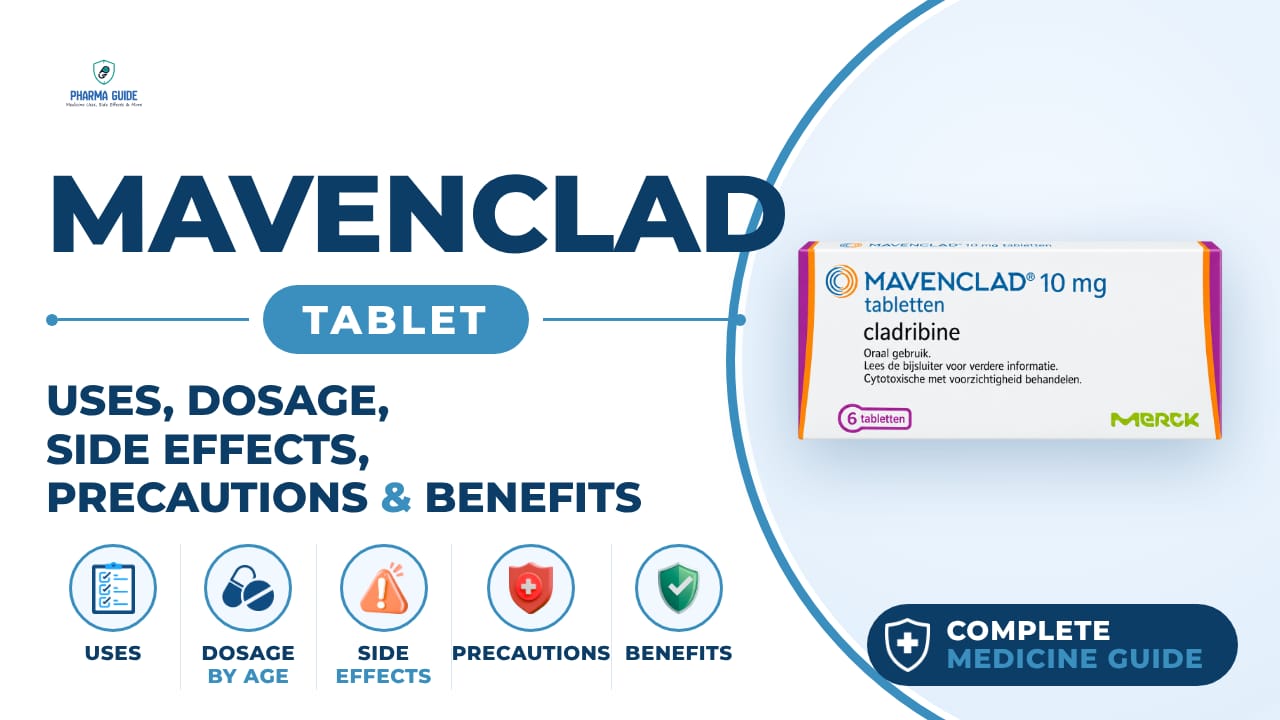
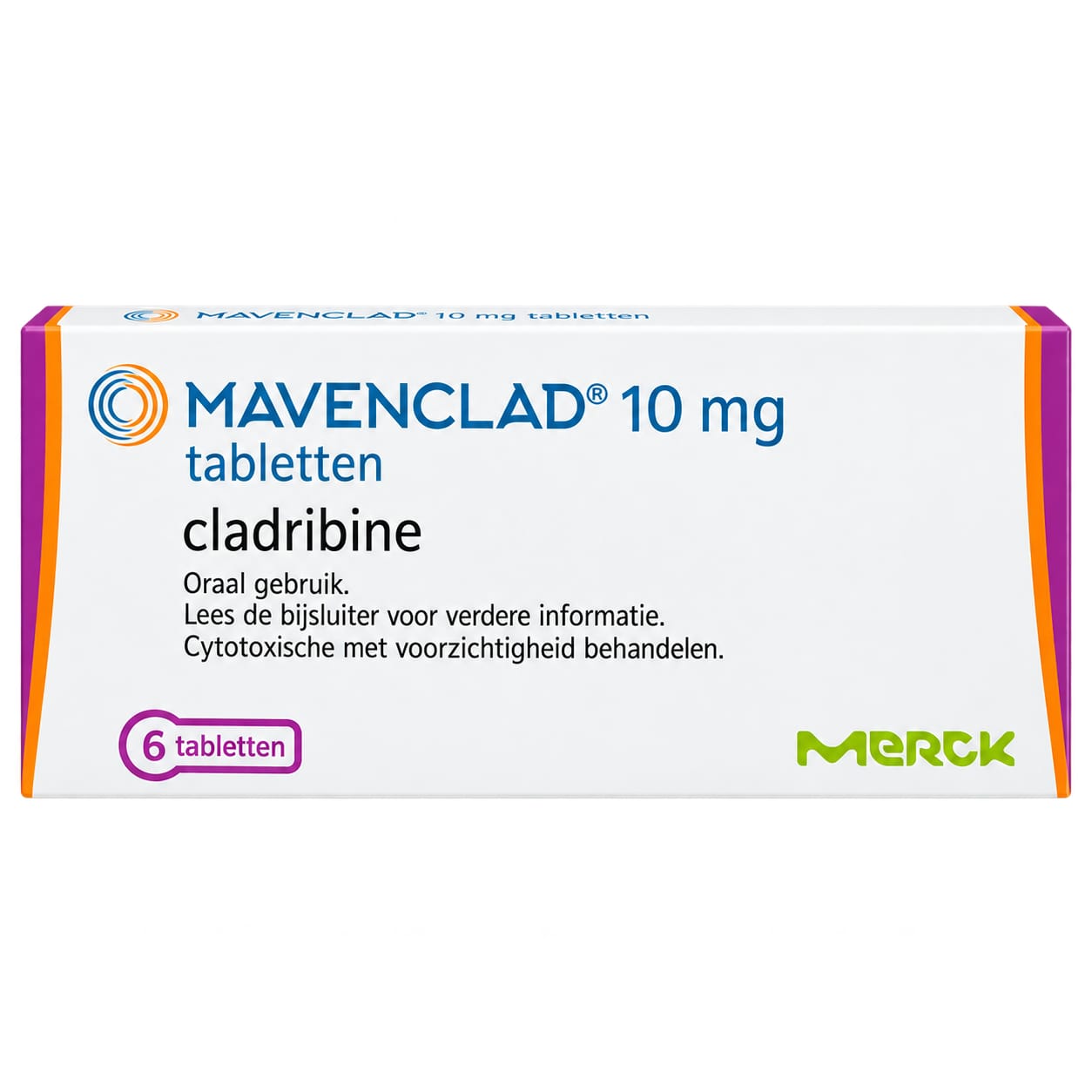
| Generic name | cladribine |
|---|---|
| Drug class | Antimetabolite (selective immunosuppressant) |
| Forms | Oral tablets (10 mg) |
Quick overview
Mavenclad Tablet contains cladribine, an antimetabolite that works as a selective immunosuppressant. It is a prescription medicine used to treat relapsing forms of multiple sclerosis (MS) in adults, generally for people who have already tried another MS medicine that did not work well enough or that they could not tolerate. It is given as two yearly short treatment courses rather than continuous daily therapy. Mavenclad carries a boxed warning for the risk of cancer and harm to an unborn baby.
What is Mavenclad Tablet
Mavenclad is a prescription tablet containing cladribine, used to treat relapsing forms of multiple sclerosis (MS) in adults. It is generally given to people who have already tried another MS medicine that did not work well enough or that they could not tolerate.
Mavenclad Tablet uses
- Treats relapsing forms of multiple sclerosis (MS), including relapsing-remitting disease and active secondary progressive disease, in adults
Benefits of Mavenclad Tablet
- May help reduce MS relapses by lowering the number of immune cells that attack the nerves
- Treats certain relapsing forms of multiple sclerosis
- Helps reduce MS relapses
- May slow disability progression
- Uses short treatment courses rather than continuous daily therapy
- Reduces certain lymphocytes involved in MS inflammation
How Mavenclad Tablet works
Mavenclad works by lowering the number of certain immune cells (B and T lymphocytes) that mistakenly attack the nerves in people with MS, which may help reduce relapses.
Mavenclad Tablet dosage
Take Mavenclad tablets with water and swallow them whole; do not chew, cut, or crush them. The tablet can be taken with or without food. Swallow it right away after opening the blister pack. Keep your hands dry when handling the tablets, and wash your hands well with water afterward; avoid touching your eyes, nose, or other parts of your body, and limit skin contact. If the medicine touches your skin or a surface, wash it off right away with water.
Take Mavenclad at least 3 hours apart from any other medicines taken by mouth during the treatment week. It is given as two yearly treatment courses, each made up of two treatment weeks (cycles) about a month apart, with each treatment week lasting 4 or 5 days.
If you miss a dose, take it as soon as you remember the same day; if a whole day passes, take the missed dose the next day instead, and do not take two doses at once—this will extend the treatment week. Mavenclad is not recommended for children under 18 years of age since safety and effectiveness are not known in this age group.
| Age group | Dose |
|---|---|
| Under 18 years | Safety and effectiveness have not been established |
| 18–64 years | Total treatment dose: 3.5 mg/kg over 2 years, given as 1.75 mg/kg per treatment year in 2 treatment courses |
Available forms and strengths
- Oral tablets (10 mg)
Side effects of Mavenclad Tablet
Common
- Upper respiratory infection (nose or throat infection, sore throat, or common cold symptoms)
- Headache
- Low white blood cell counts (lymphopenia)
Serious
- Low blood cell counts, increasing risk of infection
- Serious infections, including bacterial, viral, parasitic, or fungal infections that may be life-threatening
- Tuberculosis (TB), hepatitis B or C, and shingles
- Progressive multifocal leukoencephalopathy (PML), a rare and serious brain infection
- Liver problems
- Allergic reactions (hypersensitivity)
- Heart failure
- Increased risk of cancer
- Risk of birth defects if used during pregnancy
Warnings and precautions
- Mavenclad has a boxed warning, the strongest warning from the FDA, for the risk of cancer and the risk of harm to an unborn baby.
- Mavenclad must not be used if you currently have cancer. Do not take Mavenclad if you are HIV positive, have active infections such as tuberculosis or hepatitis B or C, are allergic to cladribine, or are breastfeeding.
- You should not receive live or live-attenuated vaccines within 4 to 6 weeks before starting Mavenclad, during treatment, or until your immune system has recovered. Mavenclad is a cytotoxic medicine, so handle it with dry hands, limit skin contact, and wash off any contact with water right away.
- Mavenclad can cause birth defects if used during pregnancy. Women must not be pregnant when starting treatment or become pregnant during dosing or within 6 months after the last dose of each yearly course. Men with partners who can become pregnant must use effective birth control during dosing and for at least 14 weeks after the last dose.
- Do not breastfeed while taking Mavenclad, as it can pass into breast milk and may harm your baby. Do not breastfeed on days you take the medicine and for 10 days after the last dose.
- Tell your healthcare provider if you have kidney problems before starting Mavenclad.
- Tell your healthcare provider if you have liver problems before starting Mavenclad, as your risk of serious liver problems may be higher. Liver blood tests are done before and during treatment.
- It is not known whether drinking alcohol affects Mavenclad.
- Mavenclad usually does not directly impair driving, but avoid driving if dizziness, weakness, or other symptoms occur.
Storage
- Store Mavenclad at room temperature between 68°F and 77°F (20°C and 25°C)
- Keep it in the original package to protect it from moisture
- Mavenclad comes in a child-resistant package
- Ask your healthcare provider or pharmacist how to safely throw away any unused or expired tablets and packaging
- Keep out of the reach of children
When to see a doctor
- Call your healthcare provider right away if you or your partner becomes pregnant during treatment, and stop taking Mavenclad
- Call your healthcare provider right away if you have symptoms of infection such as fever, loss of appetite, aching or painful muscles, burning, tingling, numbness or itchy skin, headache, skin blotches, blistered rash, severe pain, or feeling generally unwell
- Call your healthcare provider right away if you have new or worsening symptoms that could mean a brain infection (PML), such as weakness on one side of the body, vision changes, loss of coordination, confusion, memory or thinking changes, balance problems, or personality changes
- Call your healthcare provider right away if you notice signs of liver problems, such as nausea, loss of appetite, vomiting, yellowing of skin or eyes, stomach pain, tiredness, or dark urine
- Stop treatment and go to the nearest emergency room right away if you notice signs of a serious allergic reaction, such as rash, swelling of the face, lips, tongue, or throat, or trouble breathing
- Call your healthcare provider or go to the nearest emergency room right away if you have signs of heart failure, such as shortness of breath, a fast or irregular heartbeat, or unusual swelling
Alternatives
- Mayzent (siponimod)
- Gilenya (fingolimod)
- Ocrevus (ocrelizumab)
Watch the video
FAQs
What is Mavenclad Tablet used for?
Mavenclad is used to treat relapsing forms of multiple sclerosis, including relapsing-remitting disease and active secondary progressive disease, in adults who have already tried another MS medicine that did not work well enough or that they could not tolerate.
How is Mavenclad Tablet taken?
Mavenclad is given as two yearly treatment courses, each made up of two treatment weeks about a month apart, with each treatment week lasting 4 or 5 days. Tablets should be swallowed whole with water right after opening the blister pack, taken at least 3 hours apart from other oral medicines during the treatment week.
What are the serious side effects of Mavenclad Tablet?
Serious side effects include low blood cell counts, serious infections, tuberculosis, hepatitis B or C, shingles, progressive multifocal leukoencephalopathy (PML), liver problems, allergic reactions, heart failure, increased cancer risk, and risk of birth defects if used during pregnancy.
Does Mavenclad Tablet have a boxed warning?
Yes, Mavenclad has a boxed warning, the strongest FDA warning, for the risk of cancer and the risk of harm to an unborn baby.
Can Mavenclad Tablet be used during pregnancy or breastfeeding?
No, Mavenclad can cause birth defects and must not be used during pregnancy; women must avoid pregnancy during dosing and for 6 months after the last dose of each yearly course. Breastfeeding should also be avoided on treatment days and for 10 days after the last dose.
General information, not medical advice
Your prescriber and the leaflet in your pack know your situation. This page does not.
- Follow your prescriber and the leaflet
- Don't start, stop, or change a dose on your own
- Doses and warnings differ by country and product
Sources
Video
Related medicines

Injectafer Injection: Uses, Dosage, Side Effects, Precautions and Alternates
Iron products
Injectafer (ferric carboxymaltose) treats iron deficiency anemia and heart failure-related iron deficiency via IV. Learn uses, dosage, side effects, and

Gliclazide Tablet: Uses, Dosage, Side Effects, Precautions and Alternates
Sulfonylurea (hypoglycemic/antidiabetic agent)
Gliclazide Tablet is a sulfonylurea for type 2 diabetes that boosts insulin release. Learn about dosage, side effects, warnings, and precautions.