
Safety
General information, not medical advice
Your prescriber and the leaflet in your pack know your situation. This page does not.
- Follow your prescriber and the leaflet
- Don't start, stop, or change a dose on your own
- Doses and warnings differ by country and product
Mavyret Tablet: Uses, Dosage, Side Effects, Precautions and Alternates
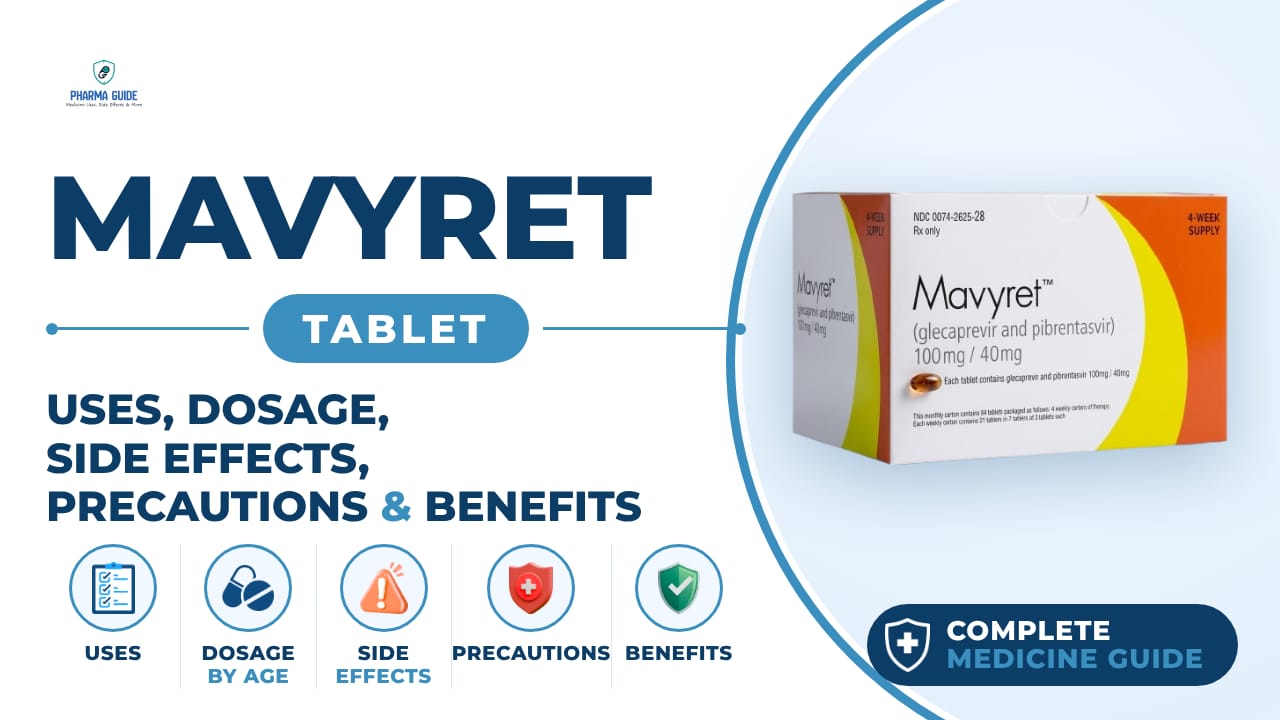
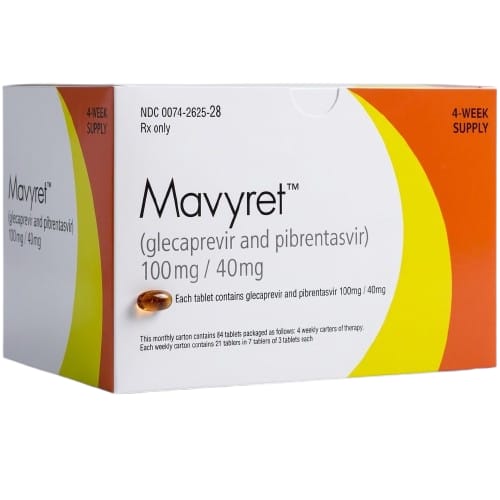
| Generic name | glecaprevir and pibrentasvir |
|---|---|
| Drug class | Antiviral combination (HCV NS3/4A protease inhibitor and NS5A inhibitor) |
| Forms | Tablet |
Quick overview
Mavyret Tablet combines glecaprevir and pibrentasvir, two antiviral medicines used together to treat hepatitis C virus (HCV) infection in adults and children 3 years of age and older. It is used for certain HCV genotypes, both in people new to treatment and in some who were previously treated. Mavyret works by blocking two different proteins the virus needs to multiply, helping the body clear the infection.
What is Mavyret Tablet
Mavyret is a prescription medicine that combines two antiviral drugs, glecaprevir and pibrentasvir, in one tablet or pellet form. It is used to treat hepatitis C virus (HCV) infection in adults and children 3 years of age and older.
Mavyret Tablet uses
- Treatment of acute or chronic hepatitis C virus (HCV) genotype 1, 2, 3, 4, 5, or 6 infection in people 3 years and older without cirrhosis or with compensated cirrhosis (Child-Pugh A)
- Treatment of HCV genotype 1 infection in people 3 years and older who were previously treated with a regimen containing an HCV NS5A inhibitor or an NS3/4A protease inhibitor, but not both
Benefits of Mavyret Tablet
- Helps eliminate hepatitis C virus from the body
- Can cure hepatitis C in many patients
- Helps reduce the risk of liver damage caused by hepatitis C
- Helps prevent long-term complications when treatment succeeds
How Mavyret Tablet works
Mavyret contains two medicines that attack the hepatitis C virus in different ways. Glecaprevir blocks an enzyme (protease) the virus needs to form its mature proteins, and pibrentasvir blocks another viral protein needed for the virus to copy its genetic material and build new virus particles. Together, they stop the virus from making more copies of itself, allowing the body to clear the infection.
Mavyret Tablet dosage
Take Mavyret with food, as this helps your body absorb the medicine better. Take all the tablets at the same time once a day. Do not miss or skip doses during treatment, and do not stop taking it without talking to your healthcare provider first. Tablets should be swallowed whole and not crushed, cut, or broken.
For oral pellets, sprinkle the entire dose onto a small amount of soft, low-water-content food (such as peanut butter, chocolate hazelnut spread, cream cheese, thick jam, or Greek yogurt) and swallow without chewing within 15 minutes of preparing. Do not use liquids or runny foods because the medicine may not work as well. Do not store any leftover pellet-and-food mixture for later use; throw away any unused portion.
If a dose is missed and it has been less than 18 hours since the usual dose time, take the missed dose with food as soon as possible, then take the next dose at the usual time. If more than 18 hours have passed, skip the missed dose and take the next dose at the usual time with food.
Treatment typically lasts 8 to 16 weeks depending on hepatitis C genotype, prior treatment history, and whether you have cirrhosis. No dosage adjustment is needed for elderly patients.
| Age group | Dose |
|---|---|
| Under 18 years | Not recommended |
| 18–64 years | 300 mg/120 mg, once/day |
| 65+ years | 300 mg/120 mg, once/day |
Available forms and strengths
- Tablet (300 mg/120 mg)
Side effects of Mavyret Tablet
Common
- Headache
- Fatigue (tiredness)
- Nausea
- Diarrhea
Serious
- Hepatitis B virus reactivation, which in some cases has led to fulminant hepatitis, liver failure, and death
- Hepatic decompensation/liver failure, including fatal outcomes, mostly in people with advanced liver disease
- Allergic reactions including angioedema (swelling of face, lips, tongue, or throat)
Warnings and precautions
- If you have ever had hepatitis B infection, it could become active again during or after treatment with Mavyret, which may cause serious liver problems including liver failure and death. Your doctor will test you for hepatitis B before starting treatment and monitor you during and after treatment.
- People with a history of advanced liver disease have a rare risk of worsening liver problems, liver failure, and death while taking Mavyret, usually within the first 4 weeks of treatment.
- Do not take Mavyret with atazanavir or rifampin, as this combination is not allowed due to safety and effectiveness concerns.
- Certain medicines, including carbamazepine, efavirenz, and St. John's wort, can reduce how well Mavyret works and should not be taken together with it.
- It is not known whether Mavyret can harm an unborn baby. Tell your healthcare provider if you are pregnant or plan to become pregnant.
- It is not known whether Mavyret passes into breast milk or affects a nursing baby. Talk to your healthcare provider about the best way to feed your baby during treatment.
- No dose adjustment is needed for people with mild, moderate, or severe kidney impairment, including those on dialysis.
- Mavyret should not be used by people with moderate or severe liver impairment or anyone with a past history of liver decompensation. No dose adjustment is needed for mild liver impairment.
- It is best not to drink alcohol while taking Mavyret, since alcohol and hepatitis C can both damage the liver and together may cause scarring faster.
Storage
- Store at or below 86°F (30°C)
- Keep in its original package until you are ready to take it
- Keep out of the reach of children
- For oral pellets, do not open the packet until ready to use
When to see a doctor
- Get medical help right away if you notice nausea, tiredness, yellowing of your skin or the white part of your eyes, easy bleeding or bruising, confusion, dark or bloody stools, loss of appetite, diarrhea, dark or brown urine, swelling or pain in the upper right side of your stomach, sleepiness, vomiting blood, or lightheadedness — these can be signs of worsening liver problems.
- If you take too much Mavyret, contact your healthcare provider or go to the nearest hospital emergency room right away.
- Seek emergency help for signs of a serious allergic reaction such as trouble breathing, swelling of the face, lips, tongue, or throat, or severe rash or hives.
Alternatives
- Sovaldi
- Epclusa
- Harvoni
Watch the video
FAQs
What is Mavyret Tablet used for?
Mavyret treats acute or chronic hepatitis C virus (HCV) genotype 1, 2, 3, 4, 5, or 6 infection in people 3 years and older, including those without cirrhosis or with compensated cirrhosis, and certain previously treated genotype 1 patients.
How should I take Mavyret Tablet?
Take Mavyret with food once a day, swallowing tablets whole without crushing, cutting, or breaking them. Treatment typically lasts 8 to 16 weeks depending on genotype, prior treatment, and cirrhosis status.
What are the common side effects of Mavyret?
Common side effects include headache, fatigue, nausea, and diarrhea.
Can Mavyret cause serious liver problems?
Yes, Mavyret can cause hepatitis B virus reactivation and hepatic decompensation or liver failure, especially in people with advanced liver disease or a history of hepatitis B infection.
What medicines should not be taken with Mavyret?
Mavyret should not be taken with atazanavir or rifampin, and medicines like carbamazepine, efavirenz, and St. John's wort can reduce its effectiveness and should be avoided.
General information, not medical advice
Your prescriber and the leaflet in your pack know your situation. This page does not.
- Follow your prescriber and the leaflet
- Don't start, stop, or change a dose on your own
- Doses and warnings differ by country and product
Sources
Video
Related medicines

Injectafer Injection: Uses, Dosage, Side Effects, Precautions and Alternates
Iron products
Injectafer (ferric carboxymaltose) treats iron deficiency anemia and heart failure-related iron deficiency via IV. Learn uses, dosage, side effects, and

Gliclazide Tablet: Uses, Dosage, Side Effects, Precautions and Alternates
Sulfonylurea (hypoglycemic/antidiabetic agent)
Gliclazide Tablet is a sulfonylurea for type 2 diabetes that boosts insulin release. Learn about dosage, side effects, warnings, and precautions.