
Safety
General information, not medical advice
Your prescriber and the leaflet in your pack know your situation. This page does not.
- Follow your prescriber and the leaflet
- Don't start, stop, or change a dose on your own
- Doses and warnings differ by country and product
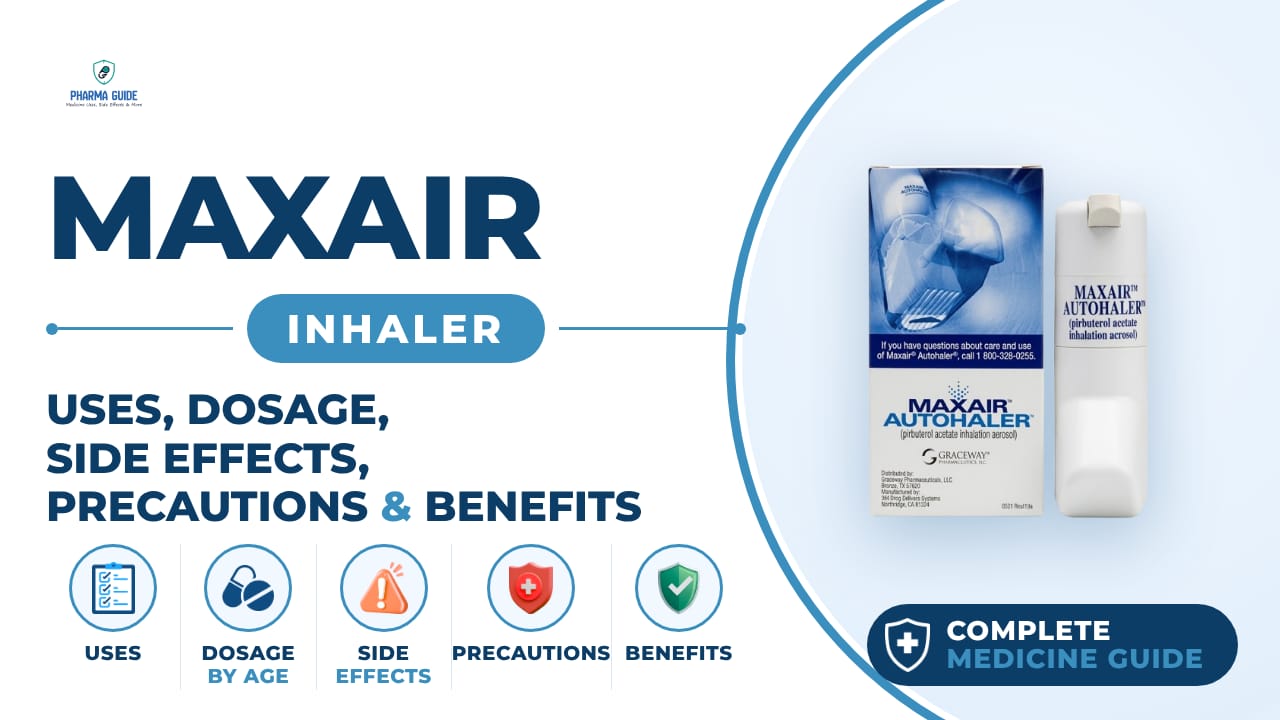
Maxair Inhaler: Uses, Dosage, Side Effects, Precautions and Alternates
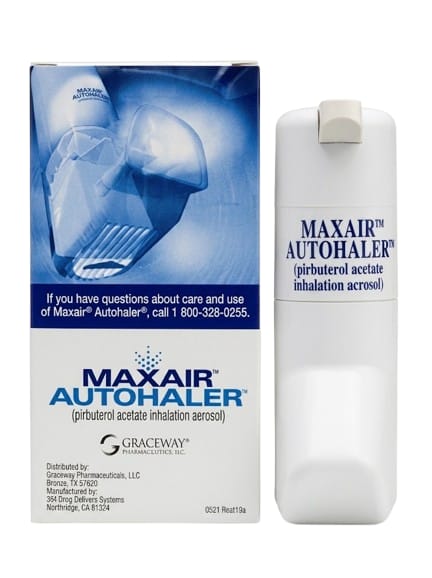
| Generic name | pirbuterol |
|---|---|
| Drug class | Beta2 Agonists |
| Forms | Inhalation aerosol (metered-dose inhaler) |
Quick overview
Maxair Inhaler (pirbuterol) is a Beta2 Agonist bronchodilator used to treat conditions such as asthma, bronchitis, and emphysema. It works by relaxing and opening the airways in the lungs, making breathing easier. It is used to relieve and prevent bronchospasm, wheezing, shortness of breath, and chest tightness. Maxair comes as an inhalation aerosol and is not recommended for children under 12 years old.
What is Maxair Inhaler
Maxair (pirbuterol) inhalation is a bronchodilator used to treat conditions such as asthma, bronchitis, and emphysema.
Maxair Inhaler uses
- Asthma-related bronchospasm.
- Wheezing caused by asthma.
- Shortness of breath associated with reversible airway narrowing.
- Chest tightness associated with bronchospasm.
- Prevention and relief of reversible bronchospasm.
Benefits of Maxair Inhaler
- Helps open narrowed airways.
- Improves airflow.
- Relieves wheezing.
- Helps reduce shortness of breath.
- Relaxes airway muscles.
How Maxair Inhaler works
Maxair works by relaxing and opening the air passages in the lungs, making it easier to breathe. It does this by acting on receptors in the airway muscles, which causes the muscles to relax.
Maxair Inhaler dosage
Shake the inhaler well just before use. Prime the inhaler by releasing two test sprays into the air before using it for the first time, and again if it has not been used in 48 hours. Hold the inhaler so the base of the canister points up, breathe normally, then place the mouthpiece in the mouth and press down to release one dose while breathing in deeply.
Hold your breath for a few seconds after inhaling, then breathe out normally. Wait and shake the inhaler again before taking a second inhalation if needed. Do not use more often or in greater amounts than your doctor recommends, and do not use other inhaled medicines while using this one unless your doctor tells you to.
Clean the inhaler mouthpiece daily by rinsing with warm water. This medicine is not recommended for children under 12 years old because there is not enough information on whether it is safe and effective for them.
| Age group | Dose |
|---|---|
| Under 18 years | Not recommended |
| 18–64 years | 400 mcg per dose |
| 65+ years | 400 mcg per dose |
Available forms and strengths
Inhalation aerosol (metered-dose inhaler).
Side effects of Maxair Inhaler
Common
- Headache
- Dizziness
- Lightheadedness
- Insomnia
- Tremor
- Nervousness
- Sweating
- Nausea
- Vomiting
- Diarrhea
- Dry mouth or throat
- Cough
- Hoarseness
- Sore throat
- Runny or stuffy nose
- Muscle pain
Serious
- Bronchospasm (wheezing, chest tightness, trouble breathing), especially after starting a new canister
- Chest pain, fast or pounding heartbeats, fluttering in the chest
- Low potassium - confusion, uneven heart rate, extreme thirst, increased urination, leg discomfort, muscle weakness or limp feeling
- Dangerously high blood pressure - severe headache, blurred vision, buzzing in the ears, anxiety, confusion, shortness of breath, uneven heartbeats, seizure
- Allergic reaction - hives, difficult breathing, swelling of face, lips, tongue, or throat
Warnings and precautions
- This medicine can cause heart-related effects such as changes in pulse rate and blood pressure, and should be used carefully in people with heart disease, irregular heartbeat, or high blood pressure.
- This medicine can cause a serious, life-threatening tightening of the airways called paradoxical bronchospasm, which often happens the first time a new canister is used.
- Using beta-agonist inhalers alone may not fully control asthma, and your doctor may need to add anti-inflammatory medicines like corticosteroids.
- If your asthma gets worse and you need to use this medicine more often than usual, this can be a sign that your asthma is getting worse and needs to be reassessed by your doctor.
- Deaths have been reported with overuse of inhaled medicines like this one.
Maxair should be used during pregnancy only if your doctor decides it is needed, since there are no well-controlled studies in pregnant women. It is not known if this medicine passes into breast milk, so talk with your doctor before breastfeeding while using it.
Maxair (pirbuterol) is discontinued in the United States; confirm availability before use. Inform your doctor if you have heart disease, high blood pressure, or an irregular heartbeat. Use cautiously if you have diabetes or thyroid problems. Seek medical advice if you experience chest pain, a rapid heartbeat, or severe tremors.
Storage
- Store between 15° and 30°C (59° to 86°F)
- For best results, the canister should be at room temperature before use
- The contents are under pressure - do not puncture the canister
- Do not use or store near heat or open flame
- Exposure to temperatures above 120°F may cause the canister to burst
- Never throw the container into a fire or incinerator
- Keep out of reach of children
- Avoid spraying in eyes
- Discard the canister once the labeled number of actuations has been used, even if it does not feel empty
When to see a doctor
- Get emergency medical help right away if you have signs of an allergic reaction, such as hives, difficulty breathing, or swelling of the face, lips, tongue, or throat.
- Call your doctor right away if you have wheezing, chest tightness, or trouble breathing, especially after starting a new canister.
- Call your doctor right away if you have chest pain, a fast or pounding heartbeat, or fluttering in your chest.
- Call your doctor right away if you have signs of low potassium, such as confusion, an uneven heart rate, extreme thirst, increased urination, leg discomfort, or muscle weakness.
- Call your doctor right away if you have signs of dangerously high blood pressure, such as a severe headache, blurred vision, buzzing in your ears, anxiety, confusion, shortness of breath, uneven heartbeats, or a seizure.
- Seek medical advice immediately if your usual dose stops giving the usual relief, since this often signals that your asthma is getting seriously worse.
Alternatives
- Proventil
- ProAir
- Ventolin
Watch the video
FAQs
What is Maxair Inhaler used for?
Maxair Inhaler is used to treat and prevent bronchospasm, wheezing, shortness of breath, and chest tightness caused by conditions like asthma, bronchitis, and emphysema.
How does Maxair Inhaler work?
It works by acting on receptors in the airway muscles, causing them to relax, which opens the air passages in the lungs and makes breathing easier.
Can children use Maxair Inhaler?
No, Maxair is not recommended for children under 12 years old because there is not enough information on whether it is safe and effective for them.
What are the serious side effects of Maxair Inhaler?
Serious side effects include paradoxical bronchospasm (especially after starting a new canister), chest pain or fast heartbeats, low potassium symptoms, dangerously high blood pressure, and allergic reactions like hives or swelling of the face, lips, tongue, or throat.
Is Maxair Inhaler still available?
Maxair (pirbuterol) is discontinued in the United States, so availability should be confirmed before use.
General information, not medical advice
Your prescriber and the leaflet in your pack know your situation. This page does not.
- Follow your prescriber and the leaflet
- Don't start, stop, or change a dose on your own
- Doses and warnings differ by country and product
Sources
Video
Related medicines

Injectafer Injection: Uses, Dosage, Side Effects, Precautions and Alternates
Iron products
Injectafer (ferric carboxymaltose) treats iron deficiency anemia and heart failure-related iron deficiency via IV. Learn uses, dosage, side effects, and

Gliclazide Tablet: Uses, Dosage, Side Effects, Precautions and Alternates
Sulfonylurea (hypoglycemic/antidiabetic agent)
Gliclazide Tablet is a sulfonylurea for type 2 diabetes that boosts insulin release. Learn about dosage, side effects, warnings, and precautions.