
Safety
General information, not medical advice
Your prescriber and the leaflet in your pack know your situation. This page does not.
- Follow your prescriber and the leaflet
- Don't start, stop, or change a dose on your own
- Doses and warnings differ by country and product
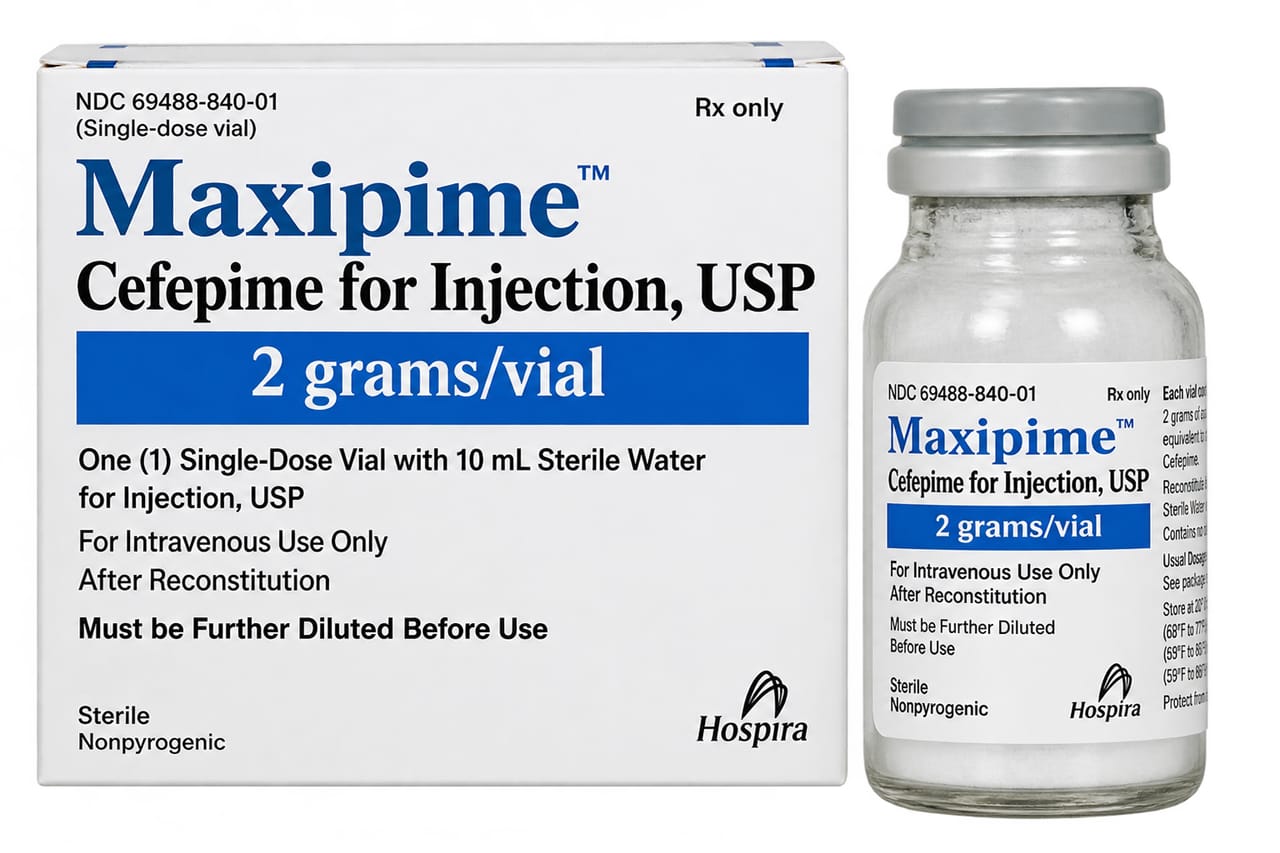
Maxipime Injection: Uses, Dosage, Side Effects, Precautions and Alternates

| Generic name | cefepime hydrochloride |
|---|---|
| Drug class | Cephalosporins (fourth generation) |
| Forms | Injection |
Quick overview
Maxipime Injection (cefepime hydrochloride) is a fourth-generation cephalosporin antibiotic given by injection to treat a range of bacterial infections, including serious or life-threatening ones affecting the lungs, urinary tract, skin, stomach, and blood. It works by breaking down the bacterial cell wall, causing the bacteria to die. It is given by a healthcare professional and must be used for the full prescribed course.
What is Maxipime Injection
Maxipime is a broad-spectrum cephalosporin antibiotic given by injection. It is used to treat many kinds of bacterial infections, including severe or life-threatening ones, affecting the lungs, urinary tract, skin, stomach, and blood.
Maxipime Injection uses
- Pneumonia (moderate to severe)
- Empiric treatment of fever in patients with low white blood cell counts (febrile neutropenia)
- Uncomplicated and complicated urinary tract infections, including kidney infection (pyelonephritis)
- Uncomplicated skin and skin structure infections
- Complicated infections inside the abdomen, used together with metronidazole
Benefits of Maxipime Injection
- Treats serious bacterial infections.
- Helps treat bacterial pneumonia.
- Treats certain urinary tract infections.
- Helps control skin and soft-tissue infections.
- Treats febrile neutropenia in selected patients under medical supervision.
How Maxipime Injection works
Cefepime kills bacteria by blocking the proteins bacteria need to build and maintain their cell walls, causing the bacterial cells to break apart and die.
Maxipime Injection dosage
This medicine is given by a healthcare professional as an infusion into a vein, usually over about 30 minutes, or sometimes as an injection into a muscle for certain urinary tract infections. It may need to be mixed with a specific liquid (diluent) before use, and only the diluent recommended by your doctor should be used. After mixing, the medicine must be used within a certain time depending on how it is stored (at room temperature or refrigerated). Do not use the medicine if the mixed solution looks cloudy or has particles in it.
Use this medicine for the full prescribed length of time, even if you start feeling better quickly, to avoid the infection coming back or becoming resistant to treatment. This medicine will not treat viral infections such as the common cold or flu.
In patients with kidney problems, the dose and frequency are adjusted differently from patients with normal kidney function. In elderly patients, doctors monitor kidney function closely since reduced kidney function can increase the risk of side effects.
| Age group | Dose |
|---|---|
| Under 18 years | Not recommended |
| 18–64 years | 2 g, twice/day |
| 65+ years | 2 g, twice/day |
Available forms and strengths
- Injection
Side effects of Maxipime Injection
Common
- Injection site reactions (pain, redness, swelling, soreness, or skin rash)
- Stomach pain
- Nausea
- Vomiting
- Loss of appetite
- Diarrhea
- Headache
- Skin rash or itching
- White patches or sores inside the mouth or on the lips
- Vaginal itching or discharge
- Fever
Serious
- Hives, difficulty breathing, swelling of the face or throat (allergic reaction)
- Fever, sore throat, burning eyes, skin pain, red or purple skin rash that spreads and causes blistering and peeling
- Severe stomach pain, watery or bloody diarrhea
- Confusion, hallucinations
- Trouble speaking, reading, or understanding others
- Seizures
- Hearing problems
- Little or no urination, swelling in feet or ankles
- Tiredness and shortness of breath
- Dark urine, easy bruising or bleeding
- Fast, pounding, or irregular heartbeat
- Mental or mood changes, decreased alertness
- Jerking movements
- Unusual weakness
- Yellowing of eyes or skin
Warnings and precautions
- Serious nerve-related side effects can occur, including confusion, hallucinations, seizures, and loss of consciousness, especially in people with kidney problems who were not given an adjusted dose.
- This medicine can cause severe diarrhea linked to a bacteria called C. difficile, which can range from mild diarrhea to a life-threatening bowel condition, and may occur even two months after finishing treatment.
- Do not use this medicine if you have had an immediate allergic reaction to cefepime, other cephalosporin antibiotics, penicillins, or other beta-lactam antibiotics. People allergic to penicillin have a higher chance of reacting to this medicine too.
- Using this medicine when it is not truly needed, or not completing the full course, can lead to bacteria becoming resistant to treatment.
- This medicine is not expected to be harmful to a baby during pregnancy, but you should tell your doctor if you are pregnant or planning to become pregnant.
- Small amounts of this medicine pass into breast milk and could potentially affect a nursing baby, so talk to your doctor before breastfeeding.
- People with kidney problems need special care, including dose adjustments, because this medicine is removed from the body through the kidneys and can build up to harmful levels if the kidneys aren't working well.
- This medicine may raise liver enzyme levels and cause liver swelling, so people with liver problems should use it carefully and may need dose adjustments.
- It is not known how this medicine interacts with alcohol, so check with your doctor before drinking alcohol during treatment.
- This medicine can cause dizziness, which may affect your ability to drive or operate machinery safely, so avoid these activities until you know how it affects you.
Storage
- Store the unmixed medicine in its dry state at room temperature, between 20 to 25°C (68 to 77°F)
- Protect from light
- After mixing with a diluent, the solution may be stored at controlled room temperature for up to 24 hours, or refrigerated for up to 7 days, depending on the diluent used
- Keep out of the reach of children and pets
- Dispose of needles and syringes in a puncture-proof sharps container according to local laws
When to see a doctor
- Get emergency help right away for signs of a serious allergic reaction such as hives, difficulty breathing, or swelling of the face or throat.
- Call your doctor right away if you have severe stomach pain or watery/bloody diarrhea, even if it happens months after your last dose.
- Seek medical help immediately for confusion, hallucinations, trouble speaking or understanding others, or seizures, as these can be signs of a serious nervous system reaction.
- Contact your doctor if you notice pale skin, easy bruising, unusual bleeding, dark-colored urine, or yellowing of the skin or eyes.
Alternatives
- Meropenem
- Ceftriaxone
- Cefotaxime
Watch the video
FAQs
What is Maxipime Injection used for?
Maxipime is used to treat moderate to severe pneumonia, febrile neutropenia, uncomplicated and complicated urinary tract infections including kidney infection, uncomplicated skin infections, and complicated abdominal infections (with metronidazole).
How is Maxipime Injection given?
It is given by a healthcare professional as an infusion into a vein, usually over about 30 minutes, or sometimes as an injection into a muscle for certain urinary tract infections.
What are the common side effects of Maxipime Injection?
Common side effects include injection site reactions, stomach pain, nausea, vomiting, loss of appetite, diarrhea, headache, skin rash or itching, mouth sores, vaginal itching or discharge, and fever.
Who should not use Maxipime Injection?
It should not be used by people who have had an immediate allergic reaction to cefepime, other cephalosporins, penicillins, or other beta-lactam antibiotics, since those allergic to penicillin have a higher chance of reacting to it too.
Can Maxipime Injection cause serious side effects?
Yes, serious effects can include severe allergic reactions, C. difficile-associated diarrhea, nerve-related effects like confusion and seizures (especially with kidney problems), hearing problems, and signs of liver or kidney issues.
General information, not medical advice
Your prescriber and the leaflet in your pack know your situation. This page does not.
- Follow your prescriber and the leaflet
- Don't start, stop, or change a dose on your own
- Doses and warnings differ by country and product
Sources
Video
Related medicines

Injectafer Injection: Uses, Dosage, Side Effects, Precautions and Alternates
Iron products
Injectafer (ferric carboxymaltose) treats iron deficiency anemia and heart failure-related iron deficiency via IV. Learn uses, dosage, side effects, and

Gliclazide Tablet: Uses, Dosage, Side Effects, Precautions and Alternates
Sulfonylurea (hypoglycemic/antidiabetic agent)
Gliclazide Tablet is a sulfonylurea for type 2 diabetes that boosts insulin release. Learn about dosage, side effects, warnings, and precautions.