
Safety
General information, not medical advice
Your prescriber and the leaflet in your pack know your situation. This page does not.
- Follow your prescriber and the leaflet
- Don't start, stop, or change a dose on your own
- Doses and warnings differ by country and product
Mebendazole Tablet: Uses, Dosage, Side Effects, Precautions and Alternates
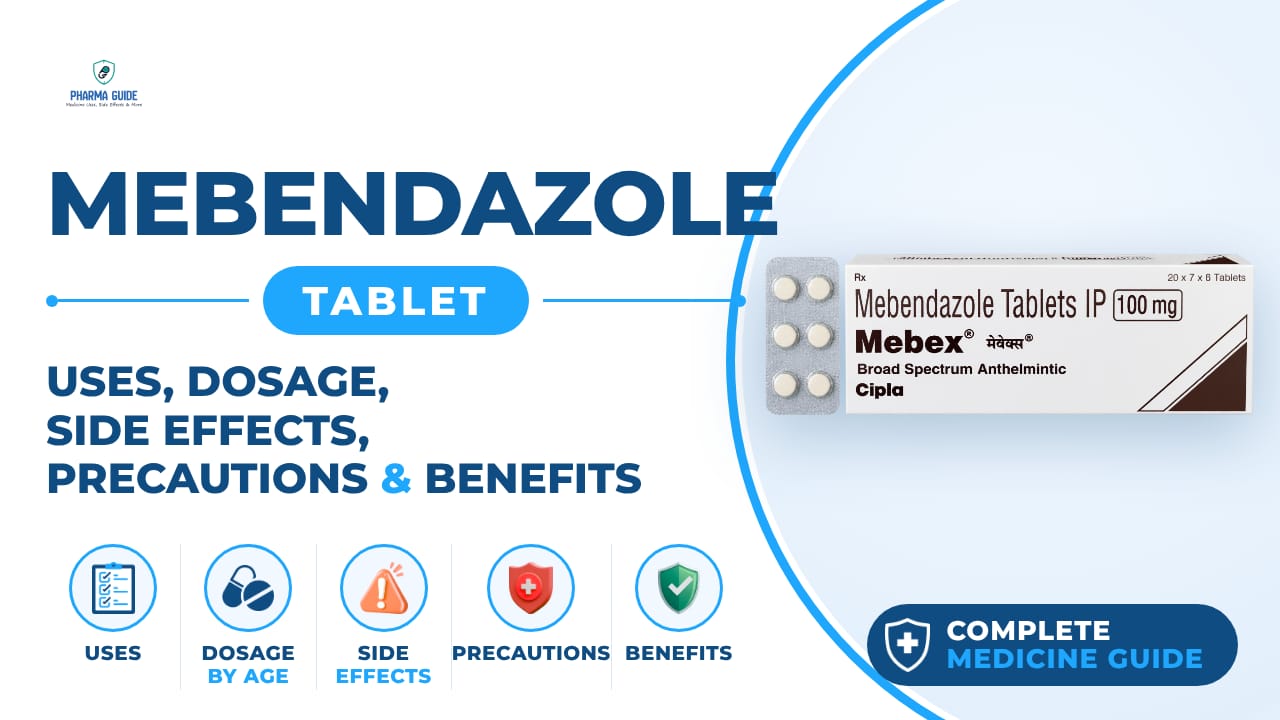
| Generic name | Mebendazole |
|---|---|
| Drug class | Anthelmintic (broad-spectrum worm medicine) |
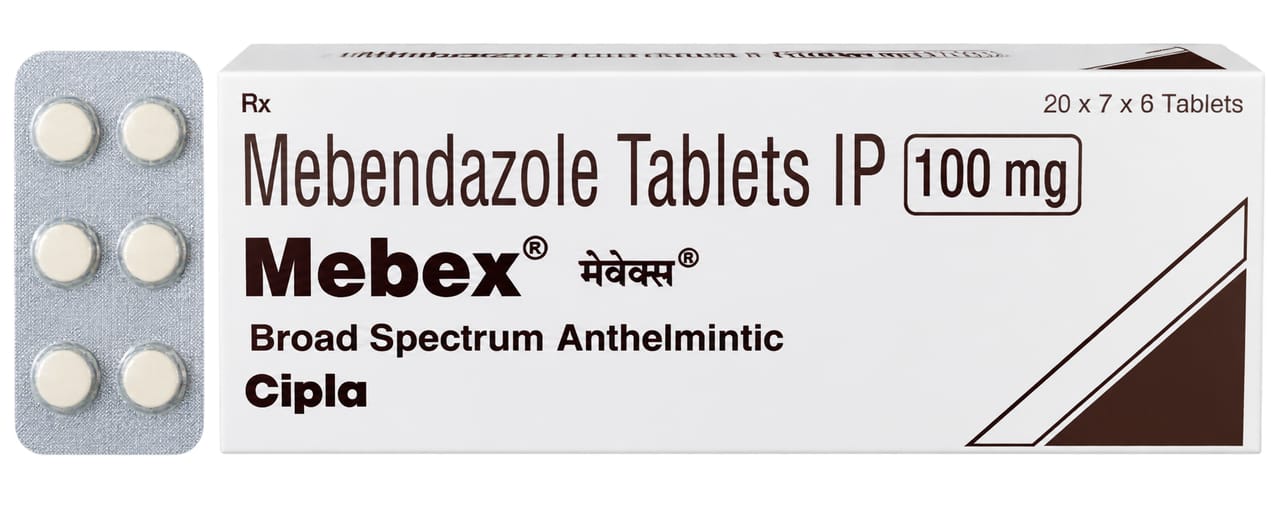
| Forms | Chewable tablet (100 mg) |
Quick overview
Mebendazole Tablet is a chewable anthelmintic medicine containing 100 mg of mebendazole, used to treat intestinal worm infections such as pinworm, whipworm, roundworm, and hookworm. It works by killing worms in the gut so the body can expel them. It is taken as a chewable tablet, with dosing that depends on age and the type of worm infection being treated, and it carries certain warnings, including that it is not recommended during pregnancy.
What is Mebendazole Tablet
Mebendazole is a man-made medicine used to kill intestinal worms. It belongs to the anthelmintic (broad-spectrum worm medicine) drug class. It comes as a chewable tablet containing 100 mg of mebendazole.
Mebendazole Tablet uses
- Pinworm infection (Enterobius vermicularis)
- Whipworm infection (Trichuris trichiura)
- Common roundworm infection (Ascaris lumbricoides)
- Common hookworm infection (Ancylostoma duodenale)
- American hookworm infection (Necator americanus)
- Single or mixed worm infections
- Sometimes used for tapeworm infections
Benefits of Mebendazole Tablet
- Treats several types of intestinal worm infections in one course of treatment
- Can treat mixed infections caused by more than one type of worm
- Works locally in the gut to expel worms from the body
How Mebendazole Tablet works
Mebendazole works by blocking the worms' ability to build the tiny internal structures they need and by starving them of sugar, which kills the worms so the body can expel them.
Mebendazole Tablet dosage
The tablet can be chewed, swallowed whole, or crushed and mixed with food. No fasting, purging, or special diet is needed before or during treatment, and it does not need to be taken with food.
If a dose is missed, take it as soon as you remember, unless it is almost time for the next dose - in that case skip the missed dose and continue as scheduled; do not double up.
Cleanliness, such as handwashing, keeping nails clean, and washing bedding without shaking it, helps prevent reinfection and spreading the infection to others. For children who have trouble swallowing the tablet, it can be crushed before giving it to them.
| Age group | Dose |
|---|---|
| Under 1 year | Not recommended |
| 1–<2 years | 500 mg once may be used in some guidelines; medical advice recommended |
| 2–17 years | Same dose as adults |
| Adults ≥18 years | 100 mg once for pinworm; 100 mg twice daily for 3 days for roundworm, hookworm, or whipworm |
Available forms and strengths
- Chewable tablet (100 mg)
Side effects of Mebendazole Tablet
Common
- Diarrhea
- Stomach pain, discomfort, or swelling
- Nausea
- Vomiting
- Loss of appetite
- Dizziness
- Headache
- Gas (flatulence)
- Drowsiness
- Itching
Serious
- Seizures (convulsions)
- Rash
- Hives
- Shortness of breath
- Difficulty breathing or swallowing
- Fever, sore throat, chills, or other signs of infection
- Severe skin reactions with blisters and mouth/eye/genital sores along with fever
- Severe allergic reaction with swelling of mouth, throat, or limbs, along with breathing trouble, itching, flushing, or fainting
- Hair loss, which in some cases may be permanent
- Blood and liver disorders
- Kidney inflammation with prolonged use of high doses
Warnings and precautions
- This medicine is not recommended during pregnancy, especially in the first three months, because it may harm the unborn baby. Talk to your doctor before use if you are or might be pregnant.
- It isn't known for certain if this medicine passes into breast milk, so caution is advised for breastfeeding mothers.
- Tell your doctor if you have or have had liver disease. Your doctor may want to check your liver function during treatment, especially with long-term use.
- There is no proof that this medicine works for hydatid disease, even at high doses.
- Rarely, taking this medicine for a long time or at doses much higher than recommended has led to low white blood cell counts, which can be serious.
- Do not take this medicine if you are pregnant or think you might be pregnant without talking to your doctor first.
- Taking this medicine together with metronidazole should be avoided because of a possible link to a serious skin reaction.
- Convulsions, including in infants, have been reported after taking this medicine.
Storage
- Store at controlled room temperature, between 20° and 25°C (68° and 77°F)
- Keep this and all medications out of the reach of children
- Keep the medication in the container it came in, tightly closed, and out of reach of children
- Store it at room temperature and away from excess heat and moisture (not in the bathroom)
- Dispose of unneeded medication in a way so that pets, children, and other people cannot take it
- Do not flush this medication down the toilet; use a medicine take-back program if available
When to see a doctor
- Get emergency help or call your doctor right away if you have seizures, a severe skin reaction with blisters or mouth/eye sores plus fever, or a severe allergic reaction with swelling, trouble breathing, hives, or fainting.
- Call your doctor immediately or get emergency care if you have seizures, rash, hives, shortness of breath, trouble breathing or swallowing, or signs of infection like fever, sore throat, or chills.
- If you think you have taken too much of this medicine, contact a doctor or poison control center right away, even if you feel fine.
- If your infection symptoms don't improve or get worse, call your doctor.
Alternatives
- Albendazole
- Pyrantel pamoate
- Ivermectin
- Levamisole
Watch the video
FAQs
What is Mebendazole Tablet used for?
It is used to treat intestinal worm infections such as pinworm, whipworm, common roundworm, and hookworm, including single or mixed infections, and is sometimes used for tapeworm infections.
How does Mebendazole Tablet work?
It works by blocking the worms' ability to build the tiny internal structures they need and by starving them of sugar, which kills the worms so the body can expel them.
What is the dosage of Mebendazole Tablet for adults?
Adults 18 years and older take 100 mg once for pinworm, or 100 mg twice daily for 3 days for roundworm, hookworm, or whipworm infections.
Can Mebendazole Tablet be taken during pregnancy?
No, it is not recommended during pregnancy, especially in the first three months, because it may harm the unborn baby. Talk to your doctor before use if you are or might be pregnant.
What should I do if I miss a dose of Mebendazole Tablet?
Take the missed dose as soon as you remember, unless it is almost time for the next dose, in which case skip the missed dose and continue as scheduled without doubling up.
General information, not medical advice
Your prescriber and the leaflet in your pack know your situation. This page does not.
- Follow your prescriber and the leaflet
- Don't start, stop, or change a dose on your own
- Doses and warnings differ by country and product
Sources
- MedlinePlus: https://medlineplus.gov/druginfo/meds/a682315.html
- Health Canada Product Monograph (VERMOX): https://pdf.hres.ca/dpd_pm/00050288.PDF
- FDA label information (Physicians Total Care, Inc., Mebendazole Tablets, USP)
Video
Related medicines

Injectafer Injection: Uses, Dosage, Side Effects, Precautions and Alternates
Iron products
Injectafer (ferric carboxymaltose) treats iron deficiency anemia and heart failure-related iron deficiency via IV. Learn uses, dosage, side effects, and

Gliclazide Tablet: Uses, Dosage, Side Effects, Precautions and Alternates
Sulfonylurea (hypoglycemic/antidiabetic agent)
Gliclazide Tablet is a sulfonylurea for type 2 diabetes that boosts insulin release. Learn about dosage, side effects, warnings, and precautions.