
Safety
General information, not medical advice
Your prescriber and the leaflet in your pack know your situation. This page does not.
- Follow your prescriber and the leaflet
- Don't start, stop, or change a dose on your own
- Doses and warnings differ by country and product
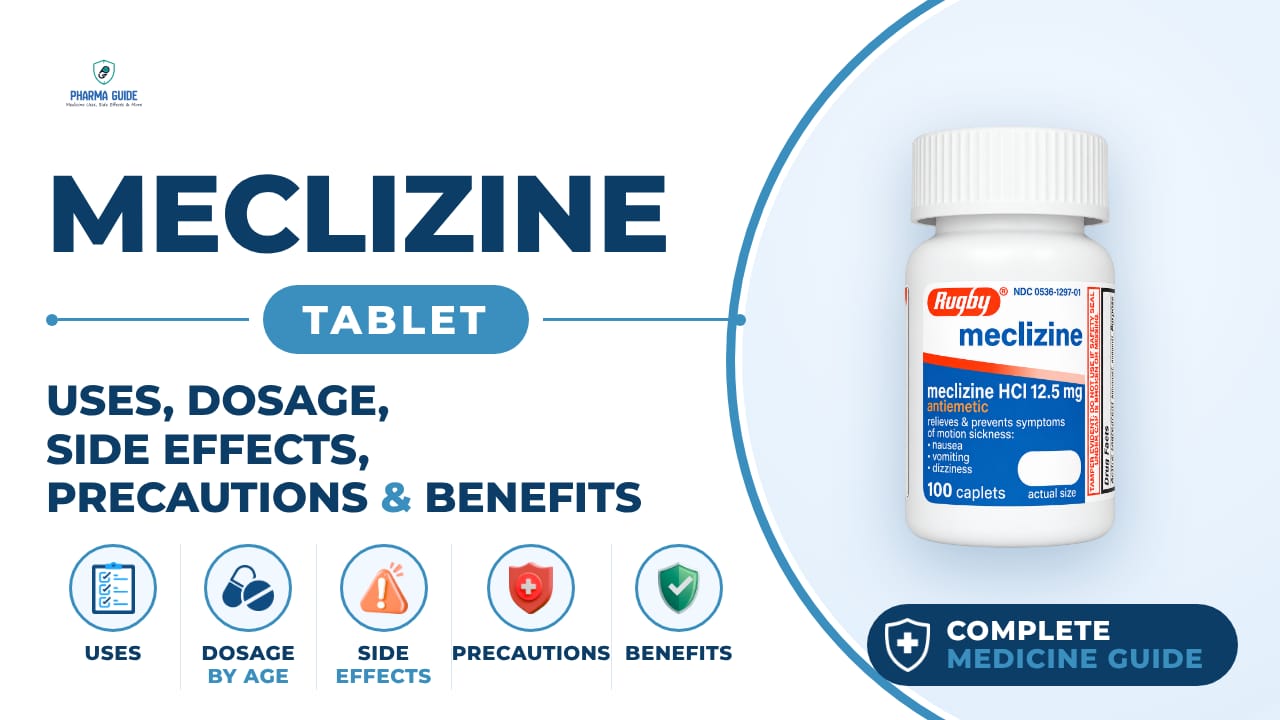
Meclizine Tablet: Uses, Dosage, Side Effects, Precautions and Alternates
| Generic name | Meclizine hydrochloride |
|---|---|
| Drug class | Antiemetic / Anticholinergic antihistamine |
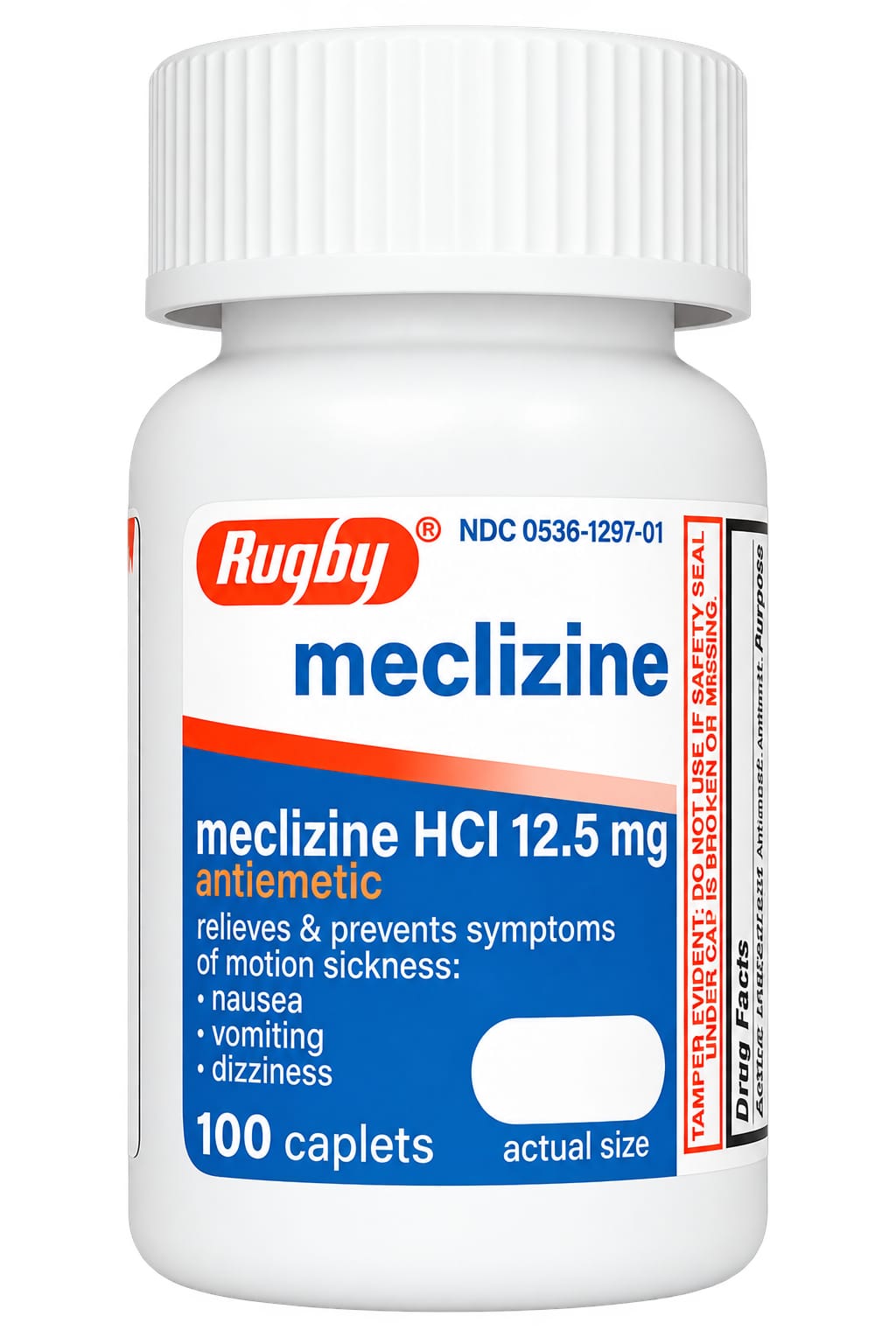
| Forms | Tablets (12.5 mg, 25 mg, 50 mg), Chewable tablets (25 mg, 50 mg) |
Quick overview
Meclizine Tablet, containing Meclizine hydrochloride, is a first-generation antihistamine belonging to the antiemetic and anticholinergic antihistamine drug class. It is used to treat or prevent motion sickness and vertigo caused by inner ear problems. It works by blocking histamine H1 receptors and has anticholinergic effects in brain areas that control nausea and balance. Common side effects include drowsiness and dry mouth, while serious reactions such as allergic responses require immediate medical attention.
What is Meclizine Tablet
Meclizine is a first-generation antihistamine used to treat or prevent motion sickness and vertigo caused by inner ear problems.
Meclizine Tablet uses
- Prevents and relieves nausea, vomiting, and dizziness caused by motion sickness
- Treats vertigo (dizziness or spinning feeling) caused by diseases affecting the inner ear (vestibular system)
- Used for symptoms linked to Meniere's syndrome, labyrinthitis, and other vestibular disturbances
Benefits of Meclizine Tablet
- Helps prevent motion sickness
- Reduces nausea and vomiting
- Helps relieve dizziness
- May reduce symptoms of vertigo
- Can help improve comfort during travel
How Meclizine Tablet works
Meclizine blocks histamine H1 receptors and has anticholinergic effects in parts of the brain that control nausea and balance, including the vomiting center, the chemoreceptor trigger zone, and the vestibular nuclei. This reduces signals that cause motion sickness and vertigo.
Meclizine Tablet dosage
Tablets must be swallowed whole; do not crush, break, or chew them. Chewable tablets must be chewed or crushed completely before swallowing. Meclizine can be taken with or without food.
For motion sickness, take the first dose about one hour before travel begins; a repeat dose may be taken every 24 hours if needed during the trip. For vertigo, the medicine may need to be taken several times a day as directed by a doctor.
If a dose is missed, take it as soon as remembered, but skip it if it is almost time for the next dose — do not take two doses at once. Meclizine is not recommended for children younger than 12 years old.
| Age group | Dose |
|---|---|
| 12–17 years | For motion sickness, commonly 25–50 mg once daily, taken about 1 hour before travel |
| Adults 18–64 years | For motion sickness, 25–50 mg once daily; for vertigo, dosing is individualized by a clinician |
Available forms and strengths
- Tablets (12.5 mg, 25 mg, 50 mg)
- Chewable tablets (25 mg, 50 mg)
Side effects of Meclizine Tablet
Common
- Drowsiness
- Tiredness/fatigue
- Headache
- Dry mouth
- Blurred vision
- Vomiting
Serious
- Allergic reaction (hives, trouble breathing, swelling of face, lips, tongue, or throat)
- Anaphylactic reaction
- Restlessness or confusion
- Fast or irregular heartbeat
- Shaking (tremor)
- Difficulty urinating
- Seizures (rare)
Warnings and precautions
- Do not use meclizine if you are allergic to meclizine or any of its ingredients. Because meclizine can have anticholinergic effects, use it carefully if you have asthma, glaucoma, or an enlarged prostate gland.
- Taking meclizine with other medicines that depress the central nervous system, including alcohol, can increase drowsiness and sedation. In children, antihistamines like meclizine may sometimes cause overexcitement instead of drowsiness.
- Meclizine is not recommended for children younger than 12 years old.
- Studies in pregnant women have not shown a clear link between meclizine and birth defects, but animal studies in rats showed some fetal problems at high doses. Tell your doctor if you are pregnant or planning to become pregnant before using this medicine.
- There isn't enough data on whether meclizine passes into breast milk or affects a nursing baby, so breastfeeding mothers should discuss the risks and benefits with their doctor.
- People with kidney problems should use meclizine carefully, as the drug or its breakdown products may build up in the body. This caution is extra important for elderly patients since kidney function often declines with age.
- People with liver problems should use meclizine with caution, since liver impairment may cause the drug to build up more in the body.
- Avoid alcohol while taking meclizine, as it can increase drowsiness and other sedative side effects.
- Meclizine can cause drowsiness, so be careful when driving a car or operating machinery until you know how it affects you.
Storage
Store at room temperature away from moisture, heat, and light. Store between 15º and 25ºC. Protect from high humidity and heat. Store at 20° to 25°C (68° to 77°F) [see USP Controlled Room Temperature]. Dispense in a tight, light-resistant container (USP).
When to see a doctor
Get emergency help right away if you notice signs of an allergic reaction, such as hives, difficulty breathing, or swelling of the face, lips, tongue, or throat. Seek emergency help if you think you have taken too much meclizine, even without symptoms. In case of a suspected overdose, contact a healthcare professional, hospital emergency department, or your regional poison control center, even if there are no symptoms yet.
Alternatives
- Dimenhydrinate
- Cyclizine
- Promethazine
Watch the video
FAQs
What is Meclizine Tablet used for?
Meclizine Tablet is used to prevent and relieve nausea, vomiting, and dizziness caused by motion sickness, and to treat vertigo caused by diseases affecting the inner ear, including Meniere's syndrome and labyrinthitis.
How does Meclizine Tablet work?
Meclizine blocks histamine H1 receptors and has anticholinergic effects in brain areas that control nausea and balance, including the vomiting center, chemoreceptor trigger zone, and vestibular nuclei, reducing signals that cause motion sickness and vertigo.
When should I take Meclizine for motion sickness?
For motion sickness, take the first dose about one hour before travel begins; a repeat dose may be taken every 24 hours if needed during the trip.
What are the common side effects of Meclizine Tablet?
Common side effects include drowsiness, tiredness, headache, dry mouth, blurred vision, and vomiting.
Can children take Meclizine Tablet?
Meclizine is not recommended for children younger than 12 years old.
General information, not medical advice
Your prescriber and the leaflet in your pack know your situation. This page does not.
- Follow your prescriber and the leaflet
- Don't start, stop, or change a dose on your own
- Doses and warnings differ by country and product
Sources
- MECLIZINE HYDROCHLORIDE- meclizine hydrochloride tablet, Zydus Pharmaceuticals (USA) Inc., Revised 8/2023
- BONAMINE Product Monograph, McNeil Consumer Healthcare, division of Johnson & Johnson Inc., June 8, 2011
- CareHospitals Medicine Information: Meclizine, https://www.carehospitals.com/medicine-detail/meclizine
Video
Related medicines

Injectafer Injection: Uses, Dosage, Side Effects, Precautions and Alternates
Iron products
Injectafer (ferric carboxymaltose) treats iron deficiency anemia and heart failure-related iron deficiency via IV. Learn uses, dosage, side effects, and

Gliclazide Tablet: Uses, Dosage, Side Effects, Precautions and Alternates
Sulfonylurea (hypoglycemic/antidiabetic agent)
Gliclazide Tablet is a sulfonylurea for type 2 diabetes that boosts insulin release. Learn about dosage, side effects, warnings, and precautions.