
Safety
General information, not medical advice
Your prescriber and the leaflet in your pack know your situation. This page does not.
- Follow your prescriber and the leaflet
- Don't start, stop, or change a dose on your own
- Doses and warnings differ by country and product
Medroxyprogesterone Injection: Uses, Dosage, Side Effects, Precautions and Alternates
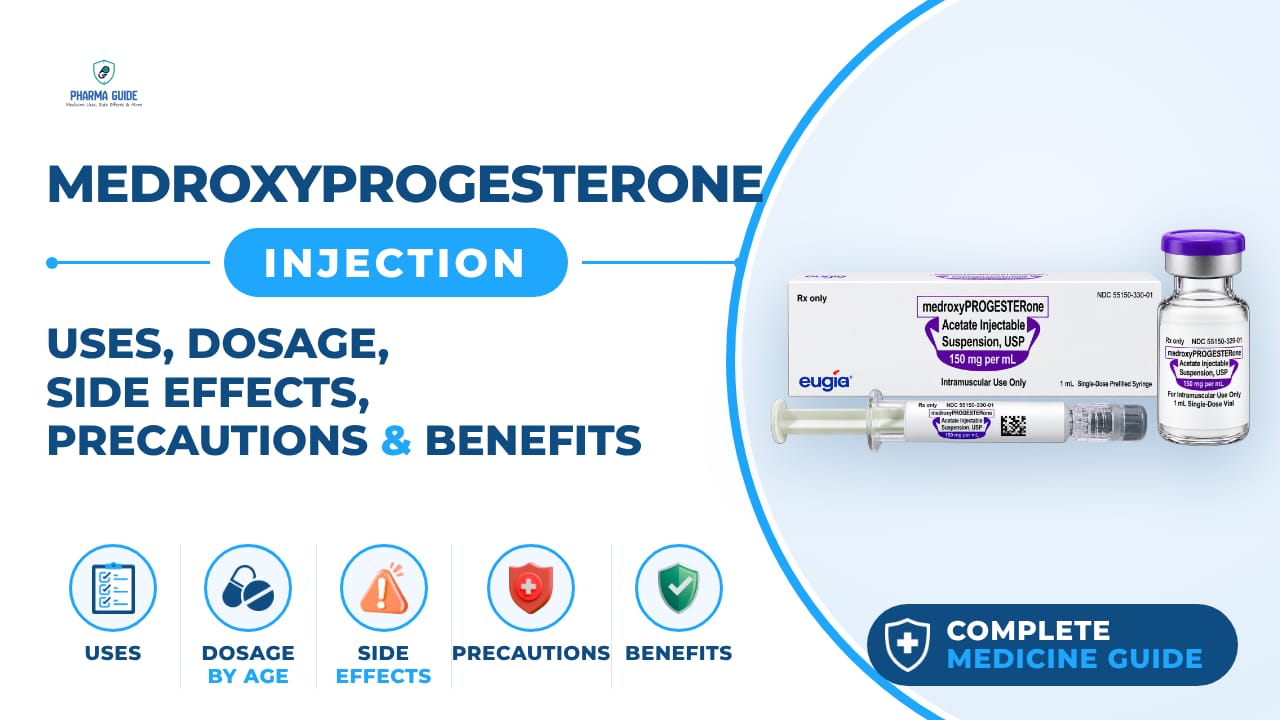
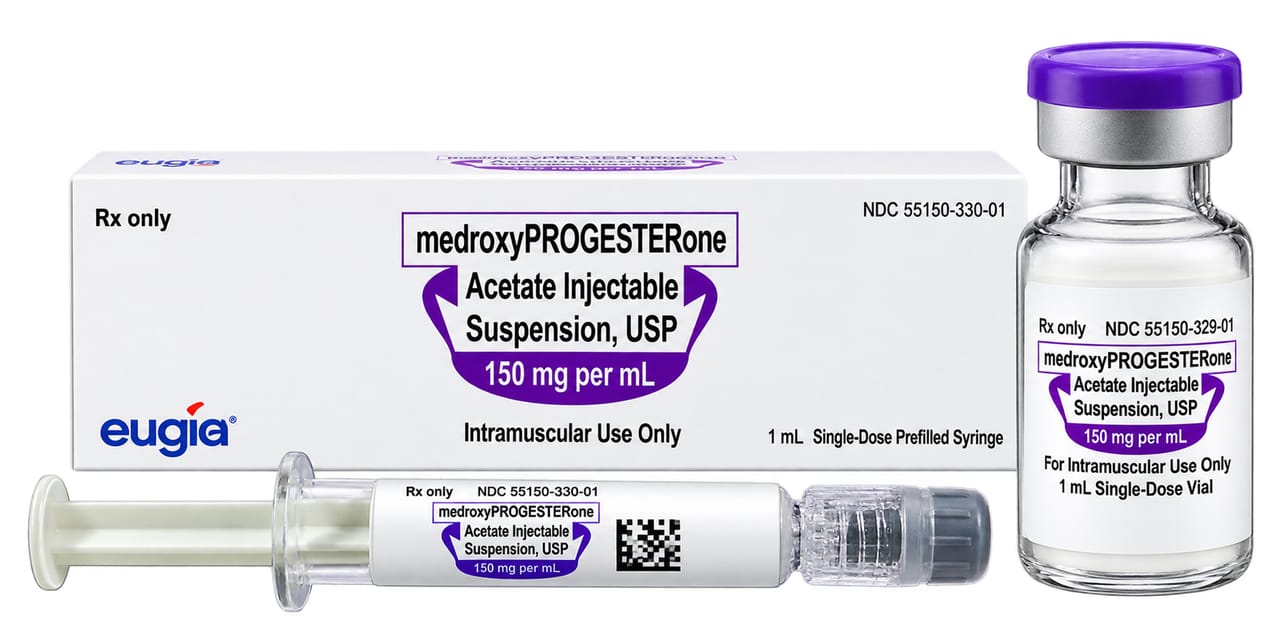
| Generic name | medroxyprogesterone acetate |
|---|---|
| Drug class | Progestin (progestogen) |
| Forms | Intramuscular suspension (injection into a muscle), Subcutaneous suspension (injection under the skin) |
Quick overview
Medroxyprogesterone Injection (medroxyprogesterone acetate) is a progestin medicine given as a shot by a healthcare provider, into a muscle or under the skin, that slowly releases into the body over several months. It is used to prevent pregnancy and to treat endometriosis. It works by stopping ovulation, thickening cervical mucus, and thinning the lining of the womb. It does not protect against HIV or other sexually transmitted infections.
What is Medroxyprogesterone Injection
Medroxyprogesterone injection is a man-made form of the hormone progesterone. It is given as a shot by a healthcare provider, either into a muscle or under the skin, and slowly releases into your body over several months.
Medroxyprogesterone Injection uses
- Preventing pregnancy (birth control)
- Treating endometriosis (a condition where tissue like the uterus lining grows in other areas of the body, causing pain and irregular periods)
Benefits of Medroxyprogesterone Injection
- Very effective at preventing pregnancy
- You do not have to remember to take a daily pill
- Can be used while breastfeeding
- Reduces pain from endometriosis and may help heal endometriosis lesions
How Medroxyprogesterone Injection works
The medicine stops your ovaries from releasing an egg each month. It also thickens the mucus at the entrance to the womb so sperm cannot easily get through, and it thins the lining of the womb so a fertilized egg is less likely to attach.
Medroxyprogesterone Injection dosage
This is given as an injection into a muscle or under the skin by a healthcare provider; it is not a medicine you take at home. The first injection is usually given during the first 5 days of a normal menstrual period, or at a specific time after childbirth depending on whether you plan to breastfeed. Injections are repeated on a regular schedule set by your doctor; it is important to keep every appointment on time for the medicine to keep working.
This medicine does not protect against HIV or other sexually transmitted infections, so you may still need to use condoms. If you are more than a few days late for your next injection, you may need to use a backup method of birth control such as condoms until the new injection takes effect.
| Age group | Dose |
|---|---|
| Under 18 Years | 150 mg injection every 3 months, only under medical supervision |
| Adults (18–64 Years) | 150 mg injection every 3 months (13 weeks) |
| Older Adults (65+ Years) | 150 mg injection every 3 months, if medically appropriate |
Available forms and strengths
- Intramuscular suspension (injection into a muscle)
- Subcutaneous suspension (injection under the skin)
Side effects of Medroxyprogesterone Injection
Common
- Headache
- Belly pain or bloating
- Nausea
- Weight gain
- Nervousness or irritability
- Dizziness or tiredness
- Decreased sex drive
- Swelling, pain, redness, or bruising at the injection site
- Changes in your periods such as irregular bleeding, spotting, heavier or lighter periods, or periods stopping completely
- Acne
- Back pain
- Hot flashes
- Breast pain or tenderness
- Mood changes or depression
Serious
- Bulging of the eyeballs, double vision, loss of vision, or sudden severe headache
- Warmth, swelling, or pain in an arm or leg (possible blood clot)
- Severe belly pain, especially on one side (possible ectopic pregnancy)
- Signs of a serious allergic reaction: rash, hives, itching, blistering skin, trouble breathing, or throat swelling
- Yellowing of the skin or eyes, dark urine, pale stools, loss of appetite, or extreme tiredness (possible liver problems)
- Seizures
- Swelling of the legs, feet, or ankles with weight gain
- Signs of a stroke: sudden numbness or weakness, trouble walking or speaking, confusion, severe headache
- Signs of a blood clot in the lung: chest pain, sudden cough, shortness of breath, coughing up blood
- Unusual or very heavy vaginal bleeding
- Broken bones related to bone loss
- A rare brain tumor called meningioma
Warnings and precautions
This medicine can cause a major loss of bone mineral density, which may increase the risk of weak, brittle bones (osteoporosis) and fractures. This bone loss may not fully reverse. Because of this, it generally should not be used for longer than 2 years unless no other birth control or treatment option works for you.
This medicine does not protect against HIV or other sexually transmitted infections. It can increase your risk of developing a blood clot that could travel to your lungs or brain.
If you are younger than 35 and started this medicine in the last 4 to 5 years, you may have a slightly increased risk of breast cancer. This medicine may cause meningioma, a type of brain tumor that grows from the tissue covering the brain and spinal cord.
After your last injection, it may take a long time before you are able to become pregnant again, sometimes up to a year or more.
You should not use this medicine if you have unexplained vaginal bleeding, a history of breast cancer, a hormone-sensitive tumor, blood clots, stroke, heart attack, or severe liver disease.
This medicine should not be used during pregnancy. It may harm an unborn baby. You should not receive your first injection unless there is no chance you are pregnant, and you should call your doctor right away if you become pregnant while using it.
You can use this medicine while breastfeeding as long as your baby is at least 6 weeks old when you get your first injection. Small amounts may pass into breast milk, but studies have not shown harm to breastfed babies.
This medicine can cause fluid retention, so it should be used with caution if you have kidney disease.
This medicine should not be used if you have severe liver disease. Tell your doctor if you have or have had liver problems, as they may need to monitor your liver function.
Drinking alcohol may increase the loss of bone density caused by this medicine. Talk to your doctor about whether this medicine is safe for you if you drink alcohol.
This medicine can cause dizziness or drowsiness. If you feel dizzy or tired, do not drive until you feel better.
Storage
Store this medication at room temperature, protect it from freezing and light, and keep it out of the reach of children. It should be shaken well just before using.
Do not dispose of medications in wastewater (e.g. down the sink or in the toilet) or in household garbage. Ask your pharmacist how to dispose of medications that are no longer needed or have expired.
Do not keep out-of-date or unwanted medicines. Take them to your local pharmacy which will dispose of them for you.
When to see a doctor
Get emergency help right away if you have signs of a severe allergic reaction, such as hives, trouble breathing, or swelling of your face, lips, tongue, or throat.
Call your doctor right away or get emergency help if you have severe pain in your lower belly, especially on one side, as this could be a sign of a pregnancy outside the womb (ectopic pregnancy).
Call your doctor right away if you have unusual or very heavy vaginal bleeding, seizures, vision loss or eye problems, or pain, swelling, redness or bleeding at the injection site.
Call your doctor right away if you have signs of a stroke, such as sudden numbness or weakness on one side of the body, severe headache, slurred speech, or problems with balance.
Call your doctor right away if you have signs of a blood clot, such as chest pain, sudden cough or shortness of breath, dizziness, coughing up blood, or pain, swelling, or warmth in one leg.
Call your doctor if you have signs of liver problems, such as loss of appetite, nausea, vomiting, stomach pain, tiredness, itching, dark urine, clay-colored stools, or yellowing of the skin or eyes.
Alternatives
- Contraceptive Implant
- Copper IUD
- Vaginal Ring
Watch the video
FAQs
How often is Medroxyprogesterone Injection given?
It is given as a 150 mg injection every 3 months (13 weeks) by a healthcare provider, into a muscle or under the skin.
Does Medroxyprogesterone Injection protect against STIs?
No, it does not protect against HIV or other sexually transmitted infections, so condoms may still be needed.
Can Medroxyprogesterone Injection be used while breastfeeding?
Yes, it can be used while breastfeeding as long as the baby is at least 6 weeks old when the first injection is given.
What are the serious side effects of Medroxyprogesterone Injection?
Serious side effects include blood clots, stroke, liver problems, seizures, severe allergic reactions, broken bones from bone loss, and a rare brain tumor called meningioma.
How long can you use Medroxyprogesterone Injection?
Because it can cause major bone density loss that may not fully reverse, it generally should not be used for longer than 2 years unless no other option works for you.
General information, not medical advice
Your prescriber and the leaflet in your pack know your situation. This page does not.
- Follow your prescriber and the leaflet
- Don't start, stop, or change a dose on your own
- Doses and warnings differ by country and product
Sources
- https://medlineplus.gov/druginfo/meds/a604039.html
- https://www.healthline.com/health/drugs/medroxyprogesterone-injectable-suspension#alternatives
- https://www.ncbi.nlm.nih.gov/books/NBK559192/
- https://patient.info (Medroxyprogesterone injection for contraception)
- https://www.goodrx.com (Medroxyprogesterone Provera)
- RxHealthMed / MediResource Medroxyprogesterone Acetate Injectable Suspension monograph
Video
Related medicines

Injectafer Injection: Uses, Dosage, Side Effects, Precautions and Alternates
Iron products
Injectafer (ferric carboxymaltose) treats iron deficiency anemia and heart failure-related iron deficiency via IV. Learn uses, dosage, side effects, and

Gliclazide Tablet: Uses, Dosage, Side Effects, Precautions and Alternates
Sulfonylurea (hypoglycemic/antidiabetic agent)
Gliclazide Tablet is a sulfonylurea for type 2 diabetes that boosts insulin release. Learn about dosage, side effects, warnings, and precautions.