
Safety
General information, not medical advice
Your prescriber and the leaflet in your pack know your situation. This page does not.
- Follow your prescriber and the leaflet
- Don't start, stop, or change a dose on your own
- Doses and warnings differ by country and product
Mefloquine Tablet: Uses, Dosage, Side Effects, Precautions and Alternates
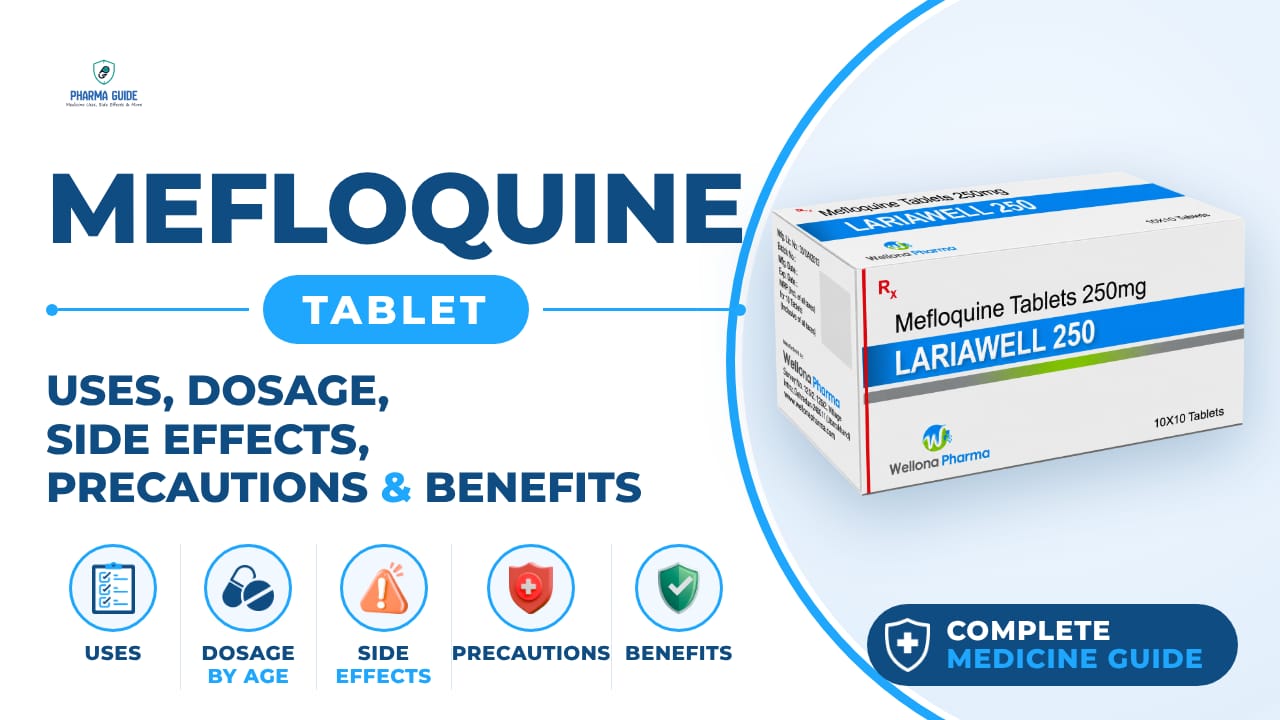
| Generic name | Mefloquine |
|---|---|
| Drug class | Antimalarial (methanolquinoline) |
| Forms | Tablet |
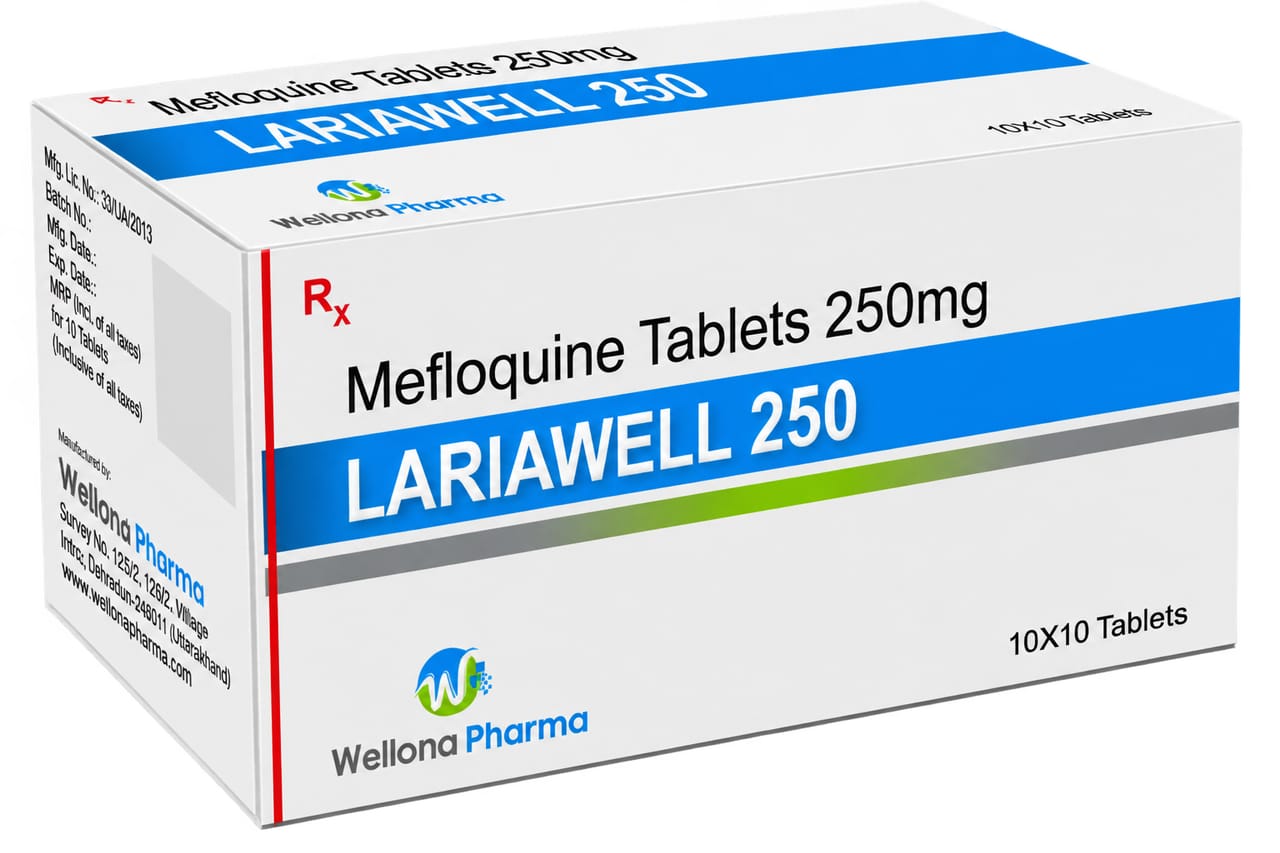
Quick overview
Mefloquine Tablet is a prescription antimalarial medicine (methanolquinoline class) used to treat and prevent malaria. It works by killing the malaria parasite during the red blood cell stage of its life cycle. It is taken by mouth and is used for both treatment of certain malaria infections and prevention when traveling to malaria-prone areas, including regions with chloroquine-resistant parasites.
What is Mefloquine Tablet
Mefloquine is a prescription medicine used to treat and prevent malaria, a red blood cell infection spread by mosquito bites. It comes as a tablet taken by mouth.
Mefloquine Tablet uses
- Treating mild to moderate malaria caused by Plasmodium falciparum (including strains resistant to chloroquine) or Plasmodium vivax
- Preventing malaria infection in areas where other medicines, such as chloroquine, may not work, including chloroquine-resistant P. falciparum and P. vivax
Benefits of Mefloquine Tablet
- Can treat malaria infections, including strains resistant to chloroquine
- Can help prevent malaria when traveling to areas where malaria is present
- Works against chloroquine-resistant forms of malaria parasites
How Mefloquine Tablet works
Mefloquine works by killing the malaria parasite while it is in the red blood cell stage of its life cycle, which prevents or treats the infection. It does not work against the form of the parasite that lives in the liver.
Mefloquine Tablet dosage
Take exactly as directed by your doctor; do not take more, more often, or for longer than prescribed. Take with a full glass (8 ounces) of water and with food, unless your doctor tells you otherwise. Tablets may be crushed and mixed with water, milk, or juice to make them easier to take, especially for children or others who cannot swallow tablets whole.
For preventing malaria, start taking the medicine one week before traveling to an area where malaria occurs (your doctor may have you start 2 to 3 weeks before travel in some cases). Continue taking the medicine while in the area where malaria is present and for 4 weeks after leaving the area. Take the weekly dose on the same day each week, preferably after your main meal, and do not skip doses. Keep taking the medicine for the full treatment time, even if you feel better after the first few doses.
Children may vomit after taking this medicine; contact the child's doctor if vomiting occurs, since more medicine may be needed. Check with your doctor immediately if fever or flu-like symptoms develop during travel or within 2 to 3 months after leaving a malaria area.
If you miss a dose, take it as soon as possible, but if it is almost time for the next dose, skip the missed dose and go back to your regular schedule; do not double doses.
| Age group | Dose |
|---|---|
| Under 6 months | Not established / specialist use |
| 6 months–11 years | 20–25 mg/kg once; maximum 1,250 mg |
| 12–17 years | 20–25 mg/kg once; maximum 1,250 mg |
| Adults ≥18 years | 1,250 mg once |
Available forms and strengths
- Tablet
Side effects of Mefloquine Tablet
Common
- Diarrhea
- Emotional problems
- Nausea
- Stomach pain
- Abnormal dreams
- Loss of appetite
- Skin rash
- Loss of hair
- Vomiting
Serious
- Irregular, pounding, slow, or fast heartbeat or pulse
- Dizziness, fainting, or feeling of constant movement of self or surroundings
- Convulsions (seizures)
- Confusion, anxiety, restlessness, irritability, or mental depression
- Hallucinations (seeing, hearing, or feeling things that are not there)
- Chest pain or discomfort
- Blistering, loosening, peeling, or redness of the skin
- Unusual bleeding or bruising
- Blurred or loss of vision, double vision, or other vision changes
- Ringing or buzzing in the ears or hearing problems
- Loss of balance or sensation of spinning
- Trouble sleeping that continues
- Severe or continuing headache
- Sudden loss of consciousness
- Troubled breathing
- Swelling of the ankles, feet, or lower legs
- Signs of serious allergic reaction such as rash, hives, hoarseness, trouble breathing or swallowing, or swelling of the hands, face, or mouth
Warnings and precautions
- Mefloquine should be used during pregnancy only if the benefits outweigh the risks to the unborn baby. Women who could become pregnant should use effective birth control while taking mefloquine and for 3 months after stopping it.
- Mefloquine passes into breast milk in small amounts. Because it could cause serious side effects in a nursing infant, you and your doctor should decide whether to stop the medicine or stop breastfeeding.
- In people with liver problems, the body may remove mefloquine more slowly, which can lead to higher levels of the medicine in the body. Use with caution, and liver function should be checked periodically during long-term use.
- Avoid alcohol while taking this medicine.
- Be careful when driving, operating machinery, or doing other activities that require alertness and coordination, because mefloquine can cause dizziness or loss of balance, even after you stop taking it.
- Mefloquine should not be used for malaria prevention in people with depression (current or recent history), generalized anxiety disorder, psychosis, schizophrenia or other major psychiatric disorders, or a history of seizures.
- Mefloquine can cause psychiatric symptoms ranging from anxiety, paranoia, and depression to hallucinations and psychotic behavior. These symptoms have sometimes continued long after stopping the medicine, and rare cases of suicidal thoughts and suicide have been reported.
- Do not take halofantrine with mefloquine, or after it, because this combination can cause a serious and potentially fatal heart rhythm problem.
- Taking mefloquine together with quinine or quinidine may cause heart rhythm abnormalities, and taking it with quinine or chloroquine may increase the risk of seizures.
- People with epilepsy may have an increased risk of seizures with mefloquine, so it should only be prescribed for treatment (not prevention) in these patients and only if there are strong medical reasons to use it.
- Mefloquine may affect the eyes and liver with long-term use, so periodic eye exams and liver function tests are recommended during prolonged treatment.
- Do not receive vaccinations without your doctor's approval while being treated with mefloquine; live vaccines should be completed at least 3 days before the first dose.
Storage
- Store the medicine in a closed container at room temperature, away from heat, moisture, and direct light.
- Keep from freezing.
- Keep out of the reach of children.
- Do not keep outdated medicine or medicine no longer needed.
- Ask your healthcare professional how you should dispose of any medicine you do not use.
- Store at 20°-25°C (68°-77°F); excursions permitted to 15°-30°C (59°-86°F).
When to see a doctor
- Get medical help right away if you notice changes in your heartbeat, such as dizziness, fainting, or a fast, pounding, or uneven heartbeat.
- Tell your doctor right away if you feel anxious, confused, depressed, restless, or have unusual thoughts or behavior after taking mefloquine.
- Check with your doctor right away if you have dizziness, a feeling of constant movement of yourself or your surroundings, seizures, or trouble sleeping, since these can continue for months or years after stopping the medicine.
- Check with your doctor right away if flu-like symptoms such as chills, fever, headache, or muscle pains return after treatment with this medicine.
- Call your doctor right away if you develop a rash, itching, hives, hoarseness, trouble breathing or swallowing, or swelling of the hands, face, or mouth, as these can be signs of a serious allergic reaction.
- Check with your doctor immediately if you notice blurred vision, difficulty reading, or any other change in vision during or after treatment.
- If you get flu-like symptoms such as chills, fever, muscle pains, or headaches after returning from a malaria area, get medical help right away and tell your prescriber you may have been exposed to malaria.
Alternatives
- Halofantrine (must not be taken with mefloquine or within 15 weeks after the last dose)
- Doxycycline
- Atovaquone/proguanil
- Hydroxychloroquine
- Chloroquine
- Primaquine
Watch the video
FAQs
How does Mefloquine Tablet work?
It works by killing the malaria parasite while it is in the red blood cell stage of its life cycle, which prevents or treats the infection. It does not work against the form of the parasite that lives in the liver.
When should I start taking Mefloquine for malaria prevention?
Start taking it one week before traveling to an area where malaria occurs (your doctor may have you start 2 to 3 weeks before travel in some cases). Continue taking it while in the area and for 4 weeks after leaving.
Who should not use Mefloquine for malaria prevention?
It should not be used for malaria prevention in people with depression (current or recent history), generalized anxiety disorder, psychosis, schizophrenia or other major psychiatric disorders, or a history of seizures.
What are serious side effects of Mefloquine Tablet?
Serious side effects include irregular or fast heartbeat, dizziness or fainting, seizures, confusion or hallucinations, chest pain, vision changes, hearing problems, and signs of serious allergic reaction.
Can I drink alcohol while taking Mefloquine Tablet?
No, you should avoid alcohol while taking this medicine.
General information, not medical advice
Your prescriber and the leaflet in your pack know your situation. This page does not.
- Follow your prescriber and the leaflet
- Don't start, stop, or change a dose on your own
- Doses and warnings differ by country and product
Sources
Video
Related medicines

Injectafer Injection: Uses, Dosage, Side Effects, Precautions and Alternates
Iron products
Injectafer (ferric carboxymaltose) treats iron deficiency anemia and heart failure-related iron deficiency via IV. Learn uses, dosage, side effects, and

Gliclazide Tablet: Uses, Dosage, Side Effects, Precautions and Alternates
Sulfonylurea (hypoglycemic/antidiabetic agent)
Gliclazide Tablet is a sulfonylurea for type 2 diabetes that boosts insulin release. Learn about dosage, side effects, warnings, and precautions.