
Safety
General information, not medical advice
Your prescriber and the leaflet in your pack know your situation. This page does not.
- Follow your prescriber and the leaflet
- Don't start, stop, or change a dose on your own
- Doses and warnings differ by country and product
Mekinist Tablet: Uses, Dosage, Side Effects, Precautions and Alternates
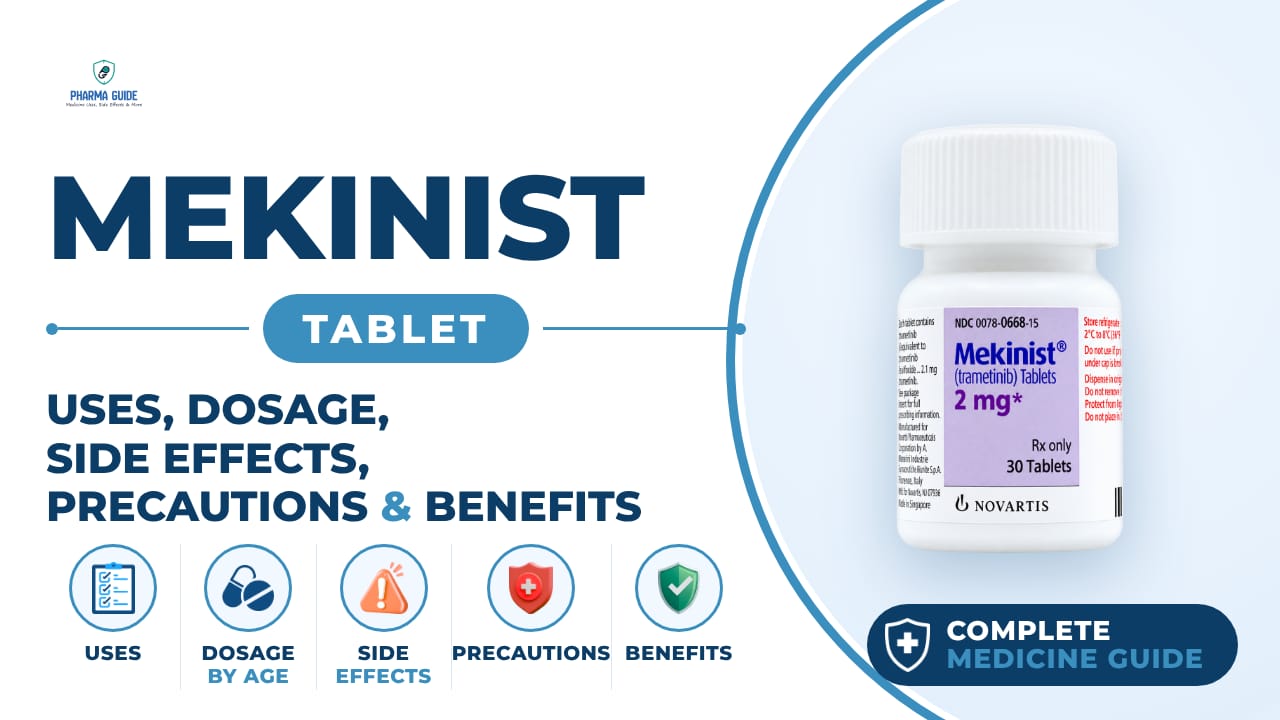
| Generic name | trametinib |
|---|---|
| Drug class | kinase inhibitor (MEK inhibitor) |
| Forms | Tablets (0.5 mg, 1 mg, and 2 mg strengths), Powder for oral solution |
Quick overview
Mekinist Tablet contains trametinib, a kinase inhibitor known as a MEK inhibitor. It is a prescription cancer medicine used alone or together with dabrafenib to treat certain cancers with a specific BRAF gene mutation. It works by blocking a protein made by the changed BRAF gene that helps cancer cells grow, slowing or stopping their growth.
What is Mekinist Tablet
Mekinist is a prescription cancer medicine that contains the active ingredient trametinib. It is used alone or together with another medicine called dabrafenib to treat certain cancers that have a specific change (mutation) in a gene called BRAF.
Mekinist Tablet uses
- Treats a type of skin cancer called melanoma that has spread to other parts of the body or cannot be removed by surgery, in people with a BRAF V600E or V600K gene mutation
- Used with dabrafenib to help prevent melanoma from coming back after it has been completely removed by surgery
- Used with dabrafenib to treat a type of lung cancer (non-small cell lung cancer) that has spread and has a BRAF V600E mutation
- Used with dabrafenib to treat anaplastic thyroid cancer that has spread and has no other good treatment options
- Used with dabrafenib to treat certain other solid tumors with a BRAF V600E mutation that have progressed after other treatment
- Not used alone in people who have already received a BRAF inhibitor medicine
Benefits of Mekinist Tablet
- Can shrink tumors and slow down disease progression in BRAF-mutated melanoma
- When combined with dabrafenib, improved how long patients lived without their cancer getting worse, and improved overall survival in clinical trials
- Helped reduce the chance of melanoma coming back after surgery when used with dabrafenib
How Mekinist Tablet works
Mekinist blocks a protein made by the changed BRAF gene that helps cancer cells grow. By blocking this protein, the medicine slows down or stops the growth of cancer cells.
Mekinist Tablet dosage
Take this medicine exactly as your healthcare provider tells you to. Take it once a day at about the same time each day, roughly 24 hours apart. Take it on an empty stomach — at least one hour before or two hours after a meal — because food can change how it is absorbed. Swallow the tablet whole with a full glass of water.
If taking it with dabrafenib, take your dose at the same time as either your morning or evening dabrafenib dose. Do not take more than one dose a day. If you miss a dose, take it as soon as you remember, unless it is within 12 hours of your next dose — in that case skip the missed dose and continue your normal schedule. Continue taking this medicine for as long as your healthcare provider recommends. Children should be sitting upright when given an oral solution dose.
| Age group | Dose |
|---|---|
| Under 1 year | Safety and effectiveness have not been established |
| 18–64 years | 2 mg once daily |
| 65–74 years | Usually 2 mg once daily |
Available forms and strengths
- Tablets (0.5 mg, 1 mg, and 2 mg strengths)
- Powder for oral solution
Side effects of Mekinist Tablet
Common
- Diarrhea
- Nausea and vomiting
- Constipation
- Decreased appetite
- Stomach ache
- Dry mouth
- Mouth sores
- Chills
- Tiredness or feeling weak
- Headache
- Dizziness
- Rash, acne-like rash, dry or itchy skin
- Peeling on palms, fingers, and soles of feet
- Night sweats
- Joint pain, muscle pain, muscle spasms
- Cough
- Swelling of the face, hands, or feet
- High blood pressure
- Nose bleeds
- Urinary tract infections
- Nail problems
Serious
- Serious bleeding problems, including in the brain, stomach, or bowel
- Blood clots in the arms or legs that can travel to the lungs
- Heart problems, including heart failure and decreased heart pumping ability
- Severe eye problems that can lead to blindness, including retinal vein occlusion
- Lung problems such as interstitial lung disease or pneumonitis
- Serious fever reactions, especially when combined with dabrafenib
- Serious skin reactions, including Stevens-Johnson syndrome and DRESS
- New skin cancers and other new cancers when combined with dabrafenib
- High blood sugar (hyperglycemia)
- Kidney problems or kidney failure
- Liver problems, including hepatitis and liver failure
- Low white blood cell counts, raising infection risk
- Muscle breakdown (rhabdomyolysis)
- Colitis and holes (perforation) in the stomach or intestines
- A rare blood disorder called hemophagocytic lymphohistiocytosis (HLH)
- Tumor lysis syndrome (a condition from fast breakdown of cancer cells)
Warnings and precautions
- This medicine can cause new skin cancers and other new cancers when used with dabrafenib. Your skin should be checked regularly before, during, and for several months after treatment.
- Serious bleeding can occur, including in the brain or stomach, and can be life-threatening.
- Blood clots can form in the legs or arms and travel to the lungs, which can be life-threatening.
- This medicine can weaken the heart's pumping ability. Your heart function will be checked before and during treatment.
- Eye problems, including a condition called retinal vein occlusion, can occur and may lead to blindness.
- Lung problems such as interstitial lung disease or pneumonitis can occur and in some cases can be fatal.
- Serious fever reactions can occur, especially when this medicine is combined with dabrafenib, and may require stopping treatment.
- Serious skin reactions can occur, some of which may require hospital treatment.
- This medicine can harm an unborn baby. Women who can become pregnant should use effective birth control during treatment and for some time after stopping. Tell your doctor right away if you become pregnant.
- Breastfeeding is not recommended while taking this medicine because it is not known if it passes into breast milk and could harm a nursing baby.
- Tell your doctor if you have kidney problems before starting this medicine.
- A recommended dose has not been established for people with moderate or severe liver problems; talk to your doctor about your liver health before starting treatment.
- Discuss alcohol use with the oncology team, particularly if liver tests are abnormal.
- This medicine can cause dizziness, tiredness, and vision problems, which could affect your ability to drive or do tasks that need clear vision and alertness.
Storage
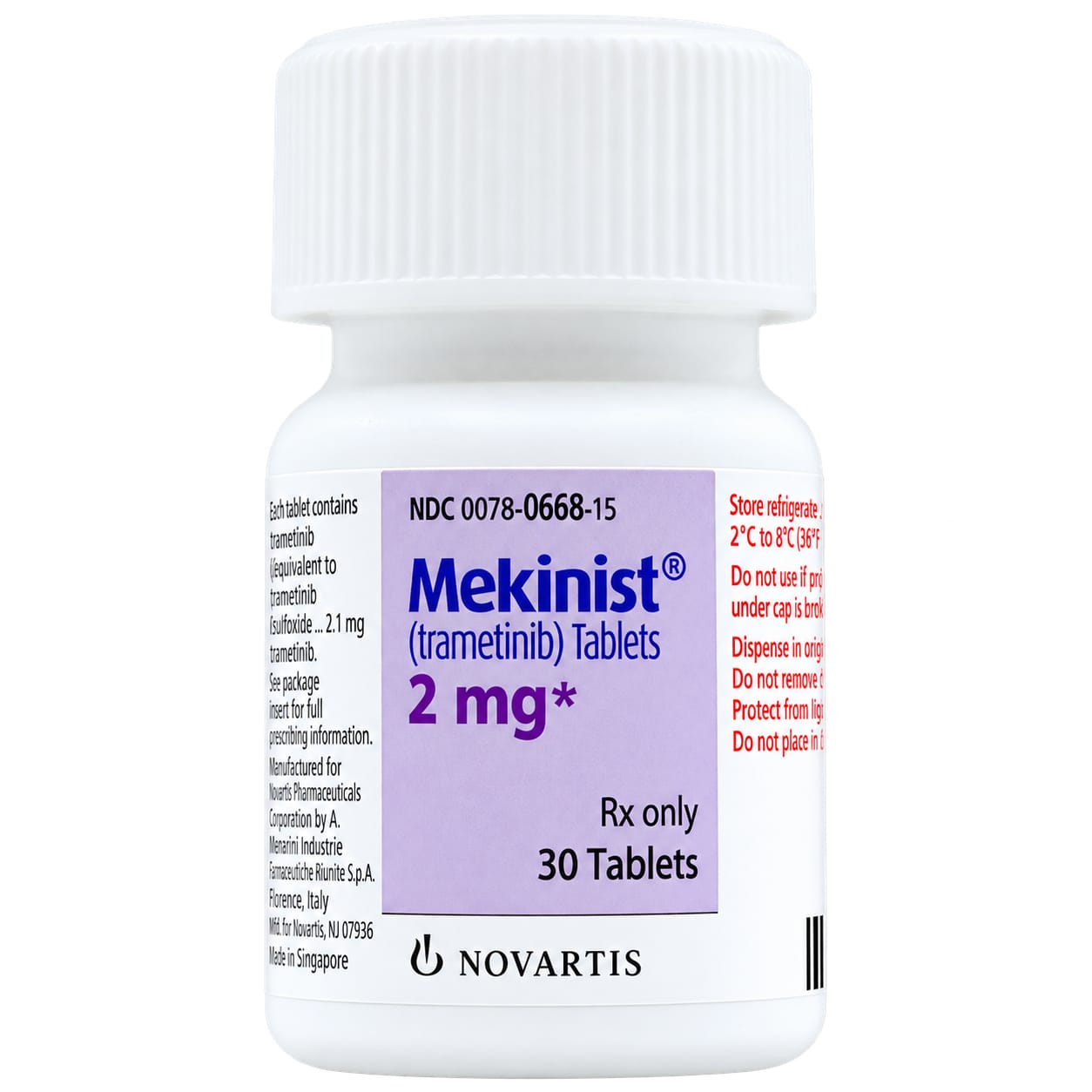
- Store refrigerated between 36°F to 46°F (2°C to 8°C)
- Do not freeze
- Keep the medicine dry and away from moisture and light
- Do not remove the desiccant packet from the bottle
- Keep the medicine in its original bottle; do not place tablets in a pill box
- Safely throw away medicine that is out of date or no longer needed
- Keep out of the reach and sight of children
When to see a doctor
- Get medical help right away if you notice signs of bleeding such as headaches, dizziness, weakness, coughing up blood, vomiting blood or material that looks like coffee grounds, or red or black tarry stools.
- Get medical help right away for signs of a blood clot, such as chest pain, sudden shortness of breath, leg pain or swelling, or a cool or pale arm or leg.
- Call your healthcare provider right away if you notice changes in vision, such as blurred vision, loss of vision, seeing colored dots, or a halo around objects.
- Contact your healthcare provider right away if you develop a fever of 100.4°F (38°C) or higher, especially if you are taking this medicine with dabrafenib.
- Tell your healthcare provider right away if you develop signs of a heart problem, such as a pounding or racing heartbeat, shortness of breath, swelling in the ankles or feet, or feeling lightheaded.
- Seek medical attention for any new or worsening lung symptoms, such as shortness of breath or cough.
- Tell your healthcare provider right away if you develop a severe skin reaction, such as blistering or peeling skin, mouth sores, or high fever with flu-like symptoms.
Alternatives
- Vemurafenib
- Encorafenib
- Binimetinib
Watch the video
FAQs
What is Mekinist Tablet used for?
Mekinist treats melanoma that has spread or cannot be removed by surgery in people with a BRAF V600E or V600K mutation. Combined with dabrafenib, it also helps prevent melanoma recurrence after surgery, treats BRAF V600E-mutated non-small cell lung cancer, anaplastic thyroid cancer, and certain other solid tumors with a BRAF V600E mutation.
How should I take Mekinist Tablet?
Take it once a day at the same time, about 24 hours apart, on an empty stomach—at least one hour before or two hours after a meal. Swallow the tablet whole with a full glass of water. If combined with dabrafenib, take it at the same time as your morning or evening dabrafenib dose.
What should I do if I miss a dose of Mekinist Tablet?
If you miss a dose, take it as soon as you remember, unless it is within 12 hours of your next dose. In that case, skip the missed dose and continue your normal schedule. Do not take more than one dose a day.
What are the serious side effects of Mekinist Tablet?
Serious side effects include bleeding problems, blood clots, heart problems, severe eye problems like retinal vein occlusion, lung problems, serious fever reactions, severe skin reactions, new cancers (when combined with dabrafenib), high blood sugar, kidney or liver problems, and low white blood cell counts.
How should Mekinist Tablet be stored?
Store it refrigerated between 36°F to 46°F (2°C to 8°C), do not freeze, and keep it dry and away from moisture and light. Keep it in its original bottle with the desiccant packet, not in a pill box.
General information, not medical advice
Your prescriber and the leaflet in your pack know your situation. This page does not.
- Follow your prescriber and the leaflet
- Don't start, stop, or change a dose on your own
- Doses and warnings differ by country and product
Sources
Video
Related medicines

Injectafer Injection: Uses, Dosage, Side Effects, Precautions and Alternates
Iron products
Injectafer (ferric carboxymaltose) treats iron deficiency anemia and heart failure-related iron deficiency via IV. Learn uses, dosage, side effects, and

Gliclazide Tablet: Uses, Dosage, Side Effects, Precautions and Alternates
Sulfonylurea (hypoglycemic/antidiabetic agent)
Gliclazide Tablet is a sulfonylurea for type 2 diabetes that boosts insulin release. Learn about dosage, side effects, warnings, and precautions.