
Safety
General information, not medical advice
Your prescriber and the leaflet in your pack know your situation. This page does not.
- Follow your prescriber and the leaflet
- Don't start, stop, or change a dose on your own
- Doses and warnings differ by country and product
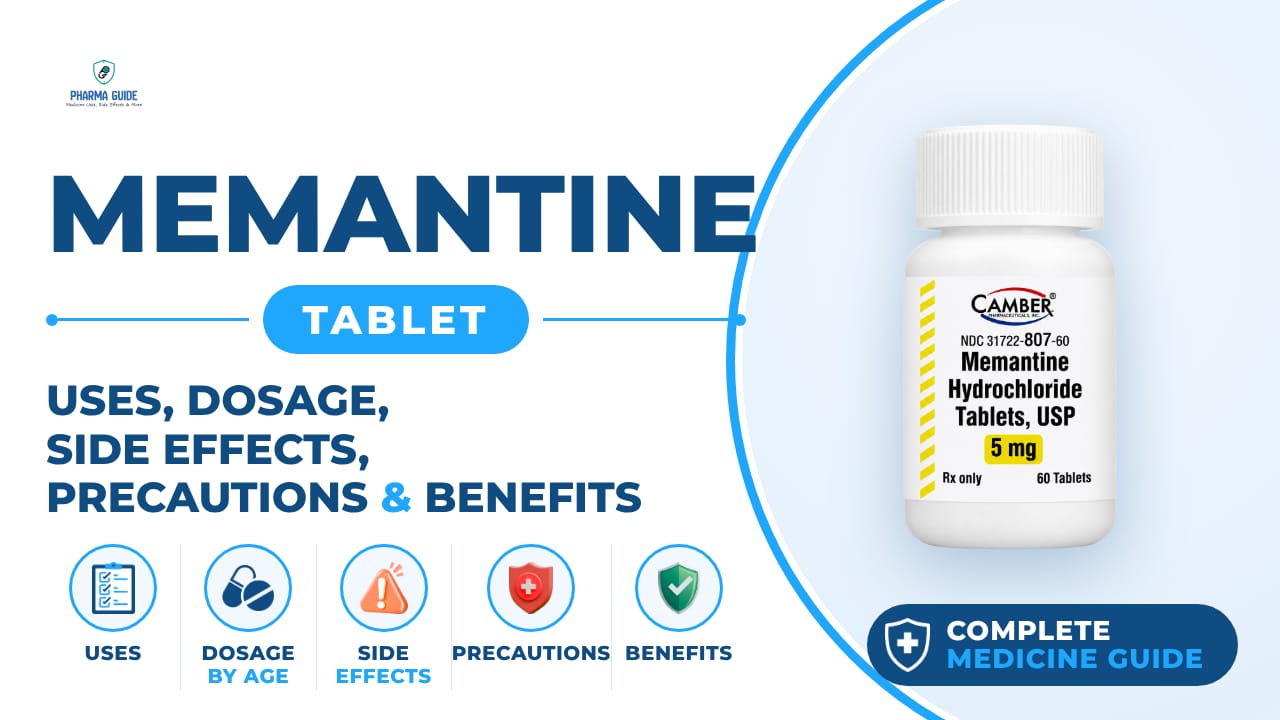
Memantine Tablet: Uses, Dosage, Side Effects, Precautions and Alternates
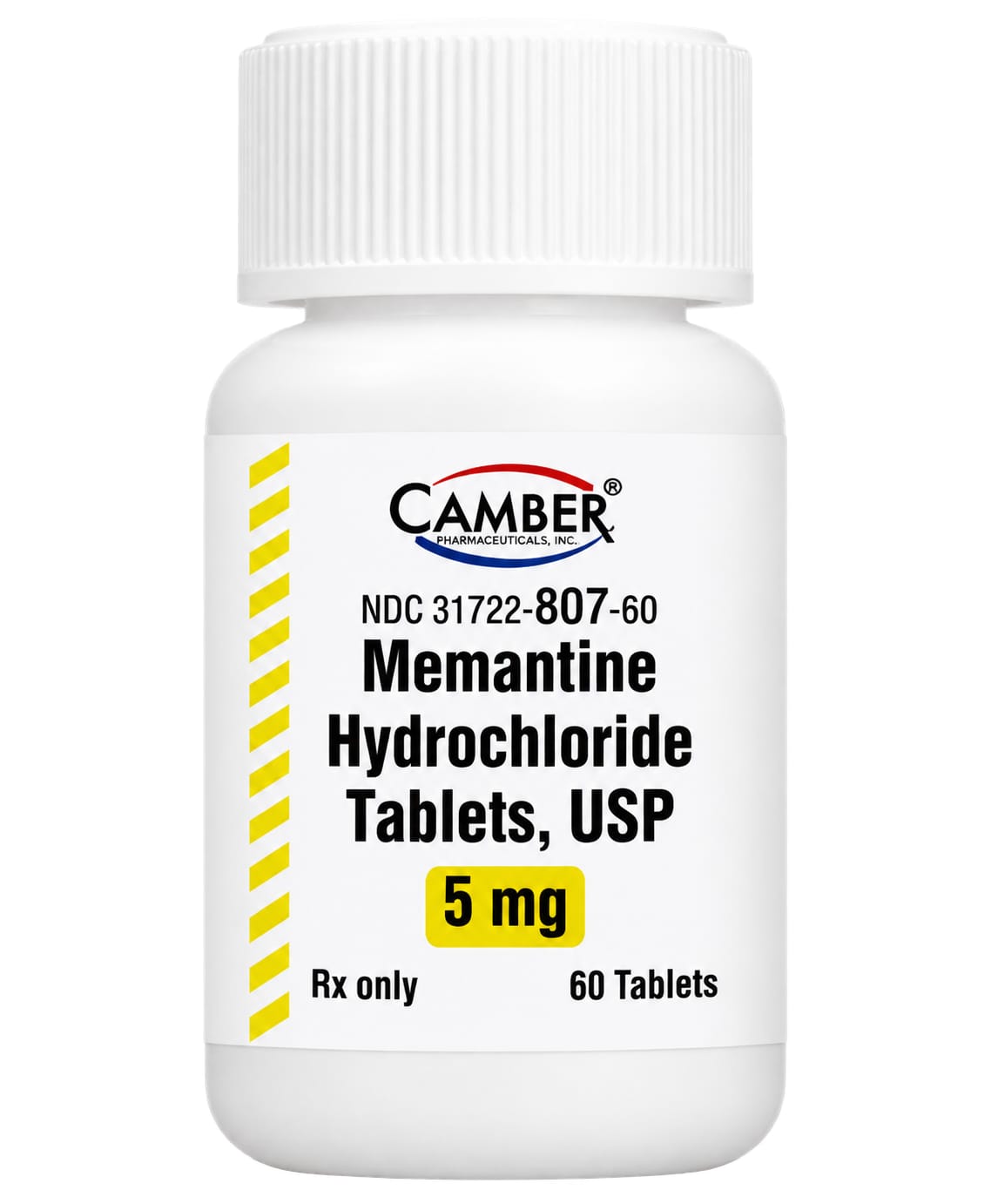
| Generic name | Memantine hydrochloride |
|---|---|
| Drug class | NMDA receptor antagonist |
| Forms | Tablets, Liquid (oral solution), Orodispersible tablets (dissolve on the tongue) |
Quick overview
Memantine Tablet (memantine hydrochloride) is an NMDA receptor antagonist used to treat moderate to severe Alzheimer's disease. It does not cure the condition but can help improve symptoms like memory loss and thinking problems and slow down how quickly the disease gets worse. It is taken once daily, with dosing adjusted gradually based on response, age, and kidney function.
What is Memantine Tablet
Memantine is a prescription medicine used to treat moderate to severe Alzheimer's disease. It does not cure the condition, but it can help improve symptoms like memory loss and thinking problems and slow down how quickly the disease gets worse.
Memantine Tablet uses
- Moderate to severe Alzheimer's disease
Benefits of Memantine Tablet
- Improves symptoms of Alzheimer's disease such as memory and thinking problems
- Delays the progression of Alzheimer's disease symptoms
- Can help with day-to-day function and cognitive performance compared with placebo in clinical studies
How Memantine Tablet works
In Alzheimer's disease, the brain has too much of a chemical called glutamate, which can damage brain cells. Memantine blocks the action of glutamate, which helps protect brain cells and improves the signals involved in memory and learning.
Memantine Tablet dosage
Memantine can be taken with or without food. Take it once a day at the same time each day for the best effect. Swallow tablets whole with a drink of water. If you have orodispersible tablets, let them dissolve on your tongue before swallowing, with or without water. Take liquid forms with some water. This medicine is not recommended for children and adolescents under 18 years old.
If you miss a dose, skip it and take your next dose at the usual time; do not take a double dose to make up for a missed one. If you miss several doses in a row, talk to your doctor before restarting treatment.
| Age group | Dose |
|---|---|
| Under 18 Years | Not recommended unless prescribed by a specialist |
| Adults (18–64 Years) | Initial dose: 5 mg once daily; gradually increased up to 10 mg twice daily |
| Older Adults (65+ years) | Initial dose: 5 mg once daily; adjusted based on response and kidney function |
Available forms and strengths
- Tablets
- Liquid (oral solution)
- Orodispersible tablets (dissolve on the tongue)
Side effects of Memantine Tablet
Common
- Headache
- Dizziness
- Sleepiness (drowsiness)
- Balance problems
- Shortness of breath
- High blood pressure
- Constipation
- Drug hypersensitivity (allergic-type reaction)
- Confusion
- Tiredness
- Nausea and vomiting
- Body pain
- Tingling of hands or feet
- Rapid weight gain or loss
- Irregular heartbeat
Serious
- Blood clots that can cause a heart attack or stroke
- Inflammation of the liver (hepatitis) causing tiredness, itchy skin, and yellowing of the eyes
- Inflammation of the pancreas (pancreatitis) causing stomach pain, fever, and vomiting
- Severe allergic reaction (anaphylaxis) with swollen throat or tongue, itchy rash, and difficulty breathing
- Seizures
- Hallucinations
- Feeling very low mood or having suicidal thoughts
- Heart failure
- Congestive heart failure
Warnings and precautions
- People with a history of seizures, a recent heart attack, heart failure, or uncontrolled high blood pressure need careful monitoring while on this medicine.
- This medicine should be used cautiously in people with urinary or bladder conditions because of a higher risk of serious side effects.
- Taking other NMDA-blocking medicines like amantadine, ketamine, or dextromethorphan together with this medicine should be avoided.
- Do not take this medicine if you are allergic to memantine or any of its ingredients.
- Tell your doctor if you plan to change your diet significantly, such as switching to a strict vegetarian diet, or if you have conditions that raise your urine's acid-base balance, since this can affect how the medicine is removed from your body.
- This medicine is generally not recommended during pregnancy because not enough is known about its safety. It should only be used if the doctor decides the benefits outweigh the risks.
- Women taking this medicine should not breastfeed unless their doctor says it's necessary.
- People with kidney problems need close monitoring, and the dose may need to be lowered, especially with severe kidney impairment.
- This medicine should be used carefully in people with severe liver problems.
- It isn't clearly known how this medicine interacts with alcohol, so it's best to check with your doctor before drinking.
- This medicine can affect your reactions, so driving or using machinery may not be safe. If you feel dizzy or sleepy, avoid driving, cycling, or using machines until these effects go away.
Storage
- Keep this medicine out of the sight and reach of children
- Do not use this medicine after the expiry date stated on the carton and blister after EXP
- This medicinal product does not require any special storage conditions
- Do not throw away any medicines via wastewater or household waste; ask your pharmacist how to dispose of medicines you no longer use
- Store at room temperature between 20° to 25°C (68° to 77°F); brief excursions to 15° to 30°C (59° to 86°F) are permitted
When to see a doctor
- Get emergency help right away if you think you might be having a severe allergic reaction, heart attack, or stroke.
- Seek medical help urgently if you take much more than your prescribed dose.
- Contact your doctor if you have any troubling side effects that don't go away, including shortness of breath.
- Get medical help if you or someone taking this medicine has thoughts of self-harm or feels very low.
Alternatives
- Donepezil
- Galantamine
- Razadyne
Watch the video
FAQs
What is Memantine Tablet used for?
Memantine Tablet is used to treat moderate to severe Alzheimer's disease. It does not cure the condition but can help improve symptoms like memory loss and thinking problems and slow down how quickly the disease gets worse.
How does Memantine Tablet work?
In Alzheimer's disease, the brain has too much glutamate, which can damage brain cells. Memantine blocks the action of glutamate, helping protect brain cells and improving the signals involved in memory and learning.
What is the dosage of Memantine Tablet for adults?
For adults aged 18 to 64, the initial dose is 5 mg once daily, gradually increased up to 10 mg twice daily. It should be taken once a day at the same time each day for the best effect.
What are the common side effects of Memantine Tablet?
Common side effects include headache, dizziness, sleepiness, balance problems, shortness of breath, high blood pressure, constipation, confusion, tiredness, nausea and vomiting, body pain, tingling of hands or feet, and irregular heartbeat.
What happens if I miss a dose of Memantine Tablet?
If you miss a dose, skip it and take your next dose at the usual time; do not take a double dose to make up for a missed one. If you miss several doses in a row, talk to your doctor before restarting treatment.
General information, not medical advice
Your prescriber and the leaflet in your pack know your situation. This page does not.
- Follow your prescriber and the leaflet
- Don't start, stop, or change a dose on your own
- Doses and warnings differ by country and product
Sources
- Practo Medicine Info: Memantine (https://www.practo.com/medicine-info/memantine-770-api)
- NHS Medicines A to Z: Memantine (http://www.nhs.uk/medicines/memantine/)
- DailyMed: Memantine Hydrochloride Tablet Label (http://dailymed.nlm.nih.gov/dailymed/lookup.cfm?setid=6e0ade9e-b721-4701-bcb7-de464e19e707)
Video
Related medicines

Injectafer Injection: Uses, Dosage, Side Effects, Precautions and Alternates
Iron products
Injectafer (ferric carboxymaltose) treats iron deficiency anemia and heart failure-related iron deficiency via IV. Learn uses, dosage, side effects, and

Gliclazide Tablet: Uses, Dosage, Side Effects, Precautions and Alternates
Sulfonylurea (hypoglycemic/antidiabetic agent)
Gliclazide Tablet is a sulfonylurea for type 2 diabetes that boosts insulin release. Learn about dosage, side effects, warnings, and precautions.