
Safety
General information, not medical advice
Your prescriber and the leaflet in your pack know your situation. This page does not.
- Follow your prescriber and the leaflet
- Don't start, stop, or change a dose on your own
- Doses and warnings differ by country and product
Menactra Injection: Uses, Dosage, Side Effects, Precautions and Alternates
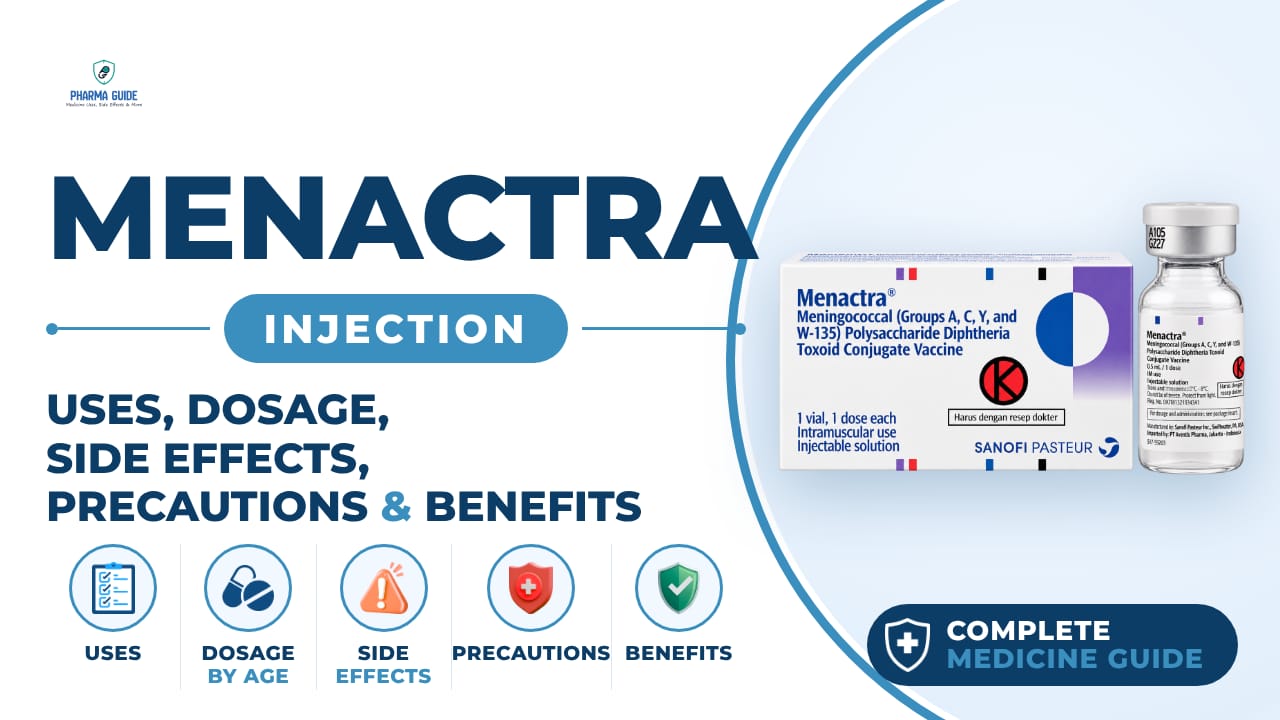
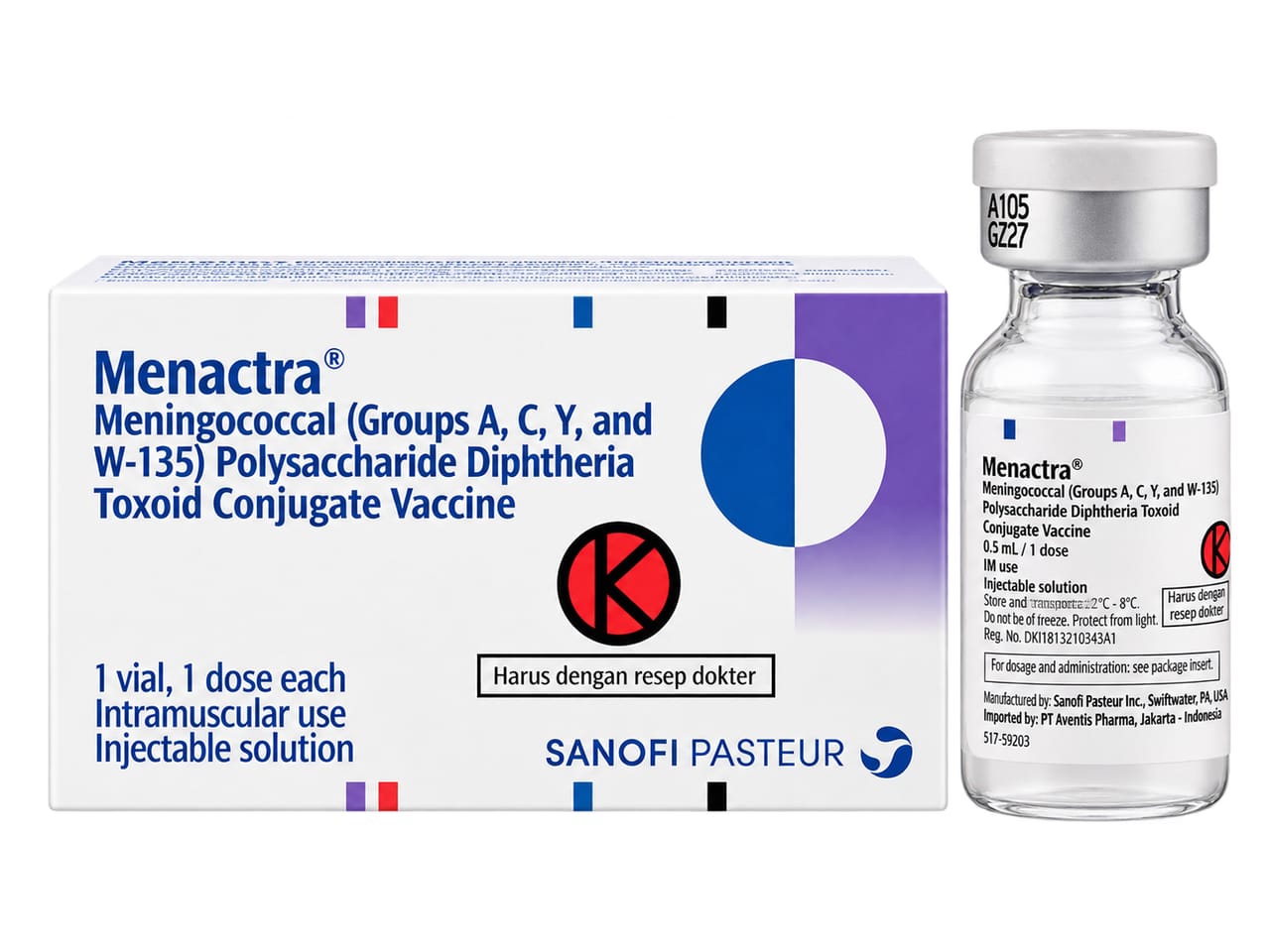
| Generic name | Meningococcal (Groups A, C, Y and W-135) Polysaccharide Diphtheria Toxoid Conjugate Vaccine |
|---|---|
| Drug class | Bacterial vaccine (meningococcal conjugate vaccine) |
| Forms | Solution for injection (single-dose vials) |
Quick overview
Menactra is a meningococcal conjugate vaccine given by injection into a muscle to help protect people ages 9 months through 55 years against invasive meningococcal disease caused by groups A, C, Y, and W-135. It works by prompting the body to make antibodies against these bacteria. It does not protect against serogroup B disease and is not used to treat an existing infection.
What is Menactra Injection
Menactra is a vaccine (generic name: Meningococcal Groups A, C, Y and W-135 Polysaccharide Diphtheria Toxoid Conjugate Vaccine), classified as a bacterial vaccine. It is given by injection into a muscle to help protect people ages 9 months through 55 years against invasive meningococcal disease caused by four types of meningococcal bacteria (groups A, C, Y and W-135).
Menactra Injection uses
- Prevents invasive meningococcal disease caused by Neisseria meningitidis serogroups A, C, Y and W-135
- Used for people 9 months through 55 years of age
- Does not protect against meningococcal serogroup B disease
- Not used to treat an active meningococcal infection
Benefits of Menactra Injection
- Helps prevent meningococcal disease
- Protects against serogroups A, C, W, and Y
- Helps prevent meningococcal meningitis
- Helps prevent serious bloodstream infections
- Provides protection for people at increased meningococcal risk
How Menactra Injection works
After you get the shot, your body starts making antibodies against the meningococcal bacteria. If you are later exposed to the bacteria, your body is usually ready to fight it off. It can take several days to a few weeks after vaccination to build up enough protection.
Menactra Injection dosage
Menactra is given as a shot into a muscle, usually in the thigh for infants or the upper arm (deltoid) for older children, adolescents, and adults. Infants and toddlers 9 through 23 months of age receive two separate doses given at least 3 months apart. People 2 through 55 years of age usually receive a single dose. A single booster dose may be given to people 15 through 55 years old who remain at risk, if at least 4 years have passed since the last dose.
The vaccine should not be injected into a vein or under the skin, and should not be given in the buttocks. It should not be mixed with other vaccines or medicines in the same syringe; if other vaccines are given at the same time, they should be given with separate syringes at separate injection sites. Vaccination should be delayed if you or your child has a high fever or significant acute illness.
| Age group | Dose |
|---|---|
| 9–23 months | 0.5 mL IM, 2 doses given 3 months apart |
| 2–14 years | 0.5 mL IM, single primary dose |
| 15–17 years | 0.5 mL IM, single primary dose; booster may be indicated for continued risk |
| 18–55 years | 0.5 mL IM, single primary dose |
Available forms and strengths
- Solution for injection (single-dose vials)
Side effects of Menactra Injection
Common
- Pain, redness, or swelling at the injection site
- Tenderness or a hard lump where the shot was given
- Headache
- Fatigue or tiredness
- Drowsiness
- Fever
- Irritability (especially in infants)
- Loss of appetite
- Nausea, vomiting, or diarrhea
- Joint or muscle pain
- Abnormal or excessive crying (in infants)
Serious
- Severe allergic reaction (hives, dizziness, weakness, fast heartbeat, difficulty breathing, swelling of face, lips, tongue, or throat)
- Fainting (syncope) shortly after vaccination
- Guillain-Barré syndrome (severe weakness or unusual feeling in arms and legs, which may occur 2 to 4 weeks after vaccination)
- Seizures or seizure-like reactions
- Large injection site reactions including extensive swelling of the injected limb
Warnings and precautions
- People with a bleeding disorder or who take blood-thinning medicines should tell the healthcare provider before vaccination, because the injection must be given carefully to prevent excessive bleeding.
- People with a weakened immune system may get less protection from the vaccine than people with healthy immune systems. If possible, vaccination should be postponed until after immune-suppressing treatment is finished.
- People previously diagnosed with Guillain-Barré syndrome (GBS) may have a higher risk of getting GBS again after this vaccine, so the decision to vaccinate should weigh the benefits and risks.
- Fainting can happen after getting this vaccine, so steps should be taken to prevent injury from falling.
- If spleen removal surgery is planned, the vaccine should ideally be given 10 to 14 days before the operation.
- Vaccination should be delayed if a person has a high fever or serious illness at the time.
- This vaccine should not be given to anyone who has had a severe allergic reaction to this vaccine, its container, or a previous vaccine with similar ingredients.
- Menactra should only be given to a pregnant woman if it is clearly needed, after weighing the risks and benefits. Tell the person giving the injection if you are pregnant.
- It is not known whether Menactra affects breastfed infants, so the decision to vaccinate should weigh the benefits of breastfeeding against the mother's need for the vaccine.
- No routine dose adjustment is required solely for kidney impairment. No routine dose adjustment is required solely for liver impairment.
- There is no established direct interaction with alcohol, though alcohol is best avoided if feeling unwell after vaccination.
- This vaccine generally does not impair driving; avoid driving if dizziness or weakness occurs after vaccination.
Storage
- Store the vaccine in a refrigerator at 2° to 8°C (35° to 46°F)
- Do not freeze
- Throw away the product if it has been exposed to freezing
- Do not use after the expiration date
- Keep out of reach of children
When to see a doctor
- Get emergency medical help right away for signs of a severe allergic reaction, such as hives, dizziness, weakness, fast heartbeat, trouble breathing, or swelling of the face, lips, tongue, or throat.
- Call your doctor right away if you notice severe weakness or unusual feelings in your arms and legs, which may appear 2 to 4 weeks after the shot, as this could be a sign of Guillain-Barré syndrome.
- Call your doctor if you develop a high fever or unusual behavior after vaccination.
- Tell your doctor, nurse, or pharmacist as soon as possible if you do not feel well after getting this vaccine.
Alternatives
- Menveo
- MenQuadfi
- Penbraya
Watch the video
FAQs
What is Menactra Injection used for?
Menactra helps prevent invasive meningococcal disease caused by Neisseria meningitidis serogroups A, C, Y, and W-135 in people ages 9 months through 55 years. It does not protect against serogroup B disease and is not used to treat an active infection.
How is Menactra given?
Menactra is given as a shot into a muscle, usually in the thigh for infants or the upper arm for older children, adolescents, and adults. Infants 9 through 23 months receive two doses at least 3 months apart, while people 2 through 55 years usually receive a single dose.
Is a booster dose of Menactra needed?
A single booster dose may be given to people 15 through 55 years old who remain at risk, if at least 4 years have passed since the last dose.
What are the common side effects of Menactra?
Common side effects include pain, redness, or swelling at the injection site, headache, fatigue, drowsiness, fever, irritability, loss of appetite, nausea, vomiting, diarrhea, and joint or muscle pain.
Who should not get the Menactra vaccine?
Menactra should not be given to anyone who has had a severe allergic reaction to this vaccine, its container, or a previous vaccine with similar ingredients. Vaccination should also be delayed if a person has a high fever or serious illness at the time.
General information, not medical advice
Your prescriber and the leaflet in your pack know your situation. This page does not.
- Follow your prescriber and the leaflet
- Don't start, stop, or change a dose on your own
- Doses and warnings differ by country and product
Sources
Video
Related medicines

Injectafer Injection: Uses, Dosage, Side Effects, Precautions and Alternates
Iron products
Injectafer (ferric carboxymaltose) treats iron deficiency anemia and heart failure-related iron deficiency via IV. Learn uses, dosage, side effects, and

Gliclazide Tablet: Uses, Dosage, Side Effects, Precautions and Alternates
Sulfonylurea (hypoglycemic/antidiabetic agent)
Gliclazide Tablet is a sulfonylurea for type 2 diabetes that boosts insulin release. Learn about dosage, side effects, warnings, and precautions.