
Safety
General information, not medical advice
Your prescriber and the leaflet in your pack know your situation. This page does not.
- Follow your prescriber and the leaflet
- Don't start, stop, or change a dose on your own
- Doses and warnings differ by country and product
Mercaptopurine Tablet: Uses, Dosage, Side Effects, Precautions and Alternates
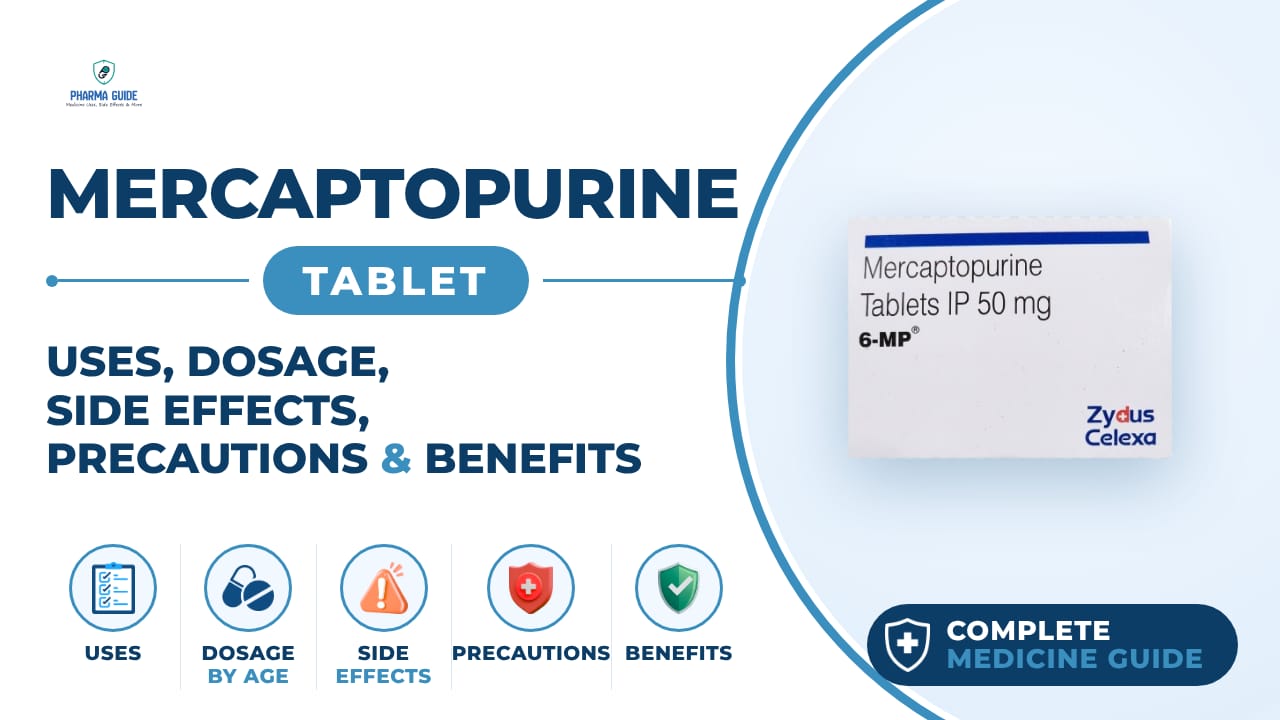
| Generic name | mercaptopurine |
|---|---|
| Drug class | antimetabolite (nucleoside metabolic inhibitor) |
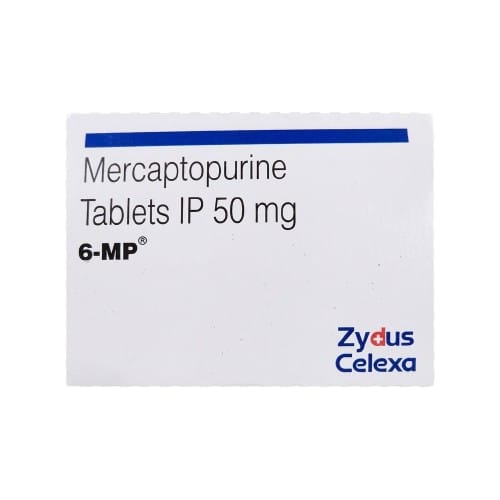
| Forms | Oral tablet (50 mg), Oral liquid/suspension |
Quick overview
Mercaptopurine Tablet (generic name mercaptopurine) is a prescription antimetabolite cancer medicine used to treat acute lymphoblastic leukemia (ALL) and as maintenance chemotherapy after remission. It works by damaging the DNA inside cancer cells so they cannot copy themselves, helping to slow or stop the disease. It is taken by mouth, usually once a day, and requires regular blood test monitoring throughout treatment.
What is Mercaptopurine Tablet
Mercaptopurine is a prescription cancer medicine. It belongs to a group of drugs called antimetabolites, which work against fast-growing cells like cancer cells.
Mercaptopurine Tablet uses
- Acute lymphoblastic leukemia (ALL)
- Maintenance chemotherapy for ALL
- Continued treatment after initial leukemia remission
Benefits of Mercaptopurine Tablet
- Helps control leukemia cells
- Supports remission maintenance
- Helps reduce the risk of leukemia returning
- Supports long-term treatment control
- Works as part of combination chemotherapy
How Mercaptopurine Tablet works
Mercaptopurine works by damaging the DNA inside cancer cells so they cannot copy themselves properly. This stops the cancer cells from growing and multiplying, helping to slow or stop the spread of the disease.
Mercaptopurine Tablet dosage
Take this medicine by mouth, usually once a day, at a regular time each day (for example, always in the morning or always in the evening). Swallow tablets whole; do not crush, cut, or chew them. You can take it with or without food, but take it the same way every time you take a dose. If you cannot swallow tablets, ask your pharmacist about a liquid form.
If a dose is vomited, tell your doctor or nurse and do not take another dose to replace it. If you miss a dose, contact your health care provider or give it as soon as remembered, but do not double up to make up for a missed dose.
Sometimes tablets may need to be cut in half to get the right dose; use a tablet cutter kept only for this medicine. Avoid touching the tablets or liquid directly; wash the area with water right away if it touches your skin, eyes, or mouth. Attend all scheduled blood test appointments so your care team can monitor how the medicine is affecting you.
| Age group | Dose |
|---|---|
| Under 18 years | Not recommended |
| 18–64 years | 50 mg, once/day |
| 65+ years | Not recommended |
Available forms and strengths
- Oral tablet (50 mg)
- Oral liquid/suspension
Side effects of Mercaptopurine Tablet
Common
- Loss of appetite
- Nausea and vomiting
- Diarrhea
- General feeling of being unwell, tired, or low energy
- Rash or changes in skin color
- Low blood cell counts
- Bruising or bleeding
- Hair loss
- Mouth sores and ulcers
Serious
- Severe allergic reaction: breathing problems, swelling of face/lips/mouth/tongue/throat, hives, trouble swallowing
- Blood disorders: fever, sore throat, shortness of breath, pale or yellowish skin, easy bruising or bleeding, frequent infections, unusual weakness, dizziness
- Liver damage: nausea, stomach pain, fever, weakness, itching, loss of appetite, light-colored stools, dark urine, yellowing of skin or eyes (jaundice)
- Signs of a rare, fast-growing lymphoma: fever, night sweats, tiredness, stomach bloating, feeling full, weight loss
- New or returning cancers
- Low blood sugar, which may cause sleepiness or tiredness after a dose
Warnings and precautions
- This medicine can cause a rare, fast-growing type of lymphoma affecting the liver, spleen, and bone marrow, which can be fatal.
- Mercaptopurine can make your skin more sensitive to sunlight, increasing the risk of severe sunburn. Protect your skin with sunscreen, hats, and covering clothing.
- Do not receive live vaccines while taking this medicine, as it may not work properly and could increase infection risk.
- This medicine can lower your blood cell counts, raising the risk of infection, bleeding, and anemia. Regular blood tests are needed.
- A life-threatening condition called macrophage activation syndrome can occur, especially in people with autoimmune conditions. Report any signs of serious infection right away.
- This medicine may affect fertility in both men and women.
- Mercaptopurine can harm an unborn baby and is not recommended during pregnancy unless absolutely necessary.
- Your doctor will confirm you are not pregnant before starting, and you should use effective birth control during treatment and for some time after.
- It is not known for certain if this medicine passes into breast milk, but because of the risk of serious harm to a nursing baby, you should not breastfeed during treatment and for one week after the last dose.
- Mercaptopurine is removed from the body by the kidneys, so people with kidney problems may need a lower starting dose and closer monitoring.
- Mercaptopurine can cause liver damage, and people with existing liver problems may need a lower starting dose and more frequent liver tests.
- It isn't known exactly how alcohol affects this medicine, but heavy drinking can weaken your immune system and make it harder for your body to fight cancer.
- This medicine is not known to affect your ability to drive or use machines, but avoid these activities until you know how the medicine affects you.
Storage
- Store at room temperature, between 68°F and 77°F (20°C and 25°C)
- It can be exposed to temperatures between 59°F and 86°F (15°C and 30°C) for shorter periods, such as during transport
- Store in a cool, dry place, away from moisture and heat
- Keep the liquid form in its original bottle with the child-resistant cap tightly closed
- Liquid should be used within eight weeks of opening the bottle; throw away any leftover medicine after eight weeks
- Do not throw unused medicine in the trash or flush it down the toilet or sink; ask your pharmacist how to safely dispose of it
- Keep all medicines out of the reach of children
When to see a doctor
- Get emergency help right away for signs of a serious allergic reaction, such as trouble breathing, swelling of the face/lips/tongue/throat, or hives.
- Call your doctor right away if you notice signs of low blood cell counts, such as fever, chills, tiredness, mouth or skin sores, easy bruising, unusual bleeding, pale skin, cold hands and feet, or feeling light-headed or short of breath.
- Call your doctor right away if you have signs of liver problems, such as loss of appetite, nausea, vomiting, diarrhea, upper stomach pain, swelling in your midsection, dark urine, clay-colored stools, or yellowing of the skin or eyes.
- Call your doctor right away if you notice signs of lymphoma, such as fever, night sweats, tiredness, stomach bloating, feeling full, or unexplained weight loss.
- If you take too much of this medicine, get emergency medical help or contact a poison control center right away.
- Seek medical help if you have redness, a rash, itching, or swelling after the medicine touches your skin, eyes, or mouth, even after washing it off.
Alternatives
- Thioguanine
- Xaluprine
- Purinethol
Watch the video
FAQs
What is Mercaptopurine Tablet used for?
It is used to treat acute lymphoblastic leukemia (ALL) and as maintenance chemotherapy to help prevent the disease from returning after remission.
How does Mercaptopurine Tablet work?
It works by damaging the DNA inside cancer cells so they cannot copy themselves, which helps slow or stop the spread of leukemia.
How should I take Mercaptopurine Tablet?
Take it by mouth once a day at the same time each day, with or without food. Swallow tablets whole without crushing, cutting, or chewing them, unless instructed to cut them for dosing.
What are the serious side effects of Mercaptopurine Tablet?
Serious side effects include severe allergic reactions, blood disorders, liver damage, a rare fast-growing lymphoma, new or returning cancers, and low blood sugar.
Is Mercaptopurine Tablet safe during pregnancy?
It can harm an unborn baby and is not recommended during pregnancy unless absolutely necessary. Effective birth control should be used during treatment and for some time after.
General information, not medical advice
Your prescriber and the leaflet in your pack know your situation. This page does not.
- Follow your prescriber and the leaflet
- Don't start, stop, or change a dose on your own
- Doses and warnings differ by country and product
Sources
Video
Related medicines

Injectafer Injection: Uses, Dosage, Side Effects, Precautions and Alternates
Iron products
Injectafer (ferric carboxymaltose) treats iron deficiency anemia and heart failure-related iron deficiency via IV. Learn uses, dosage, side effects, and

Gliclazide Tablet: Uses, Dosage, Side Effects, Precautions and Alternates
Sulfonylurea (hypoglycemic/antidiabetic agent)
Gliclazide Tablet is a sulfonylurea for type 2 diabetes that boosts insulin release. Learn about dosage, side effects, warnings, and precautions.