
Safety
General information, not medical advice
Your prescriber and the leaflet in your pack know your situation. This page does not.
- Follow your prescriber and the leaflet
- Don't start, stop, or change a dose on your own
- Doses and warnings differ by country and product
Mesalamine Tablet: Uses, Dosage, Side Effects, Precautions and Alternates
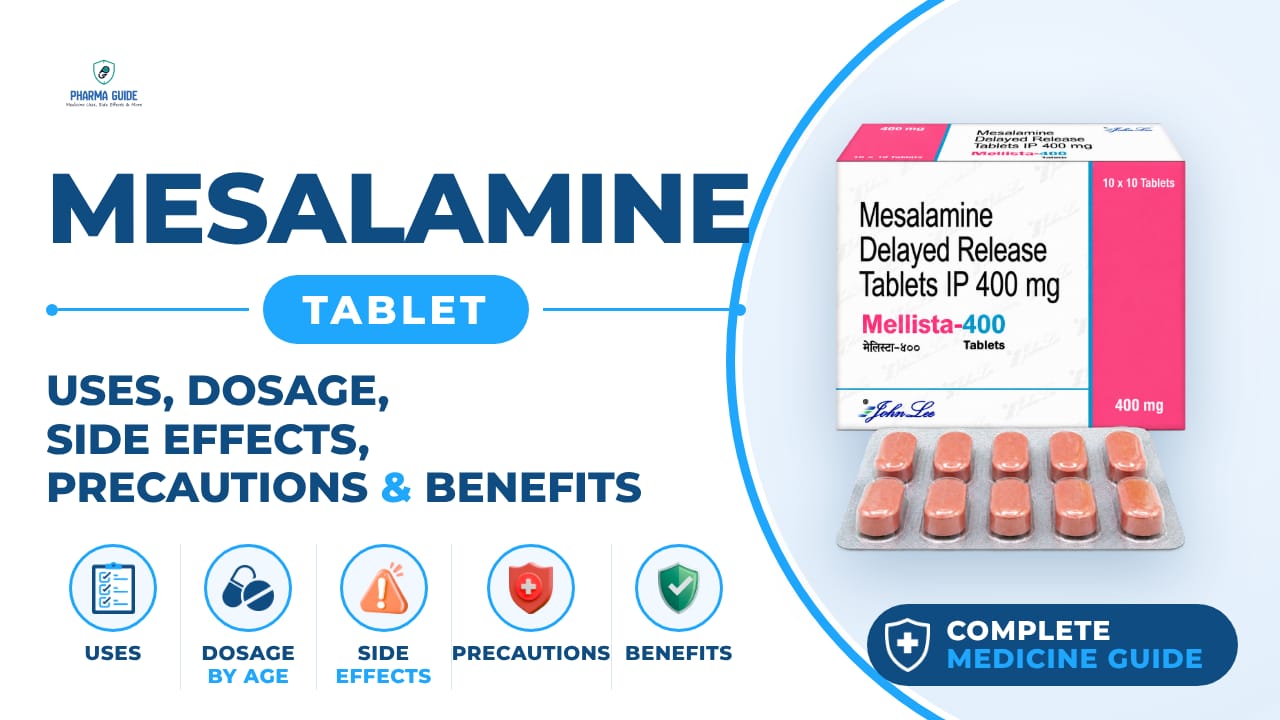
| Generic name | mesalamine (5-aminosalicylic acid, 5-ASA) |
|---|---|
| Drug class | 5-aminosalicylate (aminosalicylate anti-inflammatory) |
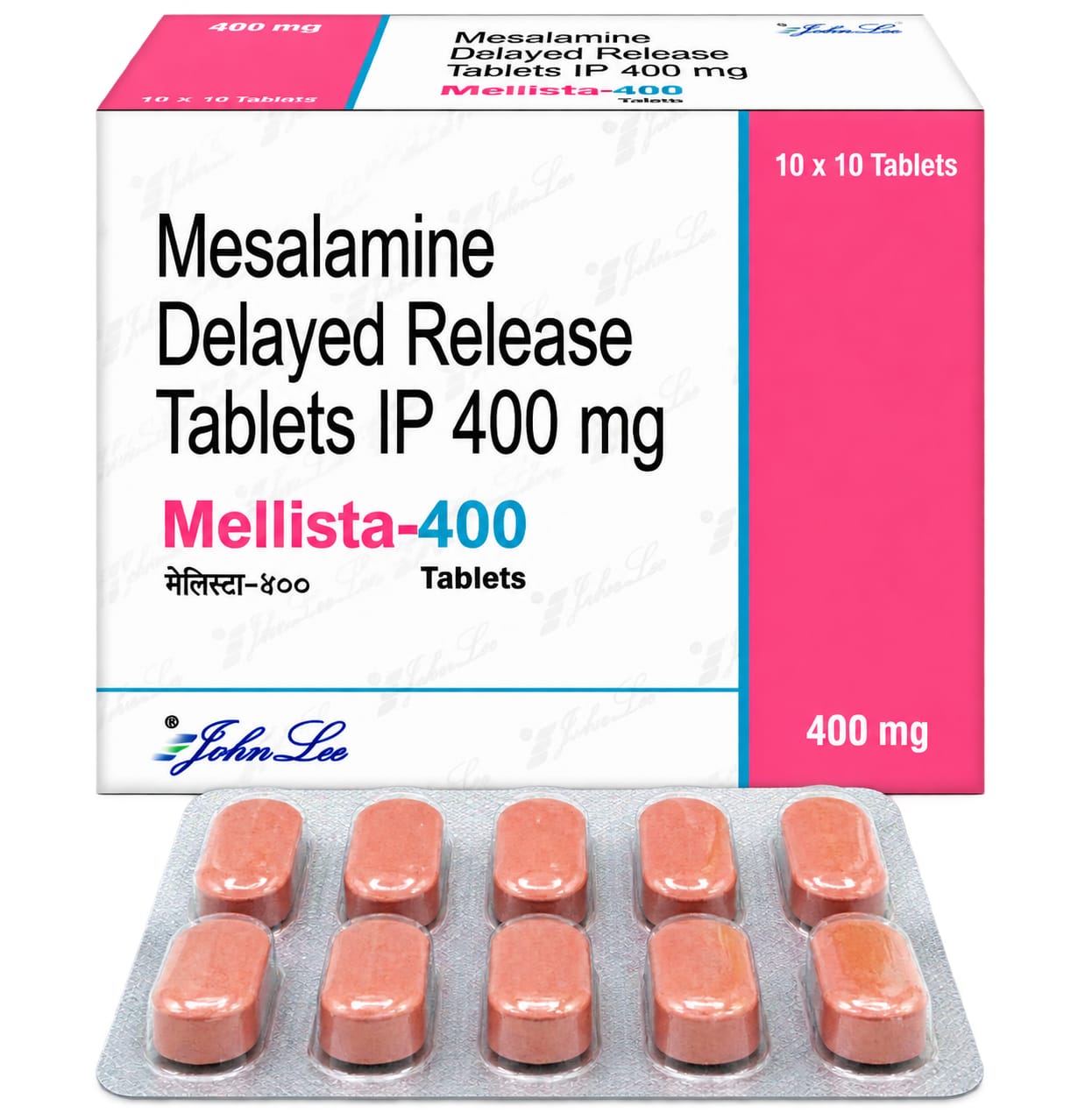
| Forms | oral capsule, extended-release, oral delayed-release capsule, delayed-release tablets, rectal suppositories, rectal suspension enema |
Quick overview
Mesalamine Tablet is a long-term anti-inflammatory medicine belonging to the aminosalicylate class, used to treat mild to moderate ulcerative colitis and to help prevent its symptoms from coming back. It is related to aspirin but works differently and does not suppress the immune system. It works directly on the bowel lining to reduce inflammation and is available in several forms and strengths, with dosing that depends on age and the specific product used.
What is Mesalamine Tablet
Mesalamine (also known as 5-aminosalicylic acid or 5-ASA) is a long-term anti-inflammatory medicine used to treat ulcerative colitis. It is related to aspirin but is not the same type of drug, and it does not suppress the immune system.
Mesalamine Tablet uses
- Treats mild to moderate ulcerative colitis
- Helps prevent ulcerative colitis symptoms from coming back
- Treats distal ulcerative colitis, proctosigmoiditis, and proctitis (rectal forms)
- Used off-label to help prevent Crohn's disease from returning after bowel surgery
Benefits of Mesalamine Tablet
- Relieves inflammation in the colon and rectum
- May reduce pain, diarrhea, and bloody stools caused by bowel irritation and swelling
- Can help you stay in remission with long-term use
How Mesalamine Tablet works
Mesalamine works directly on the lining of the bowel to reduce inflammation. It is thought to block certain natural chemicals in the body (such as prostaglandins and leukotrienes) that cause pain and swelling.
Mesalamine Tablet dosage
Follow all directions on your prescription label and any medication guides given to you, and take the medicine exactly as directed by your doctor. Some products are taken with food, and others are taken on an empty stomach, so check your specific product's label. Swallow tablets or capsules whole; do not crush, chew, or break them. Tell your doctor if you have trouble swallowing the pill or find undissolved tablets in your stool.
Drink plenty of liquids while taking this medicine to help prevent kidney stones. Ask your doctor before using an antacid, since some antacids can affect how your body absorbs this medicine. Call your doctor if your ulcerative colitis symptoms do not improve or get worse.
Your urine may look reddish-brown if it touches bleach-treated water such as in a toilet; this is normal, but tell your doctor if it is discolored before it leaves your body. You may need regular blood tests to check your blood cells and kidney function.
| Age group | Dose |
|---|---|
| Under 2 years | Not recommended unless prescribed by a specialist |
| 2–5 years | Specialist-directed dosing |
| 6–11 years | Dose depends on formulation and condition; doctor-directed |
| 12 years & older | Typically 2.4–4.8 g/day for active ulcerative colitis, depending on product |
| Adults | Typically 2.4–4.8 g/day for active ulcerative colitis, depending on product |
Available forms and strengths
- Oral capsule, extended-release
- Oral delayed-release capsule
- Delayed-release tablets
- Rectal suppositories
- Rectal suspension enema
Side effects of Mesalamine Tablet
Common
- Burping, constipation, nausea, vomiting, stomach pain, diarrhea, gas
- Dizziness
- Cold symptoms such as stuffy nose, sneezing, sore throat
- Back pain
- Headache
- Rash
- Abnormal liver function tests
- Fatigue
- Fever
- Flatulence
- Flu-like symptoms
- Joint pain
- Hair loss
- Acne
Serious
- Severe stomach pain, stomach cramping, bloody diarrhea
- Fever, unusual headache or visual disturbances, general ill feeling
- Rash, itching, eye redness, or signs of a severe skin reaction such as skin pain, blisters, peeling skin, or mouth sores
- Bloody or tarry stools, coughing up blood or vomit that looks like coffee grounds
- Low white blood cell counts - fever, chills, mouth sores, skin sores, sore throat, cough, feeling light-headed, trouble breathing
- Signs of a kidney stone - severe pain in your side and back, frequent need to urinate, foul-smelling urine, dark or cloudy urine
- Kidney problems - increased or decreased urination, swelling, weight gain
- Liver problems - loss of appetite, upper stomach pain, tiredness, easy bruising or bleeding, dark urine, clay-colored stools, jaundice
- Signs of an allergic reaction such as hives, difficulty breathing, or swelling of the face, lips, tongue, or throat
- Heart inflammation such as myocarditis and pericarditis
- Severe skin reactions such as Stevens-Johnson syndrome and toxic epidermal necrolysis
Warnings and precautions
- Mesalamine can cause serious allergic reactions, including anaphylaxis, and should not be taken by people allergic to salicylates, aminosalicylates, or mesalamine.
- Mesalamine can cause a condition called acute intolerance syndrome, which can look like a flare-up of ulcerative colitis. Tell your doctor right away if your symptoms get worse.
- This medicine may cause blood disorders. Older adults and people taking azathioprine or 6-mercaptopurine have a higher risk and will be monitored.
- Do not give this medicine to a child without medical advice, since some brands are not approved for anyone younger than 18.
- If you have a skin condition such as eczema, this medicine could make you sunburn more easily. Avoid sunlight or tanning beds and use protective clothing and sunscreen.
- Kidney stones may develop with use of mesalamine. Drink enough fluids while taking this medicine.
- This medicine can cause serious skin reactions. Stop taking it and get medical help right away if you notice signs of a severe skin reaction.
- Tell your doctor if you are pregnant or plan to become pregnant.
- It is not known whether mesalamine will harm an unborn baby, but untreated ulcerative colitis during pregnancy can also cause problems, so your doctor will weigh the benefits and risks.
- It may not be safe to breastfeed while using this medicine. Ask your doctor about the risks, and tell your doctor if your nursing baby develops diarrhea.
- This medicine can cause kidney problems. Your doctor will check your kidney function before and during treatment, and this medicine may not be suitable if you have kidney disease.
- This medicine may not be suitable for people with liver disease, and there have been reports of liver failure in people with existing liver problems who take mesalamine.
- There is no information available on whether this medicine affects your ability to drive or use machines.
Storage
- Store at room temperature away from moisture and heat.
- Store SALOFALK at controlled room temperature (15-30°C). Protect from exposure to light and moisture.
- Keep out of reach and sight of children.
- Store at room temperature. Keep the enemas in the foil pouch until ready to use. Keep all medications away from children and pets. Do not flush medications down the toilet or pour them into a drain unless instructed to do so. Properly discard this product when it is expired or no longer needed. Consult your pharmacist or local waste disposal company.
When to see a doctor
- Stop using mesalamine and call your doctor right away if you have severe stomach pain, cramping, or bloody diarrhea.
- Get medical help right away if you have fever, unusual headache or visual changes, or a general ill feeling.
- Stop taking this medicine and seek help if you have rash, itching, eye redness, or signs of a severe skin reaction such as skin pain, blisters, peeling skin, or mouth sores.
- Get medical help right away if you notice bloody or tarry stools, or you cough up blood or vomit that looks like coffee grounds.
- Seek help right away if you have signs of low white blood cell counts, such as fever, chills, mouth sores, skin sores, sore throat, cough, feeling light-headed, or trouble breathing.
- Contact your doctor if you have signs of a kidney stone, such as severe pain in your side and back, frequent need to urinate, foul-smelling urine, or dark or cloudy urine.
- Seek medical help if you have signs of kidney problems, such as increased or decreased urination, swelling, or weight gain.
- Seek help for signs of liver problems, such as loss of appetite, upper stomach pain, tiredness, easy bruising or bleeding, dark urine, clay-colored stools, or yellowing of the skin or eyes.
- If you think you have taken too much of this medicine, get emergency medical help right away, even if you feel fine.
- Stop taking this medicine and get help right away if you have signs of an allergic reaction, such as hives, difficulty breathing, or swelling of your face, lips, tongue, or throat.
Alternatives
- Lialda
- Pentasa
- Apriso
- Delzicol
- Canasa
- Rowasa
- Asacol HD
- Salofalk
Watch the video
FAQs
What is Mesalamine Tablet used for?
Mesalamine Tablet treats mild to moderate ulcerative colitis, helps prevent its symptoms from returning, and treats forms like distal ulcerative colitis, proctosigmoiditis, and proctitis. It is also used off-label to help prevent Crohn's disease from returning after bowel surgery.
How does Mesalamine Tablet work?
Mesalamine works directly on the lining of the bowel to reduce inflammation. It is thought to block certain natural chemicals in the body, such as prostaglandins and leukotrienes, that cause pain and swelling.
What is the typical dosage for Mesalamine Tablet?
Dosing depends on age and the specific product. For people 12 years and older and adults, the typical dose for active ulcerative colitis is 2.4–4.8 g/day depending on the product. Dosing for children under 12 is doctor- or specialist-directed.
What are the common side effects of Mesalamine Tablet?
Common side effects include burping, constipation, nausea, vomiting, stomach pain, diarrhea, gas, dizziness, cold symptoms, back pain, headache, rash, fatigue, fever, joint pain, hair loss, and acne.
Can Mesalamine Tablet cause kidney problems?
Yes, this medicine can cause kidney problems and kidney stones. Your doctor will check your kidney function before and during treatment, and you should drink plenty of liquids while taking it.
General information, not medical advice
Your prescriber and the leaflet in your pack know your situation. This page does not.
- Follow your prescriber and the leaflet
- Don't start, stop, or change a dose on your own
- Doses and warnings differ by country and product
Sources
- https://www.drugs.com/mesalamine.html
- https://www.healio.com/clinical-guidance/drugs/mesalamine
- https://www.ncbi.nlm.nih.gov/books/NBK551714/
- SALOFALK Product Monograph, AbbVie Corporation
- Mesalamine Suppository Prescribing Information, Actavis Pharma/Teva Pharmaceuticals
Video
Related medicines

Injectafer Injection: Uses, Dosage, Side Effects, Precautions and Alternates
Iron products
Injectafer (ferric carboxymaltose) treats iron deficiency anemia and heart failure-related iron deficiency via IV. Learn uses, dosage, side effects, and

Gliclazide Tablet: Uses, Dosage, Side Effects, Precautions and Alternates
Sulfonylurea (hypoglycemic/antidiabetic agent)
Gliclazide Tablet is a sulfonylurea for type 2 diabetes that boosts insulin release. Learn about dosage, side effects, warnings, and precautions.