
Safety
General information, not medical advice
Your prescriber and the leaflet in your pack know your situation. This page does not.
- Follow your prescriber and the leaflet
- Don't start, stop, or change a dose on your own
- Doses and warnings differ by country and product
Methimazole Tablet: Uses, Dosage, Side Effects, Precautions and Alternates
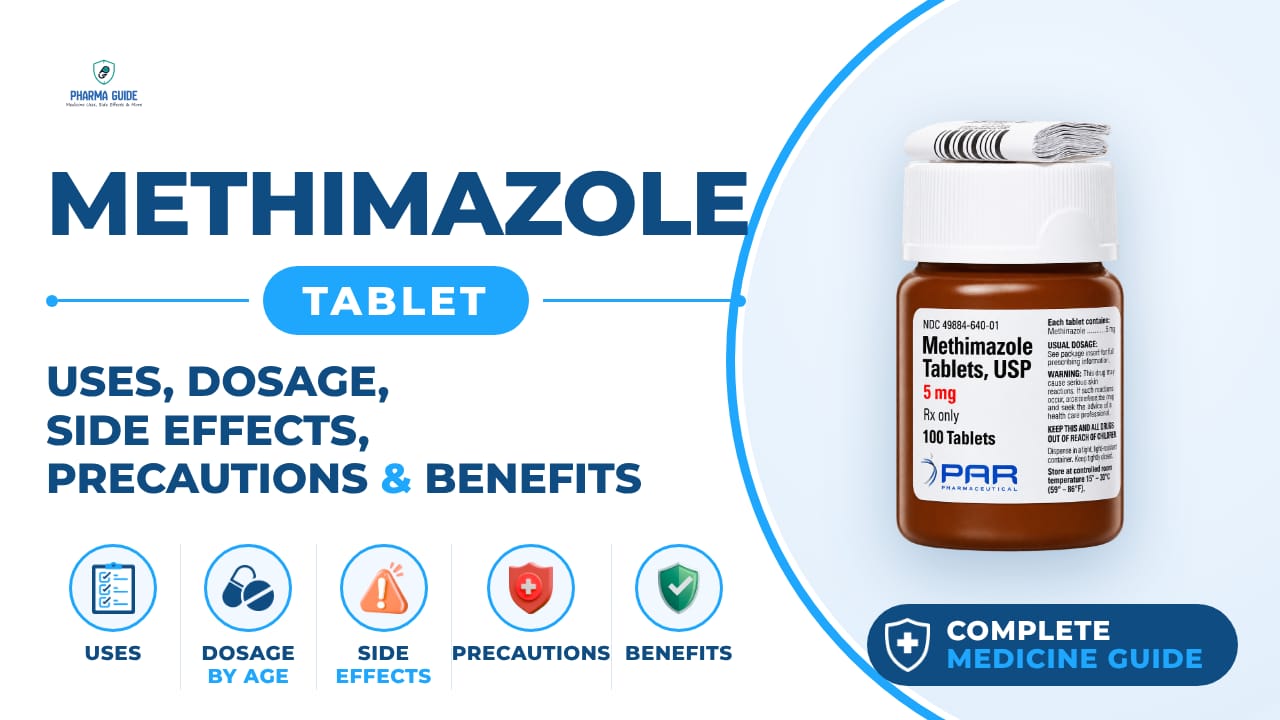
| Generic name | Methimazole |
|---|---|
| Drug class | Antithyroid Agent (thionamide/thioamide) |
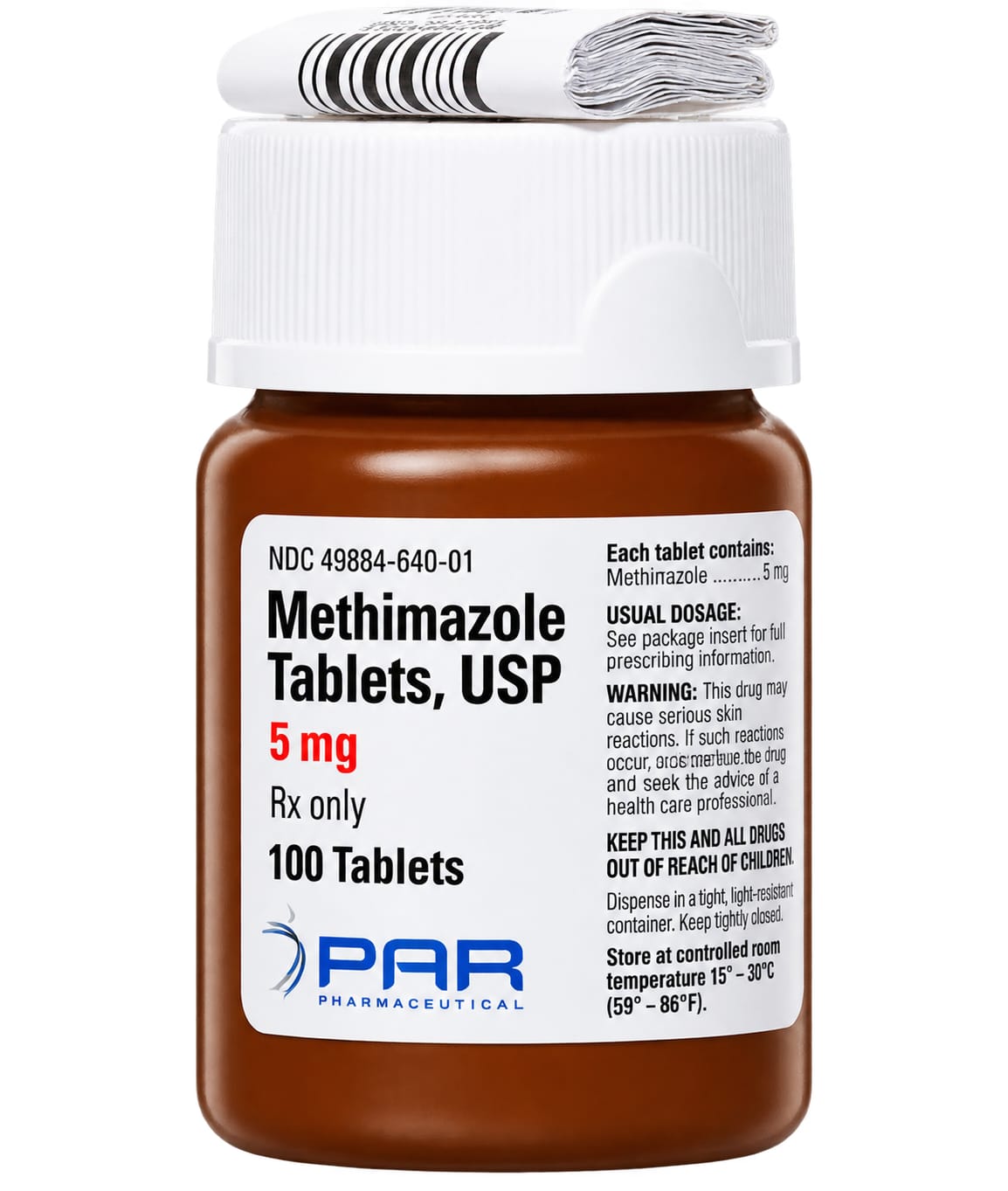
| Forms | Tablet (5 mg), Tablet (10 mg) |
Quick overview
Methimazole Tablet, the generic medicine Methimazole, is an antithyroid agent (thionamide/thioamide) used to treat hyperthyroidism, a condition where the thyroid gland makes too much thyroid hormone. It works by blocking an enzyme the thyroid needs to produce thyroid hormones, helping to lower hormone levels in the body. It may also be used to prepare patients before thyroid surgery or radioactive iodine treatment, or when surgery is not advisable.
What is Methimazole Tablet
Methimazole is an antithyroid medicine used to treat hyperthyroidism, a condition where the thyroid gland makes too much thyroid hormone.
Methimazole Tablet uses
- Treating hyperthyroidism (overactive thyroid gland)
- Reducing symptoms of hyperthyroidism before thyroid surgery or radioactive iodine treatment
- Use when surgical removal of the thyroid is not suitable or advisable
Benefits of Methimazole Tablet
- Thyroid Hormone Control: Helps reduce excessive production of thyroid hormones.
- Hyperthyroidism Management: Used to treat conditions such as Graves' disease and overactive thyroid.
- Symptom Improvement: Helps reduce symptoms like rapid heartbeat, sweating, and nervousness caused by high thyroid levels.
- Thyroid Function Support: Helps restore more balanced thyroid hormone levels.
- Pre-Surgery Preparation: May be used to control thyroid levels before thyroid surgery.
How Methimazole Tablet works
Methimazole blocks an enzyme the thyroid gland needs to make thyroid hormones, which lowers the amount of thyroid hormone in the body. It does not destroy thyroid hormone that is already made.
Methimazole Tablet dosage
Take exactly as prescribed by your doctor. This medicine is usually taken by mouth three times a day, about every 8 hours. Take it with food to help avoid stomach discomfort, and take it at the same time each day to keep a steady level of medicine in your body. Do not crush, break, or chew the tablets. Do not stop taking this medicine without talking to your doctor, as symptoms could come back. If you miss a dose, do not double up — contact your healthcare professional and take your next dose as usual.
| Age group | Dose |
|---|---|
| Children | Dose based on body weight and thyroid hormone levels (as prescribed) |
| Adults (18–64 Years) | 5–30 mg daily initially; adjusted based on response |
| Older Adults (65+ years) | Lower starting dose; adjusted according to thyroid function tests |
| Pregnancy | Dose determined by doctor based on thyroid condition |
Available forms and strengths
- Tablet (5 mg)
- Tablet (10 mg)
Side effects of Methimazole Tablet
Common
- Nausea and vomiting
- Rash, itching, or hives
- Hair loss
- Skin pigmentation changes
- Joint or muscle aches
- Headache
- Dizziness or drowsiness
- Numbness
- Loss of taste
- Heartburn
- Swelling (edema)
- Back pain, chest pain, cough, sore throat (as reported side effects)
Serious
- Agranulocytosis (severe drop in white blood cells) — fever, chills, sore throat, mouth ulcers, frequent infections
- Liver toxicity/hepatitis — yellowing of skin or eyes, dark urine, abdominal pain, unusual tiredness, nausea, vomiting
- Vasculitis (inflammation of blood vessels) — rash, blood in urine, coughing up blood, shortness of breath, fever, joint pain
- Aplastic anemia — fatigue, weakness, pale skin, easy bruising or bleeding
- Acute pancreatitis — severe upper abdominal pain, nausea, vomiting, fever, rapid heartbeat
- Exfoliative dermatitis — widespread redness or peeling of the skin
- Arthralgia that may signal antithyroid arthritis syndrome (joint pain spreading between joints)
- Lupus-like syndrome
- Nephritis (kidney inflammation)
- Hypoprothrombinemia (bleeding problems, easy bruising)
- Hypothyroidism (underactive thyroid) from excess dosing
Warnings and precautions
- This medicine can cause a serious drop in white blood cells (agranulocytosis), which raises the risk of infection.
- This medicine can cause serious liver damage, including liver failure in rare cases.
- Joint pain that spreads from one joint to another may be a sign of a serious condition, and treatment will need to be stopped.
- This medicine has been linked to inflammation of the pancreas, and should not be restarted in anyone who has had this problem before.
- Severe skin inflammation affecting large areas of the body can occur and requires stopping the medicine.
- Inflammation of blood vessels (vasculitis) is a rare but serious reaction that can cause lasting organ damage.
- Do not take this medicine if you are allergic to it, are breastfeeding, or have had pancreas problems from methimazole before.
- If you become pregnant while on this medicine, tell your healthcare professional right away, since it may harm the unborn baby, especially early in pregnancy.
- Methimazole can cross the placenta and may harm the developing baby, especially if taken during the first trimester.
- It should only be used in pregnancy after carefully weighing the risks and benefits, at the lowest effective dose.
- Methimazole passes into breast milk. Some product information says it should not be used while breastfeeding, while other sources say small doses are generally compatible with breastfeeding when medically needed — talk to your doctor.
- There is limited information on how methimazole behaves in people with kidney problems. Doctors will usually use the lowest possible dose and monitor closely.
- Methimazole is processed by the liver, so people with liver problems need close monitoring, and the drug should be stopped if signs of liver injury occur.
- It is not known how methimazole interacts with alcohol. Check with your doctor before drinking alcohol while taking this medicine.
- This medicine can cause tiredness and a spinning sensation (dizziness). Be careful driving or operating machinery until you know how it affects you.
Storage
- Store at room temperature (15°C to 30°C)
- Preserve in well-closed, light-resistant containers
- Keep out of reach and sight of children
When to see a doctor
- Get help right away for signs of a serious allergic reaction, such as rash, itching or swelling of your face, tongue, or throat, severe dizziness, or trouble breathing.
- Stop the medicine and get medical help right away if you have signs of a low white blood cell count, like frequent infections, fever, or chills.
- Stop the medicine and seek medical care immediately for signs of liver problems, such as stomach pain, yellowing of skin or eyes, dark urine, or unusual tiredness.
- Get immediate medical help for signs of aplastic anemia, such as extreme tiredness, weakness, pale skin, fever, or easy bruising and bleeding.
- Seek immediate help for symptoms of vasculitis such as fever, headache, weight loss, rash, blood in urine, coughing up blood, or shortness of breath.
- If you think you or someone else has taken too much of this medicine, get medical help immediately, even if there are no symptoms yet.
Alternatives
- Propylthiouracil (PTU)
- Carbimazole
- Thyroid Surgery
Watch the video
FAQs
What is Methimazole Tablet used for?
It is used to treat hyperthyroidism (overactive thyroid), reduce symptoms before thyroid surgery or radioactive iodine treatment, and manage thyroid levels when surgery is not advisable.
How does Methimazole Tablet work?
Methimazole blocks an enzyme the thyroid gland needs to make thyroid hormones, lowering the amount of thyroid hormone in the body. It does not destroy thyroid hormone that has already been made.
How should I take Methimazole Tablet?
It is usually taken by mouth three times a day, about every 8 hours, with food, at the same time each day. Do not crush, break, or chew the tablets, and do not stop taking it without talking to your doctor.
What are the serious side effects of Methimazole Tablet?
Serious side effects include agranulocytosis, liver toxicity, vasculitis, aplastic anemia, acute pancreatitis, exfoliative dermatitis, lupus-like syndrome, nephritis, and hypoprothrombinemia.
Can Methimazole Tablet be used during pregnancy or breastfeeding?
Methimazole can cross the placenta and may harm the baby, especially in the first trimester, so it should only be used after weighing risks and benefits. It also passes into breast milk, so you should talk to your doctor about breastfeeding.
General information, not medical advice
Your prescriber and the leaflet in your pack know your situation. This page does not.
- Follow your prescriber and the leaflet
- Don't start, stop, or change a dose on your own
- Doses and warnings differ by country and product
Sources
Video
Related medicines

Injectafer Injection: Uses, Dosage, Side Effects, Precautions and Alternates
Iron products
Injectafer (ferric carboxymaltose) treats iron deficiency anemia and heart failure-related iron deficiency via IV. Learn uses, dosage, side effects, and

Gliclazide Tablet: Uses, Dosage, Side Effects, Precautions and Alternates
Sulfonylurea (hypoglycemic/antidiabetic agent)
Gliclazide Tablet is a sulfonylurea for type 2 diabetes that boosts insulin release. Learn about dosage, side effects, warnings, and precautions.